Highlights

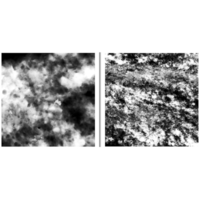
Turbulent Fracture Surfaces: A Footprint of Damage Percolation?

Stéphane Vernède, Laurent Ponson, and Jean-Philippe Bouchaud

Phys. Rev. Lett. 114, 215501 (2015) - Published 29 May, 2015

A statistical analysis of crack surfaces from three different types of materials reveals a deep connection with fluid turbulence and a potentially new approach to studying failed machine parts.

Site-Resolved Imaging of Fermionic Li6 in an Optical Lattice

Maxwell F. Parsons, Florian Huber, Anton Mazurenko, Christie S. Chiu, Widagdo Setiawan, Katherine Wooley-Brown, Sebastian Blatt, and Markus Greiner

Phys. Rev. Lett. 114, 213002 (2015) - Published 28 May, 2015

Two new quantum gas microscopes demonstrate the imaging of fermionic atoms in an optical lattice, providing a step towards simulating complex electronic systems.

Predictability of Rogue Events

Simon Birkholz, Carsten Brée, Ayhan Demircan, and Günter Steinmeyer

Phys. Rev. Lett. 114, 213901 (2015) - Published 28 May, 2015

Analysis of experimental data from multi-filament, oceanic and fiber optic rogue wave systems show that rogue waves are often preceded by a short ordered phase, providing a method to predict their occurrence.

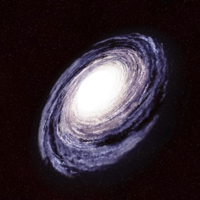
Galactic Center Excess in γ Rays from Annihilation of Self-Interacting Dark Matter

Manoj Kaplinghat, Tim Linden, and Hai-Bo Yu

Phys. Rev. Lett. 114, 211303 (2015) - Published 27 May, 2015

Self-interacting dark matter may explain the gamma-ray excess observed in the Milky Way’s galactic center while also being consistent with the absence of these signals from dwarf spheroidal galaxies.

Higgs Boson Gluon-Fusion Production in QCD at Three Loops

Charalampos Anastasiou, Claude Duhr, Falko Dulat, Franz Herzog, and Bernhard Mistlberger

Phys. Rev. Lett. 114, 212001 (2015) - Published 27 May, 2015

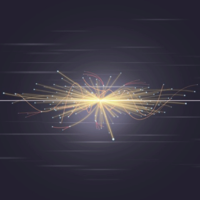
First three-loop calculation of a cross section in perturbative QCD will help with the search for deviations in Higgs boson properties from Standard Model predictions.

Measurement of Charged-Particle Stopping in Warm Dense Plasma

A. B. Zylstra, J. A. Frenje, P. E. Grabowski, C. K. Li, G. W. Collins, P. Fitzsimmons, S. Glenzer, F. Graziani, S. B. Hansen, S. X. Hu, M. Gatu Johnson, P. Keiter, H. Reynolds, J. R. Rygg, F. H. Séguin, and R. D. Petrasso

Phys. Rev. Lett. 114, 215002 (2015) - Published 27 May, 2015

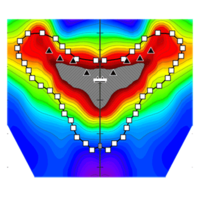
Charged particle energy loss and stopping power in warm dense matter (a moderately-coupled plasma at high density and moderate temperature) have been measured at the percent level by the OMEGA laser facility.

Reentrant Superconductivity Driven by Quantum Tricritical Fluctuations in URhGe: Evidence from Co59 NMR in URh0.9Co0.1Ge

Y. Tokunaga, D. Aoki, H. Mayaffre, S. Krämer, M.-H. Julien, C. Berthier, M. Horvatić, H. Sakai, S. Kambe, and S. Araki

Phys. Rev. Lett. 114, 216401 (2015) - Published 27 May, 2015

NMR measurements near the quantum tricritical point show that reentrance of superconductivity at high fields requires longitudinal fluctuations (parallel to the applied field). These experimental results will require revision of theoretical work, which to date has included only transverse fluctuations.

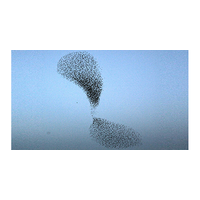
Silent Flocks: Constraints on Signal Propagation Across Biological Groups

Andrea Cavagna, Irene Giardina, Tomas S. Grigera, Asja Jelic, Dov Levine, Sriram Ramaswamy, and Massimiliano Viale

Phys. Rev. Lett. 114, 218101 (2015) - Published 27 May, 2015

Flocking birds appear to communicate through collective waves, but these waves may not be able to travel in flocks of a certain size.

Site-Dependent Evolution of Electrical Conductance from Tunneling to Atomic Point Contact

Howon Kim and Yukio Hasegawa

Phys. Rev. Lett. 114, 206801 (2015) - Published 22 May, 2015

A highly stable scanning tunneling microscope measures the electrical properties of a metal on a scale smaller than individual atoms.

Helicons in Unbounded Plasmas

R. L. Stenzel and J. M. Urrutia

Phys. Rev. Lett. 114, 205005 (2015) - Published 21 May, 2015

The plasma waves known as helicons can be created and measured in the laboratory even without confining walls.

Strongly Correlated Growth of Rydberg Aggregates in a Vapor Cell

A. Urvoy, F. Ripka, I. Lesanovsky, D. Booth, J. P. Shaffer, T. Pfau, and R. Löw

Phys. Rev. Lett. 114, 203002 (2015) - Published 19 May, 2015

The strong interaction potential between multiple Rydberg atoms allow many-body effects to be observed in a room temperature atomic vapor.

Volume Changes During Active Shape Fluctuations in Cells

Alessandro Taloni, Elena Kardash, Oguz Umut Salman, Lev Truskinovsky, Stefano Zapperi, and Caterina A. M. La Porta

Phys. Rev. Lett. 114, 208101 (2015) - Published 19 May, 2015

Water flowing through a cell’s membrane is essential to the process of changing cellular shape.

Rotation of Quantum Impurities in the Presence of a Many-Body Environment

Richard Schmidt and Mikhail Lemeshko

Phys. Rev. Lett. 114, 203001 (2015) - Published 18 May, 2015

Immersing a quantum impurity into a Bose-Einstein condensate causes a redistribution of the angular momentum between the impurity and the many-body environment leading to collective excitations. These excitations can be explained using a new quasiparticle: the “angulon”.

Tunable Subluminal Propagation of Narrow-band X-Ray Pulses

Kilian P. Heeg, Johann Haber, Daniel Schumacher, Lars Bocklage, Hans-Christian Wille, Kai S. Schulze, Robert Loetzsch, Ingo Uschmann, Gerhard G. Paulus, Rudolf Rüffer, Ralf Röhlsberger, and Jörg Evers

Phys. Rev. Lett. 114, 203601 (2015) - Published 18 May, 2015

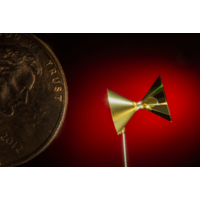
Slow light effects have been measured for x rays using a cavity filled with iron nuclei, where the speed of light was reduced by a factor of 10,000.

Suppression and Revival of Weak Localization through Control of Time-Reversal Symmetry

K. Müller, J. Richard, V. V. Volchkov, V. Denechaud, P. Bouyer, A. Aspect, and V. Josse

Phys. Rev. Lett. 114, 205301 (2015) - Published 18 May, 2015

Controlled manipulation of the time reversal symmetry in a disordered quantum gas is achieved by applying a dephasing pulse.

Ultracold Dipolar Gas of Fermionic Na23K40 Molecules in Their Absolute Ground State

Jee Woo Park, Sebastian A. Will, and Martin W. Zwierlein

Phys. Rev. Lett. 114, 205302 (2015) - Published 18 May, 2015

The cooling of strongly dipolar molecules to their absolute ground state has opened the possibility of creating new forms of matter.

Interferometric phase detection at x-ray energies via Fano resonance control

K. P. Heeg, C. Ott, D. Schumacher, H.-C. Wille, R. Röhlsberger, T. Pfeifer, and J. Evers

Phys. Rev. Lett. 114, 207401 (2015) - Published 18 May, 2015

The phase of an x ray can be detected when it interacts with nuclei, an effect that could be used to characterize the quantum state of a nuclear two-level system.

Experimental Generation of Squeezed Cat States with an Operation Allowing Iterative Growth

Jean Etesse, Martin Bouillard, Bhaskar Kanseri, and Rosa Tualle-Brouri

Phys. Rev. Lett. 114, 193602 (2015) - Published 15 May, 2015

An optical setup is used to generate a mesoscopic state of light, called a cat state, which can be fed back into the system to increase its nonclassicality.

Combined Measurement of the Higgs Boson Mass in pp Collisions at s=7 and 8 TeV with the ATLAS and CMS Experiments

G. Aad et al. (ATLAS Collaboration, CMS Collaboration)

Phys. Rev. Lett. 114, 191803 (2015) - Published 14 May, 2015

A new value for the Higgs boson mass will allow stronger tests of the standard model and of theories about the Universe’s stability.

Quantum-Gas Microscope for Fermionic Atoms

Lawrence W. Cheuk, Matthew A. Nichols, Melih Okan, Thomas Gersdorf, Vinay V. Ramasesh, Waseem S. Bakr, Thomas Lompe, and Martin W. Zwierlein

Phys. Rev. Lett. 114, 193001 (2015) - Published 13 May, 2015

A quantum microscope able to image individual atoms of optically trapped fermionic potassium has been developed by combining 3D Raman sideband cooling along with high-resolution optics.

Sign In to Your Journals Account

Filter

Section

Filter

Article Lookup

Enter a citation