Highlights

Generation of Phase-Locked Pulses from a Seeded Free-Electron Laser

David Gauthier, Primož Rebernik Ribič, Giovanni De Ninno, Enrico Allaria, Paolo Cinquegrana, Miltcho Bojanov Danailov, Alexander Demidovich, Eugenio Ferrari, and Luca Giannessi

Phys. Rev. Lett. 116, 024801 (2016) - Published 14 January, 2016

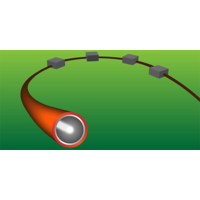
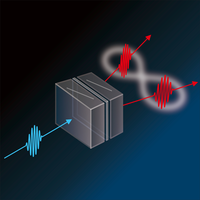
Frequency domain interferometry is used to generate two sequential phase-locked pulses from a free-electron laser in the X-ray to UV domain.

Anomalous Depletion of Pore-Confined Carbon Dioxide upon Cooling below the Bulk Triple Point: An In Situ Neutron Diffraction Study

K. L. Stefanopoulos, F. K. Katsaros, Th. A. Steriotis, A. A. Sapalidis, M. Thommes, D. T. Bowron, and T. G. A. Youngs

Phys. Rev. Lett. 116, 025502 (2016) - Published 14 January, 2016

Neutron scattering experiments indicate that CO2 confined in nanopores does not freeze when cooled below the triple point but instead vacates the pores and solidifies in the bulk. Upon reheating the CO2 refills the nanopores.

Zero-Area Single-Photon Pulses

L. S. Costanzo, A. S. Coelho, D. Pellegrino, M. S. Mendes, L. Acioli, K. N. Cassemiro, D. Felinto, A. Zavatta, and M. Bellini

Phys. Rev. Lett. 116, 023602 (2016) - Published 13 January, 2016

Broadband single-photon pulses can have a strong, if transient, interaction with an atomic medium.

Observation of a Single-Beam Gradient Force Acoustical Trap for Elastic Particles: Acoustical Tweezers

Diego Baresch, Jean-Louis Thomas, and Régis Marchiano

Phys. Rev. Lett. 116, 024301 (2016) - Published 11 January, 2016

Using new techniques for shaping sound waves from a single source, researchers have made acoustic tweezers that move particles around in three dimensions.

Symmetric Satellite Swarms and Choreographic Crystals

Latham Boyle, Jun Yong Khoo, and Kendrick Smith

Phys. Rev. Lett. 116, 015503 (2016) - Published 8 January, 2016

Theorists define a new kind of crystal, where the symmetry is not based on the static locations of objects but instead on the relationship between their periodic motions, as in a group of satellites.

Hanle Magnetoresistance in Thin Metal Films with Strong Spin-Orbit Coupling

Saül Vélez, Vitaly N. Golovach, Amilcar Bedoya-Pinto, Miren Isasa, Edurne Sagasta, Mikel Abadia, Celia Rogero, Luis E. Hueso, F. Sebastian Bergeret, and Fèlix Casanova

Phys. Rev. Lett. 116, 016603 (2016) - Published 8 January, 2016

A new type of magnetoresistance is measured in thin nonmagnetic platinum films with strong spin-orbit coupling due to spin accumulation at the surface of the film.

Superconducting Detectors for Superlight Dark Matter

Yonit Hochberg, Yue Zhao, and Kathryn M. Zurek

Phys. Rev. Lett. 116, 011301 (2016) - Published 7 January, 2016

Regions of dark matter parameter space could be explored using superconductors sensitive to electron recoils from dark matter-electron scattering events, potentially allowing superlight dark matter to be detected.

Self-Amplification of Solid Friction in Interleaved Assemblies

Héctor Alarcón, Thomas Salez, Christophe Poulard, Jean-Francis Bloch, Élie Raphaël, Kari Dalnoki-Veress, and Frédéric Restagno

Phys. Rev. Lett. 116, 015502 (2016) - Published 7 January, 2016

A simple model borne out by experiments explains why it’s so hard to separate a pair of phonebooks whose pages have been interleaved.

Complexified Path Integrals, Exact Saddles, and Supersymmetry

Alireza Behtash, Gerald V. Dunne, Thomas Schäfer, Tin Sulejmanpasic, and Mithat Ünsal

Phys. Rev. Lett. 116, 011601 (2016) - Published 6 January, 2016

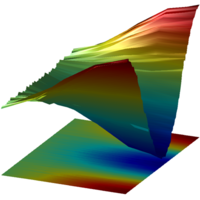
The fields and parameters in a path integral should be considered as complex quantities, even though they are real at the Lagrangian level, according to new calculations.

Step Crowding Effects Dampen the Stochasticity of Crystal Growth Kinetics

James F. Lutsko, Alexander E. S. Van Driessche, Miguel A. Durán-Olivencia, Dominique Maes, and Mike Sleutel

Phys. Rev. Lett. 116, 015501 (2016) - Published 6 January, 2016

Simulations describe how crystals are able to grow past impurities by forming multilayer steps.

Unveiling Microscopic Structures of Charged Water Interfaces by Surface-Specific Vibrational Spectroscopy

Yu-Chieh Wen, Shuai Zha, Xing Liu, Shanshan Yang, Pan Guo, Guosheng Shi, Haiping Fang, Y. Ron Shen, and Chuanshan Tian

Phys. Rev. Lett. 116, 016101 (2016) - Published 5 January, 2016

A spectroscopic technique reveals the molecular structure of a charged water interface.

Probing Carrier Transport and Structure-Property Relationship of Highly Ordered Organic Semiconductors at the Two-Dimensional Limit

Yuhan Zhang, Jingsi Qiao, Si Gao, Fengrui Hu, Daowei He, Bing Wu, Ziyi Yang, Bingchen Xu, Yun Li, Yi Shi, Wei Ji, Peng Wang, Xiaoyong Wang, Min Xiao, Hangxun Xu, Jian-Bin Xu, and Xinran Wang

Phys. Rev. Lett. 116, 016602 (2016) - Published 5 January, 2016

Researchers have fabricated high-quality organic semiconductors only a few molecular layers thick, revealing how the crystal structure affects the electronic properties.

Guiding Spin Spirals by Local Uniaxial Strain Relief

Pin-Jui Hsu, Aurore Finco, Lorenz Schmidt, André Kubetzka, Kirsten von Bergmann, and Roland Wiesendanger

Phys. Rev. Lett. 116, 017201 (2016) - Published 5 January, 2016

Nanometer cycloidal spin spirals are observed on strained double-layers of iron where the layers have different lattice orientations.

Potential Remedies for the High Synchrotron-Radiation-Induced Heat Load for Future Highest-Energy-Proton Circular Colliders

R. Cimino, V. Baglin, and F. Schäfers

Phys. Rev. Lett. 115, 264804 (2015) - Published 31 December, 2015

A new design scheme for high-energy particle colliders could halve the cost of cooling future machines.​

On-Chip Maxwell’s Demon as an Information-Powered Refrigerator

J. V. Koski, A. Kutvonen, I. M. Khaymovich, T. Ala-Nissila, and J. P. Pekola

Phys. Rev. Lett. 115, 260602 (2015) - Published 30 December, 2015

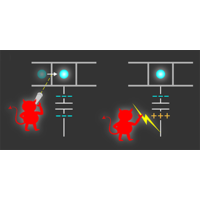
A pair of connected single-electron devices functions as a Maxwell’s demon that operates without external control.

Teleconnection Paths via Climate Network Direct Link Detection

Dong Zhou, Avi Gozolchiani, Yosef Ashkenazy, and Shlomo Havlin

Phys. Rev. Lett. 115, 268501 (2015) - Published 30 December, 2015

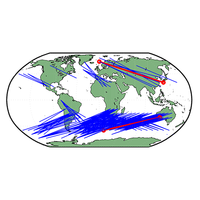
A new method allows researchers to extract climate connections between remote regions from global temperature datasets.

Thermal Generation of Spin Current in an Antiferromagnet

S. Seki, T. Ideue, M. Kubota, Y. Kozuka, R. Takagi, M. Nakamura, Y. Kaneko, M. Kawasaki, and Y. Tokura

Phys. Rev. Lett. 115, 266601 (2015) - Published 29 December, 2015

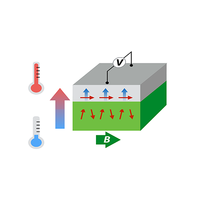
Experiments show that a heat gradient can generate a spin-wave spin current in an antiferromagnetic insulator.

Quantum Delayed-Choice Experiment with a Beam Splitter in a Quantum Superposition

Shi-Biao Zheng, You-Peng Zhong, Kai Xu, Qi-Jue Wang, H. Wang, Li-Tuo Shen, Chui-Ping Yang, John M. Martinis, A. N. Cleland, and Si-Yuan Han

Phys. Rev. Lett. 115, 260403 (2015) - Published 28 December, 2015

A beam splitter is placed in a quantum superposition state of being both active and inactive allowing the wave and particle aspects of the system to be observed in a single setup.

Experimental Greenberger-Horne-Zeilinger-Type Six-Photon Quantum Nonlocality

Chao Zhang, Yun-Feng Huang, Zhao Wang, Bi-Heng Liu, Chuan-Feng Li, and Guang-Can Guo

Phys. Rev. Lett. 115, 260402 (2015) - Published 23 December, 2015

An entangled quantum state of six photons leads to non-classical correlations veryifying quantum nonlocality.

Testing Einstein’s Equivalence Principle With Fast Radio Bursts

Jun-Jie Wei, He Gao, Xue-Feng Wu, and Peter Mészáros

Phys. Rev. Lett. 115, 261101 (2015) - Published 23 December, 2015

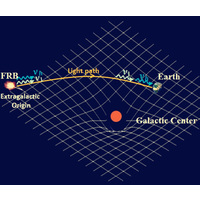
Time delays between correlated photons emitted from fast radio bursts induced by the gravitational potential of the Milky Way provide the most accurate tests of Einstein’s equivalence principle to date.

Sign In to Your Journals Account

Filter

Section

Filter

Article Lookup

Enter a citation