Highlights

Universality and Scaling in a Charge Two-Channel Kondo Device

A. K. Mitchell, L. A. Landau, L. Fritz, and E. Sela

Phys. Rev. Lett. 116, 157202 (2016) - Published 13 April, 2016

A two-channel Kondo model solved using the numerical renormalization group reproduces the temperature dependence of the conductance measured in recent experiments on Kondo nanostructures. This suggests that charge-Kondo devices constitute perfect quantum simulations of models exhibiting quantum criticality.

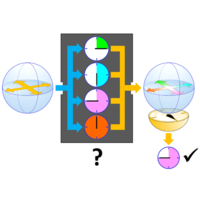
Robustness of Coherence: An Operational and Observable Measure of Quantum Coherence

Carmine Napoli, Thomas R. Bromley, Marco Cianciaruso, Marco Piani, Nathaniel Johnston, and Gerardo Adesso

Phys. Rev. Lett. 116, 150502 (2016) - Published 12 April, 2016

A general method for quantifying the amount of coherence in a quantum system is proposed.

Footprints of New Strong Dynamics via Anomaly and the 750 GeV Diphoton

Yuichiro Nakai, Ryosuke Sato, and Kohsaku Tobioka

Phys. Rev. Lett. 116, 151802 (2016) - Published 12 April, 2016

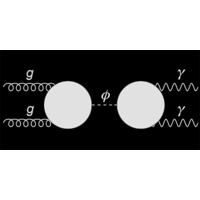
Theorists try to explain data from the LHC that could be hinting at the existence of new particles.

Pseudoscalar Decaying Only via Loops as an Explanation for the 750 GeV Diphoton Excess

Gang Li, Ying-nan Mao, Yi-Lei Tang, Chen Zhang, Yang Zhou, and Shou-hua Zhu

Phys. Rev. Lett. 116, 151803 (2016) - Published 12 April, 2016

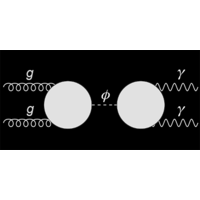
Theorists try to explain data from the LHC that could be hinting at the existence of new particles.

750 GeV Diphoton Excess from the Goldstino Superpartner

Christoffer Petersson and Riccardo Torre

Phys. Rev. Lett. 116, 151804 (2016) - Published 12 April, 2016

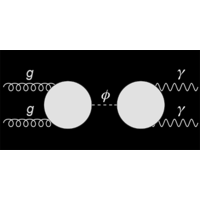
Theorists try to explain data from the LHC that could be hinting at the existence of new particles.

750 GeV Diphoton Excess May Not Imply a 750 GeV Resonance

Won Sang Cho, Doojin Kim, Kyoungchul Kong, Sung Hak Lim, Konstantin T. Matchev, Jong-Chul Park, and Myeonghun Park

Phys. Rev. Lett. 116, 151805 (2016) - Published 12 April, 2016

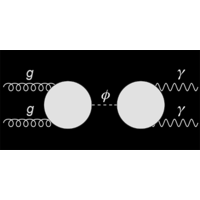
Theorists try to explain data from the LHC that could be hinting at the existence of new particles.

Magnetic Ground States of the Rare-Earth Tripod Kagome Lattice Mg2RE3Sb3O14 (RE=Gd,Dy,Er)

Z. L. Dun, J. Trinh, K. Li, M. Lee, K. W. Chen, R. Baumbach, Y. F. Hu, Y. X. Wang, E. S. Choi, B. S. Shastry, A. P. Ramirez, and H. D. Zhou

Phys. Rev. Lett. 116, 157201 (2016) - Published 12 April, 2016

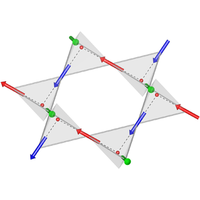
A new family of compounds with a frustrated spin structure has been discovered. These materials feature kagome networks of rare-earth ions created via the ordered substitution of non-magnetic magnesium atoms in the 3D pyrochlore crystal structure.

Spontaneous Polarization and Bulk Photovoltaic Effect Driven by Polar Discontinuity in LaFeO3/SrTiO3 Heterojunctions

M. Nakamura, F. Kagawa, T. Tanigaki, H. S. Park, T. Matsuda, D. Shindo, Y. Tokura, and M. Kawasaki

Phys. Rev. Lett. 116, 156801 (2016) - Published 11 April, 2016

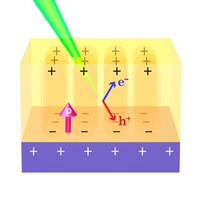
Nonpolar LaFeO3 thin films spontaneously polarize when grown on SrTiO3 substrates. This polarization induces anomalous photovoltaic properties, distinct from conventional p-n junctions.

Observation of Double-Dome Superconductivity in Potassium-Doped FeSe Thin Films

Can-Li Song, Hui-Min Zhang, Yong Zhong, Xiao-Peng Hu, Shuai-Hua Ji, Lili Wang, Ke He, Xu-Cun Ma, and Qi-Kun Xue

Phys. Rev. Lett. 116, 157001 (2016) - Published 11 April, 2016

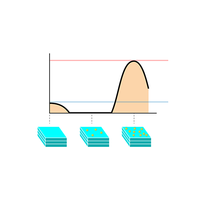
Iron selenide films peppered with potassium atoms exhibit a high-temperature superconducting phase that emerges separately from a low-temperature superconducting phase.

Thermodynamic Entropy as a Noether Invariant

Shin-ichi Sasa and Yuki Yokokura

Phys. Rev. Lett. 116, 140601 (2016) - Published 7 April, 2016

The thermodynamic entropy of a classical many-particle system can be related to a conserved quantity for quasi-static thermodynamics processes.

Optomechanical Quantum Control of a Nitrogen-Vacancy Center in Diamond

D. Andrew Golter, Thein Oo, Mayra Amezcua, Kevin A. Stewart, and Hailin Wang

Phys. Rev. Lett. 116, 143602 (2016) - Published 7 April, 2016

The state of excited electrons in a diamond-crystal defect can be controlled using mechanical waves.

Electron-Vibration Coupling in Molecular Materials: Assignment of Vibronic Modes from Photoelectron Momentum Mapping

M. Graus, M. Grimm, C. Metzger, M. Dauth, C. Tusche, J. Kirschner, S. Kümmel, A. Schöll, and F. Reinert

Phys. Rev. Lett. 116, 147601 (2016) - Published 6 April, 2016

Photoelectron spectroscopy reveals the details of the interaction between electronic and vibrational excitations in a molecular material.

Observation of Quantum Interference between Separated Mechanical Oscillator Wave Packets

D. Kienzler, C. Flühmann, V. Negnevitsky, H.-Y. Lo, M. Marinelli, D. Nadlinger, and J. P. Home

Phys. Rev. Lett. 116, 140402 (2016) - Published 5 April, 2016

A trapped ion is produced in a superposition of motional wave packets, which are shown to interfere despite being separated by 240 nanometers.

Magnetospheric Multiscale Satellite Observations of Parallel Electron Acceleration in Magnetic Field Reconnection by Fermi Reflection from Time Domain Structures

F. S. Mozer, O. A. Agapitov, A. Artemyev, J. L. Burch, R. E. Ergun, B. L. Giles, D. Mourenas, R. B. Torbert, T. D. Phan, and I. Vasko

Phys. Rev. Lett. 116, 145101 (2016) - Published 5 April, 2016

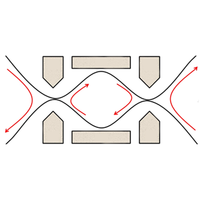
A new satellite mission has observed electron acceleration by electric field waves moving along the magnetic boundary between the Earth and the solar wind.

Mechanical Resonators for Quantum Optomechanics Experiments at Room Temperature

R. A. Norte, J. P. Moura, and S. Gröblacher

Phys. Rev. Lett. 116, 147202 (2016) - Published 5 April, 2016

Two independent experiments demonstrate room temperature mechanical resonators with outstanding optical and mechanical properties, for example high quality factor and attonewton force sensitivity.

Coupling Identical one-dimensional Many-Body Localized Systems

Pranjal Bordia, Henrik P. Lüschen, Sean S. Hodgman, Michael Schreiber, Immanuel Bloch, and Ulrich Schneider

Phys. Rev. Lett. 116, 140401 (2016) - Published 4 April, 2016

Many-body localization in chains of cold atoms with identical disorder is unstable with respect to inter-chain coupling.

Experimental Insights into the Nanostructure of the Cores of Topological Defects in Liquid Crystals

Xiaoguang Wang, Young-Ki Kim, Emre Bukusoglu, Bo Zhang, Daniel S. Miller, and Nicholas L. Abbott

Phys. Rev. Lett. 116, 147801 (2016) - Published 4 April, 2016

Experimental characterization of point defects in liquid crystals show they are nanoscopic loops as predicted by theory.

Weirdest Martensite: Smectic Liquid Crystal Microstructure and Weyl-Poincaré Invariance

Danilo B. Liarte, Matthew Bierbaum, Ricardo A. Mosna, Randall D. Kamien, and James P. Sethna

Phys. Rev. Lett. 116, 147802 (2016) - Published 4 April, 2016

A set of rules is proposed for the construction of circular domain boundaries seen at the interfaces of smectic liquid crystals.

Failure of the Volume Function in Granular Statistical Mechanics and an Alternative Formulation

Raphael Blumenfeld, Shahar Amitai, Joe F. Jordan, and Rebecca Hihinashvili

Phys. Rev. Lett. 116, 148001 (2016) - Published 4 April, 2016

A reformulation of the statistical mechanics of granular materials replaces the volume of the material with a function related to its structure.

Measurement of the Transverse Single-Spin Asymmetry in p↑+p→W±/Z0 at RHIC

L. Adamczyk et al. (STAR Collaboration)

Phys. Rev. Lett. 116, 132301 (2016) - Published 1 April, 2016
The STAR collaboration at RHIC has measured a spin asymmetry in weak boson production that can put constraints on the distribution of quarks and gluons in a transversely polarized proton.

Sign In to Your Journals Account

Filter

Section

Filter

Article Lookup

Enter a citation