Highlights

Quantum Enhancement of the Index of Refraction in a Bose-Einstein Condensate

P. C. Bons, R. de Haas, D. de Jong, A. Groot, and P. van der Straten

Phys. Rev. Lett. 116, 173602 (2016) - Published 28 April, 2016

The index of refraction in a gas of bosons is enhanced relative to its value in a classical gas, a predicted quantum effect that has now been observed in ultracold sodium atoms.

Symmetry Guide to Ferroaxial Transitions

J. Hlinka, J. Privratska, P. Ondrejkovic, and V. Janovec

Phys. Rev. Lett. 116, 177602 (2016) - Published 28 April, 2016

A theoretical database is presented of the 212 distinct types of symmetry reductions that could occur for a symmetry-breaking structural phase transition, revealing 124 symmetry reductions that are ferroaxial.

Is the Gravitational-Wave Ringdown a Probe of the Event Horizon?

Vitor Cardoso, Edgardo Franzin, and Paolo Pani

Phys. Rev. Lett. 116, 171101 (2016) - Published 27 April, 2016

Recently detected gravitational waves might not be a signature of black holes but of other massive objects that lack an event horizon.

Observation of Long-Range Elliptic Azimuthal Anisotropies in s=13 and 2.76 TeV pp Collisions with the ATLAS Detector

G. Aad et al. (ATLAS Collaboration)

Phys. Rev. Lett. 116, 172301 (2016) - Published 27 April, 2016

Proton-proton collisions at the highest available LHC energy produce strongly correlated particles that are reminiscent of those seen in similar collisions with protons and lead.

Equation of State of the Two-Dimensional Hubbard Model

Eugenio Cocchi, Luke A. Miller, Jan H. Drewes, Marco Koschorreck, Daniel Pertot, Ferdinand Brennecke, and Michael Köhl

Phys. Rev. Lett. 116, 175301 (2016) - Published 25 April, 2016

The engineered simplicity of a cold-atom system described by the 2D Fermi-Hubbard model allows for a precision test of the model’s equation of state.

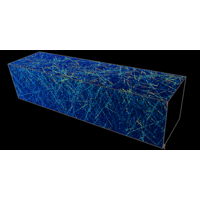
Active Curved Polymers Form Vortex Patterns on Membranes

Jonas Denk, Lorenz Huber, Emanuel Reithmann, and Erwin Frey

Phys. Rev. Lett. 116, 178301 (2016) - Published 25 April, 2016

Active self-propelled particles moving along chiral paths self-organize into vortex structures.

Quantum Tunneling of Water in Beryl: A New State of the Water Molecule

Alexander I. Kolesnikov, George F. Reiter, Narayani Choudhury, Timothy R. Prisk, Eugene Mamontov, Andrey Podlesnyak, George Ehlers, Andrew G. Seel, David J. Wesolowski, and Lawrence M. Anovitz

Phys. Rev. Lett. 116, 167802 (2016) - Published 22 April, 2016

Water molecules confined in nanochannels exhibit tunneling behavior that smears out the positions of the hydrogen atoms into a pair of corrugated rings.

Observation of Genuine One-Way Einstein-Podolsky-Rosen Steering

Sabine Wollmann, Nathan Walk, Adam J. Bennet, Howard M. Wiseman, and Geoff J. Pryde

Phys. Rev. Lett. 116, 160403 (2016) - Published 21 April, 2016

Experiments provide evidence for one-way quantum steering—an effect by which distant entangled systems can influence one another in a directional way.

Experimental Quantification of Asymmetric Einstein-Podolsky-Rosen Steering

Kai Sun, Xiang-Jun Ye, Jin-Shi Xu, Xiao-Ye Xu, Jian-Shun Tang, Yu-Chun Wu, Jing-Ling Chen, Chuan-Feng Li, and Guang-Can Guo

Phys. Rev. Lett. 116, 160404 (2016) - Published 21 April, 2016

Experiments provide evidence for one-way quantum steering—an effect by which distant entangled systems can influence one another in a directional way.

Magnetic Solitons in a Binary Bose-Einstein Condensate

Chunlei Qu, Lev P. Pitaevskii, and Sandro Stringari

Phys. Rev. Lett. 116, 160402 (2016) - Published 20 April, 2016

An analytic solution for a moving magnetic soliton in a spinor condensate shows that the width and velocity of these solitons are directly linked to the spin healing length and the spin sound velocity of the condensate.

Search for Spectral Irregularities due to Photon–Axionlike-Particle Oscillations with the Fermi Large Area Telescope

M. Ajello et al. (The Fermi-LAT Collaboration)

Phys. Rev. Lett. 116, 161101 (2016) - Published 20 April, 2016

Observations of gamma rays from the Perseus galaxy by the Fermi Large Area Telescope provide strong limits on the mass of axion-like dark matter particles.

Improved Limits on Scattering of Weakly Interacting Massive Particles from Reanalysis of 2013 LUX Data

D. S. Akerib et al. (LUX Collaboration)

Phys. Rev. Lett. 116, 161301 (2016) - Published 20 April, 2016

Data from the Large Underground Xenon dark matter experiment sets new limits on the scattering of weakly interacting massive particles by searching for their recoil signature from xenon nuclei.

Results on the Spin-Dependent Scattering of Weakly Interacting Massive Particles on Nucleons from the Run 3 Data of the LUX Experiment

D. S. Akerib et al. (LUX Collaboration)

Phys. Rev. Lett. 116, 161302 (2016) - Published 20 April, 2016

Data from the Large Underground Xenon dark matter experiment sets new limits on the scattering of weakly interacting massive particles by searching for their recoil signature from xenon nuclei.

Radio Frequency Tunable Oscillator Device Based on a SmB6 Microcrystal

Alex Stern, Dmitry K. Efimkin, Victor Galitski, Zachary Fisk, and Jing Xia

Phys. Rev. Lett. 116, 166603 (2016) - Published 20 April, 2016

A conduction channel that is electrically and thermally connected to a semiconductor could be made into a tunable oscillator.

Single Quantum Level Electron Turnstile

D. M. T. van Zanten, D. M. Basko, I. M. Khaymovich, J. P. Pekola, H. Courtois, and C. B. Winkelmann

Phys. Rev. Lett. 116, 166801 (2016) - Published 20 April, 2016

A combination of a quantum dot and superconducting leads works as an electron turnstile, letting only one electron pass at a time through a single level in the dot.

Reduced Limit on the Permanent Electric Dipole Moment of Hg199

B. Graner, Y. Chen ((陳宜)), E. G. Lindahl, and B. R. Heckel

Phys. Rev. Lett. 116, 161601 (2016) - Published 18 April, 2016

A factor of four improvement on the maximum value for the permanent electric dipole moment of mercury atoms places new limits on a number of CP-violating observables.

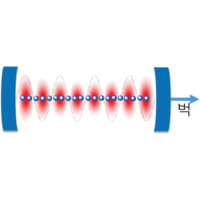
Supercooling of Atoms in an Optical Resonator

Minghui Xu, Simon B. Jäger, S. Schütz, J. Cooper, Giovanna Morigi, and M. J. Holland

Phys. Rev. Lett. 116, 153002 (2016) - Published 15 April, 2016

A proposal to cool a cavity of atoms by mechanically coupling the atoms to the cavity could provide an enhanced cooling rate and lower temperatures than conventional laser cooling methods.

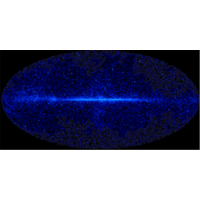
Resolving the Extragalactic γ-Ray Background above 50 GeV with the Fermi Large Area Telescope

M. Ackermann et al.

Phys. Rev. Lett. 116, 151105 (2016) - Published 14 April, 2016

Researchers estimate that blazars produce 86% of the extragalactic gamma-ray background.

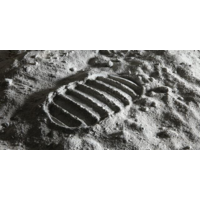
Interstellar Fe60 on the Surface of the Moon

L. Fimiani, D. L. Cook, T. Faestermann, J. M. Gómez-Guzmán, K. Hain, G. Herzog, K. Knie, G. Korschinek, P. Ludwig, J. Park, R. C. Reedy, and G. Rugel

Phys. Rev. Lett. 116, 151104 (2016) - Published 13 April, 2016

Lunar soil samples reveal an unusually high level of radioactive iron, which suggests a supernova in our vicinity within the last few million years.

First Measurement of Electron Neutrino Appearance in NOvA

P. Adamson et al. (NOvA Collaboration)

Phys. Rev. Lett. 116, 151806 (2016) - Published 13 April, 2016

The first results from the NOvA experiment set new constraints on charge-parity violation in neutrinos and on the ordering of neutrino masses.

Sign In to Your Journals Account

Filter

Section

Filter

Article Lookup

Enter a citation