Highlights

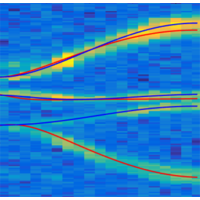
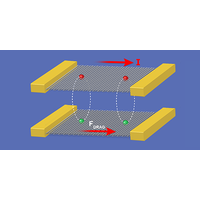
Giant Frictional Drag in Double Bilayer Graphene Heterostructures

Kayoung Lee, Jiamin Xue, David C. Dillen, Kenji Watanabe, Takashi Taniguchi, and Emanuel Tutuc

Phys. Rev. Lett. 117, 046803 (2016) - Published 18 July, 2016

Unusual interactions between charges have been observed in two closely separated graphene bilayers, a promising system in which to create a condensate of electron-hole pairs.

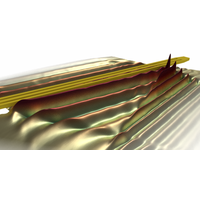
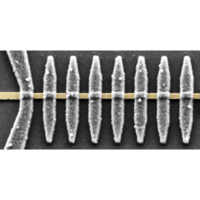
Detection of Zeptojoule Microwave Pulses Using Electrothermal Feedback in Proximity-Induced Josephson Junctions

J. Govenius, R. E. Lake, K. Y. Tan, and M. Möttönen

Phys. Rev. Lett. 117, 030802 (2016) - Published 15 July, 2016

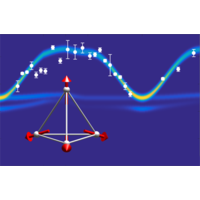
A new technique detects as few as 200 microwave photons at a time by the heat they supply to an electrical circuit.

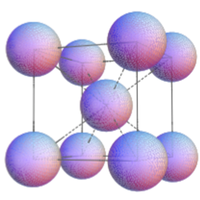
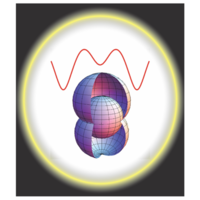
Emergence of a Metallic Quantum Solid Phase in a Rydberg-Dressed Fermi Gas

Wei-Han Li, Tzu-Chi Hsieh, Chung-Yu Mou, and Daw-Wei Wang

Phys. Rev. Lett. 117, 035301 (2016) - Published 14 July, 2016

A metallic state resulting from a charge-density wave instability is theoretically predicted for a Fermi gas of Rydberg atoms with repulsive pair interactions.

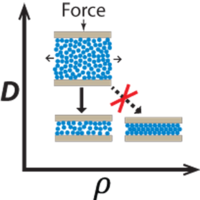
Density and Phase State of a Confined Nonpolar Fluid

Daniel F. Kienle and Tonya L. Kuhl

Phys. Rev. Lett. 117, 036101 (2016) - Published 14 July, 2016

Does it freeze or go glassy? Experiments show that a nonpolar fluid undergoes a glass transition, rather than a freezing transition, when it is confined in very thin channels.

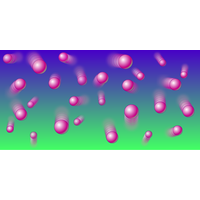
How Far from Equilibrium Is Active Matter?

Étienne Fodor, Cesare Nardini, Michael E. Cates, Julien Tailleur, Paolo Visco, and Frédéric van Wijland

Phys. Rev. Lett. 117, 038103 (2016) - Published 13 July, 2016

An analysis of a popular model for active matter, like bacteria and buffalo herds, defines the conditions under which such systems can be described with the tools of equilibrium statistics.

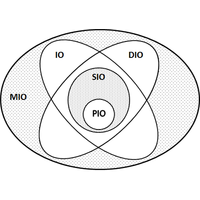
Critical Examination of Incoherent Operations and a Physically Consistent Resource Theory of Quantum Coherence

Eric Chitambar and Gilad Gour

Phys. Rev. Lett. 117, 030401 (2016) - Published 12 July, 2016

A resource theory of quantum coherence is completely characterized, highlighting the theory’s free operations, which are physically inconsistent.

Omnidirectional Measurements of Angle-Resolved Heat Capacity for Complete Detection of Superconducting Gap Structure in the Heavy-Fermion Antiferromagnet UPd2Al3

Yusei Shimizu, Shunichiro Kittaka, Toshiro Sakakibara, Yasumasa Tsutsumi, Takuya Nomoto, Hiroaki Ikeda, Kazushige Machida, Yoshiya Homma, and Dai Aoki

Phys. Rev. Lett. 117, 037001 (2016) - Published 12 July, 2016

The measured heavy electron density of states in the correlated (unconventional) superconductor UPd2Al3 contains horizontal line nodes in the gap symmetry, a signal that the superconducting pairing mechanism could be mediated by magnetic fluctuations.

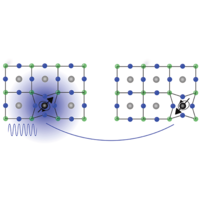
High-Precision Measurement of the Dzyaloshinsky-Moriya Interaction between Two Rare-Earth Ions in a Solid

Cyril Laplane, Emmanuel Zambrini Cruzeiro, Florian Fröwis, Philippe Goldner, and Mikael Afzelius

Phys. Rev. Lett. 117, 037203 (2016) - Published 12 July, 2016

Electron spin resonance measurements on Nd3+ doped single crystals of YVO4 directly reveal the pairwise anti-symmetric exchange interaction known as the Dzyaloshinsky-Moriya interaction.

Snell’s Law for Spin Waves

J. Stigloher, M. Decker, H. S. Körner, K. Tanabe, T. Moriyama, T. Taniguchi, H. Hata, M. Madami, G. Gubbiotti, K. Kobayashi, T. Ono, and C. H. Back

Phys. Rev. Lett. 117, 037204 (2016) - Published 12 July, 2016

Researchers have verified experimentally that the reflection and refraction of spin waves at an interface follow a Snell’s-like law.

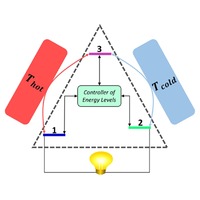
Adaptive Heat Engine

A. E. Allahverdyan, S. G. Babajanyan, N. H. Martirosyan, and A. V. Melkikh

Phys. Rev. Lett. 117, 030601 (2016) - Published 11 July, 2016

A model is proposed for an adaptive heat engine that modifies its internal structure in order to remain operative when the external conditions (like the temperatures of the thermal baths) change.

Using Inertial Fusion Implosions to Measure the T+He3 Fusion Cross Section at Nucleosynthesis-Relevant Energies

A. B. Zylstra, H. W. Herrmann, M. Gatu Johnson, Y. H. Kim, J. A. Frenje, G. Hale, C. K. Li, M. Rubery, M. Paris, A. Bacher, C. R. Brune, C. Forrest, V. Yu. Glebov, R. Janezic, D. McNabb, A. Nikroo, J. Pino, T. C. Sangster, F. H. Séguin, W. Seka, H. Sio, C. Stoeckl, and R. D. Petrasso

Phys. Rev. Lett. 117, 035002 (2016) - Published 11 July, 2016

Experiments using high-energy-density laboratory plasmas at conditions comparable to astrophysical systems show that the T+3He fusion reaction is not responsible for the high levels of 6Li observed in primordial material.

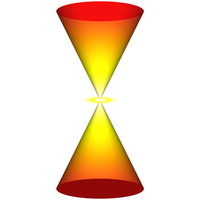
All-in–all-Out Magnetic Order and Propagating Spin Waves in Sm2Ir2O7

C. Donnerer, M. C. Rahn, M. Moretti Sala, J. G. Vale, D. Pincini, J. Strempfer, M. Krisch, D. Prabhakaran, A. T. Boothroyd, and D. F. McMorrow

Phys. Rev. Lett. 117, 037201 (2016) - Published 11 July, 2016

Resonant x-ray scattering experiments show that a pyrochlore iridate exhibits all-in all-out ordering—the moments either all point towards the center of the crystal unit cell, or away from it—which is a prerequisite for stabilizing a Weyl semimetal phase. This suggests that some pyrochlore iridates may behave as Weyl semimetals.

Manipulation of Nanoscale Domain Switching Using an Electron Beam with Omnidirectional Electric Field Distribution

Zibin Chen, Xiaolin Wang, Simon P. Ringer, and Xiaozhou Liao

Phys. Rev. Lett. 117, 027601 (2016) - Published 8 July, 2016

Electrons hitting a ferroelectric material can produce a single digital bit 100 times smaller than the bits in today’s commercial memories.

Evidence for a Bs0π± State

V. M. Abazov et al. (D0 Collaboration)

Phys. Rev. Lett. 117, 022003 (2016) - Published 7 July, 2016

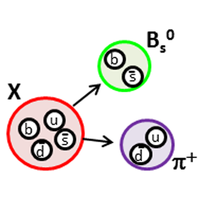
The D0 collaboration reports evidence of an exotic four-quark state, which would be the first ever consisting of four different flavors: up, down, strange, and bottom.

Giant Optical Polarization Rotation Induced by Spin-Orbit Coupling in Polarons

Blai Casals, Rafael Cichelero, Pablo García Fernández, Javier Junquera, David Pesquera, Mariano Campoy-Quiles, Ingrid C. Infante, Florencio Sánchez, Josep Fontcuberta, and Gervasi Herranz

Phys. Rev. Lett. 117, 026401 (2016) - Published 7 July, 2016

A surprisingly large magneto-optical response occurs when mobile electrons in a cooled material become trapped by their interaction with the surrounding lattice.

Two-Gap Superconductivity in LaNiGa2 with Nonunitary Triplet Pairing and Even Parity Gap Symmetry

Z. F. Weng, J. L. Zhang, M. Smidman, T. Shang, J. Quintanilla, J. F. Annett, M. Nicklas, G. M. Pang, L. Jiao, W. B. Jiang, Y. Chen, F. Steglich, and H. Q. Yuan

Phys. Rev. Lett. 117, 027001 (2016) - Published 7 July, 2016

A triplet pairing state exists between electrons with even parity on different orbitals in superconductors with two nodeless gaps.

Evolution of Porosity and Channelization of an Erosive Medium Driven by Fluid Flow

Arshad Kudrolli and Xavier Clotet

Phys. Rev. Lett. 117, 028001 (2016) - Published 7 July, 2016

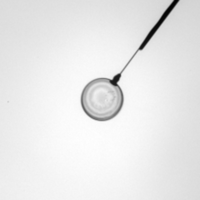
A transparent box with a thin layer of glass beads allows optical tracking of dislodging, deposition, and erosion as water travels through the system. Channels develop underground and grow towards the surface due to erosion.

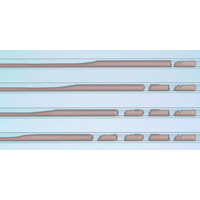
Frictional Fluid Dynamics and Plug Formation in Multiphase Millifluidic Flow

Guillaume Dumazer, Bjørnar Sandnes, Monem Ayaz, Knut Jørgen Måløy, and Eirik Grude Flekkøy

Phys. Rev. Lett. 117, 028002 (2016) - Published 7 July, 2016

Experiments on grain-water-air mixtures flowing through a tube find that frictional forces between the grains and the tube lead to the creation of a series of plugs.

Perfect Quantum Cosmological Bounce

Steffen Gielen and Neil Turok

Phys. Rev. Lett. 117, 021301 (2016) - Published 6 July, 2016

One theory for the formation of the universe replaces the singularity of the big bang with a smooth quantum “bounce”. This theory is extended to account for the passage of density variations and gravitational waves across the bounce.

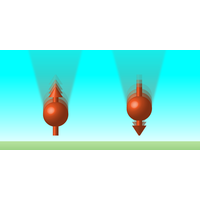
Test of the Universality of Free Fall with Atoms in Different Spin Orientations

Xiao-Chun Duan, Xiao-Bing Deng, Min-Kang Zhou, Ke Zhang, Wen-Jie Xu, Feng Xiong, Yao-Yao Xu, Cheng-Gang Shao, Jun Luo, and Zhong-Kun Hu

Phys. Rev. Lett. 117, 023001 (2016) - Published 6 July, 2016
Atom interferometry shows that the free-fall acceleration of rubidium atoms of opposite spin orientation is the same to within 1 part in 10 million.

Sign In to Your Journals Account

Filter

Section

Filter

Article Lookup

Enter a citation