Highlights

Model-Independent Evidence for J/ψp Contributions to Λb0→J/ψpK− Decays

R. Aaij et al. (LHCb Collaboration)

Phys. Rev. Lett. 117, 082002 (2016) - Published 18 August, 2016

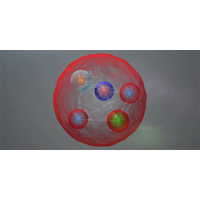
New results from the LHCb experiment confirm the 2015 discovery that quarks can combine into groups of five.

Evidence for Exotic Hadron Contributions to Λb0→J/ψpπ− Decays

R. Aaij et al. (LHCb Collaboration)

Phys. Rev. Lett. 117, 082003 (2016) - Published 18 August, 2016

New results from the LHCb experiment confirm the 2015 discovery that quarks can combine into groups of five.

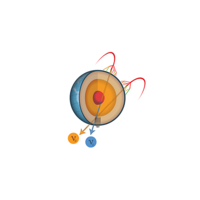
Search for Majorana Neutrinos Near the Inverted Mass Hierarchy Region with KamLAND-Zen

A. Gando et al. (KamLAND-Zen Collaboration)

Phys. Rev. Lett. 117, 082503 (2016) - Published 16 August, 2016

The KamLAND-Zen collaboration has run the most sensitive search to date for a radioactive decay that could reveal whether neutrinos are Majorana fermions.

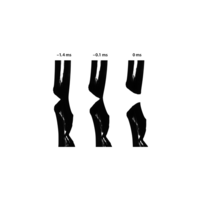
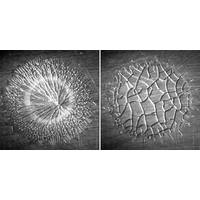
Multiple Cracks Propagate Simultaneously in Polymer Liquids in Tension

Qian Huang, Nicolas J. Alvarez, Aamir Shabbir, and Ole Hassager

Phys. Rev. Lett. 117, 087801 (2016) - Published 15 August, 2016

High-speed imaging shows that fluids can break like brittle glass under the right conditions.

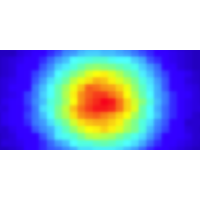
Preparation of Ultracold Atom Clouds at the Shot Noise Level

M. Gajdacz, A. J. Hilliard, M. A. Kristensen, P. L. Pedersen, C. Klempt, J. J. Arlt, and J. F. Sherson

Phys. Rev. Lett. 117, 073604 (2016) - Published 12 August, 2016

A new technique allows researchers to specify the number of atoms in an ultracold cloud (in the millions) and then to reproduce that same number in repeated experiments.

Decoupling Edge Versus Bulk Conductance in the Trivial Regime of an InAs/GaSb Double Quantum Well Using Corbino Ring Geometry

Binh-Minh Nguyen, Andrey A. Kiselev, Ramsey Noah, Wei Yi, Fanming Qu, Arjan J. A. Beukman, Folkert K. de Vries, Jasper van Veen, Stevan Nadj-Perge, Leo P. Kouwenhoven, Morten Kjaergaard, Henri J. Suominen, Fabrizio Nichele, Charles M. Marcus, Michael J. Manfra, and Marko Sokolich

Phys. Rev. Lett. 117, 077701 (2016) - Published 12 August, 2016

A semiconductor quantum well with a concentric geometry enables experimentalists to decouple bulk and edge conduction channels.

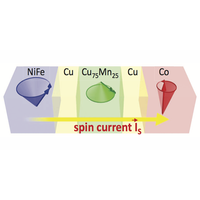
Direct Detection of Pure ac Spin Current by X-Ray Pump-Probe Measurements

J. Li, L. R. Shelford, P. Shafer, A. Tan, J. X. Deng, P. S. Keatley, C. Hwang, E. Arenholz, G. van der Laan, R. J. Hicken, and Z. Q. Qiu

Phys. Rev. Lett. 117, 076602 (2016) - Published 11 August, 2016

X-ray pulses have been used to directly observe the spin current flowing in a metal.

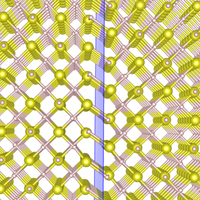
Possible “Magnéli” Phases and Self-Alloying in the Superconducting Sulfur Hydride

Ryosuke Akashi, Wataru Sano, Ryotaro Arita, and Shinji Tsuneyuki

Phys. Rev. Lett. 117, 075503 (2016) - Published 10 August, 2016

The emergence of an infinite number of metastable crystal phases may play a role in the high-pressure superconducting phase transition of sulfur hydride according to new ab initio calculations.

Frozen Impacted Drop: From Fragmentation to Hierarchical Crack Patterns

Elisabeth Ghabache, Christophe Josserand, and Thomas Séon

Phys. Rev. Lett. 117, 074501 (2016) - Published 9 August, 2016

Water droplets impacting a cold surface exhibit a variety of fracture patterns depending on the temperature of the surface.

Searches for Sterile Neutrinos with the IceCube Detector

M. G. Aartsen et al. (IceCube Collaboration)

Phys. Rev. Lett. 117, 071801 (2016) - Published 8 August, 2016

A search for sterile neutrinos with the IceCube detector has found no evidence for the hypothetical particles, significantly narrowing the range of masses that a new kind of neutrino could possibly have.

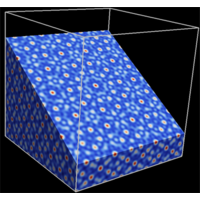
Three-Dimensional Icosahedral Phase Field Quasicrystal

P. Subramanian, A. J. Archer, E. Knobloch, and A. M. Rucklidge

Phys. Rev. Lett. 117, 075501 (2016) - Published 8 August, 2016

A 3D phase field crystal model is used to explore the formation and stability of icosahedral quasicrystals. The mechanisms that stabilize 2D quasicrystals also play a role in this 3D system.

Detecting Gravitational-Wave Memory with LIGO: Implications of GW150914

Paul D. Lasky, Eric Thrane, Yuri Levin, Jonathan Blackman, and Yanbei Chen

Phys. Rev. Lett. 117, 061102 (2016) - Published 5 August, 2016

A theoretical analysis suggests that advanced LIGO may be able to detect gravitational wave memory–permanent distortion of spacetime due to nonlinear effects predicted by general relativity–when it operates at its design sensitivity.

Measurement of the CP Asymmetry in Bs0−B¯s0 Mixing

R. Aaij et al. (LHCb Collaboration)

Phys. Rev. Lett. 117, 061803 (2016) - Published 5 August, 2016

The rate difference between two CP-conjugate decays of bottom-strange mesons shows no sign of deviation from the Standard Model, in contrast to a previous hint.

Microwave Realization of the Gaussian Symplectic Ensemble

A. Rehemanjiang, M. Allgaier, C. H. Joyner, S. Müller, M. Sieber, U. Kuhl, and H.-J. Stöckmann

Phys. Rev. Lett. 117, 064101 (2016) - Published 5 August, 2016

A circuit of microwave cavities exhibiting chaotic dynamics and antiunitary symmetry is demonstrated. This is the first experimental observation of a Gaussian symplectic ensemble, one of the three classical matrix ensembles.

Picosecond Electric-Field-Induced Threshold Switching in Phase-Change Materials

Peter Zalden, Michael J. Shu, Frank Chen, Xiaoxi Wu, Yi Zhu, Haidan Wen, Scott Johnston, Zhi-Xun Shen, Patrick Landreman, Mark Brongersma, Scott W. Fong, H.-S. Philip Wong, Meng-Ju Sher, Peter Jost, Matthias Kaes, Martin Salinga, Alexander von Hoegen, Matthias Wuttig, and Aaron M. Lindenberg

Phys. Rev. Lett. 117, 067601 (2016) - Published 5 August, 2016

New experiments show that picosecond pulses of light can effectively switch off the resistance in phase-change materials that are used for storing computer information.

Direct Measurement of Topological Numbers with Spins in Diamond

Fei Kong, Chenyong Ju, Ying Liu, Chao Lei, Mengqi Wang, Xi Kong, Pengfei Wang, Pu Huang, Zhaokai Li, Fazhan Shi, Liang Jiang, and Jiangfeng Du

Phys. Rev. Lett. 117, 060503 (2016) - Published 4 August, 2016

The topological phase transitions of a quantum wire are simulated with a single diamond nitrogen vacancy center. The results provide a direct measurement of the transition’s topological number.

High-Fidelity Quantum Logic Gates Using Trapped-Ion Hyperfine Qubits

C. J. Ballance, T. P. Harty, N. M. Linke, M. A. Sepiol, and D. M. Lucas

Phys. Rev. Lett. 117, 060504 (2016) - Published 4 August, 2016

The highest two-qubit gate fidelities have been demonstrated in two experiments that use scalable trapped ion platforms.

High-Fidelity Universal Gate Set for Be9+ Ion Qubits

J. P. Gaebler, T. R. Tan, Y. Lin, Y. Wan, R. Bowler, A. C. Keith, S. Glancy, K. Coakley, E. Knill, D. Leibfried, and D. J. Wineland

Phys. Rev. Lett. 117, 060505 (2016) - Published 4 August, 2016

The highest two-qubit gate fidelities have been demonstrated in two experiments that use scalable trapped ion platforms.

Cotunneling Drag Effect in Coulomb-Coupled Quantum Dots

A. J. Keller, J. S. Lim, David Sánchez, Rosa López, S. Amasha, J. A. Katine, Hadas Shtrikman, and D. Goldhaber-Gordon

Phys. Rev. Lett. 117, 066602 (2016) - Published 4 August, 2016

Electric current passing through a quantum dot can generate current in a nearby dot through a coordinated tunneling mechanism.

Primordial Black Hole Scenario for the Gravitational-Wave Event GW150914

Misao Sasaki, Teruaki Suyama, Takahiro Tanaka, and Shuichiro Yokoyama

Phys. Rev. Lett. 117, 061101 (2016) - Published 2 August, 2016
A theoretical analysis examines the possibility that the gravitational wave signal (GW150914) detected by LIGO was due to the coalescence of primordial black holes created by the extremely dense matter present in the early Universe.

Sign In to Your Journals Account

Filter

Section

Filter

Article Lookup

Enter a citation