Highlights

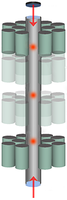
Light-Mediated Collective Atomic Motion in an Optical Lattice Coupled to a Membrane

Aline Vochezer, Tobias Kampschulte, Klemens Hammerer, and Philipp Treutlein

Phys. Rev. Lett. 120, 073602 (2018) - Published 14 February, 2018

By coupling atoms in an optical lattice to a thin elastic membrane, researchers have demonstrated a dynamic instability that is evidence of collective atomic motion.

Observation of Hopping and Blockade of Bosons in a Trapped Ion Spin Chain

S. Debnath, N. M. Linke, S.-T. Wang, C. Figgatt, K. A. Landsman, L.-M. Duan, and C. Monroe

Phys. Rev. Lett. 120, 073001 (2018) - Published 12 February, 2018

A programmable trapped-ion quantum computer performs a quantum simulation of a bosonic system.

Coherent Bichromatic Force Deflection of Molecules

Ivan Kozyryev, Louis Baum, Leland Aldridge, Phelan Yu, Edward E. Eyler, and John M. Doyle

Phys. Rev. Lett. 120, 063205 (2018) - Published 8 February, 2018

Optical pulses from bichromatic lasers are used to control the temperature and motion of strontium monohydroxide molecules, a step towards trapping molecules.

Electron and Nucleon Localization Functions of Oganesson: Approaching the Thomas-Fermi Limit

Paul Jerabek, Bastian Schuetrumpf, Peter Schwerdtfeger, and Witold Nazarewicz

Phys. Rev. Lett. 120, 053001 (2018) - Published 31 January, 2018

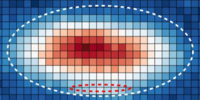
Calculations of the structure in oganesson—the element with the highest atomic number—reveal a uniform, gas-like distribution of its electrons and nucleons.

Vibrational Energy Redistribution in a Gas-Surface Encounter: State-to-State Scattering of CH4 from Ni(111)

Jörn Werdecker, Maarten E. van Reijzen, Bo-Jung Chen, and Rainer D. Beck

Phys. Rev. Lett. 120, 053402 (2018) - Published 31 January, 2018

A highly efficient mechanism for vibrational energy redistribution during surface scattering of methane molecules is observed using a new laser tagging technique.

Direct Characterization of Ultrafast Energy-Time Entangled Photon Pairs

Jean-Philippe W. MacLean, John M. Donohue, and Kevin J. Resch

Phys. Rev. Lett. 120, 053601 (2018) - Published 30 January, 2018

A new detection system directly observes a type of entanglement in which a photon’s energy is correlated with the time its partner is detected.

He3−Xe129 Comagnetometery using Rb87 Detection and Decoupling

M. E. Limes, D. Sheng, and M. V. Romalis

Phys. Rev. Lett. 120, 033401 (2018) - Published 16 January, 2018

An enhanced version of a magnetometer based on atomic spins could be used to search for theoretically predicted exotic fields with ultrahigh sensitivity.

Sorting Photons by Radial Quantum Number

Yiyu Zhou, Mohammad Mirhosseini, Dongzhi Fu, Jiapeng Zhao, Seyed Mohammad Hashemi Rafsanjani, Alan E. Willner, and Robert W. Boyd

Phys. Rev. Lett. 119, 263602 (2017) - Published 28 December, 2017

A new method groups photons based on the radial component of their angular momentum.

Atom Interferometry with the Sr Optical Clock Transition

Liang Hu, Nicola Poli, Leonardo Salvi, and Guglielmo M. Tino

Phys. Rev. Lett. 119, 263601 (2017) - Published 27 December, 2017

A single-photon interaction atom interferometer is demonstrated using the ultra-narrow optical clock transition of strontium atoms.

Twisted-Light–Ion Interaction: The Role of Longitudinal Fields

G. F. Quinteiro, Ferdinand Schmidt-Kaler, and Christian T. Schmiegelow

Phys. Rev. Lett. 119, 253203 (2017) - Published 20 December, 2017

The paraxial approximation of light propagation breaks down for strongly inhomogeneous or oddly-shaped light fields, making it hard to fit data with theory. But, including longitudinal components in the theory allows these light beams to be described accurately.

Canceling the Gravity Gradient Phase Shift in Atom Interferometry

G. D’Amico, G. Rosi, S. Zhan, L. Cacciapuoti, M. Fattori, and G. M. Tino

Phys. Rev. Lett. 119, 253201 (2017) - Published 19 December, 2017

A method is demonstrated that compensates for gravity gradients in Raman-pulse atom interferometers.

Ultrastable Silicon Cavity in a Continuously Operating Closed-Cycle Cryostat at 4 K

W. Zhang, J. M. Robinson, L. Sonderhouse, E. Oelker, C. Benko, J. L. Hall, T. Legero, D. G. Matei, F. Riehle, U. Sterr, and J. Ye

Phys. Rev. Lett. 119, 243601 (2017) - Published 15 December, 2017

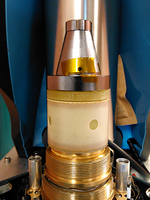
A specially-designed cryostat allows a silicon cavity operating at 4K to reach an instability ten times more stable and a linewith ten thousand times narrower than previous sub-10K systems.

Observation of a Degenerate Fermi Gas Trapped by a Bose-Einstein Condensate

B. J. DeSalvo, Krutik Patel, Jacob Johansen, and Cheng Chin

Phys. Rev. Lett. 119, 233401 (2017) - Published 7 December, 2017

A Bose-Einstein condensate can act as a stable trap for a gas of fermions.

Observation of Broad d-Wave Feshbach Resonances with a Triplet Structure

Yue Cui, Chuyang Shen, Min Deng, Shen Dong, Cheng Chen, Rong Lü, Bo Gao, Meng Khoon Tey, and Li You

Phys. Rev. Lett. 119, 203402 (2017) - Published 13 November, 2017

d-wave interactions like those thought to underlie unconventional superconductivity have been implemented in a cold-atom gas.

Photonic Counterparts of Cooper Pairs

André Saraiva, Filomeno S. de Aguiar Júnior, Reinaldo de Melo e Souza, Arthur Patrocínio Pena, Carlos H. Monken, Marcelo F. Santos, Belita Koiller, and Ado Jorio

Phys. Rev. Lett. 119, 193603 (2017) - Published 9 November, 2017

A pairing of photons—similar to the pairing of electrons in superconductors—can occur when light scatters in a transparent medium.

Cross-Kerr Nonlinearity for Phonon Counting

Shiqian Ding, Gleb Maslennikov, Roland Hablützel, and Dzmitry Matsukevich

Phys. Rev. Lett. 119, 193602 (2017) - Published 8 November, 2017

The motional states of trapped ions are nonlinearly coupled through the anharmonicity of the inter-ion Coublomb interaction.

Detection of Microwave Transitions between Ortho and Para States in a Free Isolated Molecule

Hideto Kanamori, Zeinab. T. Dehghani, Asao Mizoguchi, and Yasuki Endo

Phys. Rev. Lett. 119, 173401 (2017) - Published 25 October, 2017

Microwave emission from a simple molecule reveals a highly forbidden transition between two nuclear spin states.

Two-Particle Four-Mode Interferometer for Atoms

Pierre Dussarrat, Maxime Perrier, Almazbek Imanaliev, Raphael Lopes, Alain Aspect, Marc Cheneau, Denis Boiron, and Christoph I. Westbrook

Phys. Rev. Lett. 119, 173202 (2017) - Published 24 October, 2017

A prototype interferometer for massive particles is demonstrated. Such a device could enable Bell test measurements on atoms.

Observation of Optomechanical Strain in a Cold Atomic Cloud

Noam Matzliah, Hagai Edri, Asif Sinay, Roee Ozeri, and Nir Davidson

Phys. Rev. Lett. 119, 163201 (2017) - Published 19 October, 2017

Laser light can stretch and squeeze a whole cloud of atoms with a collective force.

Spectroscopy and Directed Transport of Topological Solitons in Crystals of Trapped Ions

J. Brox, P. Kiefer, M. Bujak, T. Schaetz, and H. Landa

Phys. Rev. Lett. 119, 153602 (2017) - Published 12 October, 2017

Researchers have directed the motion of a domain-wall-like topological defect through a crystal of trapped ions.

Sign In to Your Journals Account

Filter

Section

Filter

Article Lookup

Enter a citation