Highlights

Dynamic Substrate for the Physical Encoding of Sensory Information in Bat Biosonar

Rolf Müller, Anupam K. Gupta, Hongxiao Zhu, Mittu Pannala, Uzair S. Gillani, Yanqing Fu, Philip Caspers, and John R. Buck

Phys. Rev. Lett. 118, 158102 (2017) - Published 11 April, 2017

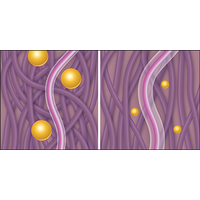
The directional sensitivity of bat biosonar is improved by the wiggling of structures on the bat’s nose and ears.

Fundamental Costs in the Production and Destruction of Persistent Polymer Copies

Thomas E. Ouldridge and Pieter Rein ten Wolde

Phys. Rev. Lett. 118, 158103 (2017) - Published 11 April, 2017

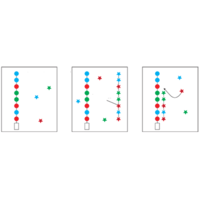
A lower bound is derived for the energetic cost of making polymer copies, a process that occurs during DNA replication and gene expression.

Combined Analysis of Neutrino and Antineutrino Oscillations at T2K

K. Abe et al. (T2K Collaboration)

Phys. Rev. Lett. 118, 151801 (2017) - Published 10 April, 2017

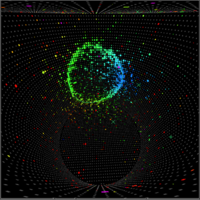
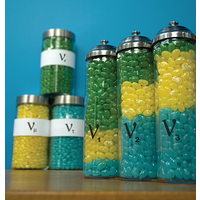
A pair of long-baseline neutrino oscillation experiments, T2K and NOvA, probe whether μ and τ neutrinos maximally mix, as experiments have heretofore shown. T2K’s data is consistent with maximal mixing, but NOvA’s data disfavors it.

Measurement of the Neutrino Mixing Angle θ23 in NOvA

P. Adamson et al. (NOvA Collaboration)

Phys. Rev. Lett. 118, 151802 (2017) - Published 10 April, 2017

A pair of long-baseline neutrino oscillation experiments, T2K and NOvA, probe whether μ and τ neutrinos maximally mix, as experiments have heretofore shown. T2K’s data is consistent with maximal mixing, but NOvA’s data disfavors it.

Observation of Genuine Three-Photon Interference

Sascha Agne, Thomas Kauten, Jeongwan Jin, Evan Meyer-Scott, Jeff Z. Salvail, Deny R. Hamel, Kevin J. Resch, Gregor Weihs, and Thomas Jennewein

Phys. Rev. Lett. 118, 153602 (2017) - Published 10 April, 2017

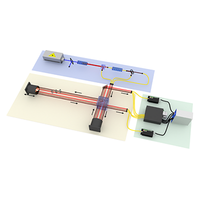
Two independent groups have provided the first experimental demonstration of genuine three-photon interference.

Distinguishability and Many-Particle Interference

Adrian J. Menssen, Alex E. Jones, Benjamin J. Metcalf, Malte C. Tichy, Stefanie Barz, W. Steven Kolthammer, and Ian A. Walmsley

Phys. Rev. Lett. 118, 153603 (2017) - Published 10 April, 2017

Two independent groups have provided the first experimental demonstration of genuine three-photon interference.

Negative-Mass Hydrodynamics in a Spin-Orbit–Coupled Bose-Einstein Condensate

M. A. Khamehchi, Khalid Hossain, M. E. Mossman, Yongping Zhang, Th. Busch, Michael McNeil Forbes, and P. Engels

Phys. Rev. Lett. 118, 155301 (2017) - Published 10 April, 2017

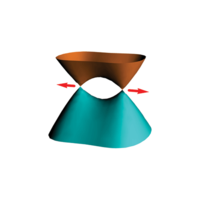
Measurements of an expanding spin-orbit coupled Bose-Einstein condensate indicate that its dispersion features a region of negative effective mass.

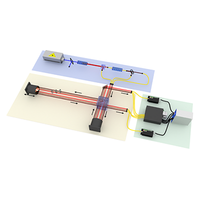
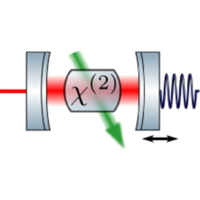
Beating the Standard Sensitivity-Bandwidth Limit of Cavity-Enhanced Interferometers with Internal Squeezed-Light Generation

M. Korobko, L. Kleybolte, S. Ast, H. Miao, Y. Chen, and R. Schnabel

Phys. Rev. Lett. 118, 143601 (2017) - Published 7 April, 2017

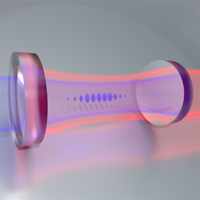
A 36% increase in the sensitivity of an interferometer is demonstrated using internal squeezing—non-classical correlations of a light field—inside the interferometer’s cavity.

Wind Generated Rogue Waves in an Annular Wave Flume

A. Toffoli, D. Proment, H. Salman, J. Monbaliu, F. Frascoli, M. Dafilis, E. Stramignoni, R. Forza, M. Manfrin, and M. Onorato

Phys. Rev. Lett. 118, 144503 (2017) - Published 7 April, 2017

Wind-generated waves in a ring-shaped water tank can spontaneously grow into single behemoth waves, mimicking a poorly understood ocean phenomenon.

Demonstration of Multisetting One-Way Einstein-Podolsky-Rosen Steering in Two-Qubit Systems

Ya Xiao, Xiang-Jun Ye, Kai Sun, Jin-Shi Xu, Chuan-Feng Li, and Guang-Can Guo

Phys. Rev. Lett. 118, 140404 (2017) - Published 5 April, 2017

One-way EPR steering—the ability of one quantum system to remotely affect another’s state through local measurements—is experimentally demonstrated for two qubits.

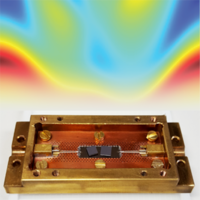
Coherent Coupling of Remote Spin Ensembles via a Cavity Bus

T. Astner, S. Nevlacsil, N. Peterschofsky, A. Angerer, S. Rotter, S. Putz, J. Schmiedmayer, and J. Majer

Phys. Rev. Lett. 118, 140502 (2017) - Published 5 April, 2017

Two macroscopically distinct nitrogen-vacancy spin ensembles are coherently coupled using a superconducting transmission line resonator.

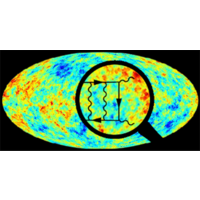
Strong Constraints on Self-Interacting Dark Matter with Light Mediators

Torsten Bringmann, Felix Kahlhoefer, Kai Schmidt-Hoberg, and Parampreet Walia

Phys. Rev. Lett. 118, 141802 (2017) - Published 5 April, 2017

Models of dark matter with velocity-dependent self-interactions are strongly constrained or ruled out by data from cosmic microwave background radiation and other detection probes.

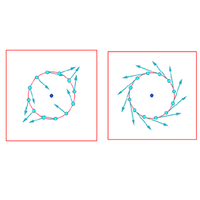
Diffused Vorticity and Moment of Inertia of a Spin-Orbit Coupled Bose-Einstein Condensate

Sandro Stringari

Phys. Rev. Lett. 118, 145302 (2017) - Published 5 April, 2017

A striking reduction in the superfluid density of a Bose-Einstein condensate with spin-orbit coupling at zero temperature, is observed in a hydrodynamic theory of the system. This result violates the established theory of superfluid density behavior.

Evidence for Anomalous Dynamic Heterogeneities in Isostatic Supercooled Liquids

M. Micoulaut and M Bauchy

Phys. Rev. Lett. 118, 145502 (2017) - Published 5 April, 2017

The glass transition of a liquid is approached from high and low temperature directions via simulations, showing anomalies in the correlation lengths of the glass.

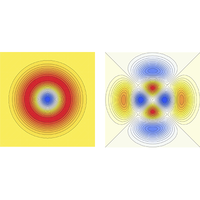
Generalized Pseudopotentials for the Anisotropic Fractional Quantum Hall Effect

Bo Yang, Zi-Xiang Hu, Ching Hua Lee, and Z. Papić

Phys. Rev. Lett. 118, 146403 (2017) - Published 5 April, 2017

By studying the geometries that lack rotational symmetry, theorists quantitatively describe quantum Hall scenarios such as tilted magnetic fields and nematic states.

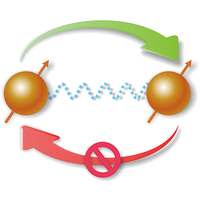
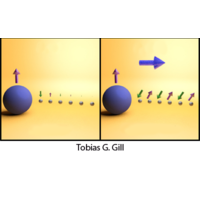
Gating Classical Information Flow via Equilibrium Quantum Phase Transitions

Leonardo Banchi, Joaquín Fernández-Rossier, Cyrus F. Hirjibehedin, and Sougato Bose

Phys. Rev. Lett. 118, 147203 (2017) - Published 5 April, 2017

The flow of information through a wire of coupled magnetic atoms can be shut off by tuning the intrinsic quantum fluctuations in the system with a magnetic field.

Small Particle Driven Chain Disentanglements in Polymer Nanocomposites

Erkan Senses, Siyam M. Ansar, Christopher L. Kitchens, Yimin Mao, Suresh Narayanan, Bharath Natarajan, and Antonio Faraone

Phys. Rev. Lett. 118, 147801 (2017) - Published 5 April, 2017

Adding nanoparticles to molten polymer disentangles its constituent molecular chains, allowing them to flow more easily.

Elemental Topological Dirac Semimetal: α-Sn on InSb(111)

Cai-Zhi Xu, Yang-Hao Chan, Yige Chen, Peng Chen, Xiaoxiong Wang, Catherine Dejoie, Man-Hong Wong, Joseph Andrew Hlevyack, Hyejin Ryu, Hae-Young Kee, Nobumichi Tamura, Mei-Yin Chou, Zahid Hussain, Sung-Kwan Mo, and Tai-Chang Chiang

Phys. Rev. Lett. 118, 146402 (2017) - Published 4 April, 2017

By applying strain to a form of tin, researchers make it behave like a 3D analog of graphene.

Bell Correlations in Spin-Squeezed States of 500 000 Atoms

Nils J. Engelsen, Rajiv Krishnakumar, Onur Hosten, and Mark A. Kasevich

Phys. Rev. Lett. 118, 140401 (2017) - Published 3 April, 2017

Nonlocal correlations implied by quantum mechanics have been achieved to high statistical significance in an ensemble of half a million atoms, an increase by three orders of magnitude over previous results.

Two-Photon Blockade in an Atom-Driven Cavity QED System

Christoph Hamsen, Karl Nicolas Tolazzi, Tatjana Wilk, and Gerhard Rempe

Phys. Rev. Lett. 118, 133604 (2017) - Published 31 March, 2017

A photon low pass filter is realized using a single atom strongly coupled to an optical cavity.

Sign In to Your Journals Account

Filter

Section

Filter

Article Lookup

Enter a citation