Highlights

Charge-Induced Force Noise on Free-Falling Test Masses: Results from LISA Pathfinder

M. Armano et al. (LISA Pathfinder Collaboration)

Phys. Rev. Lett. 118, 171101 (2017) - Published 26 April, 2017

Measurements of electrostatic forces on free-falling test masses–2 kg metal cubes–are carried out for the first time in an environment constructed for space-based gravitational wave detectors (a spacecraft 1.5 million km away from Earth).

Realization of a Cascaded Quantum System: Heralded Absorption of a Single Photon Qubit by a Single-Electron Charged Quantum Dot

Aymeric Delteil, Zhe Sun, Stefan Fält, and Atac Imamoğlu

Phys. Rev. Lett. 118, 177401 (2017) - Published 25 April, 2017

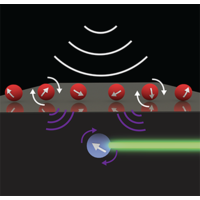
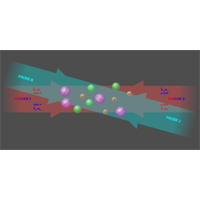
Researchers have transferred quantum information from one quantum dot to another dot 5 m away using photonic qubits as the relay.

Sisyphus Laser Cooling of a Polyatomic Molecule

Ivan Kozyryev, Louis Baum, Kyle Matsuda, Benjamin L. Augenbraun, Loic Anderegg, Alexander P. Sedlack, and John M. Doyle

Phys. Rev. Lett. 118, 173201 (2017) - Published 24 April, 2017

The successful laser cooling of a triatomic molecule paves the way towards the study of ultracold polyatomic molecules.

Mass-Discrepancy Acceleration Relation: A Natural Outcome of Galaxy Formation in Cold Dark Matter Halos

Aaron D. Ludlow, Alejandro Benítez-Llambay, Matthieu Schaller, Tom Theuns, Carlos S. Frenk, Richard Bower, Joop Schaye, Robert A. Crain, Julio F. Navarro, Azadeh Fattahi, and Kyle A. Oman

Phys. Rev. Lett. 118, 161103 (2017) - Published 21 April, 2017

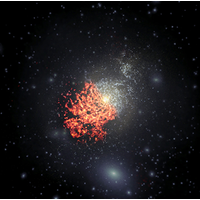
Analysis of the acceleration profiles of galaxies identified in simulations of a cold dark matter universe confirms a previous finding that total acceleration correlates strongly with the baryonic acceleration in rotationally supported galaxies.

Detector-Independent Verification of Quantum Light

J. Sperling, W. R. Clements, A. Eckstein, M. Moore, J. J. Renema, W. S. Kolthammer, S. W. Nam, A. Lita, T. Gerrits, W. Vogel, G. S. Agarwal, and I. A. Walmsley

Phys. Rev. Lett. 118, 163602 (2017) - Published 21 April, 2017

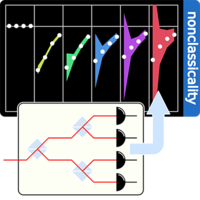
Criteria are formulated and experimentally verified for optical measurement schemes that probe nonclassical properties of light and are independent of the detector architecture used.

Spin-Hall Voltage over a Large Length Scale in Bulk Germanium

F. Bottegoni, C. Zucchetti, S. Dal Conte, J. Frigerio, E. Carpene, C. Vergnaud, M. Jamet, G. Isella, F. Ciccacci, G. Cerullo, and M. Finazzi

Phys. Rev. Lett. 118, 167402 (2017) - Published 21 April, 2017

Germanium produces a surprisingly large separation of electron spins in response to electric current—good news for spin-based devices, since germanium is highly compatible with silicon.

Black Hole Spectroscopy with Coherent Mode Stacking

Huan Yang, Kent Yagi, Jonathan Blackman, Luis Lehner, Vasileios Paschalidis, Frans Pretorius, and Nicolás Yunes

Phys. Rev. Lett. 118, 161101 (2017) - Published 20 April, 2017

Stacking up gravitational-wave “ringdown” signals from a set of black hole mergers increases the sensitivity of the signals to black hole properties.

Multifaceted Quadruplet of Low-Lying Spin-Zero States in Ni66: Emergence of Shape Isomerism in Light Nuclei

S. Leoni et al.

Phys. Rev. Lett. 118, 162502 (2017) - Published 20 April, 2017

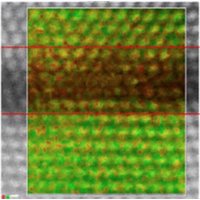
Shape isomers are measured in 66Ni, the lightest nuclei to date in which this behavior has been observed.

Emergence of Huge Negative Spin-Transfer Torque in Atomically Thin Co layers

Soong-Geun Je, Sang-Cheol Yoo, Joo-Sung Kim, Yong-Keun Park, Min-Ho Park, Joon Moon, Byoung-Chul Min, and Sug-Bong Choe

Phys. Rev. Lett. 118, 167205 (2017) - Published 20 April, 2017

Experiments on ultrathin magnetic films show that spin-transfer torque has a much larger effect on spin transport than previously thought. This finding indicates a new way to manipulate magnetic domain walls in these materials.

Neutron Generation by Laser-Driven Spherically Convergent Plasma Fusion

G. Ren, J. Yan, J. Liu, K. Lan, Y. H. Chen, W. Y. Huo, Z. Fan, X. Zhang, J. Zheng, Z. Chen, W. Jiang, L. Chen, Q. Tang, Z. Yuan, F. Wang, S. Jiang, Y. Ding, W. Zhang, and X. T. He

Phys. Rev. Lett. 118, 165001 (2017) - Published 19 April, 2017

A new laser-driven fusion method could lead to a robust and efficient way to generate neutrons for use in materials science, geology, and other fields.

Environmentally Mediated Coherent Control of a Spin Qubit in Diamond

Scott E. Lillie, David A. Broadway, James D. A. Wood, David A. Simpson, Alastair Stacey, Jean-Philippe Tetienne, and Lloyd C. L. Hollenberg

Phys. Rev. Lett. 118, 167204 (2017) - Published 19 April, 2017

The state of a diamond nitrogen-vacancy spin qubit is controlled by resonances with neighboring spins, offering a new way to control spin qubits.

Large Deviations of a Tracer in the Symmetric Exclusion Process

Takashi Imamura, Kirone Mallick, and Tomohiro Sasamoto

Phys. Rev. Lett. 118, 160601 (2017) - Published 17 April, 2017

Anomalous diffusion of gas particles in a single-file channel is modeled using the one-dimensional symmetric exclusion process by tracking a tagged particle. An exact formula is derived for the large fluctuations of this tracer.

Exact Single-Electron Approach to the Dynamics of Molecules in Strong Laser Fields

Axel Schild and E. K. U. Gross

Phys. Rev. Lett. 118, 163202 (2017) - Published 17 April, 2017

An exact single-electron theory is derived for many-electron processes in strong-fields. As a first illustration of its potential, the theory is used to derive the single-active electron approximation, which had hitherto been an assumption.

Atom Interferometry in a Warm Vapor

G. W. Biedermann, H. J. McGuinness, A. V. Rakholia, Y.-Y. Jau, D. R. Wheeler, J. D. Sterk, and G. R. Burns

Phys. Rev. Lett. 118, 163601 (2017) - Published 17 April, 2017

Researchers have demonstrated an atom interferometer based on a warm vapor, rather than on a cold atomic gas.

Topological Subspace-Induced Bound State in the Continuum

Yi-Xin Xiao, Guancong Ma, Zhao-Qing Zhang, and C. T. Chan

Phys. Rev. Lett. 118, 166803 (2017) - Published 17 April, 2017

A new theory shows that symmetry-protected topological properties can survive in a system when the symmetry is broken, something that was previously thought to be impossible.

Screening, Hyperuniformity, and Instability in the Sedimentation of Irregular Objects

Tomer Goldfriend, Haim Diamant, and Thomas A. Witten

Phys. Rev. Lett. 118, 158005 (2017) - Published 14 April, 2017

A new theory suggests that sedimenting particles of irregular shape will drift horizontally as they fall, a result that may resolve a long-standing puzzle.

Nonlinear Rheology in a Model Biological Tissue

D. A. Matoz-Fernandez, Elisabeth Agoritsas, Jean-Louis Barrat, Eric Bertin, and Kirsten Martens

Phys. Rev. Lett. 118, 158105 (2017) - Published 14 April, 2017

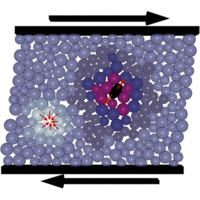
A new model is developed to describe the crossover from linear to non-linear rheology in flowing active tissues. The model is based on stress fluctuations mediated by long-range elastic interactions.

Enhancing the Charging Power of Quantum Batteries

Francesco Campaioli, Felix A. Pollock, Felix C. Binder, Lucas Céleri, John Goold, Sai Vinjanampathy, and Kavan Modi

Phys. Rev. Lett. 118, 150601 (2017) - Published 12 April, 2017

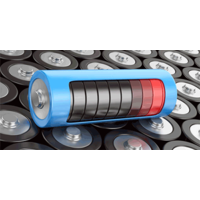
Calculations show that charging a set of batteries can go faster if the batteries are coupled together quantum mechanically.

Direct Measurement of Sub-10 fs Relativistic Electron Beams with Ultralow Emittance

Jared Maxson, David Cesar, Giacomo Calmasini, Alexander Ody, Pietro Musumeci, and David Alesini

Phys. Rev. Lett. 118, 154802 (2017) - Published 12 April, 2017

Electron pulses have shattered the 10-femtosecond barrier at which essentially all atomic motion is frozen in materials.

Flow Navigation by Smart Microswimmers via Reinforcement Learning

Simona Colabrese, Kristian Gustavsson, Antonio Celani, and Luca Biferale

Phys. Rev. Lett. 118, 158004 (2017) - Published 12 April, 2017

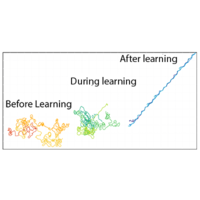
“Smart” microswimmers—those that can sense mechanical cues from their surroundings and respond to them—can learn to take advantage of their environment, escaping bad situations and actively seeking more favorable ones.

Sign In to Your Journals Account

Filter

Section

Filter

Article Lookup

Enter a citation