Highlights

Phase-Imposing Initiation of Cherenkov Superradiance Emission by an Ultrashort-Seed Microwave Pulse

G. A. Mesyats, N. S. Ginzburg, A. A. Golovanov, G. G. Denisov, I. V. Romanchenko, V. V. Rostov, K. A. Sharypov, V. G. Shpak, S. A. Shunailov, M. R. Ulmaskulov, M. I. Yalandin, and I. V. Zotova

Phys. Rev. Lett. 118, 264801 (2017) - Published 30 June, 2017

The phase of Chereknov superradiant emission is controlled by the injection of a short electromagnetic pulse.

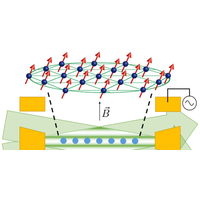
Amplitude Sensing below the Zero-Point Fluctuations with a Two-Dimensional Trapped-Ion Mechanical Oscillator

K. A. Gilmore, J. G. Bohnet, B. C. Sawyer, J. W. Britton, and J. J. Bollinger

Phys. Rev. Lett. 118, 263602 (2017) - Published 29 June, 2017

A spin-based technique is able to measure the center-of-mass motion of a 2D crystal of trapped ions to a precision 40 times below the object’s zero-point energy.

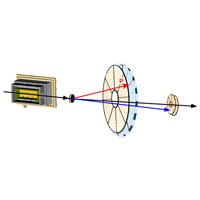
Nuclear Force Imprints Revealed on the Elastic Scattering of Protons with C10

A. Kumar et al.

Phys. Rev. Lett. 118, 262502 (2017) - Published 28 June, 2017

The scattering of protons from a carbon isotope can be used to test models of the strong force.

Hidden Area and Mechanical Nonlinearities in Freestanding Graphene

Ryan J. T. Nicholl, Nickolay V. Lavrik, Ivan Vlassiouk, Bernadeta R. Srijanto, and Kirill I. Bolotin

Phys. Rev. Lett. 118, 266101 (2017) - Published 27 June, 2017

The crumpling of graphene sheets explains a “soft spot” in the material’s mechanical response.

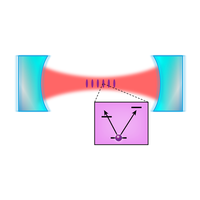
Magnetically Induced Optical Transparency on a Forbidden Transition in Strontium for Cavity-Enhanced Spectroscopy

Matthew N. Winchester, Matthew A. Norcia, Julia R. K. Cline, and James K. Thompson

Phys. Rev. Lett. 118, 263601 (2017) - Published 26 June, 2017

A magnetic field applied to an atomic sample in an optical cavity generates optical transparency that could be used to enhance the frequency stability of lasers.

Multispecies Trapped-Ion Node for Quantum Networking

I. V. Inlek, C. Crocker, M. Lichtman, K. Sosnova, and C. Monroe

Phys. Rev. Lett. 118, 250502 (2017) - Published 23 June, 2017

For the first time, ion-photon entanglement and two-quibit gating, two operations necessary for realizing fully functioning quantum computing nodes, are realized in the same experiment.

Dark Matter Search Results from the PICO−60 C3F8 Bubble Chamber

C. Amole et al. (PICO Collaboration)

Phys. Rev. Lett. 118, 251301 (2017) - Published 23 June, 2017

The best limits, to date, on WIMP spin-dependent interactions with protons and neutrons are obtained by the PICO and LUX collaborations, respectively.

Limits on Spin-Dependent WIMP-Nucleon Cross Section Obtained from the Complete LUX Exposure

D. S. Akerib et al. (LUX Collaboration)

Phys. Rev. Lett. 118, 251302 (2017) - Published 23 June, 2017

The best limits, to date, on WIMP spin-dependent interactions with protons and neutrons are obtained by the PICO and LUX collaborations, respectively.

Extremely Large Magnetoresistance in a Topological Semimetal Candidate Pyrite PtBi2

Wenshuai Gao, Ningning Hao, Fa-Wei Zheng, Wei Ning, Min Wu, Xiangde Zhu, Guolin Zheng, Jinglei Zhang, Jianwei Lu, Hongwei Zhang, Chuanying Xi, Jiyong Yang, Haifeng Du, Ping Zhang, Yuheng Zhang, and Mingliang Tian

Phys. Rev. Lett. 118, 256601 (2017) - Published 23 June, 2017

A magnetoresistance of 11.2 million percent is observed in PtBi2 single crystals at a temperature of 1.8 K, a value projected to be higher than previously reported for Dirac materials at 60 T.

Controlling the Topological Sector of Magnetic Solitons in Exfoliated Cr1/3NbS2 Crystals

L. Wang, N. Chepiga, D.-K. Ki, L. Li, F. Li, W. Zhu, Y. Kato, O. S. Ovchinnikova, F. Mila, I. Martin, D. Mandrus, and A. F. Morpurgo

Phys. Rev. Lett. 118, 257203 (2017) - Published 23 June, 2017

Film thickness dependent changes in the topological properties of magnetic solitons are tracked via magnetotransport measurements in exfoliated crystals of the monoaxial chiral helimagnet Cr1/3NbS2.

Dispersive Dam-Break Flow of a Photon Fluid

Gang Xu, Matteo Conforti, Alexandre Kudlinski, Arnaud Mussot, and Stefano Trillo

Phys. Rev. Lett. 118, 254101 (2017) - Published 20 June, 2017

High-intensity photon beams exhibit behavior reminiscent of water flowing after a dam collapses.

Evolution of the Reactor Antineutrino Flux and Spectrum at Daya Bay

F. P. An et al. (Daya Bay Collaboration)

Phys. Rev. Lett. 118, 251801 (2017) - Published 19 June, 2017

The Daya Bay Collaboration reports that sterile neutrinos probably aren’t behind a puzzling deficit in detected antineutrinos at nuclear reactors.

Ultrafast Magnetization of a Dense Molecular Gas with an Optical Centrifuge

A. A. Milner, A. Korobenko, and V. Milner

Phys. Rev. Lett. 118, 243201 (2017) - Published 16 June, 2017

The electronic spin of paramagnetic molecules is controlled by manipulating their rotation, polarizing them. This technique should be applicable to many other paramagnetic molecules.

Nonlinear Surface Lattice Resonance in Plasmonic Nanoparticle Arrays

Lior Michaeli, Shay Keren-Zur, Ori Avayu, Haim Suchowski, and Tal Ellenbogen

Phys. Rev. Lett. 118, 243904 (2017) - Published 16 June, 2017

A 30-fold increase in second harmonic emission is reported from an array of split-ring resonators. The enhancement is attributed to two sources: the Rayleigh-Wood anomaly and a collective surface lattice resonance mode.

Infrared Topological Plasmons in Graphene

Dafei Jin, Thomas Christensen, Marin Soljačić, Nicholas X. Fang, Ling Lu, and Xiang Zhang

Phys. Rev. Lett. 118, 245301 (2017) - Published 16 June, 2017

Periodically patterned graphene is predicted to host a new class of high-frequency, unidirectional, topological, edge magnetoplasmons.

Scaling of the Quantum Anomalous Hall Effect as an Indicator of Axion Electrodynamics

S. Grauer, K. M. Fijalkowski, S. Schreyeck, M. Winnerlein, K. Brunner, R. Thomale, C. Gould, and L. W. Molenkamp

Phys. Rev. Lett. 118, 246801 (2017) - Published 16 June, 2017

Evidence of axionic insulating behavior is shown in thin topological insulator films via analysis of conductivity flow diagrams. As film thickness increases, the flow changes from a two-dimensional integer quantum Hall regime to one consistent with an axion insulator.

Dimensional, Geometrical, and Physical Constraints in Skull Growth

Johannes Weickenmeier, Cedric Fischer, Dennis Carter, Ellen Kuhl, and Alain Goriely

Phys. Rev. Lett. 118, 248101 (2017) - Published 16 June, 2017

A model predicts skull growth patterns based on mechanical effects, rather than biology, and could help surgeons treating patients with head growth problems.

Observation of Topological Bloch-State Defects and Their Merging Transition

Matthias Tarnowski, Marlon Nuske, Nick Fläschner, Benno Rem, Dominik Vogel, Lukas Freystatzky, Klaus Sengstock, Ludwig Mathey, and Christof Weitenberg

Phys. Rev. Lett. 118, 240403 (2017) - Published 15 June, 2017

A new method is proposed and demonstrated for detecting topological phenomena in cold atoms confined in optical lattices.

Solving the Quantum Many-Body Problem via Correlations Measured with a Momentum Microscope

S. S. Hodgman, R. I. Khakimov, R. J. Lewis-Swan, A. G. Truscott, and K. V. Kheruntsyan

Phys. Rev. Lett. 118, 240402 (2017) - Published 14 June, 2017

A microscope that images the momenta of atoms in a Bose-Einstein condensate could solve quantum many-body problems

Real-Time Observation of Internal Motion within Ultrafast Dissipative Optical Soliton Molecules

Katarzyna Krupa, K. Nithyanandan, Ugo Andral, Patrice Tchofo-Dinda, and Philippe Grelu

Phys. Rev. Lett. 118, 243901 (2017) - Published 13 June, 2017

Pairs of solitons traveling in an optical fiber behave like a vibrating molecule.

Sign In to Your Journals Account

Filter

Section

Filter

Article Lookup

Enter a citation