Highlights

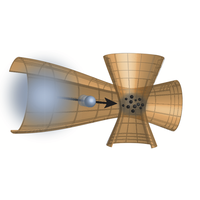
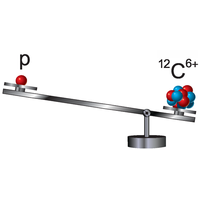
High-Precision Measurement of the Proton’s Atomic Mass

F. Heiße, F. Köhler-Langes, S. Rau, J. Hou, S. Junck, A. Kracke, A. Mooser, W. Quint, S. Ulmer, G. Werth, K. Blaum, and S. Sturm

Phys. Rev. Lett. 119, 033001 (2017) - Published 18 July, 2017

The most precise measurement to date of the proton mass finds a value that is 3 standard deviations lower than previous estimates.

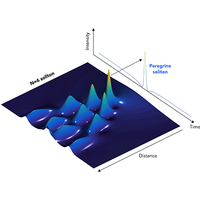
Universality of the Peregrine Soliton in the Focusing Dynamics of the Cubic Nonlinear Schrödinger Equation

Alexey Tikan, Cyril Billet, Gennady El, Alexander Tovbis, Marco Bertola, Thibaut Sylvestre, Francois Gustave, Stephane Randoux, Goëry Genty, Pierre Suret, and John M. Dudley

Phys. Rev. Lett. 119, 033901 (2017) - Published 18 July, 2017

The Peregrine soliton, a special kind of soliton whose shape is localized in space and time, exists in a wider range of scenarios than previously thought.

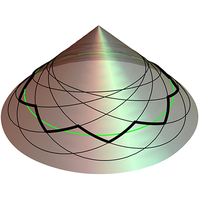
Self-Focusing and the Talbot Effect in Conformal Transformation Optics

Xiangyang Wang, Huanyang Chen, Hui Liu, Lin Xu, Chong Sheng, and Shining Zhu

Phys. Rev. Lett. 119, 033902 (2017) - Published 18 July, 2017

Transformation optics is used to design a device that both focuses light and diffracts it.

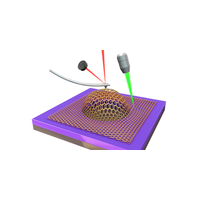
Measuring Interlayer Shear Stress in Bilayer Graphene

Guorui Wang, Zhaohe Dai, Yanlei Wang, PingHeng Tan, Luqi Liu, Zhiping Xu, Yueguang Wei, Rui Huang, and Zhong Zhang

Phys. Rev. Lett. 119, 036101 (2017) - Published 17 July, 2017

Creating a bulge in a graphene sheet offers the first measurement of the shear forces between graphene layers, an essential parameter for progress on graphene-based devices.

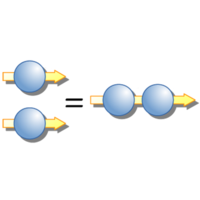
No-Hypersignaling Principle

Michele Dall’Arno, Sarah Brandsen, Alessandro Tosini, Francesco Buscemi, and Vlatko Vedral

Phys. Rev. Lett. 119, 020401 (2017) - Published 14 July, 2017

In classical and quantum theories, there is a constraint on how much timelike information can be conveyed. New theoretical work predicts that the input-output correlations attainable when transmitting two elementary systems cannot depend on whether the systems are transmitted in series or in parallel.

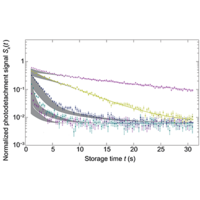
Radiative Rotational Lifetimes and State-Resolved Relative Detachment Cross Sections from Photodetachment Thermometry of Molecular Anions in a Cryogenic Storage Ring

C. Meyer et al.

Phys. Rev. Lett. 119, 023202 (2017) - Published 14 July, 2017

A beam of molecules is cooled through radiative rotation using a cryogenic storage ring without buffer gas, enabling natural lifetime measurements of lowest rotational levels in the molecules.

Topological Quantum Optics in Two-Dimensional Atomic Arrays

J. Perczel, J. Borregaard, D. E. Chang, H. Pichler, S. F. Yelin, P. Zoller, and M. D. Lukin

Phys. Rev. Lett. 119, 023603 (2017) - Published 14 July, 2017

A proposed platform for studying topological effects in quantum optical systems involves 2D atomic emitter arrays in optical lattices.

Scaling Analysis of the Screening Length in Concentrated Electrolytes

Alpha A. Lee, Carla S. Perez-Martinez, Alexander M. Smith, and Susan Perkin

Phys. Rev. Lett. 119, 026002 (2017) - Published 14 July, 2017

Experiments and theory indicate that the interaction between ions in a concentrated salt solution acts over longer distances that previously thought.

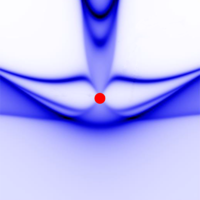
Type-II Symmetry-Protected Topological Dirac Semimetals

Tay-Rong Chang, Su-Yang Xu, Daniel S. Sanchez, Wei-Feng Tsai, Shin-Ming Huang, Guoqing Chang, Chuang-Han Hsu, Guang Bian, Ilya Belopolski, Zhi-Ming Yu, Shengyuan A. Yang, Titus Neupert, Horng-Tay Jeng, Hsin Lin, and M. Zahid Hasan

Phys. Rev. Lett. 119, 026404 (2017) - Published 14 July, 2017

A three-dimensional type-II Dirac fermion, analogous to 3D type-II Weyl fermions, is predicted and identified in a family of transition metal compounds.

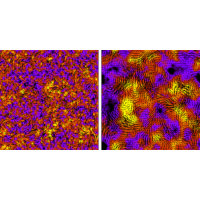
Role of Correlations in the Collective Behavior of Microswimmer Suspensions

Joakim Stenhammar, Cesare Nardini, Rupert W. Nash, Davide Marenduzzo, and Alexander Morozov

Phys. Rev. Lett. 119, 028005 (2017) - Published 13 July, 2017

Simulations and theory indicate that the “synchronized swimming” of bacteria occurs in much sparser suspensions of the microorganisms than expected.

Detecting Patchy Reionization in the Cosmic Microwave Background

Kendrick M. Smith and Simone Ferraro

Phys. Rev. Lett. 119, 021301 (2017) - Published 12 July, 2017

A new method of analyzing cosmic microwave background data could isolate signatures from the so-called reionization period that occurred a few hundred million years after the big bang.

Active versus Passive Hard Disks against a Membrane: Mechanical Pressure and Instability

G. Junot, G. Briand, R. Ledesma-Alonso, and O. Dauchot

Phys. Rev. Lett. 119, 028002 (2017) - Published 12 July, 2017

Experiments show that, unlike an ideal gas, an active-matter system comprised of self-propelled disks does not have a well-defined mechanical pressure.

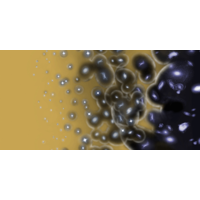
Compression Freezing Kinetics of Water to Ice VII

A. E. Gleason, C. A. Bolme, E. Galtier, H. J. Lee, E. Granados, D. H. Dolan, C. T. Seagle, T. Ao, S. Ali, A. Lazicki, D. Swift, P. Celliers, and W. L. Mao

Phys. Rev. Lett. 119, 025701 (2017) - Published 11 July, 2017

Laser pulses can turn liquid water into an exotic type of ice within a few nanoseconds.

Observing Dissipative Topological Defects with Coupled Lasers

Vishwa Pal, Chene Tradonsky, Ronen Chriki, Asher A. Friesem, and Nir Davidson

Phys. Rev. Lett. 119, 013902 (2017) - Published 7 July, 2017

A circle of interacting lasers is a new model system for exploring topological defects, disordered structures that show up in a wide variety of seemingly unrelated systems.

Tuning Paramagnetic Spin Excitations of Single Adatoms

Julen Ibañez-Azpiroz, Manuel dos Santos Dias, Benedikt Schweflinghaus, Stefan Blügel, and Samir Lounis

Phys. Rev. Lett. 119, 017203 (2017) - Published 7 July, 2017

Theory and simulations show that strongly renormalized spin-flip interactions of nonmagnetic atoms can be measured by inelastic scanning tunneling spectroscopy.

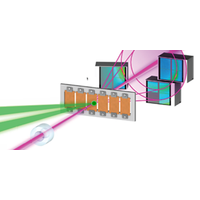
Event-Ready Bell Test Using Entangled Atoms Simultaneously Closing Detection and Locality Loopholes

Wenjamin Rosenfeld, Daniel Burchardt, Robert Garthoff, Kai Redeker, Norbert Ortegel, Markus Rau, and Harald Weinfurter

Phys. Rev. Lett. 119, 010402 (2017) - Published 6 July, 2017

Rubidium atoms 400 meters apart have been used to demonstrate the first event-ready violation of a Bell inequality, free from the usual loopholes.

Inferences about Supernova Physics from Gravitational-Wave Measurements: GW151226 Spin Misalignment as an Indicator of Strong Black-Hole Natal Kicks

Richard O’Shaughnessy, Davide Gerosa, and Daniel Wysocki

Phys. Rev. Lett. 119, 011101 (2017) - Published 6 July, 2017

An analysis of data from LIGO’s second gravitational-wave event indicates that a supernova can impart a strong kick to the black hole it creates.

Experimental Realization of Type-II Dirac Fermions in a PdTe2 Superconductor

Han-Jin Noh, Jinwon Jeong, En-Jin Cho, Kyoo Kim, B. I. Min, and Byeong-Gyu Park

Phys. Rev. Lett. 119, 016401 (2017) - Published 5 July, 2017

Three separate groups report experimental evidence of novel type-II Dirac quasiparticles, suggesting possible applications in future quantum technology.

Markov Property of the Conformal Field Theory Vacuum and the a Theorem

Horacio Casini, Eduardo Testé, and Gonzalo Torroba

Phys. Rev. Lett. 118, 261602 (2017) - Published 30 June, 2017

Vacuum entanglement entropy is used to prove the irreversibility of renormalization group flows in four or fewer spacetime dimensions.

Individual Tracer Atoms in an Ultracold Dilute Gas

Michael Hohmann, Farina Kindermann, Tobias Lausch, Daniel Mayer, Felix Schmidt, Eric Lutz, and Artur Widera

Phys. Rev. Lett. 118, 263401 (2017) - Published 30 June, 2017
The tracking of individual atoms diffusing in a cold, rarefied gas reveals the influence that a single impact has on randomizing the motion.

Sign In to Your Journals Account

Filter

Section

Filter

Article Lookup

Enter a citation