Highlights

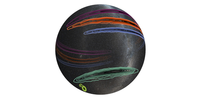
Observation of Optomechanical Strain in a Cold Atomic Cloud

Noam Matzliah, Hagai Edri, Asif Sinay, Roee Ozeri, and Nir Davidson

Phys. Rev. Lett. 119, 163201 (2017) - Published 19 October, 2017

Laser light can stretch and squeeze a whole cloud of atoms with a collective force.

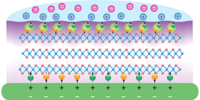
Coulometry and Calorimetry of Electric Double Layer Formation in Porous Electrodes

Mathijs Janssen, Elian Griffioen, P. M. Biesheuvel, René van Roij, and Ben Erné

Phys. Rev. Lett. 119, 166002 (2017) - Published 19 October, 2017

Two new experimental techniques that make coulometric and calorimetric measurements of porous electrodes are used to obtain the entropic contribution to the grand potential. The new results differ significantly from theoretical predictions.

Band Filling Control of the Dzyaloshinskii-Moriya Interaction in Weakly Ferromagnetic Insulators

G. Beutier, S. P. Collins, O. V. Dimitrova, V. E. Dmitrienko, M. I. Katsnelson, Y. O. Kvashnin, A. I. Lichtenstein, V. V. Mazurenko, A. G. A. Nisbet, E. N. Ovchinnikova, and D. Pincini

Phys. Rev. Lett. 119, 167201 (2017) - Published 19 October, 2017

The evolution of the sign of the Dzyaloshinskii-Moriya interaction is determined with phase sensitive x-ray magnetic diffraction, through interference between quadrupole resonant and non-resonant magnetic scattering.

Quantum criticality and the Tomonaga-Luttinger liquid in one-dimensional Bose gases

Bing Yang, Yang-Yang Chen, Yong-Guang Zheng, Hui Sun, Han-Ning Dai, Xi-Wen Guan, Zhen-Sheng Yuan, and Jian-Wei Pan

Phys. Rev. Lett. 119, 165701 (2017) - Published 18 October, 2017

The Tomonaga-Luttinger theory describing one-dimensional materials has been tested with cold atoms and arrays of Josephson junctions.

Insulating Josephson Junction Chains as Pinned Luttinger Liquids

Karin Cedergren, Roger Ackroyd, Sergey Kafanov, Nicolas Vogt, Alexander Shnirman, and Timothy Duty

Phys. Rev. Lett. 119, 167701 (2017) - Published 18 October, 2017

The Tomonaga-Luttinger theory describing one-dimensional materials has been tested with cold atoms and arrays of Josephson junctions.

Are Gravitational Waves Spinning Down PSR J1023+0038?

B. Haskell and A. Patruno

Phys. Rev. Lett. 119, 161103 (2017) - Published 17 October, 2017

A pulsar PSR J1023+0038 switches between two states that have different spin-down rates. A new analysis suggests that this discrepancy may be due to gravitational wave emission.

Dynamo Action in a Quasi-Keplerian Taylor-Couette Flow

Anna Guseva, Rainer Hollerbach, Ashley P. Willis, and Marc Avila

Phys. Rev. Lett. 119, 164501 (2017) - Published 17 October, 2017

Numerical evidence is provided for self-sustaining dynamo action in a confined electrically conducting fluid, such as an astrophysical accretion disc.

Revealing Quantum Statistics with a Pair of Distant Atoms

C. F. Roos, A. Alberti, D. Meschede, P. Hauke, and H. Häffner

Phys. Rev. Lett. 119, 160401 (2017) - Published 16 October, 2017

A proposed set of experiments could offer a direct measurement of the fundamental quantum property that distinguishes fermions from bosons.

GW170817: Observation of Gravitational Waves from a Binary Neutron Star Inspiral

B. P. Abbott et al. (LIGO Scientific Collaboration and Virgo Collaboration)

Phys. Rev. Lett. 119, 161101 (2017) - Published 16 October, 2017

For the first time, researchers have detected both light and gravitational waves from the same event in space.

Scalable Creation of Long-Lived Multipartite Entanglement

H. Kaufmann, T. Ruster, C. T. Schmiegelow, M. A. Luda, V. Kaushal, J. Schulz, D. von Lindenfels, F. Schmidt-Kaler, and U. G. Poschinger

Phys. Rev. Lett. 119, 150503 (2017) - Published 13 October, 2017

A four-qubit entangled state is created in a scalable ion trap system, with fidelity exceeding 90%.

Topological Hopf and Chain Link Semimetal States and Their Application to Co2MnGa

Guoqing Chang, Su-Yang Xu, Xiaoting Zhou, Shin-Ming Huang, Bahadur Singh, Baokai Wang, Ilya Belopolski, Jiaxin Yin, Songtian Zhang, Arun Bansil, Hsin Lin, and M. Zahid Hasan

Phys. Rev. Lett. 119, 156401 (2017) - Published 13 October, 2017

A new topological semimetal state is predicted, featuring three-dimensional band crossings that manifest as perpendicular, nontrivial links.

Spectroscopy and Directed Transport of Topological Solitons in Crystals of Trapped Ions

J. Brox, P. Kiefer, M. Bujak, T. Schaetz, and H. Landa

Phys. Rev. Lett. 119, 153602 (2017) - Published 12 October, 2017

Researchers have directed the motion of a domain-wall-like topological defect through a crystal of trapped ions.

How a Small Quantum Bath Can Thermalize Long Localized Chains

David J. Luitz, François Huveneers, and Wojciech De Roeck

Phys. Rev. Lett. 119, 150602 (2017) - Published 11 October, 2017

Numerical simulations show that an imperfection as small as three units can destabilize the many-body localized phase of a one-dimensional chain.

Generating Single-Spike Hard X-Ray Pulses with Nonlinear Bunch Compression in Free-Electron Lasers

S. Huang, Y. Ding, Y. Feng, E. Hemsing, Z. Huang, J. Krzywinski, A. A. Lutman, A. Marinelli, T. J. Maxwell, and D. Zhu

Phys. Rev. Lett. 119, 154801 (2017) - Published 10 October, 2017

X-ray free-electron lasers have been used to generate single spikes of hard x rays that are only 200 attoseconds long.

Giant Quantum Hall Plateau in Graphene Coupled to an InSe van der Waals Crystal

Z. R. Kudrynskyi, M. A. Bhuiyan, O. Makarovsky, J. D. G. Greener, E. E. Vdovin, Z. D. Kovalyuk, Y. Cao, A. Mishchenko, K. S. Novoselov, P. H. Beton, L. Eaves, and A. Patanè

Phys. Rev. Lett. 119, 157701 (2017) - Published 10 October, 2017

Induced transfer of charge carriers is demonstrated in a graphene-based field-effect transistor, leading to a quantum Hall plateau.

Precision Measurement of the Electron’s Electric Dipole Moment Using Trapped Molecular Ions

William B. Cairncross, Daniel N. Gresh, Matt Grau, Kevin C. Cossel, Tanya S. Roussy, Yiqi Ni, Yan Zhou, Jun Ye, and Eric A. Cornell

Phys. Rev. Lett. 119, 153001 (2017) - Published 9 October, 2017

New precision experiments using trapped molecular ions provide an alternative method for determining if the electron has an electric dipole moment.

GW170814: A Three-Detector Observation of Gravitational Waves from a Binary Black Hole Coalescence

B. P. Abbott et al. (LIGO Scientific Collaboration and Virgo Collaboration)

Phys. Rev. Lett. 119, 141101 (2017) - Published 6 October, 2017

The first simultaneous detection of gravitational radiation by the LIGO and Virgo detectors greatly improves localization of the source and permits a novel test of general relativity.

Inducing and Manipulating Heteroelectronic States in a Single MoS2 Thin Flake

Q. H. Chen, J. M. Lu, L. Liang, O. Zheliuk, A. Ali, P. Sheng, and J. T. Ye

Phys. Rev. Lett. 119, 147002 (2017) - Published 5 October, 2017

Electric fields applied on either side of a thin, semiconducting transition-metal dichalcogenide create a superconducting layer atop a metallic layer within the material.

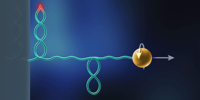
Supercoiling DNA Locates Mismatches

Andrew Dittmore, Sumitabha Brahmachari, Yasuharu Takagi, John F. Marko, and Keir C. Neuman

Phys. Rev. Lett. 119, 147801 (2017) - Published 3 October, 2017

Single base-pair mismatches in DNA can be pinpointed by twisting the molecule until it buckles.

Upper Bound on Diffusivity

Thomas Hartman, Sean A. Hartnoll, and Raghu Mahajan

Phys. Rev. Lett. 119, 141601 (2017) - Published 2 October, 2017

Quantum mechanical arguments give a hitherto unknown upper limit on the diffusion constant of any local conserved quantity.

Sign In to Your Journals Account

Filter

Section

Filter

Article Lookup

Enter a citation