Highlights

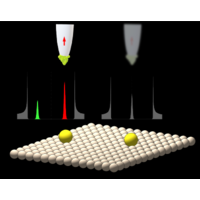
Spin-Polarized Yu-Shiba-Rusinov States in an Iron-Based Superconductor

Dongfei Wang, Jens Wiebe, Ruidan Zhong, Genda Gu, and Roland Wiesendanger

Phys. Rev. Lett. 126, 076802 (2021) - Published 18 February, 2021

Scanning tunneling spectroscopy reveals finite-energy bound states as well as zero-energy states inside the superconducting gap.

Probing Band Topology Using Modulational Instability

Daniel Leykam, Ekaterina Smolina, Aleksandra Maluckov, Sergej Flach, and Daria A. Smirnova

Phys. Rev. Lett. 126, 073901 (2021) - Published 17 February, 2021

Nonlinear modulational instability is sensitive to the bulk topological properties of energy bands, providing a new way to measure the Chern number.

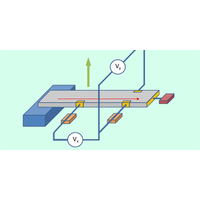
Universal Bound to the Amplitude of the Vortex Nernst Signal in Superconductors

Carl Willem Rischau, Yuke Li, Benoît Fauqué, Hisashi Inoue, Minu Kim, Christopher Bell, Harold Y. Hwang, Aharon Kapitulnik, and Kamran Behnia

Phys. Rev. Lett. 126, 077001 (2021) - Published 16 February, 2021

In contrast with predictions, researchers find no variation in a thermoelectric signal (known as the Nernst signal) for different types of superconductor.

Low-Energy Collective Oscillations and Bogoliubov Sound in an Exciton-Polariton Condensate

E. Estrecho, M. Pieczarka, M. Wurdack, M. Steger, K. West, L. N. Pfeiffer, D. W. Snoke, A. G. Truscott, and E. A. Ostrovskaya

Phys. Rev. Lett. 126, 075301 (2021) - Published 15 February, 2021

A new technique for studying exciton-polariton condensates adds the ability to resolve individual normal modes in time to previous frequency-resolved studies.

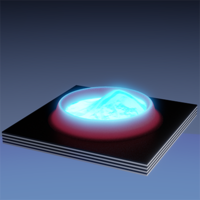
Massively Multiplexed Electrohydrodynamic Tip Streaming from a Thin Disc

Z. Wang, Y. Tian, C. Zhang, Y. Wang, and W. Deng

Phys. Rev. Lett. 126, 064502 (2021) - Published 12 February, 2021

Radial electric fields applied to an ethanol-wetted foil disk generate more than a thousand thin jets with a uniform jet spacing of thirty microns around the circumference of the disk.

Observation of Coulomb-Assisted Nuclear Bound State of Ξ−–N14 System

S. H. Hayakawa et al. (J-PARC E07 Collaboration)

Phys. Rev. Lett. 126, 062501 (2021) - Published 11 February, 2021

Particle physicists have detected a short-lived nucleus containing two strange quarks, whose properties could provide new insights into the behavior of other nuclear particles.

Catastrophic Phase Inversion in High-Reynolds-Number Turbulent Taylor-Couette Flow

Dennis Bakhuis, Rodrigo Ezeta, Pim A. Bullee, Alvaro Marin, Detlef Lohse, Chao Sun, and Sander G. Huisman

Phys. Rev. Lett. 126, 064501 (2021) - Published 11 February, 2021

Turning an emulsion of oil droplets in water into one consisting of water droplets in oil drastically changes the fluid’s properties.

Postselection-Free Entanglement Dynamics via Spacetime Duality

Matteo Ippoliti and Vedika Khemani

Phys. Rev. Lett. 126, 060501 (2021) - Published 9 February, 2021

A protocol based on space-time duality is used to find the purity of a quantum state for simulations of a class of nonunitary circuits, without any postselection.

Did NANOGrav See a Signal from Primordial Black Hole Formation?

Ville Vaskonen and Hardi Veermäe

Phys. Rev. Lett. 126, 051303 (2021) - Published 5 February, 2021

Gravitational waves produced during the formation of primordial black holes may be one of several ways (see https://physics.aps.org/articles/v14/15) to interpret data reported by the NANOGrav collaboration.

Nevanlinna Analytical Continuation

Jiani Fei, Chia-Nan Yeh, and Emanuel Gull

Phys. Rev. Lett. 126, 056402 (2021) - Published 4 February, 2021

A new analytical continuation approach that takes advantage of the mathematical structure of response functions will significantly improve finite-temperature quantum simulations.

Numerical Study of a Dual Representation of the Integer Quantum Hall Transition

Kevin S. Huang, S. Raghu, and Prashant Kumar

Phys. Rev. Lett. 126, 056802 (2021) - Published 4 February, 2021

A dual composite fermion approach in which all states are delocalized at criticality provides an alternative insight into the integer quantum Hall transition.

Spontaneous Anchoring-Mediated Topography of an Orientable Fluid

Andrew J. Ferris, Charles Rosenblatt, and Timothy J. Atherton

Phys. Rev. Lett. 126, 057803 (2021) - Published 4 February, 2021

Orientational surface anchoring at one interface of a liquid crystal thin film can induce topographic changes on the opposite interface.

Controlling Cell Motion and Microscale Flow with Polarized Light Fields

Siyuan Yang, Mingji Huang, Yongfeng Zhao, and H. P. Zhang

Phys. Rev. Lett. 126, 058001 (2021) - Published 4 February, 2021

Polarization-sensitive algae could be used to make light-directed active matter that controls fluid flow.

Real-Space Observation of Magnon Interaction with Driven Space-Time Crystals

Nick Träger, Paweł Gruszecki, Filip Lisiecki, Felix Groß, Johannes Förster, Markus Weigand, Hubert Głowiński, Piotr Kuświk, Janusz Dubowik, Gisela Schütz, Maciej Krawczyk, and Joachim Gräfe

Phys. Rev. Lett. 126, 057201 (2021) - Published 3 February, 2021

Electron spin waves condense to form an exotic new state that repeats in both space and time.

Fast Molecular Compression by a Hyperthermal Collision Gives Bond-Selective Mechanochemistry

Lukas Krumbein, Kelvin Anggara, Martina Stella, Tomasz Michnowicz, Hannah Ochner, Sabine Abb, Gordon Rinke, André Portz, Michael Dürr, Uta Schlickum, Andrew Baldwin, Andrea Floris, Klaus Kern, and Stephan Rauschenbach

Phys. Rev. Lett. 126, 056001 (2021) - Published 1 February, 2021

Colliding a large organic molecule with a surface can break a specific chemical bond in the molecule with surprising precision.

Interactions and Mobility Edges: Observing the Generalized Aubry-André Model

Fangzhao Alex An, Karmela Padavić, Eric J. Meier, Suraj Hegde, Sriram Ganeshan, J. H. Pixley, Smitha Vishveshwara, and Bryce Gadway

Phys. Rev. Lett. 126, 040603 (2021) - Published 29 January, 2021

A system that hosts an analytical mobility edge has been realized in a Bose-Einstein condensate through the use of laser-coupled momentum modes.

Self-Switching Kerr Oscillations of Counterpropagating Light in Microresonators

Michael T. M. Woodley, Lewis Hill, Leonardo Del Bino, Gian-Luca Oppo, and Pascal Del’Haye

Phys. Rev. Lett. 126, 043901 (2021) - Published 29 January, 2021

High-power counter-propagating light in optical microresonators leads to instabilities and oscillatory light states, exposing a fundamental limitation on the amount of light that can be stored in these systems.

Properties of Iron Primary Cosmic Rays: Results from the Alpha Magnetic Spectrometer

M. Aguilar et al. (AMS Collaboration)

Phys. Rev. Lett. 126, 041104 (2021) - Published 28 January, 2021

A spectrometer on the International Space Station has measured the energy spectrum of iron—the heaviest cosmic-ray element characterized to date.

NANOGrav Data Hints at Primordial Black Holes as Dark Matter

V. De Luca, G. Franciolini, and A. Riotto

Phys. Rev. Lett. 126, 041303 (2021) - Published 28 January, 2021

A theoretical analysis lays out a plausibility scenario for interpreting data reported recently by the NANOGrav collaboration in terms of gravitational waves produced during the formation of primordial black holes.

Cosmic String Interpretation of NANOGrav Pulsar Timing Data

John Ellis and Marek Lewicki

Phys. Rev. Lett. 126, 041304 (2021) - Published 28 January, 2021
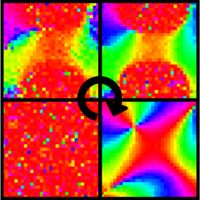
A pulsar survey has detected a potential signal from low-frequency gravitational waves, which theorists are eager to explain.

Sign In to Your Journals Account

Filter

Section

Filter

Article Lookup

Enter a citation