Highlights

Study of the KL→π0νν¯ Decay at the J-PARC KOTO Experiment

J. K. Ahn et al. (KOTO Collaboration)

Phys. Rev. Lett. 126, 121801 (2021) - Published 24 March, 2021

The KOTO collaboration has now carefully analyzed widely discussed preliminary data containing four signal events for a rare kaon decay—an excess suggesting physics beyond the Standard Model—and found that Standard Model background events are large enough to explain the signal.

Universal Relation between Instantaneous Diffusivity and Radius of Gyration of Proteins in Aqueous Solution

Eiji Yamamoto, Takuma Akimoto, Ayori Mitsutake, and Ralf Metzler

Phys. Rev. Lett. 126, 128101 (2021) - Published 23 March, 2021

How quickly a protein diffuses in a liquid depends directly on its radius, which changes as the protein’s conformation fluctuates.

Optical Modulation of Electron Beams in Free Space

F. Javier García de Abajo and Andrea Konečná

Phys. Rev. Lett. 126, 123901 (2021) - Published 22 March, 2021

Intense laser beams can shape an electron beam without interaction with the material to correct electron aberrations in free space and produce on-demand electron focal spot shapes.

Flow Rectification in Loopy Network Models of Bird Lungs

Quynh M. Nguyen, Anand U. Oza, Joanna Abouezzi, Guanhua Sun, Stephen Childress, Christina Frederick, and Leif Ristroph

Phys. Rev. Lett. 126, 114501 (2021) - Published 19 March, 2021

A simple network of pipes based on the structures of a bird’s lung transforms back-and-forth flow into one-way flow.

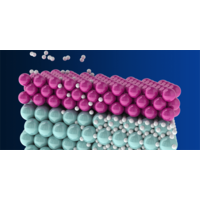
RETRACTED: Synthesis of Yttrium Superhydride Superconductor with a Transition Temperature up to 262 K by Catalytic Hydrogenation at High Pressures

Elliot Snider, Nathan Dasenbrock-Gammon, Raymond McBride, Xiaoyu Wang, Noah Meyers, Keith V. Lawler, Eva Zurek, Ashkan Salamat, and Ranga P. Dias

Phys. Rev. Lett. 126, 117003 (2021) - Published 19 March, 2021

A new synthesis technique pushes high-temperature superconducting materials a step closer to ambient pressure.

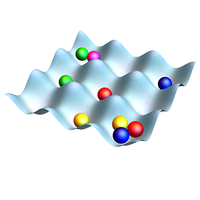
Nanosecond Random Telegraph Noise in In-Plane Magnetic Tunnel Junctions

K. Hayakawa, S. Kanai, T. Funatsu, J. Igarashi, B. Jinnai, W. A. Borders, H. Ohno, and S. Fukami

Phys. Rev. Lett. 126, 117202 (2021) - Published 17 March, 2021

The relaxation time of superparamagnetic tunnel junctions can be made faster by forcing the precession to take on an elliptical shape.

Skyrmion-(Anti)Vortex Coupling in a Chiral Magnet-Superconductor Heterostructure

A. P. Petrović, M. Raju, X. Y. Tee, A. Louat, I. Maggio-Aprile, R. M. Menezes, M. J. Wyszyński, N. K. Duong, M. Reznikov, Ch. Renner, M. V. Milošević, and C. Panagopoulos

Phys. Rev. Lett. 126, 117205 (2021) - Published 17 March, 2021

Control over vortices that arise in magnet-superconductor heterostructures could lead to qubits that are immune to the effects of their environment.

Sauter-Schwinger Effect in a Bardeen-Cooper-Schrieffer Superconductor

P. Solinas, A. Amoretti, and F. Giazotto

Phys. Rev. Lett. 126, 117001 (2021) - Published 16 March, 2021

The old Sauter-Schwinger effect, or the creation of electron-positron pairs by a strong electric field, is predicted to be finally realized in a regular low-temperature superconducting material.

Molecular View on Mechanical Reinforcement in Polymer Nanocomposites

Ruikun Sun, Matthew Melton, Niloofar Safaie, Robert C. Ferrier, Jr., Shiwang Cheng, Yun Liu, Xiaobing Zuo, and Yangyang Wang

Phys. Rev. Lett. 126, 117801 (2021) - Published 16 March, 2021

Rheological and small angle neutron scattering methods show that nanoparticles mechanically reinforce polymer-nanoparticle composites through hydrodynamic effects.

Switchable X-Ray Orbital Angular Momentum from an Artificial Spin Ice

Justin S. Woods, Xiaoqian M. Chen, Rajesh V. Chopdekar, Barry Farmer, Claudio Mazzoli, Roland Koch, Anton S. Tremsin, Wen Hu, Andreas Scholl, Steve Kevan, Stuart Wilkins, Wai-Kwong Kwok, Lance E. De Long, Sujoy Roy, and J. Todd Hastings

Phys. Rev. Lett. 126, 117201 (2021) - Published 15 March, 2021

Scientists create a pattern of nanomagnets—called an artificial spin ice—that can control the orbital angular momentum of a scattered x-ray beam.

Theory for Durotactic Axon Guidance

Hadrien Oliveri, Kristian Franze, and Alain Goriely

Phys. Rev. Lett. 126, 118101 (2021) - Published 15 March, 2021

Physical theory suggests that nerve fibers use their mechanical environment to find functional targets following the laws analogous to those that govern optic rays.

COVID-19 Superspreading Suggests Mitigation by Social Network Modulation

Bjarke Frost Nielsen, Lone Simonsen, and Kim Sneppen

Phys. Rev. Lett. 126, 118301 (2021) - Published 15 March, 2021

A new model shows that restricting the number of social interactions among members of a population is effective at controlling outbreaks dominated by “superspreaders,” explaining the unexpected success of last year’s lockdowns.

Rigorous Results on the Ground State of the Attractive SU(N) Hubbard Model

Hironobu Yoshida and Hosho Katsura

Phys. Rev. Lett. 126, 100201 (2021) - Published 12 March, 2021

Three theorems addressing the degeneracy, the fermion number, and a relevant quantum number may provide significant progress in the study of the attractive SU(N) Hubbard model.

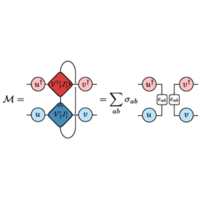
Ergodic and Nonergodic Dual-Unitary Quantum Circuits with Arbitrary Local Hilbert Space Dimension

Pieter W. Claeys and Austen Lamacraft

Phys. Rev. Lett. 126, 100603 (2021) - Published 12 March, 2021

A large class of solvable dual-unitary quantum circuit models are used to construct 1D lattice models.

Emergent Field-Driven Robot Swarm States

Gao Wang, Trung V. Phan, Shengkai Li, Michael Wombacher, Junle Qu, Yan Peng, Guo Chen, Daniel I. Goldman, Simon A. Levin, Robert H. Austin, and Liyu Liu

Phys. Rev. Lett. 126, 108002 (2021) - Published 12 March, 2021

Using a swarm of puck-shaped robots, researchers simulate interactions between biological organisms and their environment.

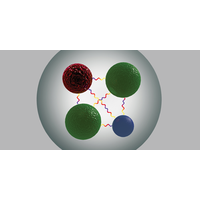
Observation of a Near-Threshold Structure in the K+ Recoil-Mass Spectra in e+e−→K+(Ds−D*0+Ds*−D0)

M. Ablikim et al. (BESIII Collaboration)

Phys. Rev. Lett. 126, 102001 (2021) - Published 11 March, 2021

The detection of a new particle containing both charm and strange quarks could offer new insights into how hadrons form.

Robust and Efficient High-Dimensional Quantum State Tomography

Markus Rambach, Mahdi Qaryan, Michael Kewming, Christopher Ferrie, Andrew G. White, and Jacquiline Romero

Phys. Rev. Lett. 126, 100402 (2021) - Published 10 March, 2021

With a technique called self-guided tomography, researchers accurately measure the states of qudits—quantum systems like qubits but with more than two dimensions.

Traversable Wormholes in Einstein-Dirac-Maxwell Theory

Jose Luis Blázquez-Salcedo, Christian Knoll, and Eugen Radu

Phys. Rev. Lett. 126, 101102 (2021) - Published 9 March, 2021

New theories of wormholes—postulated tunnels through spacetime—explore whether they could be traversable by humans.

Wide Critical Fluctuations of the Field-Induced Phase Transition in Graphite

Christophe Marcenat, Thierry Klein, David LeBoeuf, Alexandre Jaoui, Gabriel Seyfarth, Jozef Kačmarčík, Yoshimitsu Kohama, Hervé Cercellier, Hervé Aubin, Kamran Behnia, and Benoît Fauqué

Phys. Rev. Lett. 126, 106801 (2021) - Published 8 March, 2021

In high magnetic fields calorimetric measurements of the electronic specific heat of graphite exhibit a second-order phase transition jump due to electron-electron correlations.

Enforcing Analytic Constraints in Neural Networks Emulating Physical Systems

Tom Beucler, Michael Pritchard, Stephan Rasp, Jordan Ott, Pierre Baldi, and Pierre Gentine

Phys. Rev. Lett. 126, 098302 (2021) - Published 4 March, 2021

A neural network can be made to produce more reliable predictions of nonlinear systems if it is created with conservation laws built in.

Sign In to Your Journals Account

Filter

Section

Filter

Article Lookup

Enter a citation