Highlights

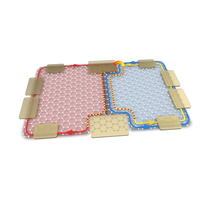
Quantum Hall Valley Splitters and a Tunable Mach-Zehnder Interferometer in Graphene

M. Jo, P. Brasseur, A. Assouline, G. Fleury, H.-S. Sim, K. Watanabe, T. Taniguchi, W. Dumnernpanich, P. Roche, D. C. Glattli, N. Kumada, F. D. Parmentier, and P. Roulleau

Phys. Rev. Lett. 126, 146803 (2021) - Published 9 April, 2021

A nanoscale, graphene-based device takes advantage of the wave nature of electrons and provides a level of control that will be useful for quantum computers.

Searching for Dark Matter with a Superconducting Qubit

Akash V. Dixit, Srivatsan Chakram, Kevin He, Ankur Agrawal, Ravi K. Naik, David I. Schuster, and Aaron Chou

Phys. Rev. Lett. 126, 141302 (2021) - Published 8 April, 2021

A detector made from superconducting qubits could allow researchers to search for dark matter particles 1000 times faster than other techniques.

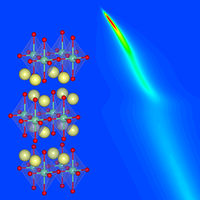
Unmasking the Origin of Kinks in the Photoemission Spectra of Cuprate Superconductors

Zhenglu Li, Meng Wu, Yang-Hao Chan, and Steven G. Louie

Phys. Rev. Lett. 126, 146401 (2021) - Published 8 April, 2021

First-principles calculations based on GW perturbation theory explain the long-standing “kink” structure of photoemission spectra of high-Tc cuprate superconductors as a consequence of enhanced electron-phonon coupling.

Measurement of the Positive Muon Anomalous Magnetic Moment to 0.46 ppm

B. Abi et al. (Muon g−2 Collaboration)

Phys. Rev. Lett. 126, 141801 (2021) - Published 7 April, 2021

Measurements of the muon magnetic moment strengthen a previously reported tension with theoretical predictions, ushering in a new era of precision tests of the standard model.

SO(5) Non-Fermi Liquid in a Coulomb Box Device

Andrew K. Mitchell, Alon Liberman, Eran Sela, and Ian Affleck

Phys. Rev. Lett. 126, 147702 (2021) - Published 7 April, 2021

Revisiting non-Fermi liquid physics in quantum dots indicates the presence of a possibly observable Majorana fermion at a symmetry point.

Dark Energy Survey Year 1 Results: Cosmological Constraints from Cluster Abundances, Weak Lensing, and Galaxy Correlations

C. To et al. (DES Collaboration)

Phys. Rev. Lett. 126, 141301 (2021) - Published 6 April, 2021

The Dark Energy Survey Collaboration has updated a model of the Universe to correctly capture more galaxy measurements.

First Detection of sub-PeV Diffuse Gamma Rays from the Galactic Disk: Evidence for Ubiquitous Galactic Cosmic Rays beyond PeV Energies

M. Amenomori et al. (Tibet ASγ Collaboration)

Phys. Rev. Lett. 126, 141101 (2021) - Published 5 April, 2021

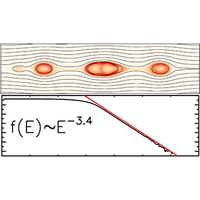
A diffuse glow of high-energy gamma rays hints at the presence of powerful cosmic accelerators, called PeVatrons, within the disk of our Galaxy.

Transverse Beam Emittance Measurement by Undulator Radiation Power Noise

Ihar Lobach, Sergei Nagaitsev, Valeri Lebedev, Aleksandr Romanov, Giulio Stancari, Alexander Valishev, Aliaksei Halavanau, Zhirong Huang, and Kwang-Je Kim

Phys. Rev. Lett. 126, 134802 (2021) - Published 1 April, 2021

A new way of measuring a vital property of electron beams helps prepare researchers for next-generation synchrotron light sources.

Theory for Twisted Bilayer Photonic Crystal Slabs

Beicheng Lou, Nathan Zhao, Momchil Minkov, Cheng Guo, Meir Orenstein, and Shanhui Fan

Phys. Rev. Lett. 126, 136101 (2021) - Published 31 March, 2021

A numerical technique enables the computational study of twisted photonic structures.

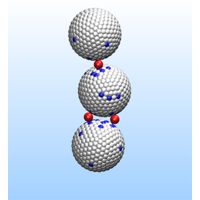
Charge Regulation Effects in Nanoparticle Self-Assembly

Tine Curk and Erik Luijten

Phys. Rev. Lett. 126, 138003 (2021) - Published 31 March, 2021

A computational scheme that combines Monte Carlo and molecular dynamics methods dynamically accounts for charge regulation in associating nanoparticles.

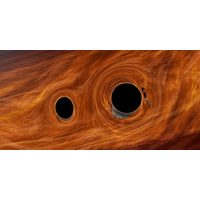
Spinning Black Holes Fall in Love

Alexandre Le Tiec and Marc Casals

Phys. Rev. Lett. 126, 131102 (2021) - Published 30 March, 2021

New calculations show that spinning black holes—unlike nonspinning ones—can be tidally deformed by a nonsymmetric gravitational field.

Electron Acceleration during Macroscale Magnetic Reconnection

H. Arnold, J. F. Drake, M. Swisdak, F. Guo, J. T. Dahlin, B. Chen, G. Fleishman, L. Glesener, E. Kontar, T. Phan, and C. Shen

Phys. Rev. Lett. 126, 135101 (2021) - Published 30 March, 2021

The first self-consistent macroscale simulation of magnetic reconnection with electron acceleration shows, consistently with the observation of the solar flare on September 10, 2017, that nonthermal electrons can contain up to 80% of the total electron energy and depend strongly on the ambient guide field.

Actinide Crystallization and Fission Reactions in Cooling White Dwarf Stars

C. J. Horowitz and M. E. Caplan

Phys. Rev. Lett. 126, 131101 (2021) - Published 29 March, 2021

White dwarf explosions may be initiated by uranium in the stellar core detonating like a nuclear weapon.

Active Viscoelasticity of Odd Materials

Debarghya Banerjee, Vincenzo Vitelli, Frank Jülicher, and Piotr Surówka

Phys. Rev. Lett. 126, 138001 (2021) - Published 29 March, 2021

The odd viscoelastic response of active chiral materials can be described by generalizations of canonical hydrodynamic theories of viscoelasticity.

Assembly of a Rovibrational Ground State Molecule in an Optical Tweezer

William B. Cairncross, Jessie T. Zhang, Lewis R. B. Picard, Yichao Yu, Kenneth Wang, and Kang-Kuen Ni

Phys. Rev. Lett. 126, 123402 (2021) - Published 26 March, 2021

A single NaCs molecule is coherently created in its rotational, vibrational, and electronic ground state in an optical tweezer.

Universal Aspects of a Strongly Interacting Impurity in a Dilute Bose Condensate

Pietro Massignan, Nikolay Yegovtsev, and Victor Gurarie

Phys. Rev. Lett. 126, 123403 (2021) - Published 26 March, 2021

An analytical solution of an impurity in strong local interaction with a dilute Bose-Einstein condensate shows that the properties of the polaron are universal.

Observation of Distinct Spatial Distributions of the Zero and Nonzero Energy Vortex Modes in (Li0.84Fe0.16)OHFeSe

Tianzhen Zhang, Weicheng Bao, Chen Chen, Dong Li, Zouyuwei Lu, Yining Hu, Wentao Yang, Dongming Zhao, Yajun Yan, Xiaoli Dong, Qiang-Hua Wang, Tong Zhang, and Donglai Feng

Phys. Rev. Lett. 126, 127001 (2021) - Published 26 March, 2021

Measuring the spatial distribution of the vortex state in (Li,Fe)OHFeSe clarifies the origin of zero-energy modes which is the key feature of topological superconductivity.

Is Seismicity Operating at a Critical Point?

Shyam Nandan, Sumit Kumar Ram, Guy Ouillon, and Didier Sornette

Phys. Rev. Lett. 126, 128501 (2021) - Published 26 March, 2021

The branching ratio of the Epidemic-Type Aftershock Sequence model using spatial variability of the background rate is substantially lower than previously reported using a space invariant background rate, demonstrating that the Earth’s crust is at a subcritical rather than critical state.

Measuring Topological Invariants in a Polaritonic Analog of Graphene

P. St-Jean, A. Dauphin, P. Massignan, B. Real, O. Jamadi, M. Milicevic, A. Lemaître, A. Harouri, L. Le Gratiet, I. Sagnes, S. Ravets, J. Bloch, and A. Amo

Phys. Rev. Lett. 126, 127403 (2021) - Published 25 March, 2021

Advances in spectroscopic imaging have made it possible to measure topological invariants in materials with time-reversal and chiral symmetry.

Two-Qubit Engine Fueled by Entanglement and Local Measurements

Léa Bresque, Patrice A. Camati, Spencer Rogers, Kater Murch, Andrew N. Jordan, and Alexia Auffèves

Phys. Rev. Lett. 126, 120605 (2021) - Published 24 March, 2021

A two-qubit engine uses quantum measurement and entanglement as fuel.

Sign In to Your Journals Account

Filter

Section

Filter

Article Lookup

Enter a citation