Highlights

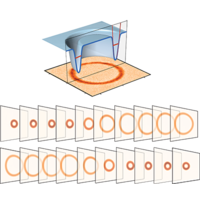
Detecting Heat Leaks with Trapped Ion Qubits

D. Pijn, O. Onishchenko, J. Hilder, U. G. Poschinger, F. Schmidt-Kaler, and R. Uzdin

Phys. Rev. Lett. 128, 110601 (2022) - Published 17 March, 2022

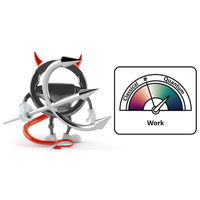
By determining whether two qubits are coupled to a third “hidden” one, researchers can detect whether energy is irreversibly lost from a quantum system.

Nanosecond-Scale Proton Emission from Strongly Oblate-Deformed Lu149

K. Auranen et al.

Phys. Rev. Lett. 128, 112501 (2022) - Published 16 March, 2022

An isotope of Lutetium, synthesized for the first time, is found to be the most oblate deformed proton emitter.

Magnetic-Field Effect as a Tool to Investigate Electron Correlation in Strong-Field Ionization

Kang Lin, Xiang Chen, Sebastian Eckart, Hui Jiang, Alexander Hartung, Daniel Trabert, Kilian Fehre, Jonas Rist, Lothar Ph. H. Schmidt, Markus S. Schöffler, Till Jahnke, Maksim Kunitski, Feng He, and Reinhard Dörner

Phys. Rev. Lett. 128, 113201 (2022) - Published 16 March, 2022

The role of the magnetic field of light in double ionization explains the lack of nondipole contributions from initial tunneling to recollision.

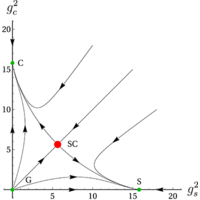
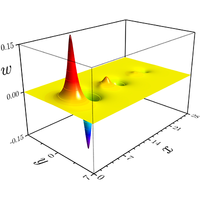
Quantum Criticality of Antiferromagnetism and Superconductivity with Relativity

Hanqing Liu, Emilie Huffman, Shailesh Chandrasekharan, and Ribhu K. Kaul

Phys. Rev. Lett. 128, 117202 (2022) - Published 15 March, 2022

Quantum Monte Carlo simulations of a phase transition from a massless to massive Dirac fermion phase in 2D electrons exhibits unexpected symmetry effects.

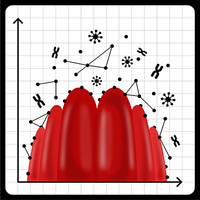
Proof for Minimum Sensitivity of Nested Canalizing Functions, a Fractal Bound, and Implications for Biology

H. Çoban and A. Kabakçıoğlu

Phys. Rev. Lett. 128, 118101 (2022) - Published 15 March, 2022

Nested canalizing functions are shown to be the minimum-sensitivity Boolean functions for any activity ratio, a result relevant for explaining the robustness of biological networks.

Search for Neutrino-Induced Neutral-Current Δ Radiative Decay in MicroBooNE and a First Test of the MiniBooNE Low Energy Excess under a Single-Photon Hypothesis

P. Abratenko et al. (MicroBooNE Collaboration)

Phys. Rev. Lett. 128, 111801 (2022) - Published 14 March, 2022

The MicroBooNE collaboration rules out a promising standard model explanation for the MiniBooNE low-energy excess: ∆ baryon radiative decay.

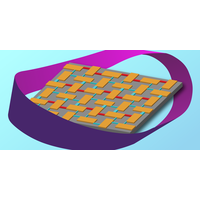
Projectively Enriched Symmetry and Topology in Acoustic Crystals

Haoran Xue, Zihao Wang, Yue-Xin Huang, Zheyu Cheng, Letian Yu, Y. X. Foo, Y. X. Zhao, Shengyuan A. Yang, and Baile Zhang

Phys. Rev. Lett. 128, 116802 (2022) - Published 14 March, 2022

By manipulating symmetries in acoustic lattices, two independent groups have created a topological insulator with a new, exotic topology.

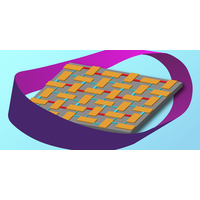
Acoustic Möbius Insulators from Projective Symmetry

Tianzi Li, Juan Du, Qicheng Zhang, Yitong Li, Xiying Fan, Fan Zhang, and Chunyin Qiu

Phys. Rev. Lett. 128, 116803 (2022) - Published 14 March, 2022

By manipulating symmetries in acoustic lattices, two independent groups have created a topological insulator with a new, exotic topology.

Bridging the μHz Gap in the Gravitational-Wave Landscape with Binary Resonances

Diego Blas and Alexander C. Jenkins

Phys. Rev. Lett. 128, 101103 (2022) - Published 11 March, 2022

Thanks to a new analysis technique, precision measurements of the Earth-Moon distance should improve estimates of the size of the gravitational-wave background.

Ultraviolet-Infrared Mixing in Marginal Fermi Liquids

Weicheng Ye, Sung-Sik Lee, and Liujun Zou

Phys. Rev. Lett. 128, 106402 (2022) - Published 11 March, 2022

A (2 + 1)-dimensional marginal Fermi liquid that exhibits ultraviolet-infrared mixing caused by virtual Cooper pairs spread over the entire Fermi surface due to large-momentum scatterings, calls into question the patch regularized description of the Fermi surface.

Detecting Induced p±ip Pairing at the Al-InAs Interface with a Quantum Microwave Circuit

D. Phan, J. Senior, A. Ghazaryan, M. Hatefipour, W. M. Strickland, J. Shabani, M. Serbyn, and A. P. Higginbotham

Phys. Rev. Lett. 128, 107701 (2022) - Published 11 March, 2022

Embedding a 2D Al-InAs system in a quantum microwave circuit enables characterization of various properties such as pairing, carrier density, and carrier mobility of superconductor-semiconductor hybrid devices.

Observation of Chemical Reactions between a Trapped Ion and Ultracold Feshbach Dimers

H. Hirzler, R. S. Lous, E. Trimby, J. Pérez-Ríos, A. Safavi-Naini, and R. Gerritsma

Phys. Rev. Lett. 128, 103401 (2022) - Published 10 March, 2022

Researchers demonstrate that they can create molecules from lithium dimers and ytterbium ions, paving the way for quantum chemistry studies in a new type of system.

Coherent Scattering of Low Mass Dark Matter from Optically Trapped Sensors

Gadi Afek, Daniel Carney, and David C. Moore

Phys. Rev. Lett. 128, 101301 (2022) - Published 9 March, 2022

A method for detecting dark matter using tiny levitated spheres could reach an unprecedented sensitivity to light dark matter particles.

Excitation Spectrum and Superfluid Gap of an Ultracold Fermi Gas

Hauke Biss, Lennart Sobirey, Niclas Luick, Markus Bohlen, Jami J. Kinnunen, Georg M. Bruun, Thomas Lompe, and Henning Moritz

Phys. Rev. Lett. 128, 100401 (2022) - Published 8 March, 2022

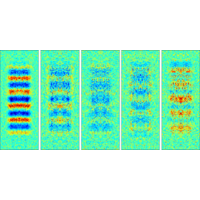
Researchers have observed the spectrum of an ultracold atomic gas that can exist as a superfluid or a BEC, a study that could provide clues to the nature of superconductivity.

Hydrodynamic Relaxation in a Strongly Interacting Fermi Gas

Xin Wang, Xiang Li, Ilya Arakelyan, and J. E. Thomas

Phys. Rev. Lett. 128, 090402 (2022) - Published 3 March, 2022

Thermal conductivity and shear viscosity in a universal normal fluid have been measured independently for the first time.

First Directional Measurement of Sub-MeV Solar Neutrinos with Borexino

M. Agostini et al. (Borexino Collaboration)

Phys. Rev. Lett. 128, 091803 (2022) - Published 3 March, 2022

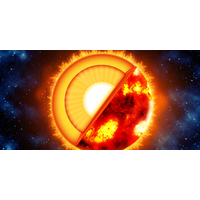
A new measurement method allows researchers to obtain directional information about low-energy solar neutrinos, something that was previously hard to do.

Dirac Magnons, Nodal Lines, and Nodal Plane in Elemental Gadolinium

A. Scheie, Pontus Laurell, P. A. McClarty, G. E. Granroth, M. B. Stone, R. Moessner, and S. E. Nagler

Phys. Rev. Lett. 128, 097201 (2022) - Published 2 March, 2022

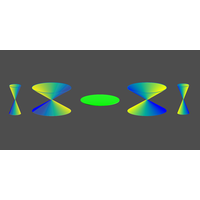
Neutron scattering experiments provide the evidence of massless spin waves, called Dirac magnons, in a single-element magnetic crystal, offering a new window into topological magnetism.

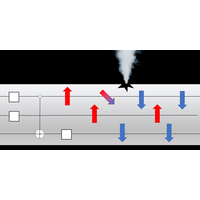
Spin Quantum Heat Engine Quantified by Quantum Steering

Wentao Ji, Zihua Chai, Mengqi Wang, Yuhang Guo, Xing Rong, Fazhan Shi, Changliang Ren, Ya Wang, and Jiangfeng Du

Phys. Rev. Lett. 128, 090602 (2022) - Published 1 March, 2022

New experiments make clear how quantum effects—in the form of quantum correlations—can make an engine perform better than classical limits.

Accurate Determination of Hubble Attenuation and Amplification in Expanding and Contracting Cold-Atom Universes

S. Banik, M. Gutierrez Galan, H. Sosa-Martinez, M. J. Anderson, S. Eckel, I. B. Spielman, and G. K. Campbell

Phys. Rev. Lett. 128, 090401 (2022) - Published 28 February, 2022

Using phonons as an analog to cosmological scalar fields, Hubble attenuation and amplification can be accurately measured in laboratory Bose-Einstein condensates.

Observation of Edge Solitons in Topological Trimer Arrays

Y. V. Kartashov, A. A. Arkhipova, S. A. Zhuravitskii, N. N. Skryabin, I. V. Dyakonov, A. A. Kalinkin, S. P. Kulik, V. O. Kompanets, S. V. Chekalin, L. Torner, and V. N. Zadkov

Phys. Rev. Lett. 128, 093901 (2022) - Published 28 February, 2022

Topological edge solitons in photonic trimer arrays can exhibit two topological bandgaps, where edge states possess different internal structures and symmetry.

Sign In to Your Journals Account

Filter

Section

Filter

Article Lookup

Enter a citation