Highlights

Persistent Currents in Rings of Ultracold Fermionic Atoms

Yanping Cai, Daniel G. Allman, Parth Sabharwal, and Kevin C. Wright

Phys. Rev. Lett. 128, 150401 (2022) - Published 12 April, 2022

A persistent current can develop in a system of interacting fermions when it is trapped in a ring geometry at low temperatures.

Self-Healing of Non-Hermitian Topological Skin Modes

Stefano Longhi

Phys. Rev. Lett. 128, 157601 (2022) - Published 12 April, 2022

Some non-Hermitian skin modes can reconstruct themselves after scattering off an obstacle.

Impact of Charge Regulation on Self-Assembly of Zwitterionic Nanoparticles

Jiaxing Yuan, Kyohei Takae, and Hajime Tanaka

Phys. Rev. Lett. 128, 158001 (2022) - Published 12 April, 2022

Simulations elucidate the crucial role of dynamic association and dissociation of surface ionization groups on the spontaneous self-organization of zwitterionic particles, which have oppositely charged patches.

New Measurements of the Beam-Normal Single Spin Asymmetry in Elastic Electron Scattering over a Range of Spin-0 Nuclei

D. Adhikari et al. (PREX and CREX Collaborations)

Phys. Rev. Lett. 128, 142501 (2022) - Published 8 April, 2022

New measurements of the beam-normal single spin asymmetry in two calcium isotopes show clear differentiation between nuclei with Z<20 and recent results on lead nuclei.

Controlling Nonlinear Interaction in a Many-Mode Laser by Tuning Disorder

Yaniv Eliezer, Simon Mahler, Asher A. Friesem, Hui Cao, and Nir Davidson

Phys. Rev. Lett. 128, 143901 (2022) - Published 8 April, 2022

The number of lasing modes increases as the characteristic scale of random phase fluctuation decreases in a degenerate cavity, providing a tunable platform for investigating many-body phenomena.

How Valley-Orbit States in Silicon Quantum Dots Probe Quantum Well Interfaces

J. P. Dodson, H. Ekmel Ercan, J. Corrigan, Merritt P. Losert, Nathan Holman, Thomas McJunkin, L. F. Edge, Mark Friesen, S. N. Coppersmith, and M. A. Eriksson

Phys. Rev. Lett. 128, 146802 (2022) - Published 6 April, 2022

The one- and two-electron valley state energies in silicon quantum dots are measured as the quantum dot potential is modified, demonstrating a new probe of the quantum well interface.

Phase Transition in a Non-Markovian Animal Exploration Model with Preferential Returns

Ohad Vilk, Daniel Campos, Vicenç Méndez, Emmanuel Lourie, Ran Nathan, and Michael Assaf

Phys. Rev. Lett. 128, 148301 (2022) - Published 5 April, 2022

A new animal-foraging model accurately predicts the dynamics of Egyptian fruit bats, allowing researchers to uncover a surprising phase transition in the penchant of animals to explore.

Quantum Charging Advantage Cannot Be Extensive without Global Operations

Ju-Yeon Gyhm, Dominik Šafránek, and Dario Rosa

Phys. Rev. Lett. 128, 140501 (2022) - Published 4 April, 2022

A new study has quantified the maximum speedup of a battery’s charging time that can be achieved through quantum effects.

Intermolecular Coulombic Decay in Liquid Water

Pengju Zhang, Conaill Perry, Tran Trung Luu, Danylo Matselyukh, and Hans Jakob Wörner

Phys. Rev. Lett. 128, 133001 (2022) - Published 1 April, 2022

The first observation of intermolecular Coulombic decay following inner-valence ionization in liquid water is made in a tabletop experiment.

Spin-Conservation Propensity Rule for Three-Body Recombination of Ultracold Rb Atoms

Shinsuke Haze, José P. D’Incao, Dominik Dorer, Markus Deiß, Eberhard Tiemann, Paul S. Julienne, and Johannes Hecker Denschlag

Phys. Rev. Lett. 128, 133401 (2022) - Published 1 April, 2022

The propensity rule for the total spin conservation of many-body ultracold collisions is confirmed experimentally.

Thermal Waves and Heat Transfer Efficiency Enhancement in Harmonically Modulated Turbulent Thermal Convection

P. Urban, P. Hanzelka, T. Králik, V. Musilová, and L. Skrbek

Phys. Rev. Lett. 128, 134502 (2022) - Published 1 April, 2022

If the temperature gradient in a fluid oscillates, heat flows through it more effectively, according to experiments that may have relevance for climate models.

Preferred Spin Excitations in the Bilayer Iron-Based Superconductor CaK(Fe0.96Ni0.04)4As4 with Spin-Vortex Crystal Order

Chang Liu, Philippe Bourges, Yvan Sidis, Tao Xie, Guanghong He, Frédéric Bourdarot, Sergey Danilkin, Haranath Ghosh, Soumyadeep Ghosh, Xiaoyan Ma, Shiliang Li, Yuan Li, and Huiqian Luo

Phys. Rev. Lett. 128, 137003 (2022) - Published 31 March, 2022

An experiment finds that spin fluctuations in an iron-based superconductor have a preferred direction, suggesting a potential mechanism for superconductivity in these materials.

High-Temperature Majorana Zero Modes

Alejandro Mercado, Sharmistha Sahoo, and M. Franz

Phys. Rev. Lett. 128, 137002 (2022) - Published 30 March, 2022

A new proposal for generating Majorana zero modes—electronic states with potential for quantum computing—would not require subkelvin temperatures.

Broadband Solenoidal Haloscope for Terahertz Axion Detection

Jesse Liu, Kristin Dona, Gabe Hoshino, Stefan Knirck, Noah Kurinsky, Matthew Malaker, David W. Miller, Andrew Sonnenschein, Mohamed H. Awida, Peter S. Barry, Karl K. Berggren, Daniel Bowring, Gianpaolo Carosi, Clarence Chang, Aaron Chou, Rakshya Khatiwada, Samantha Lewis, Juliang Li, Sae Woo Nam, Omid Noroozian, and Tony X. Zhou (BREAD Collaboration)

Phys. Rev. Lett. 128, 131801 (2022) - Published 28 March, 2022

A proposed cylindrical metal barrel detector with a parabolic reflector will be able to probe dark matter axions over the broad meV to eV range.

Enhanced Cooper-Pair Injection into a Semiconductor Structure by Resonant Tunneling

Shlomi Bouscher, Dmitry Panna, Krishna Balasubramanian, Shimon Cohen, Dan Ritter, and Alex Hayat

Phys. Rev. Lett. 128, 127701 (2022) - Published 24 March, 2022

Engineering a semiconductor’s energy bands allows pairs of electrons to tunnel into it more easily from a superconductor.

Quantum Gravity of Dust Collapse: Shock Waves from Black Holes

Viqar Husain, Jarod George Kelly, Robert Santacruz, and Edward Wilson-Ewing

Phys. Rev. Lett. 128, 121301 (2022) - Published 22 March, 2022

New black hole simulations that incorporate quantum gravity indicate that when a black hole dies, it produces a gravitational shock wave that radiates information, a finding that could solve the information paradox.

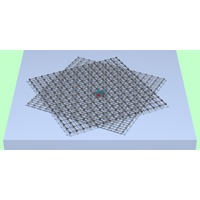
Spectroscopic Visualization of Flat Bands in Magic-Angle Twisted Monolayer-Bilayer Graphene: Coexistence of Localization and Delocalization

Ling-Hui Tong, Qingjun Tong, Li-Zhen Yang, Yue-Ying Zhou, Qilong Wu, Yuan Tian, Li Zhang, Lijie Zhang, Zhihui Qin, and Long-Jing Yin

Phys. Rev. Lett. 128, 126401 (2022) - Published 22 March, 2022

Flat bands in magic-angle twisted monolayer-bilayer graphene are shown to be delocalized on the bilayer side and localized on the monolayer side.

Excitation of Initial Waves by Wind: A Theoretical Model and Its Experimental Verification

Meital Geva and Lev Shemer

Phys. Rev. Lett. 128, 124501 (2022) - Published 21 March, 2022

Laboratory water-tank experiments and model calculations reveal a complex interaction between wind and the resulting surface water waves.

Single-Crystal Alkali Antimonide Photocathodes: High Efficiency in the Ultrathin Limit

C. T. Parzyck, A. Galdi, J. K. Nangoi, W. J. I. DeBenedetti, J. Balajka, B. D. Faeth, H. Paik, C. Hu, T. A. Arias, M. A. Hines, D. G. Schlom, K. M. Shen, and J. M. Maxson

Phys. Rev. Lett. 128, 114801 (2022) - Published 18 March, 2022

Researchers demonstrate a single-crystal photocathode that can emit electrons with higher efficiency than its predecessors.

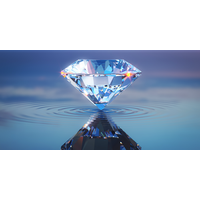
Angle Locking of a Levitating Diamond Using Spin Diamagnetism

M. Perdriat, P. Huillery, C. Pellet-Mary, and G. Hétet

Phys. Rev. Lett. 128, 117203 (2022) - Published 18 March, 2022

By tuning the magnetic properties of a tiny levitating diamond, researchers control its orientation in a magnetic field.

Sign In to Your Journals Account

Filter

Section

Filter

Article Lookup

Enter a citation