Highlights

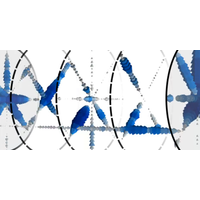
Hierarchy of Ideal Flatbands in Chiral Twisted Multilayer Graphene Models

Jie Wang and Zhao Liu

Phys. Rev. Lett. 128, 176403 (2022) - Published 29 April, 2022

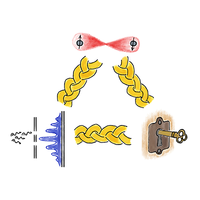
A class of models generalize the ideal quantum geometry of chiral magic angle twisted bilayer graphene to arbitrary numbers of layers and various stacking patterns.

Family of Ideal Chern Flatbands with Arbitrary Chern Number in Chiral Twisted Graphene Multilayers

Patrick J. Ledwith, Ashvin Vishwanath, and Eslam Khalaf

Phys. Rev. Lett. 128, 176404 (2022) - Published 29 April, 2022

A class of models generalize the ideal quantum geometry of chiral magic angle twisted bilayer graphene to arbitrary numbers of layers and various stacking patterns.

Quantum Fluctuation Theorem under Quantum Jumps with Continuous Measurement and Feedback

Toshihiro Yada, Nobuyuki Yoshioka, and Takahiro Sagawa

Phys. Rev. Lett. 128, 170601 (2022) - Published 28 April, 2022

A generalized fluctuation theorem is derived for quantum systems undergoing continuous measurement and feedback.

Curved Magnetism in CrI3

Alexander Edström, Danila Amoroso, Silvia Picozzi, Paolo Barone, and Massimiliano Stengel

Phys. Rev. Lett. 128, 177202 (2022) - Published 28 April, 2022

The effect of curvature on the noncollinear magnetic order of a 2D magnet, CrI3 has been calculated using a continuum model with parameters fully determined by noncollinear spin DFT.

Motile Topological Defects Hinder Dynamical Arrest in Dense Liquids of Active Ellipsoids

Pragya Arora, A. K. Sood, and Rajesh Ganapathy

Phys. Rev. Lett. 128, 178002 (2022) - Published 28 April, 2022

At packing densities where particles in many liquid-like systems stop moving, 3D-printed ellipsoids can keep scuttling because of the presence of packing “defects.”

Search for Cosmic-Ray Boosted Sub-GeV Dark Matter at the PandaX-II Experiment

Xiangyi Cui et al. (PandaX-II Collaboration)

Phys. Rev. Lett. 128, 171801 (2022) - Published 27 April, 2022

A large unexplored region of parameter space has been ruled out for hypothetical sub-GeV dark matter which was boosted in energy from collisions with cosmic rays.

Shear-Driven Solidification and Nonlinear Elasticity in Epithelial Tissues

Junxiang Huang, James O. Cochran, Suzanne M. Fielding, M. Cristina Marchetti, and Dapeng Bi

Phys. Rev. Lett. 128, 178001 (2022) - Published 27 April, 2022

A minimal cell-based computational model demonstrates that fluid-like epithelial tissues become rigid above a critical applied strain, a process similar to shear-driven rigidity in other soft matter systems.

Observation of Degenerate Zero-Energy Topological States at Disclinations in an Acoustic Lattice

Yuanchen Deng, Wladimir A. Benalcazar, Ze-Guo Chen, Mourad Oudich, Guancong Ma, and Yun Jing

Phys. Rev. Lett. 128, 174301 (2022) - Published 26 April, 2022

A new technique creates defects in a topological acoustic system that don’t destroy the system’s chiral symmetry, protecting its topological states.

Exact Quasiparticle Properties of a Heavy Polaron in BCS Fermi Superfluids

Jia Wang, Xia-Ji Liu, and Hui Hu

Phys. Rev. Lett. 128, 175301 (2022) - Published 26 April, 2022

An exact theoretical model of polarons rigorously demonstrates universal properties of their spectrum structure.

Laughlin’s Topological Charge Pump in an Atomic Hall Cylinder

Aurélien Fabre, Jean-Baptiste Bouhiron, Tanish Satoor, Raphael Lopes, and Sylvain Nascimbene

Phys. Rev. Lett. 128, 173202 (2022) - Published 25 April, 2022

Using atomic spin to represent a synthetic dimension, researchers have experimentally verified the predictions of a long-unrealized thought experiment.

Entanglement and Superposition Are Equivalent Concepts in Any Physical Theory

Guillaume Aubrun, Ludovico Lami, Carlos Palazuelos, and Martin Plávala

Phys. Rev. Lett. 128, 160402 (2022) - Published 22 April, 2022

In general probabilistic theories, superposition, in the form of what the authors define as strong incompatibility, is equivalent to entanglement.

Experimental Realization of the Rabi-Hubbard Model with Trapped Ions

Q.-X. Mei, B.-W. Li, Y.-K. Wu, M.-L. Cai, Y. Wang, L. Yao, Z.-C. Zhou, and L.-M. Duan

Phys. Rev. Lett. 128, 160504 (2022) - Published 22 April, 2022

The Rabi-Hubbard model is realized in a quantum simulator that uses a trapped ion platform with up to 16 ions in a linear array.

Evidence of Two-Source King Plot Nonlinearity in Spectroscopic Search for New Boson

Joonseok Hur, Diana P. L. Aude Craik, Ian Counts, Eugene Knyazev, Luke Caldwell, Calvin Leung, Swadha Pandey, Julian C. Berengut, Amy Geddes, Witold Nazarewicz, Paul-Gerhard Reinhard, Akio Kawasaki, Honggi Jeon, Wonho Jhe, and Vladan Vuletić

Phys. Rev. Lett. 128, 163201 (2022) - Published 22 April, 2022

Tests of the standard model of particle physics using nuclear isotopes are becoming increasingly precise but they have a way to go before they can confirm the existence of any new particles.

Triplet Superconductivity from Nonlocal Coulomb Repulsion in an Atomic Sn Layer Deposited onto a Si(111) Substrate

Sebastian Wolf, Domenico Di Sante, Tilman Schwemmer, Ronny Thomale, and Stephan Rachel

Phys. Rev. Lett. 128, 167002 (2022) - Published 22 April, 2022

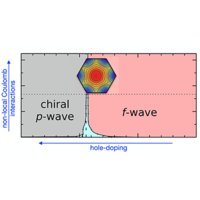
A proposed method for realizing a spin-triplet superconductor in an atomic Sn layer deposited onto a Si (111) substrate demonstrates the extended electronic Hubbard model.

Evidence and Stability Field of fcc Superionic Water Ice Using Static Compression

Gunnar Weck, Jean-Antoine Queyroux, Sandra Ninet, Frédéric Datchi, Mohamed Mezouar, and Paul Loubeyre

Phys. Rev. Lett. 128, 165701 (2022) - Published 21 April, 2022

Experiments indicate that superionic ice can exist in two stable crystal structures.

Momentum-Space Spin Antivortex and Spin Transport in Monolayer Pb

Kaijie Yang, Yuanxi Wang, and Chao-Xing Liu

Phys. Rev. Lett. 128, 166601 (2022) - Published 21 April, 2022

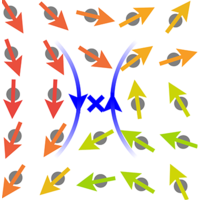
A new type of stable but movable spin texture, the spin antivortex, is predicted in lead monolayers on top of SiC substrates.

Collapse of Coherent Large Scale Flow in Strongly Turbulent Liquid Metal Convection

Felix Schindler, Sven Eckert, Till Zürner, Jörg Schumacher, and Tobias Vogt

Phys. Rev. Lett. 128, 164501 (2022) - Published 20 April, 2022

Liquid-metal convection experiments reveal an unexpected transition in the heat transport efficiency of the system at high turbulence.

High-Temperature Superconducting Phase in Clathrate Calcium Hydride CaH6 up to 215 K at a Pressure of 172 GPa

Liang Ma, Kui Wang, Yu Xie, Xin Yang, Yingying Wang, Mi Zhou, Hanyu Liu, Xiaohui Yu, Yongsheng Zhao, Hongbo Wang, Guangtao Liu, and Yanming Ma

Phys. Rev. Lett. 128, 167001 (2022) - Published 20 April, 2022

A decade after it was theorized, scientists in China have synthesized a new type of superconductor, the superhydride CaH6.

Gell-Mann–Low Criticality in Neural Networks

Lorenzo Tiberi, Jonas Stapmanns, Tobias Kühn, Thomas Luu, David Dahmen, and Moritz Helias

Phys. Rev. Lett. 128, 168301 (2022) - Published 19 April, 2022

Scientists have applied a technique called renormalization—used often in quantum field theory—to investigate how the brain stores and processes information.

Light-Induced Magnetization at the Nanoscale

Jonas Wätzel, Primož Rebernik Ribič, Marcello Coreno, Miltcho B. Danailov, Christian David, Alexander Demidovich, Michele Di Fraia, Luca Giannessi, Klavs Hansen, Špela Krušič, Michele Manfredda, Michael Meyer, Andrej Mihelič, Najmeh Mirian, Oksana Plekan, Barbara Ressel, Benedikt Rösner, Alberto Simoncig, Simone Spampinati, Matija Stupar, Matjaž Žitnik, Marco Zangrando, Carlo Callegari, Jamal Berakdar, and Giovanni De Ninno

Phys. Rev. Lett. 128, 157205 (2022) - Published 13 April, 2022

Theorists predict that an atomic gas could be magnetized using only lasers, something that could provide a noninvasive way to quickly manipulate its magnetic properties.

Sign In to Your Journals Account

Filter

Section

Filter

Article Lookup

Enter a citation