Recent Articles

Self-attention assistant classification of non-Hermitian phases on a two-dimensional lattice

Hengxuan Jiang, Xiumei Wang, and Xingping Zhou

Phys. Rev. B 112, 014116 (2025) - Published 28 July, 2025

Role of alloying and defects in light ion energy dissipation in iron

Evgeniia Ponomareva, Eduardo Pitthan, Marcos V. Moro, Barbara Bruckner, Peter Bauer, Frans Munnik, René Heller, Rafael Nuñez Palacio, Daniel Primetzhofer, and Andrea E. Sand

Phys. Rev. B 112, 014313 (2025) - Published 28 July, 2025

Simulation of current-driven magnetization switching in nanopillars with perpendicular shape anisotropy

Natalia Boscolo Meneguolo, Olivier Fruchart, Jean-Christophe Toussaint, Mouad Fattouhi, Liliana D. Buda-Prejbeanu, Ioan-Lucian Prejbeanu, and Daria Gusakova

Phys. Rev. B 112, 014448 (2025) - Published 28 July, 2025

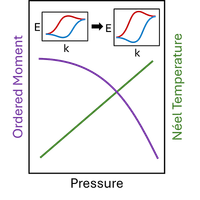
Tuning the magnetic properties of the spin-split antiferromagnet MnTe through pressure

Edison P. Carlisle, George Yumnam, Stuart Calder, Bianca Haberl, Jia-Xin Xiong, Michael A. McGuire, Alex Zunger, Raphaël P. Hermann, and Benjamin A. Frandsen

Phys. Rev. B 112, 014450 (2025) - Published 28 July, 2025

Hexagonal MnTe is a leading example of collinear antiferromagnets with nonrelativistic spin splitting of the electron bands, often called altermagnets. This material also exhibits an exceptionally large magnetovolume effect. Here, the authors investigate the magnetostructural properties of MnTe and their connection to altermagnetism via neutron diffraction with in situ pressure and density functional theory. They find that pressure is an effective tuning knob for MnTe, increasing the Néel temperature but decreasing the magnetic moment, while also modifying the altermagnetic spin splitting.

Disorder-induced magnetism in amorphous MoS2 monolayer

Hongbo Du, Chongze Wang, Chong Qiao, Shuyuan Liu, Bing Wang, Jun-Hyung Cho, and Yu Jia

Phys. Rev. B 112, 014451 (2025) - Published 28 July, 2025

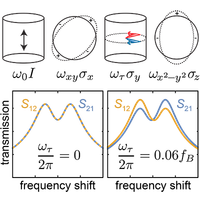
Probing time-reversal symmetry breaking at microwave frequencies

T. Chouinard and D. M. Broun

Phys. Rev. B 112, 014521 (2025) - Published 28 July, 2025

To probe spontaneous time reversal symmetry breaking (TRSB) in superconductors at microwave frequencies, the authors propose here a technique based on a doubly degenerate resonator mode, such as the TE111 mode of a cylindrical cavity. In addition to the frequency splitting induced by TRSB, which can be dwarfed by spurious shape distortions, the authors show that when such a resonator is interrogated by circularly polarized microwaves, the forward and reverse transmission response breaks reciprocity, providing unambiguous evidence that time-reversal symmetry is broken.

O interstitial diffusion in β−Ga2O3: Direct approach via master diffusion equations

Grace McKnight, Channyung Lee, and Elif Ertekin

Phys. Rev. B 112, 024112 (2025) - Published 28 July, 2025

Evidence for magnetoelastic coupling and chiral magnetic ground state in quasi-van der Waals trigonal Cr1.22Te2

S. M. Hossain, B. Rai, P. R. Baral, O. Zaharko, N. Kumar, A. K. Bera, and M. Majumder

Phys. Rev. B 112, 024439 (2025) - Published 28 July, 2025

Dynamical response theory of interacting Majorana fermions and its application to generic Kitaev quantum spin liquids in a field

Peng Rao, Roderich Moessner, and Johannes Knolle

Phys. Rev. B 112, 024440 (2025) - Published 28 July, 2025

The authors develop here a general theory for calculating experimental signatures of interacting Majorana fermions within the random phase approximation (RPA), which helps to identify their experimental signatures in experiment. As an example, the authors apply it to the seminal Kitaev quantum spin liquid (KQSL) away from the Kitaev limit, and show that, contrary to conventional wisdom, sharp signatures in neutron scattering can arise in KQSL due to Majorana bound states.

Interfacial spin-orbit coupling in superconducting hybrid systems

A. A. Mazanik, Tim Kokkeler, I. V. Tokatly, and F. Sebastian Bergeret

Phys. Rev. B 112, 024514 (2025) - Published 28 July, 2025

Disordered topological crystalline phases

Adam Yanis Chaou, Mateo Moreno-Gonzalez, Alexander Altland, and Piet W. Brouwer

Phys. Rev. B 112, 035167 (2025) - Published 28 July, 2025

Observing two-electron interactions with correlation-ARPES

A. F. Kemper, Francesco Goto, Heba A. Labib, Nicolas Gauthier, E. H. da Silva Neto, and F. Boschini

Phys. Rev. B 112, 035168 (2025) - Published 28 July, 2025

Topological phase transition in the two-leg Hubbard model: Emergence of the Haldane phase via diagonal hopping and strong interactions

João Pedro Gama D'Elia and Thereza Paiva

Phys. Rev. B 112, 035169 (2025) - Published 28 July, 2025

Collapse of Landau levels in tilted Weyl semimetals and its detection via the planar Hall effect

Fu-Yang Chen, Zhuo-Hua Chen, Hou-Jian Duan, Mou Yang, Rui-Qiang Wang, and Ming-Xun Deng

Phys. Rev. B 112, 035170 (2025) - Published 28 July, 2025

Order parameter fluctuation effects on current-induced magnetization

Genta Furuya and Kazumasa Hattori

Phys. Rev. B 112, 035171 (2025) - Published 28 July, 2025

Enhancement of persistent current in a non-Hermitian disordered ring

Suparna Sarkar, Soumya Satpathi, and Swapan K. Pati

Phys. Rev. B 112, 035425 (2025) - Published 28 July, 2025

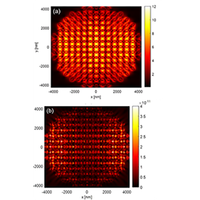
T-matrix method for computation of second-harmonic generation upon optical wave scattering from clusters of arbitrary particles: Application to nonlinear optical interaction of bound states in the continuum

Ivan Sekulic, Ji Tong Wang, Jian Wei You, and Nicolae C. Panoiu

Phys. Rev. B 112, 035426 (2025) - Published 28 July, 2025

The problem of solving nonlinear scattering of optical waves from arbitrary distributions of particles becomes practically intractable when the number of particles is larger than just a few. Here, the authors introduce an approach based on multiple-scattering matrix theory that solves this problem for clusters of thousands of particles of arbitrary shape made of materials characterized by general frequency-dispersion relations, so that it describes the optical response of metallic, semiconductor, and polaritonic particles. To illustrate the versatility of the method, the enhancement of second-harmonic generation in a cluster of particles that supports bound-states in the continuum at both the fundamental frequency and second harmonic is demonstrated.

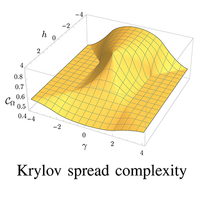
Phase transitions in a non-Hermitian Su-Schrieffer-Heeger model via Krylov spread complexity

E. Medina-Guerra, I. V. Gornyi, and Yuval Gefen

Phys. Rev. B 112, 035427 (2025) - Published 28 July, 2025

The authors present here a tour de force exploration of phase transitions in a non-Hermitian SSH model using Krylov spread complexity and fidelity. These tools detect the PT symmetry breaking as the spectrum evolves from real to complex and further into the purely imaginary regime. The Krylov spread captures both known and previously overlooked transitions. Notably, the fidelity highlights dynamical transitions in the PT-broken phase, offering a novel probe for understanding non-Hermitian quantum systems and their emergent behavior.

Scan calculation of the density of states: Real-space cluster perturbation theory applied to the inhomogeneous Hubbard model in one dimension

Kaito Matsuki, Chisa Hotta, and Kenichi Asano

Phys. Rev. B 112, 045146 (2025) - Published 28 July, 2025

Interplay between topology and electron-electron interactions in the moiré MoTe2/WSe2 heterobilayer

Palash Saha, Louk Rademaker, and Michał Zegrodnik

Phys. Rev. B 112, 045147 (2025) - Published 28 July, 2025
Sign In to Your Journals Account

Filter

Recent Issues

Vol. 114, Iss. 30
15 November 2026
Vol. 114, Iss. 29
15 November 2026
Vol. 114, Iss. 28
15 November 2026
Vol. 114, Iss. 27
1 November 2026
Category
Article Type
Section

Filter

Article Lookup

Enter a citation