Recent Articles

Implications of gauge freedom for nonrelativistic quantum electrodynamics

Adam Stokes and Ahsan Nazir

Rev. Mod. Phys. 94, 045003 (2022) - Published 3 November, 2022

This article reviews the meaning of gauge freedom in quantum electrodynamics and emphasizes its consistency with examples and analyses. It thus demonstrates that ambiguities and recent controversies are resolved by proper identification of physically relevant observables of field and matter subsystems. Since these observables differ for different gauges, light and matter subsystems can only be defined relative to the choice of gauge, with implications for the identification of effective few-dimensional models, entanglement, phase transitions, and cavity quantum electrodynamics effects beyond weak-coupling regimes.

Laser melting modes in metal powder bed fusion additive manufacturing

Cang Zhao, Bo Shi, Shuailei Chen, Dong Du, Tao Sun, Brian J. Simonds, Kamel Fezzaa, and Anthony D. Rollett

Rev. Mod. Phys. 94, 045002 (2022) - Published 20 October, 2022

Additive manufacturing, called 3D printing, has become ubiquitous in classrooms, laboratories, and research centers. While printing with plastics has revolutionized prototyping and modeling, it is now possible to fabricate metal parts and devices directly from computer models by fusing metal particles together with high-intensity lasers. This review focusses on the flow of heat and material in the high temperature environment, the instabilities that arise, and the tools to control them.

Editorial: A Welcoming Home for Applied Science

Jessica Thomas and Michael Thoennessen

Rev. Mod. Phys. 94, 040001 (2022) - Published 11 October, 2022

Charged particle motion and radiation in strong electromagnetic fields

A. Gonoskov, T. G. Blackburn, M. Marklund, and S. S. Bulanov

Rev. Mod. Phys. 94, 045001 (2022) - Published 7 October, 2022

Ultrastrong electromagnetic fields occur not only in astrophysical settings but also in dense lepton bunches, special crystals, and at the focus of high peak power lasers. For fields of sufficient magnitude including quantum electrodynamics effects becomes essential. Electron-positron pair creation and interaction of these pairs with the fields results in fascinating phenomena. In this review these particle dynamics are analyzed and shown to exhibit complex behavior including chaotic motion with strange attractors and limit cycles, as well as cascades where the vacuum “explodes” and acts back on the strong fields. An overview of planned experiments points to new discoveries which will challenge long-held theoretical expectations.

Statics and dynamics of skyrmions interacting with disorder and nanostructures

C. Reichhardt, C. J. O. Reichhardt, and M. V. Milošević

Rev. Mod. Phys. 94, 035005 (2022) - Published 20 September, 2022

The study of skyrmions has grown as they have been realized in topologically stable spin-textured magnetic excitations. This overview treats magnetic skyrmions and skyrmion assemblies using a particle-based approach to describe a system in which the energy scales of the skyrmion-skyrmion interactions, sample disorder, temperature, and drive magnitude compete. Pinning and dynamic effects of skyrmions interacting with disordered or ordered substrates are of technological importance for skyrmion applications. Analogs to vortices in type-II superconductors, charge density waves, and colloidal particles are presented.

Sachdev-Ye-Kitaev models and beyond: Window into non-Fermi liquids

Debanjan Chowdhury, Antoine Georges, Olivier Parcollet, and Subir Sachdev

Rev. Mod. Phys. 94, 035004 (2022) - Published 14 September, 2022

The Sachdev-Ye-Kitaev (SYK) model is a solvable model of a many-body quantum system that has stimulated interest in both condensed matter physics and quantum gravity. This review focuses on the insights provided by the SYK model, which has no quasiparticle excitations, into the physics of Planckian non-Fermi-liquid metals. This is discussed for a range of strongly correlated models and in relation to experiments on strongly correlated materials. Also included is a discussion of recent developments regarding the connections between the SYK model and the quantum theory of black holes.

Colloquium: Machine learning in nuclear physics

Amber Boehnlein, Markus Diefenthaler, Nobuo Sato, Malachi Schram, Veronique Ziegler, Cristiano Fanelli, Morten Hjorth-Jensen, Tanja Horn, Michelle P. Kuchera, Dean Lee, Witold Nazarewicz, Peter Ostroumov, Kostas Orginos, Alan Poon, Xin-Nian Wang, Alexander Scheinker, Michael S. Smith, and Long-Gang Pang

Rev. Mod. Phys. 94, 031003 (2022) - Published 8 September, 2022

Nuclear physics deals with complex systems, large datasets, and complicated correlations between parameters, which makes the field suitable for the application of machine learning techniques. Machine learning can help classify and analyze data, find hidden correlations, and assist in the design of new experiments and detectors. This Colloquium explains how this will lead to advances in nuclear theory, experimental methods and data acquisition, and accelerator technology.

Interplay between optical vortices and condensed matter

Guillermo F. Quinteiro Rosen, Pablo I. Tamborenea, and Tilmann Kuhn

Rev. Mod. Phys. 94, 035003 (2022) - Published 25 August, 2022

The interaction between light and matter is a subject of ongoing fundamental interest at the intersection of optics and condensed-matter physics. This review discusses how the structuring of light into optical vortices leads to distinctive optical selection rules and coupling to sample geometry, requiring reformulation of the standard theory for interaction of plane-wave light with matter. The interactions of optical vortices with semiconductor nanostructures, quantum rings, and 2D materials are presented. The results suggest further avenues for fundamental investigation as well as current and prospective applications in quantum control, communications, and sensing.

Optical diagnostics of laser-produced plasmas

S. S. Harilal, M. C. Phillips, D. H. Froula, K. K. Anoop, R. C. Issac, and F. N. Beg

Rev. Mod. Phys. 94, 035002 (2022) - Published 15 August, 2022

Laser-produced plasmas (LPP) are important for fundamental research, industrial, and medical applications. Typical laser intensities used for producing these plasmas are low to moderate, and the plasma conditions change with both space and time, can be spatially inhomogeneous, and have various degrees of ionization states for the ionized material. Measuring these properties is key for understanding, tailoring, and optimizing the plasma conditions. This review provides an overview of optical diagnostic tools employed for the characterization of the LPPs and emphasizes techniques, associated assumptions, and challenges.

Colloquium: Multiscale modeling of brain network organization

Charley Presigny and Fabrizio De Vico Fallani

Rev. Mod. Phys. 94, 031002 (2022) - Published 2 August, 2022

The brain is a formidably complex system made of neurons and neuronal ensembles that segregate and integrate information across organized layers at multiple spatial and temporal scales. A physicist’s perspective is provided on modeling the brain as interconnected and multilayered networks that grow into complex organizations for processing information dynamically. The analytical tools for multilayer networks root deeply in statistical physics that render interpretable features connecting network patterns as biomarkers to a mental state or brain diseases.

Erratum: Colloquium: Statistical mechanics and thermodynamics at strong coupling: Quantum and classical [Rev. Mod. Phys. 92, 041002 (2020)]

Peter Talkner and Peter Hänggi

Rev. Mod. Phys. 94, 039901 (2022) - Published 29 July, 2022

Colloquium: Geometric phases of light: Insights from fiber bundle theory

C. Cisowski, J. B. Götte, and S. Franke-Arnold

Rev. Mod. Phys. 94, 031001 (2022) - Published 18 July, 2022

This Colloquium reviews the role of geometric phases in optics from the perspective of fiber bundle theory. The transformation of the polarization of light by discrete optical components illustrates many elements of the theoretical formalism, and an outlook is presented for the study and application of geometric phases in higher dimensions through analyses of higher order Gaussian modes and general vectorial fields.

Micius quantum experiments in space

Chao-Yang Lu, Yuan Cao, Cheng-Zhi Peng, and Jian-Wei Pan

Rev. Mod. Phys. 94, 035001 (2022) - Published 6 July, 2022

The Micius satellite, launched from China in August 2016, is the first and only satellite dedicated entirely to quantum experiments. The ultralow loss transmission of photons on most of the path between ground and space enables quantum communication capabilities that are still far from being realized. This review details the commissioning of Micius as a full quantum communications system, and describes the achievement of global-scale quantum key distribution, entanglement distribution, and other fundamental studies, with this unique space-based system.

Security in quantum cryptography

Christopher Portmann and Renato Renner

Rev. Mod. Phys. 94, 025008 (2022) - Published 29 June, 2022

Secure communications is a vital need of the world, and the basic features of quantum mechanics seemingly offer fundamental new tools for achieving this security. But do these tools really work? This review gives due attention to the real-world problems with experimental quantum cryptography, but the heart of the review is an in-depth survey of the analyses developed to prove the security of the basic quantum techniques introduced by Wiesner, Ekert, Bennett, and Brassard. A broader set of cryptographic tasks have quantum aspects which are also discussed here.

Quantum indistinguishability by path identity and with undetected photons

Armin Hochrainer, Mayukh Lahiri, Manuel Erhard, Mario Krenn, and Anton Zeilinger

Rev. Mod. Phys. 94, 025007 (2022) - Published 21 June, 2022

The double-slit experiment manifests the duality between wave interference and the distinguishability of paths taken by a particle though an apparatus. This article reviews advanced developments of these concepts with pairs of particles, starting with experiments on quantum foundations with photon pairs in the 1990s. These experiments now form the basis for applications in quantum information as well as for spatial imaging and spectroscopy that is performed without ever detecting the photons that interacted with the object.

Nobel Lecture: A forty-year journey

Reinhard Genzel

Rev. Mod. Phys. 94, 020501 (2022) - Published 17 June, 2022

The 2020 Nobel Prize for Physics was shared by Roger Penrose, Andrea Ghez, and Reinhard Genzel. This paper is the text of the address given in conjunction with the award.

Erratum: Hadronic molecules [Rev. Mod. Phys. 90, 015004 (2018)]

Feng-Kun Guo, Christoph Hanhart, Ulf-G. Meißner, Qian Wang, Qiang Zhao, and Bing-Song Zou

Rev. Mod. Phys. 94, 029901 (2022) - Published 13 June, 2022

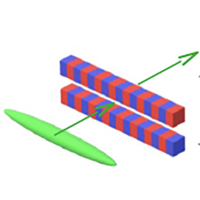
Bunch shaping in electron linear accelerators

G. Ha, K.-J. Kim, J. G. Power, Y. Sun (孙银娥), and P. Piot

Rev. Mod. Phys. 94, 025006 (2022) - Published 31 May, 2022

Electron beams from modern high performance accelerators power intense light sources such as free electron lasers and synchrotron light sources, as well as wakefield-based accelerating modules relying on plasmas or dielectric structures. The way the electron bunches are shaped in space and time controls the efficacy of how the electron beam radiates or interacts with structures. In this review the physics behind methods for controlling the mesoscopic electron-bunch properties, i.e., phase-space distributions, from an electron accelerator are discussed, from both a theoretical and an experimental perspective. The focus is on phase-space shaping methods relying on bounded external electromagnetic fields or self-generated velocity and radiation fields, and how they are implemented.

Tensor lattice field theory for renormalization and quantum computing

Yannick Meurice, Ryo Sakai, and Judah Unmuth-Yockey

Rev. Mod. Phys. 94, 025005 (2022) - Published 26 May, 2022

One goal in understanding quantum chromodynamics (QCD) includes solving how quarks and gluons combine to form the hadrons and nuclei seen in nature. With lattice QCD, progress has been made regarding the calculation of masses and couplings. However, the real-time evolution and the critical behavior at finite density of strong particles in colliders, stars, or after the big bang remain a challenging problem despite their potential to detect the existence of new physics. The tensor methods for lattice field theories provide a route to handle strongly correlated systems across different subfields using renormalization group methods or quantum computing.

Spoof surface plasmon photonics

Francisco J. Garcia-Vidal, Antonio I. Fernández-Domínguez, Luis Martin-Moreno, Hao Chi Zhang, Wenxuan Tang, Ruwen Peng, and Tie Jun Cui

Rev. Mod. Phys. 94, 025004 (2022) - Published 20 May, 2022

Structuring metallic surfaces allows for the support of surface electromagnetic modes at frequencies for which they would not be allowed for smooth surfaces. These modes are called “spoof surface plasmons” because of their similarity to surface plasmons that are supported at optical frequencies for smooth surfaces. This article describes the physics that underlies the behavior of spoof surface plasmons and how these modes are used in applications that require the manipulation of electromagnetic fields at frequencies below optical.

Sign In to Your Journals Account

Filter

Recent Issues

Vol. 98, Iss. 4
October - December 2026
Vol. 98, Iss. 3
July - September 2026
Vol. 98, Iss. 2
April - June 2026
Vol. 98, Iss. 1
January - March 2026
Category
Article Type

Filter

Article Lookup

Enter a citation