Recent Articles

Colloquium: Geospace pathfinder science at Arecibo Observatory

J. D. Mathews, M. P. Sulzer, and Shikha Raizada

Rev. Mod. Phys. 98, 011005 (2026) - Published 31 March, 2026

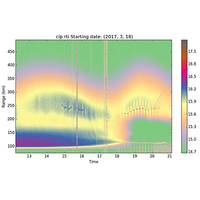
The Arecibo Observatory housed the largest single-aperture radio telescope for approximately 50 years. A major scientific focus was studying the upper atmosphere; its highly sensitive radar facility, combined with lidars, optical sensors, and satellite-based systems, enabled unprecedented studies of ionospheric physics based on incoherent scattering of radio waves off free electrons. After establishing the fundamental concepts and observables of the incoherent scattering radar technique, this Colloquium reviews key advances obtained with the Arecibo suite of instruments in multiple areas of geospace science, including plasma physics, space weather, lidar studies of atomic metals in the ionosphere, and ionosphere-magnetosphere coupling.

Colloquium: Radio astronomy with the Arecibo 305-m telescope: In contemporaneous context

Tapasi Ghosh and Chris Salter

Rev. Mod. Phys. 98, 011004 (2026) - Published 31 March, 2026

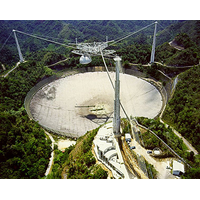
The Arecibo Observatory, inaugurated in 1963 as the world’s largest single-dish radio telescope, remained at the forefront of astronomy and atmospheric science for more than five decades, until its catastrophic collapse in December 2020. This Colloquium focuses on Arecibo’s enduring legacy in radio astronomy, offering a historical perspective that emphasizes how successive major upgrades of the telescope continuously expanded its observational capabilities and scientific impact. It presents Arecibo’s most influential contributions in topics as diverse as pulsar studies, the mapping of neutral hydrogen (HI) in the Milky Way and other galaxies, the characterization of the interstellar medium, the imaging of extragalactic radio sources with very long baseline interferometry (VLBI), the search for extraterrestrial intelligence (SETI), and being a major contributor to the first-ever detection of a stochastic gravitational-wave background.

Colloquium: Planetary radar at the Arecibo Observatory

Michael C. Nolan, Lynn M. Carter, and Edgard G. Rivera-Valentín

Rev. Mod. Phys. 98, 011003 (2026) - Published 31 March, 2026

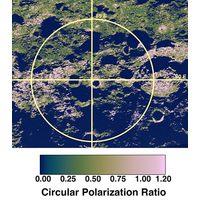
For more than two decades, the planetary radar installed at the Arecibo Telescope was the most sensitive instrument of its kind, harnessing the penetrating power of radio waves to perform observations of the (sub)surface of planets, moons, and asteroids in the Solar System—providing a unique perspective on those bodies that helped to drive in situ exploration. This Colloquium presents an overview of the scientific legacy of the Arecibo radar system, focusing on the period posterior to the Gregorian Update in the late 1990s until the unexpected demise of the telescope in 2020. After recalling the basics of planetary radar techniques, it reviews key Arecibo observations of Mercury, Venus, Mars, our Moon, and the Saturn system, and highlights its essential role in the characterization of a large sample of near-Earth asteroids and comets.

Editorial: A Tribute to the Arecibo Observatory

Véronique Van Elewyck and Dietrich Belitz

Rev. Mod. Phys. 98, 010001 (2026) - Published 31 March, 2026

Three Colloquia honor the Arecibo Observatory’s legacy, exploring its revolutionary impact on planetary radar studies, radio astronomy, and geospace science.

Continuous-variable quantum communication

Vladyslav C. Usenko, Antonio Acín, Romain Alléaume, Ulrik L. Andersen, Eleni Diamanti, Tobias Gehring, Adnan A. E. Hajomer, Florian Kanitschar, Christoph Pacher, Stefano Pirandola, and Valerio Pruneri

Rev. Mod. Phys. 98, 015003 (2026) - Published 23 March, 2026

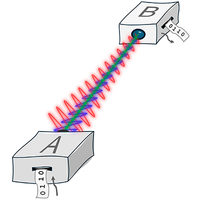
The quantum nature of radiation is not solely corpuscular. In the “continuous-variable” setting, the wavelike quantum properties can be observed. Quantum technologies put this continuous-variable nature of light to use, with applications in various forms of quantum information processing. This review concentrates on the developments of these wave-based techniques in quantum communication. Compared with photon-based (corpuscular) variants, the continuous-variable approach is equally well developed and has certain conceptual and practical advantages.

Colloquium: Multimessenger astronomy with continuous gravitational waves and future detectors

Benjamin J. Owen

Rev. Mod. Phys. 98, 011002 (2026) - Published 10 March, 2026

The search for continuous gravitational waves from rotating neutron stars represents a key frontier of gravitational-wave astrophysics, with strong connections to electromagnetic astronomy, nuclear astrophysics, and condensed matter physics. This Colloquium discusses the detection prospects for these long-lived yet elusive signals in the upcoming generation of gravitational-wave detectors, emphasizing the importance of simultaneous electromagnetic observations. It also surveys the potential implications of such multimessenger observations for our understanding of the physical and astrophysical processes taking place in the extremely dense environments of their sources.

Kagome metals

Domenico Di Sante, Titus Neupert, Giorgio Sangiovanni, Ronny Thomale, Riccardo Comin, Joseph G. Checkelsky, Ilija Zeljkovic, and Stephen D. Wilson

Rev. Mod. Phys. 98, 015002 (2026) - Published 12 February, 2026

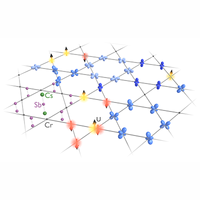
The kagome lattice is a two-dimensional tiling of hexagons and triangles named after a Japanese basket weaving technique. Its geometry gives rise to highly frustrated interactions and interference effects experienced by electrons and their multiple degrees of freedom. In metals, the exploration of materials with kagome conduction networks is driven by predictions of realizing new electronic states where these interference effects are dominant, amplifying electronic interactions and many-body effects. In these kagome metals, these amplified correlation effects in combination with spin-orbit coupling and other forms of frustration have given rise to a wealth of phenomena beyond expectations. These include unusual states and responses born from topological flat bands, massive Dirac fermions, sublattice interference effects at saddle points such as unconventional superconductivity, orbital antiferromagnetism and flux phases, amplified anomalous Hall effects, and electronic nematic states. This review examines the theoretical and experimental work on kagome metals, with the aim of elucidating fundamental mechanisms underlying the observed exotic phenomena.

Colloquium: Convection-cloud chambers: Experiment and theory

Steven Krueger and Raymond A. Shaw

Rev. Mod. Phys. 98, 011001 (2026) - Published 4 February, 2026

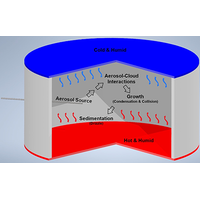
In warm clouds, drops grow into raindrops through both condensation and collision coalescence, but the observed rapid transition between these mechanisms remains difficult to theoretically explain. The convection-cloud chamber, which reproduces key phenomena such as turbulent fluctuations in droplet concentrations and supersaturation under controlled laboratory conditions, offers a promising approach to addressing this long-standing bottleneck in understanding in cloud physics. This Colloquium reviews the physics underlying the precipitation bottleneck, examines how convection-cloud chambers capture the essential processes, and synthesizes insights from experiments, theory, and computational models that bridge laboratory and atmospheric scales.

Field theories and quantum methods for stochastic reaction-diffusion systems

Mauricio J. del Razo, Tommaso Lamma, and Wout Merbis

Rev. Mod. Phys. 98, 015001 (2026) - Published 22 January, 2026

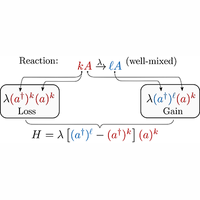
The exchange of energy and molecules in a living cell, the spread of opinions through a society, and the flow of traffic in a crowded city are very different phenomena, yet they are all examples of complex systems composed of many agents that interact with each other and exchange energy or particles with the environment. These systems can be modeled as stochastic reaction-diffusion systems. In this pedagogical review, the authors apply powerful field-theoretic methods to these systems, unifying diverse approaches under a single framework. The methods are useful for handling chemical systems but also have applications in a wide range of areas such as ecology and epidemiology.

Colloquium: Gravitational waves from neutrino-driven core collapse supernovae

A. Mezzacappa and M. Zanolin

Rev. Mod. Phys. 97, 041002 (2025) - Published 30 December, 2025

The observation of a core collapse supernova explosion of (near-)Galactic origin would constitute a landmark, once-in-a-century event for multimessenger astronomy, eagerly awaited by observers and modelers alike. The detection of gravitational waves, along with photons and neutrinos, from such an event would provide unique insights into the supernova central engine and the physics of the newly forming neutron star. This Colloquium presents the latest progress in core collapse supernova modeling and the associated gravitational wave signal predictions. It also provides an overview of the specific methods of detection and physical parameter estimation that can be implemented for such signals in ground-based laser interferometers, in the context of multimessenger research strategies.

Neutron stars and the dense matter equation of state

Katerina Chatziioannou, H. Thankful Cromartie, Stefano Gandolfi, Ingo Tews, David Radice, Andrew W. Steiner, and Anna L. Watts

Rev. Mod. Phys. 97, 045007 (2025) - Published 24 December, 2025

Neutron stars, the remnants of supernova explosions, are the densest objects in the Universe. A typical neutron star has a mass between one and two solar masses, and a radius of around 12 km. The density at the center of the star is higher than that in atomic nuclei. As a result, the properties of neutron stars provide important information about the behavior of ordinary matter under extreme compression. In recent years, new information about neutron stars has emerged from two sources. The first is the observation of the gravitational-wave signal from the final inspiral of a coalescing binary neutron star. The second is a careful measurement of the x-ray pulse profile of a spinning neutron star. This review discusses these measurements and summarizes how they constrain masses, radii, and central densities. The results are compared to predictions based on calculations of the nuclear equation of state at densities comparable to that in atomic nuclei, which are then extrapolated to higher density. The review ends with an outlook on future observational opportunities.

Quantum cryptography beyond key distribution: Theory and experiment

Mathieu Bozzio, Claude Crépeau, Petros Wallden, and Philip Walther

Rev. Mod. Phys. 97, 045006 (2025) - Published 19 December, 2025

Cryptography not only involves the sending of secret messages but also encompasses many protocols and procedures that provide privacy and security in the networked world. Likewise, quantum resources have the potential to enhance cryptography in ways that go beyond the well-known example of quantum key distribution. This review offers a classification of the main crypto primitives that are available quantum mechanically. It explains the security that they offer, including the sometimes significant limitations on their theoretical capabilities. Implementations using current photonic techniques are discussed.

Spin-glass dynamics: Experiment, theory, and simulation

E. D. Dahlberg, I. González-Adalid Pemartín, E. Marinari, G. Parisi, F. Ricci-Tersenghi, V. Martin-Mayor, J. Moreno-Gordo, R. L. Orbach, I. Paga, J. J. Ruiz-Lorenzo, and D. Yllanes

Rev. Mod. Phys. 97, 045005 (2025) - Published 15 December, 2025

This review updates the field of spin glasses with broad application to a large variety of physical systems. In particular, this review tracks the progress of experiment, theory, and large-scale simulations. It highlights the importance of their synergy, from the inception of the field to the present day, and includes future opportunities for research.

Colloquium: The cosmic dipole anomaly

Nathan Secrest, Sebastian von Hausegger, Mohamed Rameez, Roya Mohayaee, and Subir Sarkar

Rev. Mod. Phys. 97, 041001 (2025) - Published 11 December, 2025

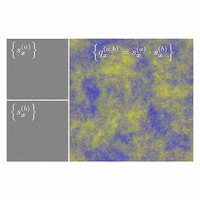
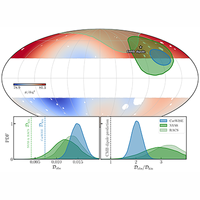
The cosmological principle, which states that the Universe must be statistically isotropic and homogeneous on large scales, is a foundational principle of the standard model of cosmology, known as lambda cold dark matter (ΛCDM). The validity of this principle can be tested by assessing the compatibility of a dipole anisotropy in the large-scale distribution of matter with the dipole observed in the cosmic microwave background, interpreted in the ΛCDM model as due to our local peculiar motion. This Colloquium describes the methodology for such a test and presents its outcome based on the analysis of recent large catalogs of radio galaxies and quasars, revealing a significant inconsistency between the two dipoles. The authors review these recent findings, as well as potential biases, systematic issues, and alternate interpretations, and discuss how this anomaly could challenge the standard description of our Universe based on the ΛCDM model.

Astrophysical tests of dark matter self-interactions

Susmita Adhikari, Arka Banerjee, Kimberly K. Boddy, Francis-Yan Cyr-Racine, Harry Desmond, Cora Dvorkin, Bhuvnesh Jain, Felix Kahlhoefer, Manoj Kaplinghat, Anna Nierenberg, Annika H. G. Peter, Andrew Robertson, Jeremy Sakstein, and Jesús Zavala

Rev. Mod. Phys. 97, 045004 (2025) - Published 8 December, 2025

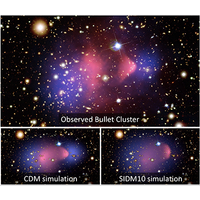
Dark sectors, involving new particles that couple very weakly to the standard model ones, play an important role in current model-building efforts in particle physics, as they allow, for example, for new dark matter production and interaction mechanisms. This review focuses on self-interacting dark matter scenarios, their implications on the dynamics and distribution of dark matter halos in the Universe, and the related astrophysical tests and observations, from galaxies to large-scale structures. It is embedded in the framework of the Novel Probes Project, a forum connecting observers and theorists involved in the study of astrophysical tests of dark-sector interactions.

Kitaev quantum spin liquids

Yuji Matsuda, Takasada Shibauchi, and Hae-Young Kee

Rev. Mod. Phys. 97, 045003 (2025) - Published 3 December, 2025

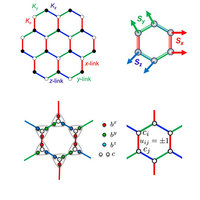
Frustration in spin systems can prevent ordering even at T=0, creating quantum spin liquids that have been sought since Anderson’s pioneering work in 1973 and his influential 1987 paper connecting them to high-temperature superconductivity. Kitaev’s solvable spin-1/2 models on a honeycomb lattice brought renewed attention to this field, with Jackeli and Khaliullin later revealing how to engineer Kitaev interactions in real materials. This review highlights theoretical and experimental developments in Kitaev spin liquids, emphasizing leading candidate materials and their broad topological properties such as chiral edge modes. Consequently, it provides essential insights for both experimentalists and theorists working on quantum spin liquid problems.

Statistical mechanics for networks of real neurons

Leenoy Meshulam and William Bialek

Rev. Mod. Phys. 97, 045002 (2025) - Published 6 November, 2025

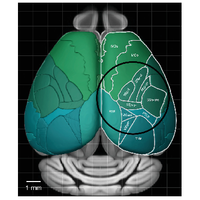
Our ability to perceive, think, or act relies on coordinated activity in large networks of neurons in the brain. This review examines recent progress in connecting ideas from statistical physics, such as maximum entropy methods and the renormalization group, to quantitative experiments that record the electrical activity of thousands of neurons simultaneously. This quantitative bridge between the new data and statistical physics models uncovers new, quantitatively reproducible behaviors and makes clear that abstract theoretical principles in studies of the brain can have the level of predictive power that we expect in other areas of physics.

Prospects for supersymmetry at High-Luminosity LHC

Howard Baer, Vernon Barger, Jessica Bolich, Juhi Dutta, Dakotah Martinez, Shadman Salam, Dibyashree Sengupta, and Kairui Zhang

Rev. Mod. Phys. 97, 045001 (2025) - Published 17 October, 2025

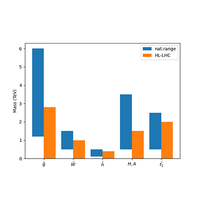
Supersymmetry remains one of the leading candidates for physics beyond the standard model, offering a compelling framework to address the hierarchy of scales. Its theoretical appeal has inspired decades of intensive model building and experimental searches. Recent results have placed stringent bounds on the supersymmetric parameter space, sharpening the focus on the remaining viable models. This review surveys the current status and outlook for supersymmetry in light of experimental constraints and recent theoretical developments, and presents projections for the discovery potential of the High-Luminosity Large Hadron Collider across multiple search channels and a variety of well-motivated scenarios.

The ups and downs of internal conversion

Anjay Manian, Zifei Chen, Hugh T. Sullivan, and Salvy P. Russo

Rev. Mod. Phys. 97, 035003 (2025) - Published 16 September, 2025

This review examines the theoretical methods used to describe the photophysical process of internal conversion in quantum systems. These models explore all facets of the nonradiative mechanism, and the review presents an outlook on how they can be incorporated in studies relevant to applications, for example, in photonics and energy harvesting.

Solar fusion III: New data and theory for hydrogen-burning stars

B. Acharya et al.

Rev. Mod. Phys. 97, 035002 (2025) - Published 4 September, 2025
Approximately 90% of the stars in the Milky Way are on the main sequence, fusing hydrogen into helium through a network of nuclear reactions. This includes the nearest star, our Sun. A precise understanding of hydrogen burning is crucial to predicting its luminosity, neutrino production, and helioseismology. This review describes the theoretical and experimental work of the last decade that has advanced our understanding of the nuclear physics of hydrogen burning. It describes the plasma and atomic physics that influences the solar environment in which the nuclear reactions take place, as well as the diagnostics probes—including solar neutrinos and helioseismology—that allow us to test our resulting model of the solar interior.

Sign In to Your Journals Account

Filter

Recent Issues

Vol. 98, Iss. 4
October - December 2026
Vol. 98, Iss. 3
July - September 2026
Vol. 98, Iss. 2
April - June 2026
Vol. 98, Iss. 1
January - March 2026
Category
Article Type

Filter

Article Lookup

Enter a citation