Recent Articles

Colloquium: Laboratory exploration of planetary interiors

G. W. Collins, S. Seager, J. Eggert, X. Gong, M. Huff, J. R. Rygg, T.-A. Suer, and R. Jeanloz

Rev. Mod. Phys. 98, 031004 (2026) - Published 30 September, 2026

Astronomers observe thousands of planets beyond our Solar System, many with extreme interior conditions. Deep inside these worlds, gravity produces pressures millions to billions of times stronger than Earth’s atmosphere. At these pressures, matter behaves in surprising ways: hydrogen can become metallic, water and ammonia may form exotic superionic states, and hydrocarbons can turn into diamond. This Colloquium describes how studying these unusual materials helps scientists explain how planets form, evolve, and generate magnetic fields and magma oceans. Using powerful lasers and pulsed-power facilities, researchers recreate such pressures in laboratories, revealing new physics and improving understanding of the hidden interiors of distant planets.

Colloquium: Manabe’s legacy of simulating and understanding global warming

T. A. Shaw

Rev. Mod. Phys. 98, 031003 (2026) - Published 28 September, 2026

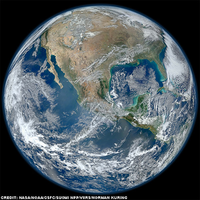
Syukuro “Suki” Manabe won part of the 2021 Nobel Prize in Physics for his role in predicting global warming using early climate models. This Colloquium traces that decades-long effort, showing how Manabe combined bedrock physical laws with a keen intuition for simplifying assumptions to construct a hierarchy of climate models, ranging from a simple 1D model of the globally averaged atmosphere to a 3D model of the fully coupled atmosphere-ocean system with realistic continental geometry. Each rung of this hierarchy yielded new insight and specific predictions, not just for global warming but also for the spatial patterns of warming—predictions borne out by subsequent observations.

Quantum geometry phenomena in condensed matter systems

Anyuan Gao, Naoto Nagaosa, Ni Ni, and Su-Yang Xu

Rev. Mod. Phys. 98, 035005 (2026) - Published 22 September, 2026

The observation by Berry that adiabatic transport around a closed loop leads to a phase in addition to that determined by the energy spectrum lies at the heart of topology in solids. Such geometrical effects have measurable physical consequences, notably quantum Hall physics in the absence of an external magnetic field—all of which are encapsulated by the quantum geometric tensor. The imaginary part of this tensor is the Berry curvature, and the real part encodes the distance between nearby wave functions and hence is referred to as the quantum metric. In recent years, the quantum geometric tensor has proven central to novel many-body effects in quantum matter, including superconductivity in flat-band systems, third-order nonlinear Hall effects, and second-harmonic nonlinear Hall effects, to name a few. This review catalogs these advances with an eye toward showing how new many-body effects arise from quantum geometry.

Opinion dynamics: Statistical physics and beyond

Michele Starnini, Fabian Baumann, Tobias Galla, David Garcia, Gerardo Iñiguez, Márton Karsai, Jan Lorenz, and Katarzyna Sznajd-Weron

Rev. Mod. Phys. 98, 035004 (2026) - Published 10 September, 2026

Social systems, when considered on an appropriately coarse-grained scale, display phenomena reminiscent of the behavior of physical many-body systems and can be studied using the methods of statistical mechanics. A particularly interesting subfield is opinion dynamics, which aims to understand the emergence of collective social phenomena, such as consensus, polarization, and fragmentation. This review systematizes the terminology and methods of opinion dynamics, surveys empirical findings alongside theoretical models, and summarizes the current state and future directions of this field.

Security proofs for practical QKD: Variations, techniques, gaps, and limitations

Devashish Tupkary, Ernest Y.-Z. Tan, Shlok Nahar, Lars Kamin, and Norbert Lütkenhaus

Rev. Mod. Phys. 98, 035003 (2026) - Published 8 September, 2026

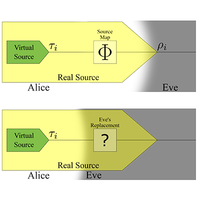
It is sometimes said that if one uses quantum cryptography methods to distribute keys, their secrecy is guaranteed by the laws of physics. This is only partly true: while quantum physics provides a strong boost to security, the proper mathematical analysis of the full detailed protocol is still nontrivial. This review provides details of this analysis for one of the most important quantum protocols for key distribution and its variants, in which weak (few photon) coherent pulses are transmitted and threshold detectors are used for measurements.

Polarons in atomic gases and two-dimensional semiconductors

Pietro Massignan, Richard Schmidt, Grigori E. Astrakharchik, Ataç İmamoglu, Martin Zwierlein, Jan J. Arlt, and Georg M. Bruun

Rev. Mod. Phys. 98, 035002 (2026) - Published 2 September, 2026

The polaron, a single impurity embedded in a quantum many-body environment, conceptually bridges few- and many-body physics. Its properties provide both a test bed for many-body theories and physical insight into the phase structure of more complicated many-body systems. This review discusses two pristine experimental platforms in which polarons have recently been realized: ultracold atomic gases and atomically thin transition-metal dichalcogenides. The authors discuss the theory of Bose and Fermi polarons, compare theory to experiment, and provide a perspective on how polarons may serve as precise sensors in complex environments.

Colloquium: Strongly dipolar molecular Bose-Einstein condensates: From few- to many-body physics

Andreas Schindewolf, Jens Hertkorn, Ian Stevenson, Matteo Ciardi, Phillip Groß, Dajun Wang, Tijs Karman, Goulven Quéméner, Sebastian Will, Thomas Pohl, and Tim Langen

Rev. Mod. Phys. 98, 031002 (2026) - Published 20 August, 2026

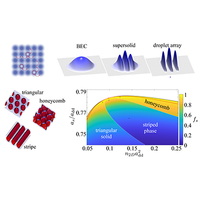
Recent advances in molecular cooling have enabled the realization of strongly dipolar molecular Bose-Einstein condensates. Such systems provide a unique platform for investigating new states of matter, from quantum droplets to supersolids. This Colloquium surveys the collisional shielding techniques that make stable molecular condensates possible, the theoretical challenges that arise in the strongly dipolar regime, and the exotic quantum phases now within experimental reach.

Ion Coulomb crystals: An exotic form of condensed matter

Giovanna Morigi, John Bollinger, Michael Drewsen, Daniel Podolsky, and Efrat Shimshoni

Rev. Mod. Phys. 98, 035001 (2026) - Published 5 August, 2026

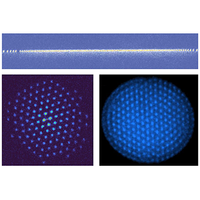
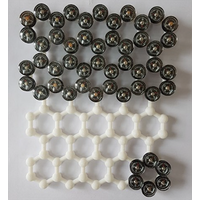
Coulomb crystals form when the Coulomb interaction between charged particles dominates over kinetic energy; the prototype is the Wigner crystal formed by conduction electrons in metals at low densities. In recent years, it has become possible to realize Coulomb crystals using laser-cooled trapped ions, and these systems allow for unprecedented control of experimental parameters. This review describes the state of the art of ion Coulomb crystals in one, two, and three dimensions, their properties in and out of equilibrium, and their importance across fields ranging from condensed matter to astrophysics.

Colloquium: What do we mean by ‘active matter’?

Michael te Vrugt, Benno Liebchen, and Michael E. Cates

Rev. Mod. Phys. 98, 031001 (2026) - Published 13 July, 2026

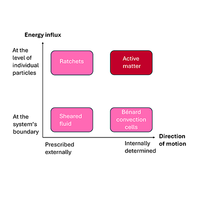
Active matter has become a lively topic in recent years, but what exactly is meant by the term ‘active matter’ is often unclear. This Colloquium discusses the scientific and semantic issues underlying this ambiguity, as well as the history of the field, and offers a definition of active matter as a well-defined subset of nonequilibrium systems. It then surveys recent developments including nonreciprocal interactions, intracellular phase separation, and quantum active matter.

Tip-enhanced molecular fluorescence microscopy with atomic-scale resolution

Anna Rosławska, Katharina Kaiser, Sofia Canola, Song Jiang, Fabrice Scheurer, Javier Aizpurua, Tomáš Neuman, and Guillaume Schull

Rev. Mod. Phys. 98, 025007 (2026) - Published 30 June, 2026

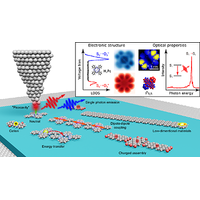
Scanning probe techniques have transformed our ability to study materials at the atomic scale, providing atom-by-atom views of surfaces. Tip-enhanced molecular fluorescence microscopy combines scanning probes with optical fluorescence. Such optical techniques normally have spatial resolution limited by the wavelength of the light used. However, using the scanning tip itself as a nanoscale optical antenna confines the electromagnetic field to the tip apex, achieving superresolution down to the atomic scale. Fluorescence is a fundamental probe of materials that reveals electronic structure and vibronic properties by exciting electrons to higher levels and observing the photons emitted when they relax. These capabilities are of particular interest for studying and identifying molecules, submolecular structures, and their reactions. This review discusses the techniques of tip-enhanced molecular fluorescence microscopy and the new insights they have revealed.

High-energy emission from the Galactic Center

Andrea Goldwurm, Maïca Clavel, Stefano Gabici, and Régis Terrier

Rev. Mod. Phys. 98, 025006 (2026) - Published 29 June, 2026

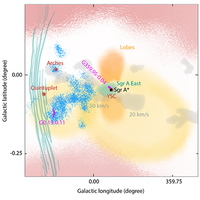
In this review, the authors provide a comprehensive multiwavelength view of high-energy emission from the center of our Galaxy. This region contains the closest supermassive black hole to us, which offers the best studied galactic nucleus in the Universe, with its quiescent emission and accretion contrasted by flaring activity. The Galactic Center also hosts diverse compact sources, plasma bubbles, and x-ray chimneys, altogether forming a dense interacting molecular zone—a gigantic powerhouse in the Milky Way.

Quantum linear system solvers: A survey of algorithms and applications

Mauro E. S. Morales, Lirandë Pira, Philipp Schleich, Kelvin Koor, Pedro C. S. Costa, Dong An, Alán Aspuru-Guzik, Lin Lin, Patrick Rebentrost, and Dominic W. Berry

Rev. Mod. Phys. 98, 025005 (2026) - Published 23 June, 2026

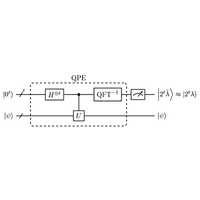
Given vector b and matrix A, solve for vector x such that Ax=b: this problem of solving linear-algebraic equations is arguably the central task of machine computation. The quantum linear system problem (QLSP) asks whether, given efficient quantum access to A and a state encoding b, a quantum computer can prepare a state encoding the solution.The QLSP has driven extensive algorithmic development since Harrow, Hassidim, and Lloyd (HHL)’s pioneering 2009 algorithm. This review explores quantum algorithmic techniques that have been devised for efficiently tackling the QLSP, with a thorough explanation of HHL and subsequent post-HHL developments.

Fundamentals of vacuum breakdown in high-gradient accelerator structures

Walter Wuensch, Sergio Calatroni, Flyura Djurabekova, Andreas Kyritsakis, and Yinon Ashkenazy

Rev. Mod. Phys. 98, 025004 (2026) - Published 5 June, 2026

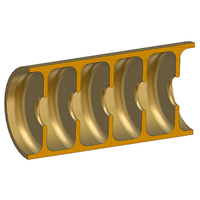
Vacuum breakdown or arcing happens when a very strong electric field causes a metal surface in a vacuum to suddenly form plasma, allowing large electrical currents to flow. Breakdown can damage particle accelerators, fusion reactors, satellites, and x-ray devices, though it is useful in technologies like plasma thrusters. Scientists have studied this unpredictable and fast phenomenon for over a century. Recent advances in experiments and computer simulations now provide a coherent mechanistic picture: tiny surface defects, electrical stress, heat, and emitted particles interact in complex ways to trigger breakdowns. These insights could improve high-power technologies and make advanced accelerators more reliable and efficient.

2D van der Waals magnets: From fundamental physics to applications

Je-Geun Park, Kai-Xuan Zhang, Hyeonsik Cheong, Jae Hoon Kim, Carina A. Belvin, David Hsieh, Honglie Ning, and Nuh Gedik

Rev. Mod. Phys. 98, 025003 (2026) - Published 27 May, 2026

Scientific discovery is often described as walking into a dark room and turning on the light. The discovery of 2D magnetism in van der Waals materials in 2016 was one such leap forward, removing one spatial dimension from macroscopic materials. The study of 2D magnets has challenged established theories and uncovered new phenomena. This review summarizes the current state of knowledge of magnetic phenomena in 2D van der Waals materials. The field encompasses not just the traditional study of ferromagnets and antiferromagnets but also topology, quantum and nonequilibrium dynamics, Floquet effects, magnons and spintronics, and the interaction of magnetism with light, phonons, and electric fields (multiferroics). The field is actively evolving, expanding theoretical understanding, materials capabilities, and experimental phenomenology while opening new directions for application.

Colloquium: Simulating non-Markovian dynamics in open quantum systems

Meng Xu, Vasilii Vadimov, J. T. Stockburger, and J. Ankerhold

Rev. Mod. Phys. 98, 021002 (2026) - Published 11 May, 2026

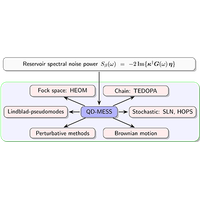
The dynamics of “open” quantum systems, which interact with their environments, are of paramount importance for basic research and quantum technologies alike. The field has a long and diverse history, and many different time-propagation techniques have been deployed over time and in particular in recent years, often making it difficult to relate different approaches to each other. Based on a unified framework, this Colloquium provides an overview of methods used to describe and to simulate open quantum systems in various contexts, including quantum optics, quantum information, quantum thermodynamics, and solid-state and many-body physics, as well as chemical physics, highlighting the commonalities and differences between them.

Radiation forces and torques in optics and acoustics

Ivan Toftul, Sebastian Golat, Francisco J. Rodríguez-Fortuño, Franco Nori, Yuri Kivshar, and Konstantin Y. Bliokh

Rev. Mod. Phys. 98, 025002 (2026) - Published 30 April, 2026

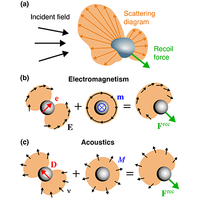
This review presents a unified perspective of how local energy, momentum, and spin densities in optical and acoustic wave fields induce forces and torques on particles—a topic that has captivated researchers for centuries. Applications discussed include trapping and manipulation of atoms and nanoparticles by light, sorting of biological cells by the combination of acoustics and microfluidics, and pulling forces that draw particles against the direction of wave propagation.

Exactly solvable quantum many-body dynamics from space-time duality

Bruno Bertini, Pieter W. Claeys, and Tomaž Prosen

Rev. Mod. Phys. 98, 025001 (2026) - Published 15 April, 2026

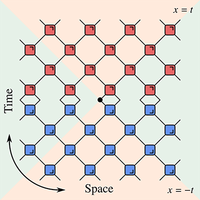
Computing quantum dynamics in many-body systems is notoriously difficult. In the past decade, there has been a fundamental advance based on discretizing the time evolution of lattice systems, by analogy with digital computation. Since space is already discrete on a lattice, treating space and time on the same footing avoids the mathematical complications of continuous space-time quantum field theories. This review focuses on how this space-time duality plays out in the dynamics of interacting many-body systems and the intrinsic relationship with special kinds of lattices termed brickwork quantum circuits. From this pedagogical review, readers will learn how this far-reaching analogy with quantum computation lies at the heart of a unified view of dynamical evolution of quantum many-body systems.

Colloquium: Hadron production in open-charm meson pairs at e+e− colliders

Xiongfei Wang, Xiang Liu, and Yuanning Gao

Rev. Mod. Phys. 98, 021001 (2026) - Published 3 April, 2026

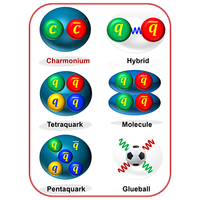
Hadron spectroscopy is a frontier of particle physics; searching for new hadrons is crucial for validating the theory of strong interaction (QCD). Investigating how charmonium, a bound state of charm and anticharm quarks, decays and searching for new charmoniumlike states yield valuable insights into strong interaction mechanisms, including quark confinement and gluon binding. Hadrons produced at e+e− collisions decaying to open-charm meson pairs are a primary source of experimental information for these investigations. This Colloquium reviews current progress from BARBAR, Belle, CLEO-c, and BESIII experiments. As BESIII accumulates high-precision data, it has emerged as the leading facility for measuring hadron production in charm-meson pair systems, and recent advances are highlighted.

Pressure effects on metals, alloys, and compounds of transplutonium elements

Tyler W. Hines, Nicholas B. Beck, Kacy N. Mendoza, Joseph M. Sperling, and Thomas E. Albrecht

Rev. Mod. Phys. 98, 015004 (2026) - Published 31 March, 2026
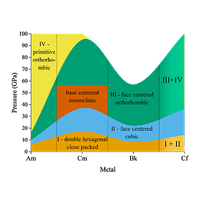
Materials containing transplutonium elements (the actinides Am–Cm that come after Pu in the periodic table) are important for nuclear power, nuclear waste management, and long-term storage. They also have fascinating properties, with 5f electrons that lie at the boundary of being localized and itinerant. This paper reviews the physics and chemistry of transplutonium compounds under high pressure, covering both traditional metals, alloys, and compounds, as well as recent work on coordination complexes. Both the theory and experiments are challenging due to the high radioactivity and the complexity of studying heavy elements with both itinerant and localized electrons. The reviewed work represents a tour-de-force expansion of our understanding of the unique behavior of these materials.

Colloquium: Geospace pathfinder science at Arecibo Observatory

J. D. Mathews, M. P. Sulzer, and Shikha Raizada

Rev. Mod. Phys. 98, 011005 (2026) - Published 31 March, 2026
The Arecibo Observatory housed the largest single-aperture radio telescope for approximately 50 years. A major scientific focus was studying the upper atmosphere; its highly sensitive radar facility, combined with lidars, optical sensors, and satellite-based systems, enabled unprecedented studies of ionospheric physics based on incoherent scattering of radio waves off free electrons. After establishing the fundamental concepts and observables of the incoherent scattering radar technique, this Colloquium reviews key advances obtained with the Arecibo suite of instruments in multiple areas of geospace science, including plasma physics, space weather, lidar studies of atomic metals in the ionosphere, and ionosphere-magnetosphere coupling.

Sign In to Your Journals Account

Filter

Recent Issues

Vol. 98, Iss. 3
July - September 2026
Vol. 98, Iss. 2
April - June 2026
Vol. 98, Iss. 1
January - March 2026
Vol. 97, Iss. 4
October - December 2025
Category
Article Type

Filter

Article Lookup

Enter a citation