Recent Articles

Materials characterization by synchrotron x-ray microprobes and nanoprobes

Lorenzo Mino, Elisa Borfecchia, Jaime Segura-Ruiz, Cinzia Giannini, Gema Martinez-Criado, and Carlo Lamberti

Rev. Mod. Phys. 90, 025007 (2018) - Published 28 June, 2018

The Moore’s law trajectory of hard x-ray spatial resolution extrapolates to a few nanometers within the next few years, thereby promising critical space-resolved structural, electronic, and compositional nanoscale characterizations for a wide variety of materials. This review addresses the capabilities and advantages of x-ray microbeam and nanobeam techniques compared to photon, electron, neutron, and ion probes through selected applications including semiconductors, superconductors, metals, and nanostructured devices.

Looking at cosmic near-infrared background radiation anisotropies

A. Kashlinsky, R. G. Arendt, F. Atrio-Barandela, N. Cappelluti, A. Ferrara, and G. Hasinger

Rev. Mod. Phys. 90, 025006 (2018) - Published 19 June, 2018

While the cosmic microwave background originates from the very early Universe, the cosmic infrared background contains the cumulative emission of sources from the earliest epochs to the present time. It is generated from nucleosynthetic sources and gravitational sources. The source-subtracted spatial fluctuations of the cosmic infrared background provide information on the brightness and clustering of sources too faint to detect individually. Among these are the very first stars in the Universe and an unexpectedly large fraction of black holes. Observational and theoretical efforts at decoding the cosmic infrared background are presented together with possible future tests and prospects.

Jet measurements in heavy ion physics

Megan Connors, Christine Nattrass, Rosi Reed, and Sevil Salur

Rev. Mod. Phys. 90, 025005 (2018) - Published 12 June, 2018

The hottest matter that existed in the early Universe after the big bang, the quark-gluon plasma, is created in ultrarelativistic collisions of heavy nuclei. By studying narrow streams of fast-moving particles coming from the collisions, nuclear physicists learn about properties of this hot, dense medium. This work reviews current experimental evidence and related theoretical descriptions of the plasma’s constituents and properties.

Macroscopic quantum states: Measures, fragility, and implementations

Florian Fröwis, Pavel Sekatski, Wolfgang Dür, Nicolas Gisin, and Nicolas Sangouard

Rev. Mod. Phys. 90, 025004 (2018) - Published 31 May, 2018

Schrödinger’s thought experiment of a cat in superposition of being dead and alive.

Diagrammatic routes to nonlocal correlations beyond dynamical mean field theory

G. Rohringer, H. Hafermann, A. Toschi, A. A. Katanin, A. E. Antipov, M. I. Katsnelson, A. I. Lichtenstein, A. N. Rubtsov, and K. Held

Rev. Mod. Phys. 90, 025003 (2018) - Published 9 May, 2018

The inclusion of strong electronic correlations into a theoretical description of solids is a notoriously hard problem. This review describes various recent schemes to improve on dynamical mean field theory, which includes only local correlations, by systematically incorporating nonlocal correlations as well, and discusses applications to standard models of strongly correlated electrons.

Dual-readout calorimetry

Sehwook Lee, Michele Livan, and Richard Wigmans

Rev. Mod. Phys. 90, 025002 (2018) - Published 26 April, 2018

The measurement of the energies of collections of particles in jets resulting from quarks or gluons produced in high energy collisions is a key element in the analyses of events at particle colliders. Good energy resolution requires that the different responses to hadrons and electrons or photons be corrected for in an event-by-event way. Measurements using the dual readout technique show that by recording separate measurements that depend differently on the electromagnetic and hadronic components can achieve excellent energy resolution.

Scattering processes and resonances from lattice QCD

Raúl A. Briceño, Jozef J. Dudek, and Ross D. Young

Rev. Mod. Phys. 90, 025001 (2018) - Published 18 April, 2018

Hadrons and their interactions arise via the coupling between quarks and gluons, as dictated by quantum chromodynamics (QCD), the theory of strong interactions. Unlike protons and neutrons, very few hadrons observed in nature are stable under the strong interaction: the majority of them appear as resonances in scattering experiments. This work reviews progress and prospects in the studies of few-hadron reactions and resonance properties using lattice QCD techniques.

Colloquium: Strong-field phenomena in periodic systems

Stanislav Yu. Kruchinin, Ferenc Krausz, and Vladislav S. Yakovlev

Rev. Mod. Phys. 90, 021002 (2018) - Published 10 April, 2018

This Colloquium presents an introduction to the interaction of strong laser fields with electrons in periodic potentials and reviews recent results on extremely nonlinear processes in crystalline solids. A classification of the field-matter interaction regimes is discussed and a research framework for extending the frontiers of optoelectronic signal processing and metrology is outlined.

Colloquium: Excitons in atomically thin transition metal dichalcogenides

Gang Wang, Alexey Chernikov, Mikhail M. Glazov, Tony F. Heinz, Xavier Marie, Thierry Amand, and Bernhard Urbaszek

Rev. Mod. Phys. 90, 021001 (2018) - Published 4 April, 2018

Most two-dimensional (2D) semiconductors are interesting materials as quantum confinement enhances the Coulomb interaction between carriers, leading to a strong attraction between conduction electrons and valence holes, forming stable excitons and the optical response of 2D semiconductors can be extraordinary. In this Colloquium the progress and open questions in the study of excitons in 2D semiconductors from both the experimental and theoretical perspectives are reviewed.

Fluctuation spectroscopy: From Rayleigh-Jeans waves to Abrikosov vortex clusters

A. A. Varlamov, A. Galda, and A. Glatz

Rev. Mod. Phys. 90, 015009 (2018) - Published 27 March, 2018

The study of superconducting fluctuations goes back to the work of Aslamazov, Larkin, Maki, and Thompson. It has received renewed attention in the context of high-temperature superconductors, whose short coherence length greatly enhances fluctuations. This review gives an overview of the theoretical treatment of superconducting fluctuations in the entire phase diagram, their observations, and their use in studying unconventional superconductors.

High precision analytical description of the allowed β spectrum shape

Leendert Hayen, Nathal Severijns, Kazimierz Bodek, Dagmara Rozpedzik, and Xavier Mougeot

Rev. Mod. Phys. 90, 015008 (2018) - Published 23 March, 2018

Beta decay is a process that reveals the structure of the standard model and its possible extensions. This reviews provides a description of the allowed beta-spectrum shape in view of ongoing and planned measurements searching for physics beyond the standard electroweak model and weak magnetism. The formalism presents a description of the underlying physics. The derived expression for both Fermi and Gamow-Teller transitions is accurate for low to medium Z nuclei.

Solids, liquids, and gases under high pressure

Ho-Kwang Mao, Xiao-Jia Chen, Yang Ding, Bing Li, and Lin Wang

Rev. Mod. Phys. 90, 015007 (2018) - Published 20 March, 2018

The effect of adding high pressure as a control parameter in solids, liquids, and gases expands opportunities to observe unexpected novel phenomena and understand matter in extreme environments. This review on high pressure science highlights subjects ranging from quantum criticality to Earth science. State-of-the-art experimental methods at megabar pressures are also discussed. The proliferation of pressure-induced phases illustrate promising new directions for this field of research.

Edwards statistical mechanics for jammed granular matter

Adrian Baule, Flaviano Morone, Hans J. Herrmann, and Hernán A. Makse

Rev. Mod. Phys. 90, 015006 (2018) - Published 8 March, 2018

Granular materials are systems of macroscopic grains such as sugar, sand, or rice. These systems exhibit a transition to a jammed state similar to an amorphous solid. Although the jammed state concept is simple as it is determined by excluded volume interactions, describing this state of matter is highly challenging. The approach of Edwards is reviewed here which describes jammed granular materials using the volume ensemble of equally probable jammed states. The Edwards volume ensemble is reviewed for various packings providing insight into an unifying phase diagram for jammed matter.

Antiferromagnetic spintronics

V. Baltz, A. Manchon, M. Tsoi, T. Moriyama, T. Ono, and Y. Tserkovnyak

Rev. Mod. Phys. 90, 015005 (2018) - Published 15 February, 2018

Spintronics utilizing antiferromagnetic materials has potential for the next generation of applications and offers opportunities for new ideas. Ultimately, antiferromagnets could replace ferromagnets as the active spin-dependent element on which spintronic devices are based. Central to this endeavor is the need for predictive models, relevant disruptive materials, and new experimental designs. This paper reviews spintronic effects described based on theoretical and experimental analysis of antiferromagnetic materials.

Hadronic molecules

Feng-Kun Guo, Christoph Hanhart, Ulf-G. Meißner, Qian Wang, Qiang Zhao, and Bing-Song Zou

Rev. Mod. Phys. 90, 015004 (2018) - Published 8 February, 2018

Hadrons are composite particles made of quark and gluons. Interestingly, some excited hadronic states resemble the deuteron viewed as a barely bound neutron-proton system. Such hadronic molecules are spatially extended systems lying very close to decay thresholds. This work reviews the current experimental evidence for hadronic molecules and related theoretical descriptions, including effective field theories and lattice quantum chromodynamics.

Nonstandard heavy mesons and baryons: Experimental evidence

Stephen Lars Olsen, Tomasz Skwarnicki, and Daria Zieminska

Rev. Mod. Phys. 90, 015003 (2018) - Published 8 February, 2018

Since the inception of the quark model we have known the simplest examples, mesons made of a quark and antiquark and baryons made of three quarks. But it has long been recognized that more complex structures such as quark-quark-antiquark-antiquark or quark-antiquark-gluon mesons were possible. Such exotic states involving only the light up, down, and strange quarks are difficult to recognize experimentally but those containing the heavier charm or bottom quarks are more distinctive. This paper reviews the experimental status and phenomenological characterization of such exotic hadrons containing heavy quarks.

Adiabatic quantum computation

Tameem Albash and Daniel A. Lidar

Rev. Mod. Phys. 90, 015002 (2018) - Published 29 January, 2018

The simple act of slowly varying the parameters of a quantum system so that it remains always in its ground state is extremely rich from an information processing point of view. For an ideal, closed system, this adiabatic evolution is equivalent to full quantum computation, and it is convenient for establishing quantum algorithms for optimization. This review presents adiabatic quantum algorithms, proves the closed-system equivalence of the adiabatic and circuit models of quantum computation, reviews the placement of adiabatic quantum computation in the more general classification of computational complexity theory, and discusses the case of “stoquastic” quantum evolutions.

Weyl and Dirac semimetals in three-dimensional solids

N. P. Armitage, E. J. Mele, and Ashvin Vishwanath

Rev. Mod. Phys. 90, 015001 (2018) - Published 22 January, 2018

In recent years many three-dimensional crystals have been discovered whose low energy electronic properties are described by the Dirac or Weyl equations for relativistic fermions. This leads to many unusual physical properties and potentially to new applications. This review explains the theory behind these developments, their material realizations, and the current experimental status.

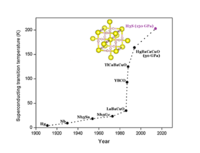
Colloquium: High pressure and road to room temperature superconductivity

Lev P. Gor’kov and Vladimir Z. Kresin

Rev. Mod. Phys. 90, 011001 (2018) - Published 9 January, 2018

Even after three decades of development, high-temperature superconductivity remains one of the most challenging theoretical and experimental areas in condensed matter physics. In this Colloquium some new discoveries in this area are reviewed and possible routes toward much higher transition temperatures are analyzed.

Announcement: Corrections in Physical Review Publications

Rev. Mod. Phys. 90, 010002 (2018) - Published 3 January, 2018

Sign In to Your Journals Account

Filter

Recent Issues

Vol. 98, Iss. 4
October - December 2026
Vol. 98, Iss. 3
July - September 2026
Vol. 98, Iss. 2
April - June 2026
Vol. 98, Iss. 1
January - March 2026
Category
Article Type

Filter

Article Lookup

Enter a citation