A new approach to low-density parity-check codes provides competitively high performance with low overhead even on restricted architectures.
Toward a 2D Local Implementation of Quantum Low-Density Parity-Check Codes
Noah Berthusen, Dhruv Devulapalli, Eddie Schoute, Andrew M. Childs, Michael J. Gullans, Alexey V. Gorshkov, and Daniel Gottesman
PRX Quantum 6, 010306 (2025)
Katiuscia Cassemiro and Stephen Bartlett
PRX Quantum 6, 010001 (2025) - Published 12 March, 2025
Celebrating 100 years of quantum mechanics: A journey of groundbreaking discoveries and the next frontier of quantum science and technologies.
Noah Berthusen, Dhruv Devulapalli, Eddie Schoute, Andrew M. Childs, Michael J. Gullans, Alexey V. Gorshkov, and Daniel Gottesman
PRX Quantum 6, 010306 (2025) - Published 9 January, 2025
A new approach to low-density parity-check codes provides competitively high performance with low overhead even on restricted architectures.
Ramanjit Sohal and Abhinav Prem
PRX Quantum 6, 010313 (2025) - Published 21 January, 2025
Decoherence can be used to generate mixed-state topological orders without analogue in closed systems and with properties useful for quantum information applications.
Zijian Wang, Zhengzhi Wu, and Zhong Wang
PRX Quantum 6, 010314 (2025) - Published 21 January, 2025
A new type of topological order for open quantum systems, which has no pure-state counterpart, is proposed and studied using exactly solvable models.
Tyler D. Ellison and Meng Cheng
PRX Quantum 6, 010315 (2025) - Published 21 January, 2025
Emergent generalized symmetries lead to the proof that there exist topological orders intrinsic to mixed states, and examples of these states provide insight into their classifications by premodular anyon theories.
Antonio Anna Mele and Yaroslav Herasymenko
PRX Quantum 6, 010319 (2025) - Published 28 January, 2025
A novel tomography algorithm with provably optimal run-time can uncover fundamental properties of a broad class of states and provide efficient circuit compilation.
Shinichi Sunami, Shiro Tamiya, Ryotaro Inoue, Hayata Yamasaki, and Akihisa Goban
PRX Quantum 6, 010101 (2025) - Published 4 February, 2025
An architecture based on photonic links is proposed to solve major challenges in scaling up neutral-atom quantum computing platforms.
Serge Haroche
PRX Quantum 6, 010102 (2025) - Published 7 March, 2025
Celebrating the 100th anniversary of quantum mechanics, this personal journey highlights key fundamental and applied discoveries of the past century, with a special focus on the transformative role of lasers.
Sofia Qvarfort and Igor Pikovski
PRX Quantum 6, 010201 (2025) - Published 27 January, 2025
The underlying principles, applicability, and scope of the Lie-algebra decoupling theorem are explored in depth to provide a tutorial on methodology for solving the dynamics of quantum systems.
A. G. de Oliveira, E. Diamond-Hitchcock, D. M. Walker, M. T. Wells-Pestell, G. Pelegrí, C. J. Picken, G. P. A. Malcolm, A. J. Daley, J. Bass, and J. D. Pritchard
PRX Quantum 6, 010301 (2025) - Published 2 January, 2025
Site-selective stark shifts and global control is used to embed maximum-weighted independent-set problems, including those on nonplanar graphs, on an array of Rydberg atoms.
Fudong Wang, Miaomiao Ren, Weiye Sun, Mucheng Guo, Matthew J. Sellars, Rose L. Ahlefeldt, John G. Bartholomew, Juan Yao, Shuping Liu, and Manjin Zhong
PRX Quantum 6, 010302 (2025) - Published 3 January, 2025
A coherence time record of 13.1 hours is achieved in a rare-earth-ion-doped crystal cooled to subkelvin temperatures.
Tanjung Krisnanda, Clara Yun Fontaine, Adrian Copetudo, Pengtao Song, Kai Xiang Lee, Ni-Ni Huang, Fernando Valadares, Timothy C.H. Liew, and Yvonne Y. Gao
PRX Quantum 6, 010303 (2025) - Published 6 January, 2025
Robust reconstruction of arbitrary quantum states of light in bosonic circuit quantum electrodynamics is experimentally demonstrated with the fewest measurements of photon numbers.
Xiaozhou Pan, Tanjung Krisnanda, Andrea Duina, Kimin Park, Pengtao Song, Clara Yun Fontaine, Adrian Copetudo, Radim Filip, and Yvonne Y. Gao
PRX Quantum 6, 010304 (2025) - Published 7 January, 2025
A versatile quantum metrology scheme achieves near-Heisenberg-limit precision with a single bosonic mode in the low-excitation regime, bypassing the need for entanglement.
Love A. Pettersson, Anders S. Sørensen, and Stefano Paesani
PRX Quantum 6, 010305 (2025) - Published 8 January, 2025
A practical scheme for concatenated graph codes in fusion-based quantum computing increases tolerance to photon loss.
Noah Berthusen, Dhruv Devulapalli, Eddie Schoute, Andrew M. Childs, Michael J. Gullans, Alexey V. Gorshkov, and Daniel Gottesman
PRX Quantum 6, 010306 (2025) - Published 9 January, 2025
A new approach to low-density parity-check codes provides competitively high performance with low overhead even on restricted architectures.
Akel Hashim, Arnaud Carignan-Dugas, Larry Chen, Christian Jünger, Neelay Fruitwala, Yilun Xu, Gang Huang, Joel J. Wallman, and Irfan Siddiqi
PRX Quantum 6, 010307 (2025) - Published 10 January, 2025
A two-step process for characterizing readout noise can be used to correct for errors in midcircuit measurements used for active feedback.
Marta Pita-Vidal, Jaap J. Wesdorp, and Christian Kraglund Andersen
PRX Quantum 6, 010308 (2025) - Published 13 January, 2025
A new qubit architecture enables all-to-all connectivity between multiple remote Andreev spin qubits, with coupling strength that is independent of distance and no frequency crowding challenges.
Florian Meier, Tom Rivlin, Tiago Debarba, Jake Xuereb, Marcus Huber, and Maximilian P.E. Lock
PRX Quantum 6, 010309 (2025) - Published 14 January, 2025
Novel bounds on the equilibration of observables in isolated quantum systems help resolve the apparent contradiction between the second law of thermodynamics and unitary evolution.
Zhihan Zhang, Senrui Chen, Yunchao Liu, and Liang Jiang
PRX Quantum 6, 010310 (2025) - Published 15 January, 2025
A new protocol for systematic characterization of midcircuit measurements is proved to learn all learnable information while remaining practically applicable.
Takato Yoshida, Daichi Okuno, Takahiro Kashiwazaki, Takeshi Umeki, Shigehito Miki, Fumihiro China, Masahiro Yabuno, Hirotaka Terai, and Shuntaro Takeda
PRX Quantum 6, 010311 (2025) - Published 16 January, 2025
A Schrödinger kitten state is squeezed multiple times in a programmable manner, an important step toward universal continuous-variable quantum computing.
Jielun Chen, Jiaqing Jiang, Dominik Hangleiter, and Norbert Schuch
PRX Quantum 6, 010312 (2025) - Published 17 January, 2025
Interference, which gives rise to the sign problem in quantum Monte Carlo, also leads to a significant increase in computational hardness in tensor networks.
Ramanjit Sohal and Abhinav Prem
PRX Quantum 6, 010313 (2025) - Published 21 January, 2025
Decoherence can be used to generate mixed-state topological orders without analogue in closed systems and with properties useful for quantum information applications.
Zijian Wang, Zhengzhi Wu, and Zhong Wang
PRX Quantum 6, 010314 (2025) - Published 21 January, 2025
A new type of topological order for open quantum systems, which has no pure-state counterpart, is proposed and studied using exactly solvable models.
Tyler D. Ellison and Meng Cheng
PRX Quantum 6, 010315 (2025) - Published 21 January, 2025
Emergent generalized symmetries lead to the proof that there exist topological orders intrinsic to mixed states, and examples of these states provide insight into their classifications by premodular anyon theories.
Aram W. Harrow and Angus Lowe
PRX Quantum 6, 010316 (2025) - Published 22 January, 2025
Circuit cutting, or using small operations on few qubits to simulate larger operations, is now achievable at minimal cost for many operations thanks to a new method and more precise cost bounds.
Ricard Puig, Marc Drudis, Supanut Thanasilp, and Zoë Holmes
PRX Quantum 6, 010317 (2025) - Published 23 January, 2025
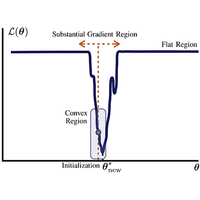
Initialization closer to a solution in variational quantum simulation yields guarantees on initial trainability, but no guarantee of a good minimum.
Fotios Gkritsis, Daniel Dux, Jin Zhang, Naman Jain, Christian Gogolin, and Philipp M. Preiss
PRX Quantum 6, 010318 (2025) - Published 24 January, 2025
A new approach to simulating quantum chemistry using ultracold atoms in optical lattices offers practical and straightforward implementations.
Antonio Anna Mele and Yaroslav Herasymenko
PRX Quantum 6, 010319 (2025) - Published 28 January, 2025
A novel tomography algorithm with provably optimal run-time can uncover fundamental properties of a broad class of states and provide efficient circuit compilation.
Julian Schuhmacher, Marco Ballarin, Alberto Baiardi, Giuseppe Magnifico, Francesco Tacchino, Simone Montangero, and Ivano Tavernelli
PRX Quantum 6, 010320 (2025) - Published 29 January, 2025
Augmenting tensor networks with quantum states provides improvements over purely classical approaches for quantum many-body simulations.
Hector Hutin, Pavlo Bilous, Chengzhi Ye, Sepideh Abdollahi, Loris Cros, Tom Dvir, Tirth Shah, Yonatan Cohen, Audrey Bienfait, Florian Marquardt, and Benjamin Huard
PRX Quantum 6, 010321 (2025) - Published 31 January, 2025
A neural network is trained to quickly find control sequences to experimentally create high-fidelity Schrödinger cat states with arbitrary phase and amplitude.
M. Seubert, L. Hartung, S. Welte, G. Rempe, and E. Distante
PRX Quantum 6, 010322 (2025) - Published 3 February, 2025
Moveable optical tweezers are used to precisely position atoms within an optical cavity to efficiently prepare arrays of cavity-coupled atoms, with applications in networking in atomic systems.
Michiel Burgelman, Nattaphong Wonglakhon, Diego N. Bernal-García, Gerardo A. Paz-Silva, and Lorenza Viola
PRX Quantum 6, 010323 (2025) - Published 5 February, 2025
The performance of a dynamically protected gate can saturate at a significantly lower fidelity when the evolution of a nonclassical environment is accounted for, challenging the notion of a constant error per gate.
Alessandro Foligno, Pasquale Calabrese, and Bruno Bertini
PRX Quantum 6, 010324 (2025) - Published 6 February, 2025
When dual-unitary circuits are enriched with symmetries, an array of complex phenomena emerge, enhancing our understanding of many-body quantum dynamics.
Yong-Yi Wang, Yun-Hao Shi, Zheng-Hang Sun, Chi-Tong Chen, Zheng-An Wang, Kui Zhao, Hao-Tian Liu, Wei-Guo Ma, Ziting Wang, Hao Li, Jia-Chi Zhang, Yu Liu, Cheng-Lin Deng, Tian-Ming Li, Yang He, Zheng-He Liu, Zhen-Yu Peng, Xiaohui Song, Guangming Xue, Haifeng Yu, Kaixuan Huang, Zhongcheng Xiang, Dongning Zheng, Kai Xu, and Heng Fan
PRX Quantum 6, 010325 (2025) - Published 7 February, 2025
A superconducting system is used to experimentally explore the weak breakdown of ergodicity in a quantum system, making connections between Stark many-body localization and Hilbert-space fragmentation.
William M. Strickland, Bassel Heiba Elfeky, Lukas Baker, Andrea Maiani, Jaewoo Lee, Ido Levy, Jacob Issokson, Andrei Vrajitoarea, and Javad Shabani
PRX Quantum 6, 010326 (2025) - Published 10 February, 2025
A new form of fluxonium qubit provides new functionalities by tuning Josephson energy over a wide range and operating in lower frequencies.
Yaodong Li, Nicholas O’Dea, and Vedika Khemani
PRX Quantum 6, 010327 (2025) - Published 10 February, 2025
A connection between out-of-equilibrium dynamics in quantum error correction and quantum phases of matter in equilibrium provides new insights into topological order and error thresholds.
Susanna Kirchhoff, Frank K. Wilhelm, and Felix Motzoi
PRX Quantum 6, 010328 (2025) - Published 12 February, 2025
Terms in the effective Hamiltonian for ion entanglement that contribute significantly to gate fidelity but are beyond those usually considered can be suppressed by applying control techniques.
Rahul Sahay and Ruben Verresen
PRX Quantum 6, 010329 (2025) - Published 13 February, 2025
A trade-off between entanglement and correlations arises for quantum states prepared using measurement and feedback conditioned on measurement outcomes.
Oliver Hahn, Giulia Ferrini, and Ryuji Takagi
PRX Quantum 6, 010330 (2025) - Published 18 February, 2025
Links between quantum resources in discrete-variable and continuous-variable quantum computing provide a unified approach for understanding computational advantages.
Richard Bing-Shiun Tsai, Xiangkai Sun, Adam L. Shaw, Ran Finkelstein, and Manuel Endres
PRX Quantum 6, 010331 (2025) - Published 19 February, 2025
State-of-the-art two-qubit entangling gates in atomic qubits are achieved and benchmarked with a new sequence tailored to the neutral-atom platform, alongside a detailed error model and predictive analytical framework.
Paul Coote, Roman Dimov, Smarak Maity, Gavin S. Hartnett, Michael J. Biercuk, and Yuval Baum
PRX Quantum 6, 010332 (2025) - Published 21 February, 2025
A new approach to dynamical decoupling completely suppresses idling errors and crosstalk across a circuit, improving algorithmic performance on real devices.
Etienne Granet and Henrik Dreyer
PRX Quantum 6, 010333 (2025) - Published 24 February, 2025
A new approach to identify quantum computing applications where hardware errors have a smaller impact than previously assumed enables an efficient noise-mitigation strategy.
Evan T. Hockings, Andrew C. Doherty, and Robin Harper
PRX Quantum 6, 010334 (2025) - Published 25 February, 2025
A protocol to characterize device performance in quantum error correction promises to improve experiments by exploiting information about the noise.
Kumar Saurav and Daniel A. Lidar
PRX Quantum 6, 010335 (2025) - Published 26 February, 2025
A complementary approach to quantum error correction is proposed that preserves specific properties of a quantum system via a time-dependent control Hamiltonian without the need for ancillary qubits or measurement feedback.
Robbie King, David Gosset, Robin Kothari, and Ryan Babbush
PRX Quantum 6, 010336 (2025) - Published 27 February, 2025
Measuring and extracting physically relevant properties of quantum states is made exponentially cheaper.
Yifan Zhang and Yuxuan Zhang
PRX Quantum 6, 010337 (2025) - Published 28 February, 2025
Leveraging the distribution of magic gates leads to new techniques to simulate highly magical quantum circuits, revealing new insights into computational complexity.
Yiming Pang, Joshua E. Castro, Trevor J. Steiner, Liao Duan, Noemi Tagliavacche, Massimo Borghi, Lillian Thiel, Nicholas Lewis, John E. Bowers, Marco Liscidini, and Galan Moody
PRX Quantum 6, 010338 (2025) - Published 3 March, 2025
Entangled-photon-pair generation is boosted using an array of integrated photonic sources, enabling high-rate quantum networking and qubit encoding schemes.
Yu Shi, Ashlesha Patil, and Saikat Guha
PRX Quantum 6, 010339 (2025) - Published 4 March, 2025
A constant-depth, measurement-based protocol for entanglement distillation is developed, enabling scalable quantum communication and computing with advanced quantum error-correcting codes.
Ziv Aqua and Barak Dayan
PRX Quantum 6, 010340 (2025) - Published 4 March, 2025
Optically interconnected atom-cavity nodes, each capable of performing two types of photon-atom gates, enable deterministic and modular generation of photonic graph states—the main resource of photonic quantum computation.
Zhenning Liu, Dhruv Devulapalli, Dominik Hangleiter, Yi-Kai Liu, Alicia J. Kollár, Alexey V. Gorshkov, and Andrew M. Childs
PRX Quantum 6, 010341 (2025) - Published 5 March, 2025
A new quantum advantage demonstration based on verifying analog quantum simulation achieves a reasonable balance between efficient verifiability, rigorous hardness guarantees, and near-term practicality.
Tomás Levy-Yeyati, Carlos Vega, Tomás Ramos, and Alejandro González-Tudela
PRX Quantum 6, 010342 (2025) - Published 5 March, 2025
An alternative implementation of deterministic photonic quantum gates allows for much simpler composition and engineering and enables quantum information processing in topological photonic systems.
Tan Van Vu
PRX Quantum 6, 010343 (2025) - Published 6 March, 2025
New fundamental bounds on the precision and response of trajectory observables in Markovian open quantum systems deepen our understanding of how quantum effects shape nonequilibrium thermodynamics.
Leonardo A. Lessa, Ruochen Ma, Jian-Hao Zhang, Zhen Bi, Meng Cheng, and Chong Wang
PRX Quantum 6, 010344 (2025) - Published 6 March, 2025
A universal mixed-state quantum phase is identified and shown to be intrinsically connected to long-range conditional mutual information.
Guglielmo Lami, Tobias Haug, and Jacopo De Nardis
PRX Quantum 6, 010345 (2025) - Published 7 March, 2025
Clifford-enhanced matrix product states redefine quantum simulation by bringing together the key resources of entanglement and magic.
Anthony Munson, Naga Bhavya Teja Kothakonda, Jonas Haferkamp, Nicole Yunger Halpern, Jens Eisert, and Philippe Faist
PRX Quantum 6, 010346 (2025) - Published 10 March, 2025
A novel framework highlights the role of quantum complexity in quantum thermodynamics and shows how complexity entropy quantifies a trade-off between the complexity- and work-cost of a quantum process.
Zijian Wang and Linhao Li
PRX Quantum 6, 010347 (2025) - Published 11 March, 2025
Unveiling a new framework for anomalies in open quantum systems, this work shows how mixed-state anomalies dictate nontrivial phases and establishes a bulk-boundary correspondence unique to dissipative dynamics.
Ruochen Ma and Alex Turzillo
PRX Quantum 6, 010348 (2025) - Published 11 March, 2025
A framework for classifying and characterizing mixed-state symmetry-protected topological phases is established, revealing new phenomena through the Choi representation and the interplay of strong and weak symmetries.
Wei-Ju Lin, Hyunheung Cho, Yinqi Chen, Maxim G. Vavilov, Chen Wang, and Vladimir E. Manucharyan
PRX Quantum 6, 010349 (2025) - Published 11 March, 2025
By smartly simplifying the device—eliminating couplers, flux tuning, and complex pulse shaping—this work achieves a remarkably stable, high-fidelity two-qubit gate on fluxonium qubits, paving the way for more robust quantum operations.
Ethan Lake, Shankar Balasubramanian, and Soonwon Choi
PRX Quantum 6, 010350 (2025) - Published 13 March, 2025
A unitary extension of the renormalization group flow provides a circuit for classifying certain phases of matter, with implications for error correction.
Thomas Iadecola, Justin H. Wilson, and J.H. Pixley
PRX Quantum 6, 010351 (2025) - Published 14 March, 2025
Collective measurements on adaptive quantum circuits drive controllability and entanglement phase transitions, having implications for quantum state preparation and error correction.
Hans Hon Sang Chan, Richard Meister, Matthew L. Goh, and Bálint Koczor
PRX Quantum 6, 010352 (2025) - Published 17 March, 2025
Classical shadows and efficient time evolution combine to measure energy differences even with a limited number of queries and a noisy system.
P. Méhaignerie, Y. Machu, A. Durán Hernández, G. Creutzer, D.J. Papoular, J.M. Raimond, C. Sayrin, and M. Brune
PRX Quantum 6, 010353 (2025) - Published 18 March, 2025
The dipole-dipole interaction between two circular Rydberg atoms is measured, with carefully controlled distances and orientations between the laser-trapped atoms, opening direct applications in quantum simulation and computation.
L.C.G. Govia, S. Majumder, S.V. Barron, B. Mitchell, A. Seif, Y. Kim, C.J. Wood, E.J. Pritchett, S.T. Merkel, and D.C. McKay
PRX Quantum 6, 010354 (2025) - Published 19 March, 2025
Knowledge of circuit errors is necessarily imperfect, but the impact of this imperfect knowledge on error mitigation can be measured and bounded using this new protocol.
Maxine Luo and J. Ignacio Cirac
PRX Quantum 6, 010355 (2025) - Published 20 March, 2025
A better scaling for simulating chemical Hamiltonians is achieved by embedding the system in a higher-dimensional space.
Adam Bene Watts, David Gosset, Yinchen Liu, and Mehdi Soleimanifar
PRX Quantum 6, 010356 (2025) - Published 21 March, 2025
Unconditional quantum advantage with random shallow Clifford circuits follows from the presence of long-range measurement-induced entanglement.
Shin Ho Choe and Robert König
PRX Quantum 6, 010357 (2025) - Published 24 March, 2025
A framework for implementing nonlocal quantum circuits with local operations and efficient classical computation minimizes overhead and removes the need to consider locality of operations in fault-tolerant quantum design.
Ting-Tung Wang, Menghan Song, Zi Yang Meng, and Tarun Grover
PRX Quantum 6, 010358 (2025) - Published 26 March, 2025
A diagnostic is developed to detect and quantify topological order, extending topological entanglement entropy to open quantum systems—noisy, real-world environments.
Pei Zeng, Jinzhao Sun, Liang Jiang, and Qi Zhao
PRX Quantum 6, 010359 (2025) - Published 27 March, 2025
A novel Hamiltonian simulation algorithm using the linear combination of unitaries to compensate for Trotter errors is easy to implement, scalable, highly accurate, and cost efficient.
Julio C. Magdalena de la Fuente, Josias Old, Alex Townsend-Teague, Manuel Rispler, Jens Eisert, and Markus Müller
PRX Quantum 6, 010360 (2025) - Published 28 March, 2025
A versatile new framework based on a three-colored graphical calculus is proposed, offering a unified and systematic approach to analyzing a broad class of QEC protocols and their error-correcting capabilities.
Jerome Lloyd, Alexios A. Michailidis, Xiao Mi, Vadim Smelyanskiy, and Dmitry A. Abanin
PRX Quantum 6, 010361 (2025) - Published 31 March, 2025
Utilizing a novel kinetic-theory description, efficient algorithms for cooling into the many-body ground state are shown to be practical and robust for near-term quantum processors.
Zhenyu Cai, Adam Siegel, and Simon Benjamin
PRX Quantum 6, 010901 (2025) - Published 20 February, 2025
Ulysse Chabaud, Ganaël Roeland, Mattia Walschaers, Frédéric Grosshans, Valentina Parigi, Damian Markham, and Nicolas Treps
PRX Quantum 6, 010902 (2025) - Published 25 March, 2025