Daniel Carney, Kyle G. Leach, and David C. Moore
PRX Quantum 4, 010315 (2023) - Published 8 February, 2023
Searching for heavy sterile neutrinos in the keV–MeV mass range is possible with a nanometer-scale, optically levitated quantum sensor.
M.R. Hogg, P. Pakkiam, S.K. Gorman, A.V. Timofeev, Y. Chung, G.K. Gulati, M.G. House, and M.Y. Simmons
PRX Quantum 4, 010319 (2023) - Published 23 February, 2023
A new atomic-scale sensor capable of reading out multiple qubits is engineered, providing a pathway for increasing on-chip qubit density.
Mingrui Xu, Risheng Cheng, Yufeng Wu, Gangqiang Liu, and Hong X. Tang
PRX Quantum 4, 010322 (2023) - Published 28 February, 2023
A low-noise parametric amplifier based on kinetic inductance, suitable for integration with quantum systems in magnetic fields, is experimentally demonstrated
W. Morong, K.S. Collins, A. De, E. Stavropoulos, T. You, and C. Monroe
PRX Quantum 4, 010334 (2023) - Published 31 March, 2023
A new method based on dynamical decoupling is shown to significantly enhance the coherence of quantum simulations.
Philipp Stammer, Javier Rivera-Dean, Andrew Maxwell, Theocharis Lamprou, Andrés Ordóñez, Marcelo F. Ciappina, Paraskevas Tzallas, and Maciej Lewenstein
PRX Quantum 4, 010201 (2023) - Published 20 January, 2023
A pedagogical and comprehensive introduction to the full quantum description of intense laser-matter interactions and its potential for quantum state engineering is presented.
Rebecca E.K. Fishman, Raj N. Patel, David A. Hopper, Tzu-Yung Huang, and Lee C. Bassett
PRX Quantum 4, 010202 (2023) - Published 6 March, 2023
Techniques used to study quantum emitters are pedagogically introduced, highlighting nuances and best practices on assessing their suitability for quantum information science.
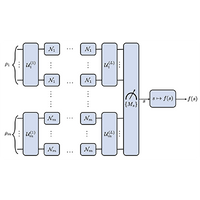
Tobias Haug and M.S. Kim
PRX Quantum 4, 010301 (2023) - Published 3 January, 2023
The newly introduced concept of Bell magic allows quantifying the quantum computing resource necessary for advantage in an efficient and practical way.
B.-W. Li, Y.-K. Wu, Q.-X. Mei, R. Yao, W.-Q. Lian, M.-L. Cai, Y. Wang, B.-X. Qi, L. Yao, L. He, Z.-C. Zhou, and L.-M. Duan
PRX Quantum 4, 010302 (2023) - Published 5 January, 2023
A trapped-ion simulator shows quantitative agreement when probing critical behavior around a quantum phase transition.
Alireza Seif, Ze-Pei Cian, Sisi Zhou, Senrui Chen, and Liang Jiang
PRX Quantum 4, 010303 (2023) - Published 9 January, 2023
A method for mitigating errors in near-term quantum computers utilizing randomized measurements explores the trade-off between the number of measurement settings and the number of repetitions of each measurement.
Zijian Song, Arpit Dua, Wilbur Shirley, and Dominic J. Williamson
PRX Quantum 4, 010304 (2023) - Published 11 January, 2023
A systematic method for constructing topological defect networks for a wide range of lattice Hamiltonians is presented.
Luuk Coopmans, Yuta Kikuchi, and Marcello Benedetti
PRX Quantum 4, 010305 (2023) - Published 13 January, 2023
Instead of directly preparing Gibbs states, a more efficient quantum algorithm to estimate them is proposed: generate thermal pure quantum states and use classical shadow tomography.
Yu-Xin Wang, Chen Wang, and Aashish A. Clerk
PRX Quantum 4, 010306 (2023) - Published 17 January, 2023
A novel approach, based on local gauge symmetries of quantum master equations, is developed to produce nonreciprocal interactions, something which previously was only possible with cascaded systems.
Jahan Claes and Shruti Puri
PRX Quantum 4, 010307 (2023) - Published 18 January, 2023
A novel technique, called bias randomized benchmarking, is developed to assess the bias in controlled-not quantum gates, a crucial step for advancing quantum error correction in biased-noise systems.
Baptiste Courme, Patrick Cameron, Daniele Faccio, Sylvain Gigan, and Hugo Defienne
PRX Quantum 4, 010308 (2023) - Published 19 January, 2023
A wavefront shaping approach enables protection of high-dimensional entangled photons traversing a scattering medium, a situation that typically hinders the building of practical quantum microscopy and quantum key distribution.
Giacomo De Palma, Milad Marvian, Cambyse Rouzé, and Daniel Stilck França
PRX Quantum 4, 010309 (2023) - Published 23 January, 2023
Using newly developed quantum entropic and concentration inequalities, two complementary sets of results are derived that provide a better quantitative understanding of the limitations of variational quantum algorithms.
Adam Paetznick, Christina Knapp, Nicolas Delfosse, Bela Bauer, Jeongwan Haah, Matthew B. Hastings, and Marcus P. da Silva
PRX Quantum 4, 010310 (2023) - Published 25 January, 2023
A clever method for implementing Floquet codes on topological platforms can lead to an error-correction performance significantly superior to that achieved with the ubiquitous surface code.
Jordan S. Cotler, Daniel K. Mark, Hsin-Yuan Huang, Felipe Hernández, Joonhee Choi, Adam L. Shaw, Manuel Endres, and Soonwon Choi
PRX Quantum 4, 010311 (2023) - Published 27 January, 2023
A new perspective on the emergence of statistical behavior in chaotic quantum many-body systems is presented, establishing projected ensembles as a relevant tool for the characterization of information-theoretic properties.
Ieva Čepaitė, Anatoli Polkovnikov, Andrew J. Daley, and Callum W. Duncan
PRX Quantum 4, 010312 (2023) - Published 30 January, 2023
A hybrid approach to achieving coherent control, dubbed COLD, promises substantial improvement when applied to annealing protocols, state preparation schemes, entanglement generation, and population transfer on a lattice.
Aniruddha Bapat, Andrew M. Childs, Alexey V. Gorshkov, and Eddie Schoute
PRX Quantum 4, 010313 (2023) - Published 1 February, 2023
A detailed investigation considers if genuinely quantum operations can accelerate routing—the task of permuting qubits within a quantum computing architecture.
Fabian Marxer et al.
PRX Quantum 4, 010314 (2023) - Published 6 February, 2023
The lack of physical space on superconducting quantum devices is experimentally tackled by utilizing an extended floating coupler design, enabling large physical distances between qubits.
Daniel Carney, Kyle G. Leach, and David C. Moore
PRX Quantum 4, 010315 (2023) - Published 8 February, 2023
Searching for heavy sterile neutrinos in the keV–MeV mass range is possible with a nanometer-scale, optically levitated quantum sensor.
Minh-Thi Nguyen, Jin-Guo Liu, Jonathan Wurtz, Mikhail D. Lukin, Sheng-Tao Wang, and Hannes Pichler
PRX Quantum 4, 010316 (2023) - Published 14 February, 2023
A new encoding scheme for Rydberg atom arrays is introduced, opening their use for solving a large class of combinatorial optimization problems.
Martin Ganahl, Jackson Beall, Markus Hauru, Adam G.M. Lewis, Tomasz Wojno, Jae Hyeon Yoo, Yijian Zou, and Guifre Vidal
PRX Quantum 4, 010317 (2023) - Published 16 February, 2023
A novel architecture is used to boost the density-matrix renormalization group, an important and widely used algorithm, impressively pushing the boundary of the current state of the art by at least an order of magnitude in complexity.
Aniket Rath, Vittorio Vitale, Sara Murciano, Matteo Votto, Jérôme Dubail, Richard Kueng, Cyril Branciard, Pasquale Calabrese, and Benoît Vermersch
PRX Quantum 4, 010318 (2023) - Published 21 February, 2023
An efficient method to extract higher-order density-matrix functionals and access operator entanglement is introduced and tested on experimental data, improving the characterization of nonequilibrium dynamics of many-body quantum systems.
M.R. Hogg, P. Pakkiam, S.K. Gorman, A.V. Timofeev, Y. Chung, G.K. Gulati, M.G. House, and M.Y. Simmons
PRX Quantum 4, 010319 (2023) - Published 23 February, 2023
A new atomic-scale sensor capable of reading out multiple qubits is engineered, providing a pathway for increasing on-chip qubit density.
Adam R. Brown, Hrant Gharibyan, Stefan Leichenauer, Henry W. Lin, Sepehr Nezami, Grant Salton, Leonard Susskind, Brian Swingle, and Michael Walter
PRX Quantum 4, 010320 (2023) - Published 27 February, 2023
A deep dive on how the language of the holographic principle can simplify our understanding of quantum information processes (and vice versa), leading to a path toward exploring holographic theories of quantum gravity in tabletop experiments.
Sepehr Nezami, Henry W. Lin, Adam R. Brown, Hrant Gharibyan, Stefan Leichenauer, Grant Salton, Leonard Susskind, Brian Swingle, and Michael Walter
PRX Quantum 4, 010321 (2023) - Published 27 February, 2023
A comprehensive investigation on how size winding of quantum operators connects to bulk gravitational physics and traversable wormholes is presented, together with a proposal on possible realizations in near-term quantum devices.
Mingrui Xu, Risheng Cheng, Yufeng Wu, Gangqiang Liu, and Hong X. Tang
PRX Quantum 4, 010322 (2023) - Published 28 February, 2023
A low-noise parametric amplifier based on kinetic inductance, suitable for integration with quantum systems in magnetic fields, is experimentally demonstrated
Mehmet T. Uysal, Mouktik Raha, Songtao Chen, Christopher M. Phenicie, Salim Ourari, Mengen Wang, Chris G. Van de Walle, Viatcheslav V. Dobrovitski, and Jeff D. Thompson
PRX Quantum 4, 010323 (2023) - Published 1 March, 2023
Coherent control between a nuclear spin and the electron spin of a rare-earth erbium ion is achieved, opening a path toward telecom-wavelength long-distance quantum repeaters.
Marco Cattaneo, Matteo A.C. Rossi, Guillermo García-Pérez, Roberta Zambrini, and Sabrina Maniscalco
PRX Quantum 4, 010324 (2023) - Published 8 March, 2023
Subradiance and superradiance are experimentally simulated on quantum processors, providing a detailed experimental and theoretical analysis of the noise properties of current devices and how they impact the quantum simulation accuracy.
Raphael Brieger, Ingo Roth, and Martin Kliesch
PRX Quantum 4, 010325 (2023) - Published 10 March, 2023
Faster and more flexible gate set tomography via low-rank manifold optimization serves as a practical characterization and quantum software calibration tool.
Yu-An Chen (陳昱安) and Yijia Xu (许逸葭)
PRX Quantum 4, 010326 (2023) - Published 13 March, 2023
An equivalence is proved between various fermion-to-qubit mappings and the exact bosonization method that utilizes the emergent fermions in the topological order.
Paul D. Nation and Matthew Treinish
PRX Quantum 4, 010327 (2023) - Published 15 March, 2023
Quantum circuit optimization software is presented that eases the effect of device variability, increasing fidelities by as much as 40% on near-term quantum processors.
Johannes Jakob Meyer, Marian Mularski, Elies Gil-Fuster, Antonio Anna Mele, Francesco Arzani, Alissa Wilms, and Jens Eisert
PRX Quantum 4, 010328 (2023) - Published 17 March, 2023
A blueprint for exploiting symmetries in the construction of variational quantum learning models that can result in improved generalization performance is developed and demonstrated on practical problems.
Martin Nurizzo, Baptiste Jadot, Pierre-André Mortemousque, Vivien Thiney, Emmanuel Chanrion, David Niegemann, Matthieu Dartiailh, Arne Ludwig, Andreas D. Wieck, Christopher Bäuerle, Matias Urdampilleta, and Tristan Meunier
PRX Quantum 4, 010329 (2023) - Published 20 March, 2023
A new readout scheme for electron spin qubits is introduced, paving the way for a more scalable spin-qubit platform.
Cédric Bruynsteen, Tobias Gehring, Cosmo Lupo, Johan Bauwelinck, and Xin Yin
PRX Quantum 4, 010330 (2023) - Published 22 March, 2023
An ultrafast secure quantum random-number generator in a chip-scale platform is demonstrated.
Yaodong Li, Sagar Vijay, and Matthew P.A. Fisher
PRX Quantum 4, 010331 (2023) - Published 24 March, 2023
The properties of the volume-law-entangled phase of weakly monitored quantum circuits are related to the classical statistical mechanics of a directed polymer in a random environment, shedding light on the stability of volume-law entanglement in the presence of repeated projective measurements.
Philip Taranto, Faraj Bakhshinezhad, Andreas Bluhm, Ralph Silva, Nicolai Friis, Maximilian P.E. Lock, Giuseppe Vitagliano, Felix C. Binder, Tiago Debarba, Emanuel Schwarzhans, Fabien Clivaz, and Marcus Huber
PRX Quantum 4, 010332 (2023) - Published 27 March, 2023
A novel framework identifies the necessary thermodynamic resources for producing pure quantum states, connecting the third law of thermodynamics with Landauer’s principle and highlighting the role of information and complexity in thermodynamics.
Ryotatsu Yanagimoto, Rajveer Nehra, Ryan Hamerly, Edwin Ng, Alireza Marandi, and Hideo Mabuchi
PRX Quantum 4, 010333 (2023) - Published 29 March, 2023
A quantum nondemolition measurement with optical parametric amplifiers opens a path for novel non-Gaussian quantum engineering.
W. Morong, K.S. Collins, A. De, E. Stavropoulos, T. You, and C. Monroe
PRX Quantum 4, 010334 (2023) - Published 31 March, 2023
A new method based on dynamical decoupling is shown to significantly enhance the coherence of quantum simulations.