Jessica Thomas and Michael Thoennessen
PRX Quantum 3, 040001 (2022) - Published 11 October, 2022
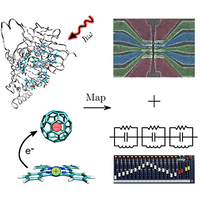
Ruslan N. Tazhigulov, Shi-Ning Sun, Reza Haghshenas, Huanchen Zhai, Adrian T.K. Tan, Nicholas C. Rubin, Ryan Babbush, Austin J. Minnich, and Garnet Kin-Lic Chan
PRX Quantum 3, 040318 (2022) - Published 14 November, 2022
Two problems of interest in chemistry and materials science are tested on a quantum processor used for quantum advantage experiments.
Bo L. Dwyer, Lila V.H. Rodgers, Elana K. Urbach, Dolev Bluvstein, Sorawis Sangtawesin, Hengyun Zhou, Yahia Nassab, Mattias Fitzpatrick, Zhiyang Yuan, Kristiaan De Greve, Eric L. Peterson, Helena Knowles, Tamara Sumarac, Jyh-Pin Chou, Adam Gali, V.V. Dobrovitski, Mikhail D. Lukin, and Nathalie P. de Leon
PRX Quantum 3, 040328 (2022) - Published 14 December, 2022
A detailed analysis of the coherence decay of a nanoscale sensor shows that ubiquitous spins on the diamond surface are mobile and reveals the potential of local sensors to investigate the dynamics of complex systems.
Chang Woo Kim, John M. Nichol, Andrew N. Jordan, and Ignacio Franco
PRX Quantum 3, 040308 (2022) - Published 17 October, 2022
A proposed quantum simulation architecture captures the effects of highly structured non-Markovian quantum environments, such as those found in chemical dynamics.
Roman Stricker, Michael Meth, Lukas Postler, Claire Edmunds, Chris Ferrie, Rainer Blatt, Philipp Schindler, Thomas Monz, Richard Kueng, and Martin Ringbauer
PRX Quantum 3, 040310 (2022) - Published 21 October, 2022
An experimental demonstration of scalable system characterization via classical-shadow-based single-setting quantum state tomography.
Long Zhang and Xiong-Jun Liu
PRX Quantum 3, 040312 (2022) - Published 27 October, 2022
Using a new approach to access band structures, a systematic and high-precision scheme to realize, manipulate, and detect unconventional Floquet topological phases on quantum simulators is developed.
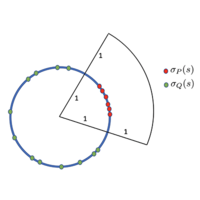
Abhinav Deshpande, Pradeep Niroula, Oles Shtanko, Alexey V. Gorshkov, Bill Fefferman, and Michael J. Gullans
PRX Quantum 3, 040329 (2022) - Published 16 December, 2022
Properties of noisy random circuits are investigated, uncovering relevant consequences for the tightness of proof techniques in the field of quantum computational advantage.
David J. Niegemann, Victor El-Homsy, Baptiste Jadot, Martin Nurizzo, Bruna Cardoso-Paz, Emmanuel Chanrion, Matthieu Dartiailh, Bernhard Klemt, Vivien Thiney, Christopher Bäuerle, Pierre-André Mortemousque, Benoit Bertrand, Heimanu Niebojewski, Maud Vinet, Franck Balestro, Tristan Meunier, and Matias Urdampilleta
PRX Quantum 3, 040335 (2022) - Published 26 December, 2022
Rapid and high-fidelity single-shot readout of spins is demonstrated by combining scalable fabrication technology, Pauli spin blockade, and rf reflectometry on a single-lead quantum dot.
Liyang Qiu, Lingjing Ji, Jiangyong Hu, Yizun He, Yuzhuo Wang, and Saijun Wu
PRX Quantum 3, 040301 (2022) - Published 3 October, 2022
An enhanced quantum manipulation technique is demonstrated, allowing fast and precise control of multicomponent atomic matterwave.
Kaoru Mizuta, Yuya O. Nakagawa, Kosuke Mitarai, and Keisuke Fujii
PRX Quantum 3, 040302 (2022) - Published 5 October, 2022
A quantum algorithm, based on the Lieb-Robinson bound, is developed to accurately and efficiently compile time-evolution operators, providing extensive proofs that certify the performance of the method.
Pedro C.S. Costa, Dong An, Yuval R. Sanders, Yuan Su, Ryan Babbush, and Dominic W. Berry
PRX Quantum 3, 040303 (2022) - Published 7 October, 2022
A quantum algorithm for solving linear systems that is asymptotically optimal is developed, matching a known lower bound on the complexity and easing its practical implementation.
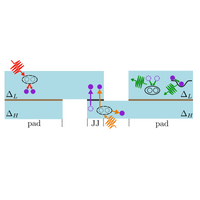
S. Diamond, V. Fatemi, M. Hays, H. Nho, P. D. Kurilovich, T. Connolly, V. R. Joshi, K. Serniak, L. Frunzio, L. I. Glazman, and M. H. Devoret
PRX Quantum 3, 040304 (2022) - Published 10 October, 2022
An investigation of quasiparticle excitation dynamics in superconducting qubits, helping to inform the strategies one should use to mitigate single-charge-tunneling decoherence.
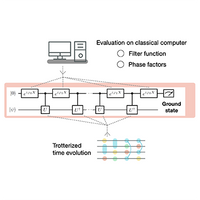
Yulong Dong, Lin Lin, and Yu Tong
PRX Quantum 3, 040305 (2022) - Published 12 October, 2022
An algorithm for estimating ground-state energy that is suitable for early fault-tolerant quantum devices can achieve near-optimal complexity, according to a new proposal.
Federico Grasselli, Gláucia Murta, Jarn de Jong, Frederik Hahn, Dagmar Bruß, Hermann Kampermann, and Anna Pappa
PRX Quantum 3, 040306 (2022) - Published 13 October, 2022
A security framework for anonymous conference key agreement with different levels of anonymity is introduced, suggesting that multipartite entanglement is a better option for cryptographic tasks involving several users.
Anastasiya Ponosova, Daria Ruzhitskaya, Poompong Chaiwongkhot, Vladimir Egorov, Vadim Makarov, and Anqi Huang
PRX Quantum 3, 040307 (2022) - Published 14 October, 2022
A clever defense strategy against light-injection attacks helps boost the security of practical quantum key distribution.
Chang Woo Kim, John M. Nichol, Andrew N. Jordan, and Ignacio Franco
PRX Quantum 3, 040308 (2022) - Published 17 October, 2022
A proposed quantum simulation architecture captures the effects of highly structured non-Markovian quantum environments, such as those found in chemical dynamics.
Joseph Vovrosh, Rick Mukherjee, Alvise Bastianello, and Johannes Knolle
PRX Quantum 3, 040309 (2022) - Published 19 October, 2022
Novel hadronic bound states in a long-range spin model are investigated, and two distinct controllable protocols indicate how one can clearly observe dynamical hadron formation.
Roman Stricker, Michael Meth, Lukas Postler, Claire Edmunds, Chris Ferrie, Rainer Blatt, Philipp Schindler, Thomas Monz, Richard Kueng, and Martin Ringbauer
PRX Quantum 3, 040310 (2022) - Published 21 October, 2022
An experimental demonstration of scalable system characterization via classical-shadow-based single-setting quantum state tomography.
Francesco Preti, Tommaso Calarco, and Felix Motzoi
PRX Quantum 3, 040311 (2022) - Published 25 October, 2022
Machine-learning methods to easy gate optimization are presented, allowing one to find optimal control pulses that depend adaptively on a vast landscape of parameters.
Long Zhang and Xiong-Jun Liu
PRX Quantum 3, 040312 (2022) - Published 27 October, 2022
Using a new approach to access band structures, a systematic and high-precision scheme to realize, manipulate, and detect unconventional Floquet topological phases on quantum simulators is developed.
Yuchen Guo and Shuo Yang
PRX Quantum 3, 040313 (2022) - Published 31 October, 2022
A quantum algorithm based on the tensor network representation of quantum channels is developed to characterize and mitigate correlated noise in deep quantum circuits.
Olli Mansikkamäki, Sami Laine, Atte Piltonen, and Matti Silveri
PRX Quantum 3, 040314 (2022) - Published 2 November, 2022
Describing the dynamics of highly excited states of coupled transmons in a unified, compact, and accurate manner is now possible, allowing investigation of various collective phenomena, such as edge localization and longer-range interactions.
Yu-Jie Liu, Kirill Shtengel, Adam Smith, and Frank Pollmann
PRX Quantum 3, 040315 (2022) - Published 7 November, 2022
A scheme that uses linear-depth quantum circuits allows one to efficiently prepare topologically ordered states and directly probe properties such as braiding statistics and fusion channels of anyons.
Jad C. Halimeh, Ian P. McCulloch, Bing Yang, and Philipp Hauke
PRX Quantum 3, 040316 (2022) - Published 9 November, 2022
How to quantum simulate high-energy physics: a detailed proposal on how to experimentally engineer a tunable topological term to probe confinement on a cold-atom-based platform.
Yanting Cheng, Shang Liu, Wei Zheng, Pengfei Zhang, and Hui Zhai
PRX Quantum 3, 040317 (2022) - Published 9 November, 2022
A recipe on how to prepare experiments and provide evidence of high-energy physics effects using cold-atom quantum simulators.
Ruslan N. Tazhigulov, Shi-Ning Sun, Reza Haghshenas, Huanchen Zhai, Adrian T.K. Tan, Nicholas C. Rubin, Ryan Babbush, Austin J. Minnich, and Garnet Kin-Lic Chan
PRX Quantum 3, 040318 (2022) - Published 14 November, 2022
Two problems of interest in chemistry and materials science are tested on a quantum processor used for quantum advantage experiments.
Yunzhe Zheng, Hemant Sharma, and Johannes Borregaard
PRX Quantum 3, 040319 (2022) - Published 16 November, 2022
A qudit-based entanglement distribution protocol allows bypass of the strict memory requirements inflicted by the deleterious loss between transmission nodes and, as a result, boosts the performance of near-term quantum networks.
Wayne M. Witzel, Jesse J. Lutz, and Dwight R. Luhman
PRX Quantum 3, 040320 (2022) - Published 18 November, 2022
Isoelectronic defects, specifically Sn with a spin-½ nucleus, are proposed as the quantum bits in a quantum processor, with internuclear operations mediated by smoothly shuttling electrons from one qubit to another.
Tomoki Hirosawa, Alexander Mook, Jelena Klinovaja, and Daniel Loss
PRX Quantum 3, 040321 (2022) - Published 21 November, 2022
A detailed investigation shows that a novel hybrid platform can be used to realize all-electrical quantum gates in multiferroic topological magnets.
Marie Lu, Jean-Loup Ville, Joachim Cohen, Alexandru Petrescu, Sydney Schreppler, Larry Chen, Christian Jünger, Chiara Pelletti, Alexei Marchenkov, Archan Banerjee, William P. Livingston, John Mark Kreikebaum, David I. Santiago, Alexandre Blais, and Irfan Siddiqi
PRX Quantum 3, 040322 (2022) - Published 23 November, 2022
A novel protocol for implementing high-fidelity multiqubit gates based on Rabi-driven all-to-all connected superconducting qubit networks is experimentally demonstrated.
Gilad Gour
PRX Quantum 3, 040323 (2022) - Published 28 November, 2022
The resource theory of thermodynamics is revisited, introducing new results and insights on the interplay between quantum coherence and irreversibility and how it affects the convertibility of quantum systems in both single-shot and asymptotic regimes.
Athreya Shankar, Emil A. Yuzbashyan, Victor Gurarie, Peter Zoller, John J. Bollinger, and Ana Maria Rey
PRX Quantum 3, 040324 (2022) - Published 30 November, 2022
A proposal to use trapped-ion crystals in a Penning trap to simulate and probe topological superconductivity; the work paves the way to prepare and manipulate skyrmionic spin textures.
Faedi Loulidi and Ion Nechita
PRX Quantum 3, 040325 (2022) - Published 2 December, 2022
Measurement incompatibility and Bell nonlocality are connected using tensor norms, generalizing the CHSH nonlocal game to all XOR games.
Guillermo González-García, Rahul Trivedi, and J. Ignacio Cirac
PRX Quantum 3, 040326 (2022) - Published 5 December, 2022
A random circuit model is devised to analyze the impact of noise in NISQ devices on solving optimization problems with variational algorithms.
Abhinav Deshpande, Alexey V. Gorshkov, and Bill Fefferman
PRX Quantum 3, 040327 (2022) - Published 9 December, 2022
The circuit complexity in preparing the ground state of a Hamiltonian is studied as a function of the spectral gap—the energy difference between the ground and the first excited state—and an optimistic outlook for quantum variational methods is presented.
Bo L. Dwyer, Lila V.H. Rodgers, Elana K. Urbach, Dolev Bluvstein, Sorawis Sangtawesin, Hengyun Zhou, Yahia Nassab, Mattias Fitzpatrick, Zhiyang Yuan, Kristiaan De Greve, Eric L. Peterson, Helena Knowles, Tamara Sumarac, Jyh-Pin Chou, Adam Gali, V.V. Dobrovitski, Mikhail D. Lukin, and Nathalie P. de Leon
PRX Quantum 3, 040328 (2022) - Published 14 December, 2022
A detailed analysis of the coherence decay of a nanoscale sensor shows that ubiquitous spins on the diamond surface are mobile and reveals the potential of local sensors to investigate the dynamics of complex systems.
Abhinav Deshpande, Pradeep Niroula, Oles Shtanko, Alexey V. Gorshkov, Bill Fefferman, and Michael J. Gullans
PRX Quantum 3, 040329 (2022) - Published 16 December, 2022
Properties of noisy random circuits are investigated, uncovering relevant consequences for the tightness of proof techniques in the field of quantum computational advantage.
Jonas Glatthard, Jesús Rubio, Rahul Sawant, Thomas Hewitt, Giovanni Barontini, and Luis A. Correa
PRX Quantum 3, 040330 (2022) - Published 19 December, 2022
Recently developed adaptive Bayesian methods allow for more precise and reliable quantum thermometry from less measurements, as demonstrated in release-recapture experiments with microkelvin-cooled potassium atoms trapped in an optical tweezer.
Suhail Ahmad Rather, S. Aravinda, and Arul Lakshminarayan
PRX Quantum 3, 040331 (2022) - Published 20 December, 2022
Novel insights are provided on the practical construction of dual-unitary circuits, a rare type of exactly soluble many-body quantum dynamics exhibiting nonintegrability and quantum chaos.
Leonid V. Abdurakhimov, Imran Mahboob, Hiraku Toida, Kosuke Kakuyanagi, Yuichiro Matsuzaki, and Shiro Saito
PRX Quantum 3, 040332 (2022) - Published 21 December, 2022
A spectroscopic method is developed and applied to characterize qubit-defect interactions, providing essential feedback for fabrication process optimization and the development of realistic noise models.
Evan Peters, Prasanth Shyamsundar, Andy C.Y. Li, and Gabriel Perdue
PRX Quantum 3, 040333 (2022) - Published 22 December, 2022
The Loschmidt echo, a method for probing reversibility in quantum systems, is used in conjunction with simulated annealing to provide a scalable and flexible approach to optimizing qubit assignment on near-term hardware.
Jens Nettersheim, Sabrina Burgardt, Quentin Bouton, Daniel Adam, Eric Lutz, and Artur Widera
PRX Quantum 3, 040334 (2022) - Published 23 December, 2022
A negative-temperature quantum heat engine is experimentally implemented with a single Cs atom in an Rb bath, demonstrating how negative temperatures can both enhance the output power and reduce fluctuations in comparison to positive temperatures.
David J. Niegemann, Victor El-Homsy, Baptiste Jadot, Martin Nurizzo, Bruna Cardoso-Paz, Emmanuel Chanrion, Matthieu Dartiailh, Bernhard Klemt, Vivien Thiney, Christopher Bäuerle, Pierre-André Mortemousque, Benoit Bertrand, Heimanu Niebojewski, Maud Vinet, Franck Balestro, Tristan Meunier, and Matias Urdampilleta
PRX Quantum 3, 040335 (2022) - Published 26 December, 2022
Rapid and high-fidelity single-shot readout of spins is demonstrated by combining scalable fabrication technology, Pauli spin blockade, and rf reflectometry on a single-lead quantum dot.
D.K. Weiss, Helin Zhang, Chunyang Ding, Yuwei Ma, David I. Schuster, and Jens Koch
PRX Quantum 3, 040336 (2022) - Published 27 December, 2022
A new coupling scheme between heavy fluxonium qubits—one of the least-noise-sensitive superconducting qubits—is introduced, predicting gate fidelities beyond state-of-the-art ones.
Tsung-Cheng Lu, Leonardo A. Lessa, Isaac H. Kim, and Timothy H. Hsieh
PRX Quantum 3, 040337 (2022) - Published 28 December, 2022
Adaptive circuits combining measurement and feedback are used to produce long-range entangled states using only low-depth circuits, overcoming limitations imposed by the Lieb-Robinson bounds.
Giampiero Marchegiani, Luigi Amico, and Gianluigi Catelani
PRX Quantum 3, 040338 (2022) - Published 29 December, 2022
An extensive analysis about how gap asymmetry affects qubit properties could lead to better engineering strategies.
Maxime Dupont, Nicolas Didier, Mark J. Hodson, Joel E. Moore, and Matthew J. Reagor
PRX Quantum 3, 040339 (2022) - Published 30 December, 2022
The fidelity of the QAOA algorithm is found to obey a scaling law associated with the bond dimension of matrix product states, benchmarking the performance of quantum hardware in realistic setups.