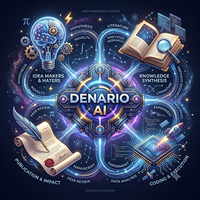
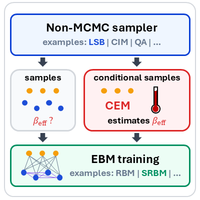
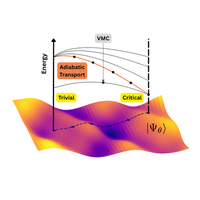
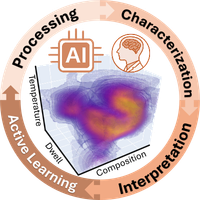
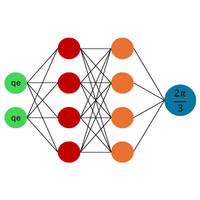
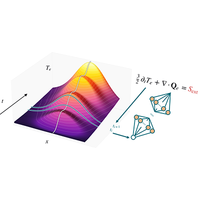
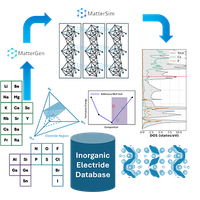
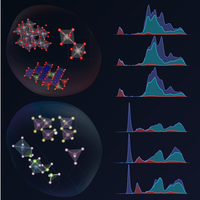
We present Denario, an Artificial Intelligence (AI) multiagent system designed to serve as a scientific research assistant. Denario can perform many different tasks, such as generating ideas, checking the literature, developing research plans, writing and executing code, making plots, and drafting a scientific paper. The system has a modular architecture, allowing it to handle specific tasks, such as generating an idea or carrying out near end-to-end scientific analysis using Cmbagent as a deep-research backend (end-to-end except for the novelty assessment, which is intentionally left for the user to inspect). In this work, we describe in detail Denario and its modules, and illustrate its capabilities by presenting multiple AI-generated papers generated by it in many different scientific disciplines such as astrophysics, biology, biophysics, biomedical informatics, chemistry, material science, mathematical physics, medicine, neuroscience, and planetary science. Denario can also produce work that combines ideas from different disciplines, which we illustrate with a single () example: a paper that applies methods from quantum physics and machine learning to astrophysical data. We report the evaluations performed on these papers by domain experts, who provided both numerical scores and reviewlike feedback. These papers were scored by domain experts on our team; we report these scores as an indicative self-assessment rather than an independent evaluation, and we flag the resulting conflict of interest explicitly. Most drafts were rated above the midpoint of a 0–10 scale, with several rated 8–9, indicating that the generated papers reach the level a good undergraduate or early graduate student could achieve after weeks or a few months of work. They should be regarded as first drafts that require expert development, not publication-ready papers. We also document an important failure mode in which, when the input data cannot be read, the system may silently generate synthetic data, which we flag explicitly as a key limitation. We then highlight the strengths, weaknesses, and limitations of the current system. Finally, we discuss the ethical implications of AI-driven research and reflect on how such technology relates to the philosophy of science. We publicly release the code at https://github.com/AstroPilot-AI/Denario. A Denario demo can also be run directly on the web at https://huggingface.co/spaces/astropilot-ai/Denario, and the full app will be deployed on the cloud.