

- Open Access
Standard Model of Electromagnetism and Chirality in Crystals
Phys. Rev. X 16, 031039 – Published 17 August, 2026
DOI: https://doi.org/10.1103/jvv7-z2fq
Abstract
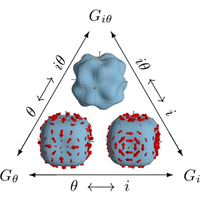
We present a general, systematic, and quantitative theory of electromagnetism and chirality in crystalline solids. Symmetry is its basic guiding principle, enabling us to consider macroscopic multipole densities without reference to any specific microscopic configurations. We use a formal analogy between space inversion and time inversion to identify two complementary, comprehensive classifications of crystals, based on five categories of electric and magnetic multipole order—called polarizations—and five categories of chirality. The five categories of polarizations (parapolar, electropolar, magnetopolar, antimagnetopolar, and multipolar) embody the variety of ways in which electromagnetic multipole order can be realized in solids, thus expanding the familiar notion of electric dipolarization in ferroelectrics and magnetization in ferromagnets to higher-rank multipole densities characterizing, e.g., altermagnets and alterelectrics. Group theory also permits the absolute, gauge-invariant quantification of these multipole densities. The five categories of chirality (parachiral, electrochiral, magnetochiral, antimagnetochiral, and multichiral) extend the notion of enantiomorphism—conventionally associated with the lack of spatial mirror symmetries—to include all possibilities for creating nonsuperposable images by applying the inversions , , and . In particular, multichiral systems lack all inversion symmetries and therefore have four different enantiomorphs. Each category of chirality is shown to arise from particular superpositions of electric and magnetic multipole densities. Our theory has great predictive power by relating electric and magnetic multipolar order with, e.g., distinctive features in the crystal structure, the electronic band structure, property tensors, and response tensors of quantum materials. These findings are critical for a large community working on fundamental and applied aspects of novel quantum materials.
Physics Subject Headings (PhySH)
Popular Summary
Predicting emergent macroscopic characteristics of crystalline solids remains a central challenge in materials physics because conventional approaches often overlook subtle symmetries that dictate complex electric, magnetic, and chiral properties. We addressed this by developing a comprehensive classification that uses symmetry principles to sort crystal structures into five categories of electric and magnetic multipole order and five categories of chirality. Our framework identifies 12 unique types of crystal classes, each possessing distinct physical properties, and accounts for previously overlooked configurations, such as multichirality with four distinct enantiomorphs. This work represents a paradigm shift in our basic understanding of how crystal order shapes the physical properties of crystalline materials. It provides a complete taxonomy for predicting the physical characteristics of complex materials from their structural symmetries and so establishes a foundation for discovering and engineering multifunctional materials with targeted properties.
Article Text
References (205)
- M. Fiebig, T. Lottermoser, D. Meier, and M. Trassin, The evolution of multiferroics, Nat. Rev. Mater. 1, 16046 (2016).
- G. Aeppli, A. V. Balatsky, H. M. Rønnow, and N. A. Spaldin, Hidden, entangled and resonating order, Nat. Rev. Mater. 5, 477 (2020).
- L. Šmejkal, J. Sinova, and T. Jungwirth, Beyond conventional ferromagnetism and antiferromagnetism: A phase with nonrelativistic spin and crystal rotation symmetry, Phys. Rev. X 12, 031042 (2022).
- L. Šmejkal, J. Sinova, and T. Jungwirth, Emerging research landscape of altermagnetism, Phys. Rev. X 12, 040501 (2022).
- R. M. Fernandes, V. S. de Carvalho, T. Birol, and R. G. Pereira, Topological transition from nodal to nodeless Zeeman splitting in altermagnets, Phys. Rev. B 109, 024404 (2024).
- Q. Yang, Y. Li, C. Felser, and B. Yan, Chirality-induced spin selectivity and current-driven spin and orbital polarization in chiral crystals, Newton 1, 100015 (2025).
- D. M. Juraschek et al., Chiral phonons, Nat. Phys. 21, 1532 (2025).
- S. Willenbrock, Symmetries of the standard model, in Proceedings of the Theoretical Advanced Study Institute in Elementary Particle Physics, edited by J. Terning, C. E. M. Wagner, and D. Zeppenfeld (World Scientific, Singapore, 2006), pp. 3–38.
- N. W. Ashcroft and N. D. Mermin, Solid State Physics (Holt, Rinehart, Winston, Philadelphia, 1976).
- C. J. Bradley and A. P. Cracknell, The Mathematical Theory of Symmetry in Solids (Clarendon, Oxford, 1972).
- W. Ludwig and C. Falter, Symmetries in Physics, 2nd ed. (Springer, Berlin, 1996).
- W. Voigt, Lehrbuch der Kristallphysik (B. G. Teubner, Leipzig, 1910).
- J. F. Nye, Physical Properties of Crystals (Oxford University Press, Oxford, 1985).
- G. L. Bir and G. E. Pikus, Symmetry and Strain-Induced Effects in Semiconductors (Wiley, New York, 1974).
- H. Weyl, Symmetry (Princeton University Press, Princeton, NJ, 1952).
- G. F. Koster, J. O. Dimmock, R. G. Wheeler, and H. Statz, Properties of the Thirty-Two Point Groups (MIT, Cambridge, MA, 1963).
For TIS to be a black-white symmetry requires , whereas for half-integer spin states [11]. The case is relevant for a range of important quantities and phenomena. The present work focuses on macroscopically observable quantities such as electric and magnetic multipoles that must transform according to the integer IRs of the full rotation group for which . Moreover, we are interested in electronic band structures as in Fig. 2. Double-group IRs where are relevant when analyzing eigenstates like Bloch functions in a spinful theory. However, the operator of spin angular momentum by itself transforms like a vector () [see Eq. (5c)]. Therefore, single-group IRs are sufficient when the relevant effective Hamiltonians for a spinful band theory are derived, e.g., via the theory of invariants [14]. Hence, for the range of quantities that are of interest here, the group theory of the symmetries and is the same.
- R. Winkler and U. Zülicke, Theory of electric, magnetic, and toroidal polarizations in crystalline solids with applications to hexagonal lonsdaleite and cubic diamond, Phys. Rev. B 107, 155201 (2023).
- B. A. Tavger and V. M. Zaitsev, Magnetic symmetry of crystals, Sov. Phys. JETP 3, 430 (1956).
- B. A. Tavger, The symmetry of ferromagnetics and antiferromagnetics, Sov. Phys. Crystallogr. 3, 341 (1958).
- Y. Le Corre, Les groupes cristallographiques magnétiques et leurs propriétés, J. Phys. Radium 19, 750 (1958).
- Y. Kuramoto, Electronic higher multipoles in solids, Prog. Theor. Phys. Suppl. 176, 77 (2008).
- M.-T. Suzuki, T. Koretsune, M. Ochi, and R. Arita, Cluster multipole theory for anomalous Hall effect in antiferromagnets, Phys. Rev. B 95, 094406 (2017).
- H. Watanabe and Y. Yanase, Group-theoretical classification of multipole order: Emergent responses and candidate materials, Phys. Rev. B 98, 245129 (2018).
- M. Yatsushiro, H. Kusunose, and S. Hayami, Multipole classification in 122 magnetic point groups for unified understanding of multiferroic responses and transport phenomena, Phys. Rev. B 104, 054412 (2021).
- H. Kusunose, R. Oiwa, and S. Hayami, Symmetry-adapted modeling for molecules and crystals, Phys. Rev. B 107, 195118 (2023).
- V. M. Dubovik, L. A. Tosunyan, and V. V. Tugushev, Axial toroidal moments in electrodynamics and solid-state physics, Sov. Phys. JETP 63, 344 (1986).
- J. Hlinka, J. Privratska, P. Ondrejkovic, and V. Janovec, Symmetry guide to ferroaxial transitions, Phys. Rev. Lett. 116, 177602 (2016).
- A. A. Gorbatsevich and Y. V. Kopaev, Toroidal order in crystals, Ferroelectrics 161, 321 (1994).
- I. Fernandez-Corbaton, S. Nanz, and C. Rockstuhl, On the dynamic toroidal multipoles from localized electric current distributions, Sci. Rep. 7, 7527 (2017).
- R. M. Martin, Comment on calculations of electric polarization in crystals, Phys. Rev. B 9, 1998 (1974).
- R. D. King-Smith and D. Vanderbilt, Theory of polarization of crystalline solids, Phys. Rev. B 47, 1651 (1993).
- R. Resta, Macroscopic polarization in crystalline dielectrics: The geometric phase approach, Rev. Mod. Phys. 66, 899 (1994).
- R. Resta, Electrical polarization and orbital magnetization: The modern theories, J. Phys. Condens. Matter 22, 123201 (2010).
- L. L. Hirst, The microscopic magnetization: Concept and application, Rev. Mod. Phys. 69, 607 (1997).
- R. Winkler and U. Zülicke, Gauge-invariant absolute quantification of electric and magnetic multipole densities in crystals, arXiv:2509.17278.
- L. E. Reichl, A Modern Course in Statistical Physics, 2nd ed. (Wiley, New York, 1998).
- L. D. Landau and E. M. Lifshitz, Statistical Physics, Part 1, 3rd ed., Course of Theoretical Physics Vol. 5 (Pergamon, Oxford, 1980).
- N. A. Spaldin, M. Fechner, E. Bousquet, A. Balatsky, and L. Nordström, Monopole-based formalism for the diagonal magnetoelectric response, Phys. Rev. B 88, 094429 (2013).
- M.-T. Suzuki, H. Ikeda, and P. M. Oppeneer, First-principles theory of magnetic multipoles in condensed matter systems, J. Phys. Soc. Jpn. 87, 041008 (2018).
- T. Hitomi and Y. Yanase, Electric octupole order in bilayer ruthenate , J. Phys. Soc. Jpn. 83, 114704 (2014).
- T. Hitomi and Y. Yanase, Electric octupole order in bilayer Rashba system, J. Phys. Soc. Jpn. 85, 124702 (2016).
- K. Mislow, Molecular chirality, in Topics in Stereochemistry, edited by S. E. Denmark (Wiley, New York, 1999), Vol. 22, Chap. 1, pp. 1–82.
- H. D. Flack, Chiral and achiral crystal structures, Helv. Chim. Acta 86, 905 (2003).
- L. D. Barron, Molecular Light Scattering and Optical Activity, 2nd ed. (Cambridge University Press, Cambridge, England, 2004).
- G. H. Wagnière, On Chirality and the Universal Asymmetry (Helvetica Chimica Acta, Zürich, 2007).
- G. H. Fecher, J. Kübler, and C. Felser, Chirality in the solid state: Chiral crystal structures in chiral and achiral space groups, Materials 15, 5812 (2022).
- J. Kishine, H. Kusunose, and H. M. Yamamoto, On the definition of chirality and enantioselective fields, Isr. J. Chem. 62, e202200049 (2022).
- E. Bousquet, M. Fava, Z. Romestan, F. Gómez-Ortiz, E. E. McCabe, and A. H. Romero, Structural chirality and related properties in periodic inorganic solids: Review and perspectives, J. Phys. Condens. Matter 37, 163004 (2025).
- C. P. Romao and D. M. Juraschek, Chirality à la carte, Science 387, 361 (2025).
- L. D. Landau and E. M. Lifshitz, Electrodynamics of Continuous Media, 2nd ed. (Pergamon, Oxford, 1984).
- J. Brown, W. F., S. Shtrikman, and D. Treves, Possibility of visual observation of antiferromagnetic domains, J. Appl. Phys. 34, 1233 (1963).
- H. Thomas, Magnetische Strukturen, Z. Angew. Phys. 18, 404 (1965).
- H. Schmid, On a magnetoelectric classification of materials, Int. J. Magn. 4, 337 (1973).
- W. Opechowski, Magnetoelectric symmetry, Int. J. Magn. 5, 317 (1974).
- V. Kopský, The structure of Heesch groups and its relation to material property tensors, J. Magn. Magn. Mater. 3, 201 (1976).
- V. Kopský, A simplified calculation and tabulation of tensorial covariants for magnetic point groups belonging to the same Laue class, Acta Crystallogr. Sect. A 35, 95 (1979).
- V. Kopský, Opechowski’s magic relations, Z. Kristallogr. 221, 51 (2006).
- H. Grimmer, General connections for the form of property tensors in the 122 Shubnikov point groups, Acta Crystallogr. Sect. A 47, 226 (1991).
- H. Grimmer, The forms of tensors describing magnetic, and toroidal properties, Ferroelectrics 161, 181 (1994).
- D. B. Litvin, Magnetic physical-property tensors, Acta Crystallogr. Sect. A 50, 406 (1994).
- H. Schmid, Some symmetry aspects of ferroics and single phase multiferroics, J. Phys. Condens. Matter 20, 434201 (2008).
- M. Ikhlas, S. Dasgupta, F. Theuss, T. Higo, S. Kittaka, B. J. Ramshaw, O. Tchernyshyov, C. W. Hicks, and S. Nakatsuji, Piezomagnetic switching of the anomalous Hall effect in an antiferromagnet at room temperature, Nat. Phys. 18, 1086 (2022).
- L. Ye, M. E. Sorensen, M. D. Bachmann, and I. R. Fisher, Measurement of the magnetic octupole susceptibility of , Nat. Commun. 15, 7005 (2024).
- L. D. Landau and E. M. Lifshitz, Quantum Mechanics, 3rd ed., Course of Theoretical Physics Vol. 3 (Pergamon, Oxford, 1977).
- G. Burns and A. M. Glazer, Space Groups for Solid State Scientists, 3rd ed. (Academic, Amsterdam, 2013).
- A. R. Edmonds, Angular Momentum in Quantum Mechanics, 2nd ed. (Princeton University Press, Princeton, NJ, 1960).
- W.-K. Tung, Group Theory in Physics (World Scientific, Singapore, 1985).
Previous work does not offer a universally accepted notation for the four basic types of tensors. In Refs. [59, 60], tensors with signatures , , , and are denoted as i-tensor, s-tensor, t-tensor, and u-tensor, respectively, while Refs. [56, 57, 58] use the symbols , , , and . See also Table 4 in Ref. [62].
- The parity of the integer indicates, as in number theory, whether is even or odd, see, e.g., M. Hunacek, Introduction to Number Theory (CRC, Boca Raton, FL, 2023).
- J. D. Jackson, Classical Electrodynamics, 3rd ed. (Wiley, NewYork, 1999).
- R. E. Raab and O. L. de Lange, Multipole Theory in Electromagnetism (Clarendon, Oxford, 2005).
- V. M. Dubovik and V. V. Tugushev, Toroid moments in electrodynamics and solid-state physics, Phys. Rep. 187, 145 (1990).
- S. Nanz, Toroidal Multipole Moments in Classical Electrodynamics (Springer, Wiesbaden, 2016).
- M. E. Rose, Spherical tensors in physics, Proc. Phys. Soc. London Sect. A 67, 239 (1954).
- P. M. Morse and H. Feshbach, Methods of Theoretical Physics, Vol. 2 (McGraw-Hill, New York, 1953).
- F. E. Low, Classical Field Theory (Wiley, New York, 1997).
- V. M. Dubovik and A. A. Cheshkov, Multipole expansion in classical and quantum field theory and radiation, Sov. J. Part. Nucl. 5, 791 (1974).
If contains none of the transformations , , or as individual elements, then and . If contains all three of these transformations as elements, then . The only remaining possibility is that contains exactly one inversion symmetry as an individual group element, in which case .
- A. B. Hellenes, T. Jungwirth, R. Jaeschke-Ubiergo, A. Chakraborty, J. Sinova, and L. Šmejkal, P-wave magnets, arXiv:2309.01607.
- Y. Yu, M. B. Lyngby, T. Shishidou, M. Roig, A. Kreisel, M. Weinert, B. M. Andersen, and D. F. Agterberg, Odd-parity magnetism driven by antiferromagnetic exchange, Phys. Rev. Lett. 135, 046701 (2025).
- S. Bhowal and N. A. Spaldin, Ferroically ordered magnetic octupoles in -wave altermagnets, Phys. Rev. X 14, 011019 (2024).
- B. A. Tavger, Symmetry of piezomagnetism of antiferromagnetics, Sov. Phys. Crystallogr. 3, 344 (1958).
- H. Wang and X. Qian, Electrically and magnetically switchable nonlinear photocurrent in -symmetric magnetic topological quantum materials, npj Comput. Mater. 6, 199 (2020).
- H. Watanabe and Y. Yanase, Chiral photocurrent in parity-violating magnet and enhanced response in topological antiferromagnet, Phys. Rev. X 11, 011001 (2021).
- R. Fei, W. Song, L. Pusey-Nazzaro, and L. Yang, -symmetry-enabled spin circular photogalvanic effect in antiferromagnetic insulators, Phys. Rev. Lett. 127, 207402 (2021).
- B. G. Wybourne, Classical Groups for Physicists (Wiley, New York, 1974).
- M.-T. Suzuki, T. Nomoto, R. Arita, Y. Yanagi, S. Hayami, and H. Kusunose, Multipole expansion for magnetic structures: A generation scheme for a symmetry-adapted orthonormal basis set in the crystallographic point group, Phys. Rev. B 99, 174407 (2019).
The electrotoroidal tensor is an interesting exception among all spherical tensors. It cannot be expressed as a compound tensor combining one nontrivial and one or two trivial tensors. This tensor does not arise in Table 5 either. In addition, the tensor component is not an invariant tensor for any continuous dihedral group ; it is only invariant under the continuous cyclic group , so it cannot be distinguished from even- electric components (see Appendix pp2-s2). Therefore is not considered further in this work.
- R. Resta and D. Vanderbilt, Theory of polarization: A modern approach, in Physics of Ferroelectrics, edited by K. M. Rabe, C. H. Ahn, and J.-M. Triscone (Springer, Berlin, 2007), pp. 31–68.
- D. Vanderbilt, Berry Phases in Electronic Structure Theory (Cambridge University Press, Cambridge, England, 2018).
- R. Resta, Why are insulators insulating and metals conducting?, J. Phys. Condens. Matter 14, R625 (2002).
- S. Ono, L. Trifunovic, and H. Watanabe, Difficulties in operator-based formulation of the bulk quadrupole moment, Phys. Rev. B 100, 245133 (2019).
- A. Daido, A. Shitade, and Y. Yanase, Thermodynamic approach to electric quadrupole moments, Phys. Rev. B 102, 235149 (2020).
- H.-W. Streitwolf, Group Theory in Solid-State Physics (Macdonald, London, 1971).
- R. E. Newnham, Properties of Materials (Oxford University Press, New York, 2005).
- S. Picozzi, Spin–orbit coupling in quantum materials: Emergent phenomena, their modelling and examples from two-dimensional magnets, Riv. Nuovo Cimento 47, 609 (2024).
- C. Herring, Effect of time-reversal symmetry on energy bands of crystals, Phys. Rev. 52, 361 (1937).
- C. Herring, Accidental degeneracy in the energy bands of crystals, Phys. Rev. 52, 365 (1937).
- S. Hayami, M. Yatsushiro, Y. Yanagi, and H. Kusunose, Classification of atomic-scale multipoles under crystallographic point groups and application to linear response tensors, Phys. Rev. B 98, 165110 (2018).
For conceptual clarity, the current analysis is restricted to bands without orbital degeneracies near the point of the Brillouin zone. All arguments can be extended to bands with orbital degeneracies and other expansion points in the Brillouin zone [14].
- E. I. Rashba and V. I. Sheka, Symmetry of energy bands in crystals of wurtzite type: II. symmetry of bands including spin-orbit interaction, Fiz. Tverd. Tela: Collected Papers 2, 162 (1959). For an English translation, see the supplement of G. Bihlmayer, O. Rader, and R. Winkler, Focus on the Rashba effect, New J. Phys. 17, 050202 (2015).
- G. Dresselhaus, Spin-orbit coupling effects in zinc blende structures, Phys. Rev. 100, 580 (1955).
- Y. Yanase, Magneto-electric effect in three-dimensional coupled zigzag chains, J. Phys. Soc. Jpn. 83, 014703 (2014).
- S. Hayami, H. Kusunose, and Y. Motome, Toroidal order in metals without local inversion symmetry, Phys. Rev. B 90, 024432 (2014).
- R. Winkler and U. Zülicke, Collinear orbital antiferromagnetic order and magnetoelectricity in quasi-two-dimensional itinerant-electron paramagnets, ferromagnets, and antiferromagnets, Phys. Rev. Res. 2, 043060 (2020).
- G. Yin, J.-X. Yu, Y. Liu, R. K. Lake, J. Zang, and K. L. Wang, Planar Hall effect in antiferromagnetic MnTe thin films, Phys. Rev. Lett. 122, 106602 (2019).
- I. Dzyaloshinsky, A thermodynamic theory of, “weak” ferromagnetism of antiferromagnetics, J. Phys. Chem. Solids 4, 241 (1958).
Different symmetry classifications identifying point and space group symmetries permitting weak ferromagnetism have been developed by Tavger [20] and Turov [110].
- E. A. Turov, Conditions for the existence of weak ferromagnetism and the classification of weakly ferromagnetic structures, Sov. Phys.–JETP 15, 1098 (1962).
- N. Nagaosa, J. Sinova, S. Onoda, A. H. MacDonald, and N. P. Ong, Anomalous Hall effect, Rev. Mod. Phys. 82, 1539 (2010).
- H. Chen, Q. Niu, and A. H. MacDonald, Anomalous Hall effect arising from noncollinear antiferromagnetism, Phys. Rev. Lett. 112, 017205 (2014).
- R. D. Gonzalez Betancourt, J. Zubáč, R. Gonzalez-Hernandez, K. Geishendorf, Z. Šobáň, G. Springholz, K. Olejník, L. Šmejkal, J. Sinova, T. Jungwirth, S. T. B. Goennenwein, A. Thomas, H. Reichlová, J. Železný, and D. Kriegner, Spontaneous anomalous Hall effect arising from an unconventional compensated magnetic phase in a semiconductor, Phys. Rev. Lett. 130, 036702 (2023).
- J. Kübler and C. Felser, Non-collinear antiferromagnets and the anomalous Hall effect, Europhys. Lett. 108, 67001 (2014).
- S. Nakatsuji, N. Kiyohara, and T. Higo, Large anomalous Hall effect in a non-collinear antiferromagnet at room temperature, Nature (London) 527, 212 (2015).
- S. Shtrikman and H. Thomas, Remarks on linear magneto-resistance and magneto-heat-conductivity, Solid State Commun. 3, 147 (1965).
- H. Grimmer, General relations for transport properties in magnetically ordered crystals, Acta Crystallogr. Sect. A 49, 763 (1993).
- H. Fujii, N. Shohata, T. Okamoto, and E. Tatsumoto, Magnetic properties of rare earth gallium compounds RGa, J. Phys. Soc. Jpn. 31, 1592 (1971).
- B. Barbara, V. N. Nguyen, and E. Siaud, Propriétés magnétiques des composés équiatomiques terres rares-gallium, C. R. Acad. Sci. (France) B274, 1053 (1972).
- B. J. Campbell, H. T. Stokes, J. M. Perez-Mato, and J. Rodriguez-Carvajal, A recapitulation of magnetic space groups and their UNI symbols, Acta Crystallogr. Sect. B 80, 401 (2024).
- V. Pomjakushin, On the magnetic and crystal structures of NiO and MnO, Acta Crystallogr. Sect. B 80, 385 (2024).
- D. B. Litvin and W. Opechowski, Spin groups, Physica 76, 538 (1974).
- R. M. White, Quantum Theory of Magnetism, 3rd ed. (Springer, Berlin, 2007).
- G. Bihlmayer, Density functional theory of magnetism, in Handbook of Magnetism and Advanced Magnetic Materials, Vol. I, edited by H. Kronmüller and S. Parkin (Wiley, Chichester, UK, 2007), pp. 1–26.
- D. Gosálbez-Martínez, I. Souza, and D. Vanderbilt, Chiral degeneracies and Fermi-surface Chern numbers in bcc Fe, Phys. Rev. B 92, 085138 (2015).
- L.-D. Yuan, Z. Wang, J.-W. Luo, E. I. Rashba, and A. Zunger, Giant momentum-dependent spin splitting in centrosymmetric low- antiferromagnets, Phys. Rev. B 102, 014422 (2020).
- R. Winkler and U. Zülicke, Time inversion symmetry in the Dirac and Schrödinger-Pauli theories, Phys. Lett. A 558, 130873 (2025).
- S. Dong, H. Xiang, and E. Dagotto, Magnetoelectricity in multiferroics: A theoretical perspective, Natl. Sci. Rev. 6, 629 (2019).
- M.-C. Chang and Q. Niu, Berry curvature, orbital moment, and effective quantum theory of electrons in electromagnetic fields, J. Phys. Condens. Matter 20, 193202 (2008).
- S. Lowitzer, D. Ködderitzsch, and H. Ebert, Coherent description of the intrinsic and extrinsic anomalous Hall effect in disordered alloys on an ab initio level, Phys. Rev. Lett. 105, 266604 (2010).
- D. Wagenknecht, L. Šmejkal, Z. Kašpar, J. Sinova, T. Jungwirth, J. Kudrnovský, K. Carva, and I. Turek, Temperature-dependent resistivity and anomalous Hall effect in NiMnSb from first principles, Phys. Rev. B 99, 174433 (2019).
See Ref. [46] for a general overview. The relation between modern uses for the term “handedness” and the precise meaning of “chirality” is discussed, e.g., in Ref. [47].
The definition, basic structure, and general properties of magnetic-point-group classes are discussed in Appendix pp1-s3. The application to continuous and discrete point groups is discussed in Appendix pp2.
- M. V. Hobden, Optical activity in a non-enantiomorphous crystal silver gallium sulphide, Nature (London) 216, 678 (1967).
- H. Zocher and C. Török, About space-time asymmetry in the realm of classical general and crystal physics, Proc. Natl. Acad. Sci. U.S.A. 39, 681 (1953).
- L. Barron, True and false chirality and parity violation, Chem. Phys. Lett. 123, 423 (1986).
- L. D. Barron, False chirality, absolute enantioselection and CP violation: Pierre Curie’s legacy, Magnetochemistry 6, 5 (2020).
The chiral charges are different from the chiral charges encountered in relativistic field theories based on Noether’s theorem, i.e., based on a conservation law reflecting a continuous chiral symmetry [139]. The chiral charges reflect the discrete symmetries in a crystalline environment.
- M. E. Peskin and D. V. Schroeder, An Introduction to Quantum Field Theory (Addison-Wesley, Reading, MA, 1995).
Systems considered to be chiral according to the definitions of Ref. [45] could be either electrochiral or multichiral. Both the parachiral and magnetochiral categories would conventionally be considered as achiral, and antimagnetochirality is equivalent to false chirality. Magnetic chirality as discussed, e.g., in Ref. [141] constitutes a subset of the electrochiral category.
- S.-W. Cheong and X. Xu, Magnetic chirality, npj Quantum Mater. 7, 40 (2022).
- M. Fava, W. Lafargue-Dit-Hauret, A. H. Romero, and E. Bousquet, Ferroelectricity and chirality in the crystal, Phys. Rev. B 109, 024113 (2024).
- T. Hayashida, K. Kimura, D. Urushihara, T. Asaka, and T. Kimura, Observation of ferrochiral transition induced by an antiferroaxial ordering of antipolar structural units in , J. Am. Chem. Soc. 143, 3638 (2021).
- S. Hayami and H. Kusunose, Time-reversal switching responses in antiferromagnets, Phys. Rev. B 108, L140409 (2023).
- R. Hoyer, P. P. Stavropoulos, A. Razpopov, R. Valenti, L. Smejkal, and A. Mook, Altermagnetic splitting of magnons in hematite (), Phys. Rev. B 112, 064425 (2025).
- G. T. Rado and V. J. Folen, Observation of the magnetically induced magnetoelectric effect and evidence for antiferromagnetic domains, Phys. Rev. Lett. 7, 310 (1961).
- E. Bousquet, E. Lelièvre-Berna, N. Qureshi, J.-R. Soh, N. A. Spaldin, A. Urru, X. H. Verbeek, and S. F. Weber, On the sign of the linear magnetoelectric coefficient in , J. Phys. Condens. Matter 36, 155701 (2024).
- X. Xu, F.-T. Huang, A. S. Admasu, M. Kratochvílová, M.-W. Chu, J.-G. Park, and S.-W. Cheong, Multiple ferroic orders and toroidal magnetoelectricity in the chiral magnet , Phys. Rev. B 105, 184407 (2022).
- D. Szaller, S. Bordács, and I. Kézsmárki, Symmetry conditions for nonreciprocal light propagation in magnetic crystals, Phys. Rev. B 87, 014421 (2013).
- G. Wagnière and A. Meier, The influence of a static magnetic field on the absorption coefficient of a chiral molecule, Chem. Phys. Lett. 93, 78 (1982).
- L. Barron and J. Vrbancich, Magneto-chiral birefringence and dichroism, Mol. Phys. 51, 715 (1984).
- G. L. J. A. Rikken and E. Raupach, Observation of magneto-chiral dichroism, Nature (London) 390, 493 (1997).
- M. Atzori, G. L. J. A. Rikken, and C. Train, Magneto-chiral dichroism: A playground for molecular chemists, Chem. Eur. J. 26, 9784 (2020).
- X. Xu, F.-T. Huang, and S.-W. Cheong, Magnetic toroidicity, J. Phys. Condens. Matter 36, 203002 (2024).
- E. L. Ivchenko and G. E. Pikus, New photogalvanic effect in gyrotropic crystals, Pis’ma Zh. Eksp. Teor. Fiz. 27, 640 (1978) [JETP Lett. 27, 604 (1978)].
- T. Furukawa, Y. Watanabe, N. Ogasawara, K. Kobayashi, and T. Itou, Current-induced magnetization caused by crystal chirality in nonmagnetic elemental tellurium, Phys. Rev. Res. 3, 023111 (2021).
- R. Winkler, Spin-dependent transport of carriers in semiconductors, in Handbook of Magnetism and Advanced Magnetic Materials, Vol. V, edited by H. Kronmüller and S. Parkin (Wiley, Chichester, UK, 2007), pp. 2830–2843.
- S.-W. Cheong, S. Lim, K. Du, and F.-T. Huang, Permutable SOS (symmetry operational similarity), npj Quantum Mater. 6, 58 (2021).
- T. Hayashida, K. Matsumoto, and T. Kimura, Electric field-induced nonreciprocal directional dichroism in a time-reversal-odd antiferromagnet, Adv. Mater. 37, 2414876 (2025).
- T. Sato, N. Abe, S. Kimura, Y. Tokunaga, and T. H. Arima, Magnetochiral dichroism in a collinear antiferromagnet with no magnetization, Phys. Rev. Lett. 124, 217402 (2020).
- G. A. Smolenskiĭ, R. V. Pisarev, and I. G. Siniĭ, Birefringence of light in magnetically ordered crystals, Sov. Phys. Usp. 18, 410 (1975).
- T. Hayashida, K. Arakawa, T. Oshima, K. Kimura, and T. Kimura, Observation of antiferromagnetic domains in using nonreciprocal optical effects, Phys. Rev. Res. 4, 043063 (2022).
- G. Chang, B. J. Wieder, F. Schindler, D. S. Sanchez, I. Belopolski, S.-M. Huang, B. Singh, D. Wu, T.-R. Chang, T. Neupert, S.-Y. Xu, H. Lin, and M. Z. Hasan, Topological quantum properties of chiral crystals, Nat. Mater. 17, 978 (2018).
- D. Gosálbez-Martínez, A. Crepaldi, and O. V. Yazyev, Diversity of radial spin textures in chiral materials, Phys. Rev. B 108, L201114 (2023).
- E. O. Kane, Band structure of indium antimonide, J. Phys. Chem. Solids 1, 249 (1957).
- U. Rössler, Nonparabolicity and warping in the conduction band of GaAs, Solid State Commun. 49, 943 (1984).
Recent work has studied chirality-induced orbital-angular-momentum textures [168, 169, 170].
- Q. Yang, J. Xiao, I. Robredo, M. G. Vergniory, B. Yan, and C. Felser, Monopole-like orbital-momentum locking and the induced orbital transport in topological chiral semimetals, Proc. Natl. Acad. Sci. U.S.A. 120, e2305541120 (2023).
- B. Kim, D. Shin, S. Namgung, N. Park, K.-W. Kim, and J. Kim, Optoelectronic manifestation of orbital angular momentum driven by chiral hopping in helical Se chains, ACS Nano 17, 18873 (2023).
- S. S. Brinkman, X. L. Tan, B. Brekke, A. C. Mathisen, O. Finnseth, R. J. Schenk, K. Hagiwara, M.-J. Huang, J. Buck, M. Kalläne, M. Hoesch, K. Rossnagel, K.-H. Ou Yang, M.-T. Lin, G.-J. Shu, Y.-J. Chen, C. Tusche, and H. Bentmann, Chirality-driven orbital angular momentum and circular dichroism in CoSi, Phys. Rev. Lett. 132, 196402 (2024).
- S. B. Lee, S. Trebst, Y. B. Kim, and A. Paramekanti, Landau theory of multipolar orders in Kondo materials (; ), Phys. Rev. B 98, 134447 (2018).
- A. S. Patri, A. Sakai, S. Lee, A. Paramekanti, S. Nakatsuji, and Y. B. Kim, Unveiling hidden multipolar orders with magnetostriction, Nat. Commun. 10, 4092 (2019).
- P. A. McClarty and J. G. Rau, Landau theory of altermagnetism, Phys. Rev. Lett. 132, 176702 (2024).
- M. Mostovoy, Phenomenology of altermagnets, Appl. Phys. Lett. 127, 060501 (2025).
- V. Baltz, A. Manchon, M. Tsoi, T. Moriyama, T. Ono, and Y. Tserkovnyak, Antiferromagnetic spintronics, Rev. Mod. Phys. 90, 015005 (2018).
- A. Dal Din, O. J. Amin, P. Wadley, and K. W. Edmonds, Antiferromagnetic spintronics and beyond, npj Spintronics 2, 25 (2024).
- S. Hayami, R. Yambe, and H. Kusunose, Analysis of photo-induced chirality and magnetic toroidal moment based on Floquet formalism, J. Phys. Soc. Jpn. 93, 043702 (2024).
- S. Hayami, Conversion between dipoles with different spatial parities by circularly polarized light, Mater. Today Quantum 5, 100019 (2025).
- M. Yarmohammadi, U. Zülicke, J. Berakdar, J. Linder, and J. K. Freericks, Anisotropic light-tailored RKKY interaction in two-dimensional -wave altermagnets, Phys. Rev. B 111, 224412 (2025).
- R. R. Birss, Symmetry and Magnetism (North-Holland, Amsterdam, 1964).
- A. M. Zamorzaev, Generalization of Fedorov groups, Sov. Phys. Crystallogr. 2, 10 (1957).
- H. Padmanabhan, J. M. Munro, I. Dabo, and V. Gopalan, Antisymmetry: Fundamentals and applications, Annu. Rev. Mater. Res. 50, 255 (2020).
The rows of Tables 11, 13, and 14, listing only one invariant tensor on the right, can be interpreted as sections of the character tables for the IRs of the full rotation group (Table 11) and the IRs of (Table 13) and the full axial rotation group (Table 14), respectively. All of these IRs are one dimensional, and “•” (“∘”) indicates that the respective character is (). The invariant tensors on the right then represent basis functions for these IRs.
- B. A. Tavger, Ultimate magnetic symmetry of physical systems, Sov. Phys. Crystallogr. 5, 646 (1961).
- J. Hlinka, Eight types of symmetrically distinct vectorlike physical quantities, Phys. Rev. Lett. 113, 165502 (2014).
- D. B. Litvin, Axial point groups: Rank 1, 2, 3 and 4 property tensor tables, Acta Crystallogr. Sect. A 71, 346 (2015).
- V. Janovec, Axial crystals—macroscopic symmetry and tensor properties, Phase Transitions 90, 1 (2017).
In Tables 12, 15, and 18, the main block of groups from a given class has the groups of type J, ii-I, i-II, and ii-II from this class at its four corners. See table captions for the discussion of how placement of magnetic groups within a class’s main block illustrates SIS-TIS duality.
- V. Janovec, V. Dvořák, and J. Petzelt, Symmetry classification and properties of equi-translation structural phase transitions, Czech. J. Phys. 25, 1362 (1975).
- E. Ascher and A. Janner, Subgroups of black–white point groups, Acta Crystallogr. 18, 325 (1965).
- M. Damnjanović, Subgroups of the magnetic axial point groups, J. Phys. C 14, 4185 (1981).
- M. Hermele, Matthew P. A. Fisher, and L. Balents, Pyrochlore photons: The spin liquid in a three-dimensional frustrated magnet, Phys. Rev. B 69, 064404 (2004).
- C. Castelnovo, R. Moessner, and S. L. Sondhi, Magnetic monopoles in spin ice, Nature (London) 451, 42 (2008).
- H. Burzlaff and H. Zimmermann, Point-group symbols, in International Tables for Crystallography, Vol. A, edited by H. Fuess, T. Hahn, H. Wondratschek, U. Müller, U. Shmueli, E. Prince, A. Authier, V. Kopský, D. B. Litvin, M. G. Rossmann, E. Arnold, S. Hall, B. McMahon, and T. Hahn (International Union of Crystallography, Chester, England, 2006) 1st ed., pp. 818–820.
- F. W. Hehl, Y. N. Obukhov, J.-P. Rivera, and H. Schmid, Relativistic nature of a magnetoelectric modulus of crystals: A four-dimensional pseudoscalar and its measurement, Phys. Rev. A 77, 022106 (2008).
- F. Calavalle, M. Suárez-Rodríguez, B. Martín-García, A. Johansson, D. C. Vaz, H. Yang, I. V. Maznichenko, S. Ostanin, A. Mateo-Alonso, A. Chuvilin, I. Mertig, M. Gobbi, F. Casanova, and L. E. Hueso, Gate-tuneable and chirality-dependent charge-to-spin conversion in tellurium nanowires, Nat. Mater. 21, 526 (2022).
- P. Huang, Z. Xia, X. Gao, J. M. Rondinelli, X. Zhang, H. Zhang, K. R. Poeppelmeier, and A. Zunger, Ferri-chiral compounds with potentially switchable Dresselhaus spin splitting, Phys. Rev. B 102, 235127 (2020).
- M. Sakano, M. Hirayama, T. Takahashi, S. Akebi, M. Nakayama, K. Kuroda, K. Taguchi, T. Yoshikawa, K. Miyamoto, T. Okuda, K. Ono, H. Kumigashira, T. Ideue, Y. Iwasa, N. Mitsuishi, K. Ishizaka, S. Shin, T. Miyake, S. Murakami, T. Sasagawa, and T. Kondo, Radial spin texture in elemental tellurium with chiral crystal structure, Phys. Rev. Lett. 124, 136404 (2020).
- G. Gatti et al., Radial spin texture of the Weyl fermions in chiral tellurium, Phys. Rev. Lett. 125, 216402 (2020).
- S. V. Gallego, J. M. Perez-Mato, L. Elcoro, E. S. Tasci, R. M. Hanson, K. Momma, M. I. Aroyo, and G. Madariaga, MAGNDATA: Towards a database of magnetic structures. I. The commensurate case, J. Appl. Crystallogr. 49, 1750 (2016).
- S. V. Gallego, J. M. Perez-Mato, L. Elcoro, E. S. Tasci, R. M. Hanson, M. I. Aroyo, and G. Madariaga, MAGNDATA: Towards a database of magnetic structures. II. The incommensurate case, J. Appl. Crystallogr. 49, 1941 (2016).
- X.-J. Gao, Z.-T. Sun, R.-P. Yu, X.-Y. Guo, and K. T. Law, Heesch Weyl fermions in inadmissible chiral antiferromagnets, arXiv:2305.15876.
- A. Knoll and C. Timm, Classification of Weyl points and nodal lines based on magnetic point groups for spin- quasiparticles, Phys. Rev. B 105, 115109 (2022).
- F. Foggetti, S.-W. Cheong, and S. Artyukhin, Magnetic monopoles and toroidal moments in and related compounds, Phys. Rev. B 100, 180408(R) (2019).
- J. Ahn, S.-Y. Xu, and A. Vishwanath, Theory of optical axion electrodynamics and application to the Kerr effect in topological antiferromagnets, Nat. Commun. 13, 7615 (2022).

