Browse by Subject

Simulating time evolution on distributed quantum computers

Finn Lasse Buessen, Dvira Segal, and Ilia Khait

Phys. Rev. Research 5, L022003 (2023) - Published 4 April, 2023

Quantum interconnect technology is crucial for enabling multicore distributed quantum computing. An algorithm for distributed quantum dynamics simulations is presented that is designed to mitigate the low transmission rate of near-term interconnect hardware.

Anisotropic enhancement of lower critical field in ultraclean crystals of spin-triplet superconductor candidate UTe2

K. Ishihara, M. Kobayashi, K. Imamura, M. Konczykowski, H. Sakai, P. Opletal, Y. Tokiwa, Y. Haga, K. Hashimoto, and T. Shibauchi

Phys. Rev. Research 5, L022002 (2023) - Published 3 April, 2023

The thermodynamic critical field, the lower critical field, and the upper critical field at low magnetic fields of ultraclean crystals of UTe2 are measured. An analysis based on the Ginzburg-Landau theory reveals that the lower critical field shows an unusual enhancement for the magnetic field only along the b- and c-axes.

Topological phase transitions at finite temperature

Paolo Molignini and Nigel R. Cooper

Phys. Rev. Research 5, 023004 (2023) - Published 3 April, 2023

Theory of x-ray absorption spectroscopy: A microscopic Bloch equation approach for two-dimensional solid states

Dominik Christiansen, Malte Selig, Jens Biegert, and Andreas Knorr

Phys. Rev. Research 5, 023002 (2023) - Published 3 April, 2023

Enhancement of spin-charge conversion efficiency for Co3Sn2S2 across transition from paramagnetic to ferromagnetic phase

Takeshi Seki, Yong-Chang Lau, Junya Ikeda, Kohei Fujiwara, Akihiro Ozawa, Satoshi Iihama, Kentaro Nomura, and Atsushi Tsukazaki

Phys. Rev. Research 5, 013222 (2023) - Published 31 March, 2023

Decisive role of electron-phonon coupling for phonon and electron instabilities in transition metal dichalcogenides

Zishen Wang, Chuan Chen, Jinchao Mo, Jun Zhou, Kian Ping Loh, and Yuan Ping Feng

Phys. Rev. Research 5, 013218 (2023) - Published 30 March, 2023

Gauge-invariant and anyonic-symmetric autoregressive neural network for quantum lattice models

Di Luo, Zhuo Chen, Kaiwen Hu, Zhizhen Zhao, Vera Mikyoung Hur, and Bryan K. Clark

Phys. Rev. Research 5, 013216 (2023) - Published 29 March, 2023

Development of gauge-invariant and anyonic-symmetric autoregressive neural networks for quantum many-body physics simulations.

Kinetic theory of the nonlocal electrodynamic response in anisotropic metals: Skin effect in 2D systems

Davide Valentinis, Graham Baker, Douglas A. Bonn, and Jörg Schmalian

Phys. Rev. Research 5, 013212 (2023) - Published 29 March, 2023

Islands of chiral solitons in integer-spin Kitaev chains

Erik S. Sørensen, Jonathon Riddell, and Hae-Young Kee

Phys. Rev. Research 5, 013210 (2023) - Published 28 March, 2023

Dynamics of photoinduced ferromagnetism in oxides with orbital degeneracy

Jonathan B. Curtis, Ankit Disa, Michael Fechner, Andrea Cavalleri, and Prineha Narang

Phys. Rev. Research 5, 013204 (2023) - Published 24 March, 2023

Antiferromagnetic spin canting and magnetoelectric multipoles in h−YMnO3

M. Ramakrishnan, Y. Joly, Q. N. Meier, M. Fechner, M. Porer, S. Parchenko, Y. W. Windsor, E. M. Bothschafter, F. Lichtenberg, and U. Staub

Phys. Rev. Research 5, 013203 (2023) - Published 24 March, 2023

Berezinskii-Kosterlitz-Thouless transitions in an easy-plane ferromagnetic superfluid

Andrew P. C. Underwood, Andrew J. Groszek, Xiaoquan Yu, P. B. Blakie, and L. A. Williamson

Phys. Rev. Research 5, L012045 (2023) - Published 23 March, 2023

The phase diagram detailing mass and spin superfluidity in a two-dimensional easy-plane ferromagnetic Bose gas is obtained. The relevant topological defects driving spin and mass Berezinskii-Kosterlitz-Thouless transitions are identified, and the role of superfluid drag is determined. Evidence is presented for a vortex-plasma phase mimicking the much-sought-after quark-gluon plasma.

X-ray two-beam topography for quantitative derivation of phase shift by crystalline dislocations

Yoshiki Kohmura, Kenji Ohwada, Nobuki Kakiuchi, Kei Sawada, Tadaaki Kaneko, Jun'ichiro Mizuki, Masaichiro Mizumaki, Tetsu Watanuki, and Tetsuya Ishikawa

Phys. Rev. Research 5, L012043 (2023) - Published 23 March, 2023

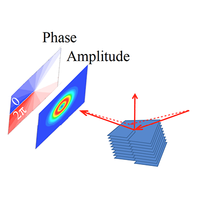
X-ray two-beam topography is shown to enable discrimination of dislocations such as the screw dislocations by the quantitative derivation of the phase shift at the Bragg reflected reciprocal space.

Nature of excitons in the Ti L and O K edges of x-ray absorption spectra in bulk SrTiO3 from a combined first principles and many-body theory approach

Vijaya Begum-Hudde, Tobias Lojewski, Nico Rothenbach, Benedikt Eggert, Andrea Eschenlohr, Katharina Ollefs, Markus E. Gruner, and Rossitza Pentcheva

Phys. Rev. Research 5, 013199 (2023) - Published 23 March, 2023

Observation of cnoidal wave localization in nonlinear topolectric circuits

Hendrik Hohmann, Tobias Hofmann, Tobias Helbig, Stefan Imhof, Hauke Brand, Lavi K. Upreti, Alexander Stegmaier, Alexander Fritzsche, Tobias Müller, Udo Schwingenschlögl, Ching Hua Lee, Martin Greiter, Laurens W. Molenkamp, Tobias Kießling, and Ronny Thomale

Phys. Rev. Research 5, L012041 (2023) - Published 21 March, 2023

A localized cnoidal state deriving from the interplay of nonlinearity and topology inherent to a Su-Schrieffer-Heeger chain is measured. Subsequently, a theoretical framework combining the nonlinear Korteweg–de Vries equation with topological localization is presented.

Nonlinear transport in the presence of a local dissipation

A.-M. Visuri, T. Giamarchi, and C. Kollath

Phys. Rev. Research 5, 013195 (2023) - Published 21 March, 2023

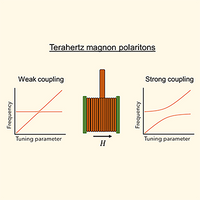
Magnetically tuned continuous transition from weak to strong coupling in terahertz magnon polaritons

Andrey Baydin, Kenji Hayashida, Takuma Makihara, Fuyang Tay, Xiaoxuan Ma, Wei Ren, Guohong Ma, G. Timothy Noe, II, Ikufumi Katayama, Jun Takeda, Hiroyuki Nojiri, Shixun Cao, Motoaki Bamba, and Junichiro Kono

Phys. Rev. Research 5, L012039 (2023) - Published 20 March, 2023

Highly tunable light-matter hybrids, magnon polaritons, have been realized in an orthoferrite crystal driven by terahertz radiation in an external magnetic field. As the magnetic field is swept, a continuous transition from weak to strong coupling via an exceptional point due to a magnetic-field-dependent light-matter coupling strength is observed.

Studies of decoherence in strongly anisotropic spin triangles with toroidal or general noncollinear easy axes

Kilian Irländer and Jürgen Schnack

Phys. Rev. Research 5, 013192 (2023) - Published 20 March, 2023

Targeting high symmetry in structure predictions by biasing the potential energy surface

Hannes Huber, Martin Sommer-Jörgensen, Moritz Gubler, and Stefan Goedecker

Phys. Rev. Research 5, 013189 (2023) - Published 17 March, 2023

Nonlinear quantum logic with colliding graphene plasmons

Giuseppe Calajó, Philipp K. Jenke, Lee A. Rozema, Philip Walther, Darrick E. Chang, and Joel D. Cox

Phys. Rev. Research 5, 013188 (2023) - Published 17 March, 2023

Sign In to Your Journals Account

Filter

Subject

Filter

Article Lookup

Enter a citation