Recent Articles

Interfacial skin modes at a non-Hermitian heterojunction

S. M. Rafi-Ul-Islam, Haydar Sahin, Zhuo Bin Siu, and Mansoor B. A. Jalil

Phys. Rev. Research 4, 043021 (2022) - Published 10 October, 2022

Characteristics of laminar ion beams accelerated via a few-joule laser pulse

Toshimasa Morita

Phys. Rev. Research 4, 043020 (2022) - Published 10 October, 2022

Order by disorder in classical kagome antiferromagnets with chiral interactions

Jackson Pitts, Finn Lasse Buessen, Roderich Moessner, Simon Trebst, and Kirill Shtengel

Phys. Rev. Research 4, 043019 (2022) - Published 10 October, 2022

Quantum phases of self-bound droplets of Bose-Bose mixtures

Junqiao Pan, Su Yi, and Tao Shi

Phys. Rev. Research 4, 043018 (2022) - Published 10 October, 2022

Collective states of active matter with stochastic reversals: Emergent chiral states and spontaneous current switching

Kristian Stølevik Olsen, Luiza Angheluta, and Eirik Grude Flekkøy

Phys. Rev. Research 4, 043017 (2022) - Published 10 October, 2022

Influence of band structure on ballistic transport revealed by molecular nanoprobe

Andreas Christ, Patrick Härtl, Patrick Kloster, Matthias Bode, and Markus Leisegang

Phys. Rev. Research 4, 043016 (2022) - Published 10 October, 2022

Pseudogap suppression by competition with superconductivity in La-based cuprates

J. Küspert et al.

Phys. Rev. Research 4, 043015 (2022) - Published 10 October, 2022

Optical spin conductivity in ultracold quantum gases

Yuta Sekino, Hiroyuki Tajima, and Shun Uchino

Phys. Rev. Research 4, 043014 (2022) - Published 10 October, 2022

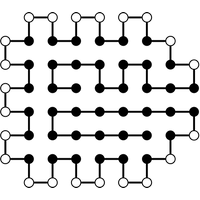
Folding lattice proteins with quantum annealing

Anders Irbäck, Lucas Knuthson, Sandipan Mohanty, and Carsten Peterson

Phys. Rev. Research 4, 043013 (2022) - Published 10 October, 2022

A lattice protein encoding is developed for finding the lowest energies on a quantum annealer. It is implemented to run on a D-Wave Advantage and yields correct results for nontrivial chain lengths.

Non-Hermitian chiral anomalies

Sharareh Sayyad, Julia D. Hannukainen, and Adolfo G. Grushin

Phys. Rev. Research 4, L042004 (2022) - Published 7 October, 2022

The quantum conservation laws of chiral currents of non-Hermitian systems are not related to those in Hermitianized and anti-Hermitianized systems, as would be expected classically, due to novel anomalous terms that are shown in this paper. In addition, some physical consequences of the non-Hermitian anomaly using a Chern-Simons description of non-Hermitian Weyl semimetals are presented.

Trapping of active Brownian and run-and-tumble particles: A first-passage time approach

Emily Qing Zang Moen, Kristian Stølevik Olsen, Jonas Rønning, and Luiza Angheluta

Phys. Rev. Research 4, 043012 (2022) - Published 7 October, 2022

One-particle Green's functions from the quantum equation of motion algorithm

Jacopo Rizzo, Francesco Libbi, Francesco Tacchino, Pauline J. Ollitrault, Nicola Marzari, and Ivano Tavernelli

Phys. Rev. Research 4, 043011 (2022) - Published 7 October, 2022

Resolving mutually-coherent point sources of light with arbitrary statistics

Ilya Karuseichyk, Giacomo Sorelli, Mattia Walschaers, Nicolas Treps, and Manuel Gessner

Phys. Rev. Research 4, 043010 (2022) - Published 7 October, 2022

Peratic phase transition by bulk-to-surface response

Xingze Qiu, Hai Wang, Wei Xia, and Xiaopeng Li

Phys. Rev. Research 4, 043009 (2022) - Published 5 October, 2022

Drag-induced dynamical formation of dark solitons in Bose mixture on a ring

Andrzej Syrwid, Emil Blomquist, and Egor Babaev

Phys. Rev. Research 4, L042003 (2022) - Published 4 October, 2022

A study investigating the interplay of dissipationless drag and solitons shows that the drag effect can lead to rich system dynamics like drag-induced dark soliton formation. The proposal could open avenues toward the direct experimental studies of the drag phenomenon.

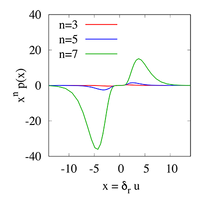
Asymmetry of velocity increments in turbulence

Katepalli R. Sreenivasan, Kartik P. Iyer, and Ashvin Vinodh

Phys. Rev. Research 4, L042002 (2022) - Published 4 October, 2022

At any point in the flow, moderate sized fluid parcels in turbulent motion get pulled and pushed randomly in the direction of mean motion. Pulling and pushing are unequal; the stronger the push and pull, the more unequal they become. This paper elaborates this important physical trait.

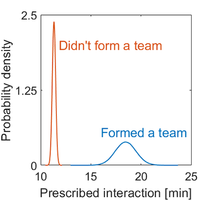
Dynamics of social interaction: Modeling the genesis of scientific collaboration

Emma R. Zajdela, Kimberly Huynh, Andy T. Wen, Andrew L. Feig, Richard J. Wiener, and Daniel M. Abrams

Phys. Rev. Research 4, L042001 (2022) - Published 4 October, 2022

Interaction at scientific conferences, even when prescribed rather than voluntary, leads to team formation. A new mechanistic model can predict who forms these teams.

Field-induced quasi-particle tunneling in the nodal-line semimetal HfSiS revealed by de Haas-van Alphen quantum oscillations

C. S. A. Müller, M. R. van Delft, T. Khouri, M. Breitkreiz, L. M. Schoop, A. Carrington, N. E. Hussey, and S. Wiedmann

Phys. Rev. Research 4, 043008 (2022) - Published 4 October, 2022

Data compression for quantum machine learning

Rohit Dilip, Yu-Jie Liu, Adam Smith, and Frank Pollmann

Phys. Rev. Research 4, 043007 (2022) - Published 4 October, 2022

Multimagnon quantum many-body scars from tensor operators

Long-Hin Tang, Nicholas O'Dea, and Anushya Chandran

Phys. Rev. Research 4, 043006 (2022) - Published 4 October, 2022

Sign In to Your Journals Account

Filter

Recent Issues

Vol. 8, Iss. 4
October - December 2026
Vol. 8, Iss. 3
July - September 2026
Vol. 8, Iss. 2
April - June 2026
Vol. 8, Iss. 1
January - March 2026
Category
Article Type

Filter

Article Lookup

Enter a citation