Recent Articles

Editorial: A Tale of Two Anniversaries: 125 Years of the Physical Reviewand 25 Years of Physical Review E

Matthew Salter and Michael Thoennessen

Phys. Rev. Phys. Educ. Res. 14, 010001 (2018) - Published 2 January, 2018

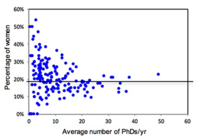
Investigating approaches to diversity in a national survey of physics doctoral degree programs: The graduate admissions landscape

Geoff Potvin, Deepa Chari, and Theodore Hodapp

Phys. Rev. Phys. Educ. Res. 13, 020142 (2017) - Published 29 December, 2017

Over-reliance on GRE scores for admission may be substantially limiting the number of well-qualified women and students from traditionally marginalized racial or ethnic groups accepted to physics graduate programs.

Mathematical sense-making in quantum mechanics: An initial peek

Benjamin W. Dreyfus, Andrew Elby, Ayush Gupta, and Erin Ronayne Sohr

Phys. Rev. Phys. Educ. Res. 13, 020141 (2017) - Published 28 December, 2017

Mathematical sense-making in quantum mechanics requires new symbolic forms not needed for classical mechanics.

Meeting students halfway: Increasing self-efficacy and promoting knowledge change in astronomy

Janelle M. Bailey, Doug Lombardi, Jacqueline R. Cordova, and Gale M. Sinatra

Phys. Rev. Phys. Educ. Res. 13, 020140 (2017) - Published 26 December, 2017

Self-efficacy is related to student achievement and the use of effective learning strategies.

Evaluating and redesigning teaching learning sequences at the introductory physics level

Jenaro Guisasola, Kristina Zuza, Jaume Ametller, and José Gutierrez-Berraondo

Phys. Rev. Phys. Educ. Res. 13, 020139 (2017) - Published 26 December, 2017

An articulation of specific strategies for the use of design-based research to develop instructional sequences.

Exploring physics students’ engagement with online instructional videos in an introductory mechanics course

Shih-Yin Lin, John M. Aiken, Daniel T. Seaton, Scott S. Douglas, Edwin F. Greco, Brian D. Thoms, and Michael F. Schatz

Phys. Rev. Phys. Educ. Res. 13, 020138 (2017) - Published 18 December, 2017

Students engaged with videos that support laboratory activities more than with videos that present lecture content.

Math remediation intervention for student success in the algebra-based introductory physics course

Rebecca L. Forrest, Donna W. Stokes, Andrea B. Burridge, and Carol D. Voight

Phys. Rev. Phys. Educ. Res. 13, 020137 (2017) - Published 7 December, 2017

A short term on-line math tutorial can increase student success in introductory college physics.

Student ownership of projects in an upper-division optics laboratory course: A multiple case study of successful experiences

Dimitri R. Dounas-Frazer, Jacob T. Stanley, and H. J. Lewandowski

Phys. Rev. Phys. Educ. Res. 13, 020136 (2017) - Published 6 December, 2017

Frustration and struggle are necessary features of learning environments that promote student ownership of projects, as opposed to obstacles that hinder ownership.

Use of item response curves of the Force and Motion Conceptual Evaluation to compare Japanese and American students’ views on force and motion

Michi Ishimoto, Glen Davenport, and Michael C. Wittmann

Phys. Rev. Phys. Educ. Res. 13, 020135 (2017) - Published 30 November, 2017

Item response curves can be used as part of the validation process when extending multiple-choice instruments to new contexts, such as languages and nationalities.

Qualitative investigation of students’ views about experimental physics

Dehui Hu, Benjamin M. Zwickl, Bethany R. Wilcox, and H. J. Lewandowski

Phys. Rev. Phys. Educ. Res. 13, 020134 (2017) - Published 29 November, 2017

In order for students to develop an expertlike understanding of scientific communication, instructors need to emphasize scientific argument rather than formatting in lab reports.

Fixed and growth mindsets in physics graduate admissions

Rachel E. Scherr, Monica Plisch, Kara E. Gray, Geoff Potvin, and Theodore Hodapp

Phys. Rev. Phys. Educ. Res. 13, 020133 (2017) - Published 29 November, 2017

An emphasis on innate talent in graduate admissions may be limiting the diversity of admitted students.

Students’ conceptual difficulties in hydrodynamics

Alvaro Suarez, Sandra Kahan, Genaro Zavala, and Arturo C. Marti

Phys. Rev. Phys. Educ. Res. 13, 020132 (2017) - Published 28 November, 2017

Students’ have significant difficulties connecting the kinematics and dynamics of moving fluids.

Characterizing representational learning: A combined simulation and tutorial on perturbation theory

Antje Kohnle and Gina Passante

Phys. Rev. Phys. Educ. Res. 13, 020131 (2017) - Published 28 November, 2017

It is important to support students in making sense of the representations shown in a simulation and in learning to choose the most appropriate representation for a given task.

Competency based teaching of college physics: The philosophy and the practice

Ajith Rajapaksha and Andrew S. Hirsch

Phys. Rev. Phys. Educ. Res. 13, 020130 (2017) - Published 21 November, 2017

Implementing competency-based instruction in introductory physics.

Impact of the second semester University Modeling Instruction course on students’ representation choices

Daryl McPadden and Eric Brewe

Phys. Rev. Phys. Educ. Res. 13, 020129 (2017) - Published 15 November, 2017

Modeling instruction in introductory physics increases the number and variety of representations that student use.

Investigating undergraduate students’ ideas about the fate of the Universe

Mallory Conlon, Kim Coble, Janelle M. Bailey, and Lynn R. Cominsky

Phys. Rev. Phys. Educ. Res. 13, 020128 (2017) - Published 10 November, 2017

The fate of the Universe is still an open question for astronomers and thus is a good opportunity for instructors to help students learn about how scientists use evidence and theory to evaluate possibilities.

Using lab notebooks to examine students’ engagement in modeling in an upper-division electronics lab course

Jacob T. Stanley, Weifeng Su, and H. J. Lewandowski

Phys. Rev. Phys. Educ. Res. 13, 020127 (2017) - Published 6 November, 2017

Model-based reasoning can be evaluated through an examination of students’ lab notebook entries.

Peer assessment of student-produced mechanics lab report videos

Scott S. Douglas, John M. Aiken, Shih-Yin Lin, Edwin F. Greco, Emily Alicea-Muñoz, and Michael F. Schatz

Phys. Rev. Phys. Educ. Res. 13, 020126 (2017) - Published 1 November, 2017

Tracking and understanding changes in student peer assessment behavior during an introductory mechanics course.

Graphical representations of data improve student understanding of measurement and uncertainty: An eye-tracking study

Ana Susac, Andreja Bubic, Petra Martinjak, Maja Planinic, and Marijan Palmovic

Phys. Rev. Phys. Educ. Res. 13, 020125 (2017) - Published 31 October, 2017

Graphical representation helps students visualize data and reduces the cognitive load, resulting in improved capacity for understanding.

Personality types and student performance in an introductory physics course

Jason J. B. Harlow, David M. Harrison, Michael Justason, Andrew Meyertholen, and Brian Wilson

Phys. Rev. Phys. Educ. Res. 13, 020124 (2017) - Published 27 October, 2017
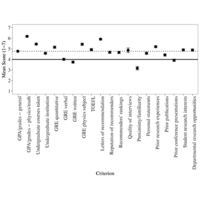
Personality type is correlated with student performance in an introductory physics course.

Sign In to Your Journals Account

Filter

Recent Issues

Vol. 22, Iss. 2
July - December 2026
Vol. 22, Iss. 1
January - June 2026
Vol. 21, Iss. 2
July - December 2025
Vol. 21, Iss. 1
January - June 2025
Category
Article Type

Filter

Article Lookup

Enter a citation