Highlights

Nontrivial scaling exponents of dislocation avalanches in microplasticity

G. Sparks and R. Maaß

Phys. Rev. Materials 2, 120601(R) (2018) - Published 5 December, 2018

Intermittency during plastic flow is one example of avalanches in critically evolving systems. Such fluctuations are typically assessed statistically with scale-free distributions. Theory and simulations have studied this behavior in detail, generally arguing for two prominent models (mean-field approach or a jamming-unjamming picture) that are characterized via distinctly different avalanche scaling exponents. In this paper, the authors show experimentally how scaling exponents for the same single crystalline metal can admit a variety of scaling exponents that encompass both models. Depending on both intrinsic and extrinsic factors, their experiments reveal how the scaling exponents are nontrivial and therefore not universal.

Quasi-free-standing single-layer WS2 achieved by intercalation

Sanjoy K. Mahatha, Maciej Dendzik, Charlotte E. Sanders, Matteo Michiardi, Marco Bianchi, Jill A. Miwa, and Philip Hofmann

Phys. Rev. Materials 2, 124001 (2018) - Published 5 December, 2018

Epitaxial growth of single-layer transition metal dichalcogenides can give rise to high-quality, large area materials, and it is even possible to grow them in just a single orientation—the key to exploit properties such as the valley degree of freedom. However, the strong interaction with the substrate that favors a single orientation can also destroy the interesting properties of the material due to hybridization effects. Here this issue is resolved by first growing a single layer of WS2 on Ag(111) and then decoupling it from the surface via the intercalation of Bi atoms.

Mechanism of twin-reduced III-V epitaxy on As-modified vicinal Si(111)

Lars Winterfeld, Christian Koppka, Daniel Abou-Ras, Peter Kleinschmidt, Oliver Supplie, Thomas Hannappel, and Erich Runge

Phys. Rev. Materials 2, 124601 (2018) - Published 3 December, 2018

Based on density functional theory calculations, the authors develop a general model for nucleation of III-V semiconductors on vicinal nonpolar (111)-oriented substrates. This model predicts, in particular, that the atomic structure of the step edges at the substrate surface is decisive for the formation and suppression of detrimental rotational twin defects. These predictions are in full agreement with the experimental analysis done on a series of samples with the technologically important material combination of GaP grown on As-modified Si(111). The authors thus derive a complete picture of the formation and suppression of rotational twins relevant for low-defect III-V-on-Si integration.

Mobility of two-dimensional materials from first principles in an accurate and automated framework

Thibault Sohier, Davide Campi, Nicola Marzari, and Marco Gibertini

Phys. Rev. Materials 2, 114010 (2018) - Published 29 November, 2018

Knowing the intrinsic mobility of 2D materials is key to assess their performance in novel electronic devices. First-principles simulations can predict phonon-limited mobilities, but being systemic and accurate is a challenging task. Here, the authors develop fully automated workflows to identify all relevant electron-phonon scattering processes that limit mobility and compute their probability using a recent development in density-functional perturbation theory for gated 2D materials. Then, an exact numerical solution to the Boltzmann transport equation allows to account for the full energy- and momentum-dependency of the scattering processes, leading to the “turnkey” calculation of mobilities on demand.

Routes for increasing endurance and retention in HfO2-based resistive switching memories

Konstantin Z. Rushchanskii, Stefan Blügel, and Marjana Ležaić

Phys. Rev. Materials 2, 115002 (2018) - Published 27 November, 2018

In redox-based resistive random-access memories, an internal, oxygen deficient filament of nanoscale size is formed in an insulating oxide matrix, acting as a functional unit due to its variable conductivity. On the atomic scale, little is known about the filament. This problem is theoretically tackled here, on the example of hafnia. The results suggest the presence of metastable (nano)phases within the filament, featuring lattices of one-dimensional channels through which oxygen may move easily, with variable conductivity depending on the oxygen content in the channels. Deliberate growth of the metastable phases could lead to the resistive memory cells with high endurance and long retention.

Unexpected termination switching and polarity compensation in LaAlO3/SrTiO3 heterostructures

Guneeta Singh-Bhalla, Pim B. Rossen, Gunnar K. Pálsson, Matthew Mecklenburg, Thomas Orvis, Sujit Das, Yun-Long Tang, Jaganatha S. Suresha, Di Yi, Abhigyan Dasgupta, David Doenning, Victor G. Ruiz, Ajay K. Yadav, Morgan Trassin, John T. Heron, Charles S. Fadley, Rossitza Pentcheva, Jayakanth Ravichandran, and Ramamoorthy Ramesh

Phys. Rev. Materials 2, 112001(R) (2018) - Published 21 November, 2018

LaAlO3/SrTiO3-based two-dimensional electron gases (2DEGs) generated great interest in complex oxide-based 2DEGs. Despite intense research, several open questions about the electron gases remain. For example, the LaO-TiO2 interface leads to electron doping, whereas the AlO2-SrO interface remains insulating. Using element sensitive surface characterization tools, the authors unveil a previously unobserved switch in the surface termination for the AlO2-SrO interface. Tunneling studies and first-principles calculations show that the surface termination has dramatic impact built-in field of LaAlO3 and explain the asymmetry in the electronic properties of different interfaces in this model 2DEG system.

Physical properties of the trigonal binary compound Nd2O3

G. Sala, M. B. Stone, B. K. Rai, A. F. May, C. R. Dela Cruz, H. Suriya Arachchige, G. Ehlers, V. R. Fanelli, V. O. Garlea, M. D. Lumsden, D. Mandrus, and A. D. Christianson

Phys. Rev. Materials 2, 114407 (2018) - Published 21 November, 2018

Exotic magnetic phases often have frustration as a key ingredient. Chemically and structurally simple materials are particularly prized as testbeds for concepts found in more complex ones. Using a combination of neutron diffraction, inelastic neutron scattering, and laboratory-based characterization methods, the authors find long-range antiferromagnetic order in Nd2O3 only below 0.55 K, despite indications that the magnetic energy scales are significantly higher. The ground state possesses alternating stripes of local moments in the plane of the triangular lattice and is characterized by strong XY anisotropy that originates from the local crystal field. These results suggest that Nd2O3 may be a model system for studying frustration originating from competing interactions between magnetic moments subject to strong spin-orbit coupling on a centrosymmetric lattice.

Energetics and the ground state quest in an artificial triangular colloidal ice

Dong Yun Lee and Pietro Tierno

Phys. Rev. Materials 2, 112601(R) (2018) - Published 16 November, 2018

Colloidal ice systems recently emerge as an alternative to the artificial spin ice for investigating the multidisciplinary Physics of geometric frustration. Here, the authors combine experiments and simulation to investigate the ordering and dynamics in a triangular colloidal ice where interacting particles are confined in gravitational double wells. The collective interactions lead to a unique ground state characterized by vertices with three colloids pointing inward and three outwards, similar to what predicted, but never reported, for artificial spin ice. Phase transition and complete structural ordering via an intermediate bias field are also reported.

Topological phonons and thermoelectricity in triple-point metals

Sobhit Singh, QuanSheng Wu, Changming Yue, Aldo H. Romero, and Alexey A. Soluyanov

Phys. Rev. Materials 2, 114204 (2018) - Published 15 November, 2018

The current study of topology in materials is, with rare exclusions, concentrated on the study of fermionic quasiparticle excitations. In this report, the authors focus on the physical properties of topological phonons—the simplest bosonic topological phase realized in crystalline materials. They explain how the bosonic topology is computed and how it can be experimentally verified, providing topology-induced quantum transport phenomena that can be observed in the proposed compounds. This study predicts the novel coexistence of topologically protected fermionic and bosonic (phononic) excitations in special triple-point metals, which makes these special topological metals useful for technological applications.

Effect of nanoscale phase separation on the fracture behavior of glasses: Toward tough, yet transparent glasses

Longwen Tang, N. M. Anoop Krishnan, Jonathan Berjikian, Jared Rivera, Morten M. Smedskjaer, John C. Mauro, Wei Zhou, and Mathieu Bauchy

Phys. Rev. Materials 2, 113602 (2018) - Published 8 November, 2018

Despite recent advances, glass still breaks. This remains a major limitation for cover glasses used, for instance, in smartphone screens. Here, the authors explore the possibility of benefiting from nanoscale phase separation to significantly increase the fracture toughness of glass, while retaining its transparency. Based on peridynamic simulations, they investigate the nature of the toughening mechanisms at play and find that nanoscale phase separation can yield up to a 90% increase in fracture energy. This establishes phase separation as a promising route to develop novel tough, yet transparent glasses

Magnetoresistance of semimetals: The case of antimony

Benoît Fauqué, Xiaojun Yang, Wojciech Tabis, Mingsong Shen, Zengwei Zhu, Cyril Proust, Yuki Fuseya, and Kamran Behnia

Phys. Rev. Materials 2, 114201 (2018) - Published 7 November, 2018

Large unsaturated magnetoresistance has been reported in numerous Weyl and Dirac semimetals. This has raised the question of a possible link between nontrivial band topology and large magnetoresistance. The authors find that magnetoresistance in elemental antimony exceeds what has been seen in all other semimetals and remains unsaturated up to 60 T. The amplitude of magnetoresistance and its variation with field orientation can be described by a modified semiclassical framework, which can be employed to any semimetal.

Nematicity of correlated systems driven by anisotropic chemical phase separation

Ye Yuan, René Hübner, Magdalena Birowska, Chi Xu, Mao Wang, Slawomir Prucnal, Rafal Jakiela, Kay Potzger, Roman Böttger, Stefan Facsko, Jacek A. Majewski, Manfred Helm, Maciej Sawicki, Shengqiang Zhou, and Tomasz Dietl

Phys. Rev. Materials 2, 114601 (2018) - Published 2 November, 2018

The origin of nematicity, i.e., in-plane rotational symmetry breaking, and in particular the relative role played by spontaneous unidirectional ordering of spin, orbital, or charge degrees of freedom, is a challenging issue of magnetism, unconventional superconductivity, and quantum Hall effect systems. In this paper, experimental and theoretical results for In1−xFexAs demonstrate that anisotropic distribution of Fe cations at the growth surface (which has a lower symmetry than the bulk) can lead to a quenched nematic order of alloy components, which then governs low-temperature magnetic and magnetotransport properties.

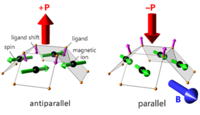
Magnetic structural unit with convex geometry: A building block hosting an exchange-striction-driven magnetoelectric coupling

Kenta Kimura, Yasuyuki Kato, Kunihiko Yamauchi, Atsushi Miyake, Masashi Tokunaga, Akira Matsuo, Koichi Kindo, Mitsuru Akaki, Masayuki Hagiwara, Shojiro Kimura, Masayuki Toyoda, Yukitoshi Motome, and Tsuyoshi Kimura

Phys. Rev. Materials 2, 104415 (2018) - Published 30 October, 2018

A magnetic structural unit with asymmetric geometry may be a source for symmetry-dependent unique phenomena such as the magnetoelectric effect. The authors report the discovery of ferroelectricity and a magnetic-field-induced sign reversal of ferroelectric polarization in Pb(TiO)Cu4(PO4)4, whose structure is characterized by a staggered array of Cu4O12 magnetic units with convex geometry known as square cupola. Their model and first-principles calculations reveal that the observed complex magnetoelectric behavior originates from an exchange striction, where leading exchange interactions between spins play a crucial role. This result demonstrates that materials with convex-shaped magnetic structural units deserve to be explored to achieve strong magnetoelectric couplings.

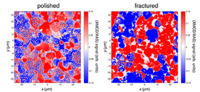
Unmasking the interior magnetic domain structure and evolution in Nd-Fe-B sintered magnets through high-field magnetic imaging of the fractured surface

David Billington, Kentaro Toyoki, Hiroyuki Okazaki, Yoshinori Kotani, Tomoki Fukagawa, Takeshi Nishiuchi, Satoshi Hirosawa, and Tetsuya Nakamura

Phys. Rev. Materials 2, 104413 (2018) - Published 26 October, 2018

In Nd-Fe-B sintered magnets, observations of how reversed magnetic domains propagate throughout the entire hysteresis loop have been restricted to polished surfaces or transmittable thin films. However, the mechanical processing of the surface introduces defects that nucleate additional reversed magnetic domains which mask the underlying domain pattern. To unmask the interior magnetic domain structure that represents the bulk, soft x-ray absorption microscopy is utilized in this paper to track the reversal of individual grains in the polished and fractured surfaces. Significant variation in the reversal behavior is observed and intergranular correlations are identified. Videos of the magnetic domain propagation accompany this paper.

Relationship between crystal structure and multiferroic orders in orthorhombic perovskite manganites

Natalya S. Fedorova, Yoav William Windsor, Christoph Findler, Mahesh Ramakrishnan, Amadé Bortis, Laurenz Rettig, Kenta Shimamoto, Elisabeth M. Bothschafter, Michael Porer, Vincent Esposito, Yi Hu, Aurora Alberca, Thomas Lippert, Christof W. Schneider, Urs Staub, and Nicola A. Spaldin

Phys. Rev. Materials 2, 104414 (2018) - Published 26 October, 2018

Orthorhombic rare-earth manganites, o-RMnO3 (R is a rare-earth cation or Y), are typical representatives of multiferroics in which ferroelectricity is induced by magnetic order. They are of interest because their magnetic and ferroelectric properties can be strongly modified by small external perturbations. Here, the authors use resonant and nonresonant x-ray diffraction measurements, density functional theory, and Monte Carlo simulations to investigate how their properties can be manipulated using chemical pressure and epitaxial strain. The authors extract the evolution of the internal lattice parameters of o-RMnO3 under chemical pressure and epitaxial strain as well as the corresponding variations of the microscopic exchange interactions and long-range magnetic order. They demonstrate that chemical pressure and epitaxial strain are accommodated differently by the o-RMnO3 crystal lattice, which is key for understanding the difference in the magnetic properties and electric polarizations of bulk samples and strained films.

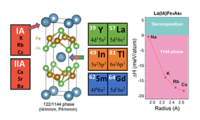
Is it possible to stabilize the 1144-phase pnictides with tri-valence cations?

B. Q. Song, Manh Cuong Nguyen, C. Z. Wang, P. C. Canfield, and K. M. Ho

Phys. Rev. Materials 2, 104802 (2018) - Published 5 October, 2018

The lately discovered 1144-phase has inspired significant research interest for its high superconducting temperatures, disorder-free doping, and various chemical substitutions. However, its synthesis is now limited to compounds with cations of IA and IIA group elements. In this work, the authors investigate 1144 iron- and cobalt-arsenides with tri-valence cations (La, Y, In, Tl, Sm, Gd). Remarkably, several new 1144 compounds are predicted, and intriguing electronic structures are demonstrated. The results indicate a potential reservoir of superconductors, as well as provide practical approaches for synthesis. They also shed light on the stability of the more general structure prototype: A-B-A-B stacking ordered crystal materials.

Large enhancement of the spin Hall effect in Mn metal by Sn doping

D. Qu, T. Higo, T. Nishikawa, K. Matsumoto, K. Kondou, D. Nishio-Hamane, R. Ishii, P. K. Muduli, Y. Otani, and S. Nakatsuji

Phys. Rev. Materials 2, 102001(R) (2018) - Published 3 October, 2018

The noncollinear kagome lattice antiferromagnets Mn3X (X=Sn, Ge, Ga) have attracted much attention due to their large anomalous Hall effect (AHE). As the spin Hall effect (SHE) and AHE share the same origin, the injection of pure spin current into these alloys would also engender large SHE. The authors surprisingly find that even a Mn-Sn amorphous/nanocrystalline alloy exhibits large SHE. These results not only serve as an essential reference in studying the pure spin current phenomena in Mn-based alloys but also offer a promising method in exploring energy efficient spin Hall materials.

Reducing intrinsic energy dissipation in diamond-on-diamond mechanical resonators toward one million quality factor

Haihua Wu, Liwen Sang, Yumeng Li, Tokuyuki Teraji, Tiefu Li, Masataka Imura, Jianqiang You, Yasuo Koide, Masaya Toda, and Meiyong Liao

Phys. Rev. Materials 2, 090601(R) (2018) - Published 28 September, 2018

This paper reports a batch fabrication of ultrahigh quality-factor single-crystal diamond microelectromechanical system resonators on diamond by using a smart-cut method and atomic scale etching of the defects within the resonators. As a result, the intrinsic energy dissipation induced by bulk defects is markedly reduced and quality factors over one million are realized, which can lead to the fabrication of highly sensitive physical and chemical sensors with high reliability.

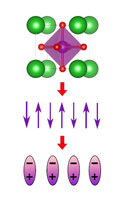
Volatile two-dimensional electron gas in ultrathin BaTiO3 films

Peter Lutz, Simon Moser, Vedran Jovic, Young Jun Chang, Roland J. Koch, Søren Ulstrup, Ji Seop Oh, Luca Moreschini, Sara Fatale, Marco Grioni, Chris Jozwiak, Aaron Bostwick, Eli Rotenberg, Hendrik Bentmann, and Friedrich Reinert

Phys. Rev. Materials 2, 094411 (2018) - Published 28 September, 2018

BaTiO3 (BTO) is one of the most important ferroelectric oxides. Its most common source of uncontrolled doping, the oxygen vacancy, releases free electrons that confine in a two-dimensional electron gas (2DEG) at the surface. This 2DEG can be readily monitored by angle-resolved photoemission, and be used to measure the defect dynamics in ultrathin BTO films. The authors reveal two remarkable properties: first, oxygen defects close to the thin film surface are preferably in a charge state of 2+, which limits charge carrier trapping. Second, these defects migrate even below room temperature, fostering significant surface charge carrier density fluctuations that ultimately quench the 2DEG.

Enhancement of the superconducting transition temperature by Re doping in Weyl semimetal MoTe2

Manasi Mandal, Sourav Marik, K. P. Sajilesh, Arushi, Deepak Singh, Jayita Chakraborty, Nirmal Ganguli, and R. P. Singh

Phys. Rev. Materials 2, 094201 (2018) - Published 13 September, 2018

The discovery of superconductivity in type-II Weyl semimetal MoTe2 has sparked great research interest because it can lead to various exotic quantum states. In this work, the authors show that electron doping at the Mo site in 1T′-MoTe2 (room temperature structure) phase can enhance the superconducting transition temperature (Tc). They found that electron doping by means of Re substitution facilities the emergence of superconductivity by enhancing the electron-phonon coupling and density of states at the Fermi level. A record high Tc at ambient pressure is observed for Mo0.7Re0.3Te2.

Sign In to Your Journals Account

Filter

Section

Filter

Article Lookup

Enter a citation