Highlights

Magneto-Optical Detection of the Orbital Hall Effect in Chromium

Igor Lyalin, Sanaz Alikhah, Marco Berritta, Peter M. Oppeneer, and Roland K. Kawakami

Phys. Rev. Lett. 131, 156702 (2023) - Published 11 October, 2023

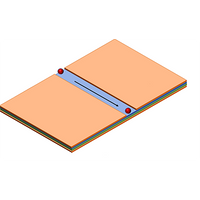
Two different experiments on two different transition metals reveal that a current of electron orbital angular momentum flows in response to an electric field.

Orbital Hanle Magnetoresistance in a 3d Transition Metal

Giacomo Sala, Hanchen Wang, William Legrand, and Pietro Gambardella

Phys. Rev. Lett. 131, 156703 (2023) - Published 11 October, 2023

Two different experiments on two different transition metals reveal that a current of electron orbital angular momentum flows in response to an electric field.

Quantum Optics Measurement Scheme for Quantum Geometry and Topological Invariants

Markus Lysne, Michael Schüler, and Philipp Werner

Phys. Rev. Lett. 131, 156901 (2023) - Published 11 October, 2023

A proposed optical setup combines a Fabry-Perot-type optical cavity with heterodyne photon detection for extracting the topological properties of two-dimensional semiconductor materials.

Realization of a Z-Classified Chiral-Symmetric Higher-Order Topological Insulator in a Coupling-Inverted Acoustic Crystal

Dongyi Wang, Yuanchen Deng, Jun Ji, Mourad Oudich, Wladimir A. Benalcazar, Guancong Ma, and Yun Jing

Phys. Rev. Lett. 131, 157201 (2023) - Published 10 October, 2023

An experiment shows the existence of Z-classified multiple chiral topological phase, which requires both chiral symmetry and a unique condition where the long-range hopping is stronger than the nearest-neighboring one.

Hydrodynamics-Induced Long-Range Attraction between Plates in Bacterial Suspensions

Luhui Ning, Xin Lou, Qili Ma, Yaochen Yang, Nan Luo, Ke Chen, Fanlong Meng, Xin Zhou, Mingcheng Yang, and Yi Peng

Phys. Rev. Lett. 131, 158301 (2023) - Published 10 October, 2023

The flow field generated by swimming bacteria drives a long-range attractive force felt by passive objects much larger than the swimmers themselves.

Measurement of Ultra-High-Energy Diffuse Gamma-Ray Emission of the Galactic Plane from 10 TeV to 1 PeV with LHAASO-KM2A

Zhen Cao et al. (LHAASO Collaboration)

Phys. Rev. Lett. 131, 151001 (2023) - Published 9 October, 2023

Interstellar magnetic fields perturb the trajectories of cosmic rays, making it difficult to identify their sources. A new survey of gamma radiation produced when cosmic rays interact with the interstellar medium should help in this identification.

Mechanistic Insights into Water Autoionization through Metadynamics Simulation Enhanced by Machine Learning

Ling Liu, Yingqi Tian, Xuanye Yang, and Chungen Liu

Phys. Rev. Lett. 131, 158001 (2023) - Published 9 October, 2023

Machine learning-assisted metadynamics is used to study water autoionization, one of the most important properties of water for all biological and chemical process including electrolysis (related to batteries).

Dark Matter Constraints from Isomeric Hf178m

D. S. M. Alves, S. R. Elliott, R. Massarczyk, S. J. Meijer, and H. Ramani

Phys. Rev. Lett. 131, 141801 (2023) - Published 5 October, 2023

A search for the collisional deexcitation of metastable 178mHf puts new constraints on the parameter space of inelastic dark matter.

Gate-Defined Topological Josephson Junctions in Bernal Bilayer Graphene

Ying-Ming Xie, Étienne Lantagne-Hurtubise, Andrea F. Young, Stevan Nadj-Perge, and Jason Alicea

Phys. Rev. Lett. 131, 146601 (2023) - Published 5 October, 2023

Gapped superconductivity emerging via intervalley coherence in bilayer graphene or monolayer WSe2 can lead to formation of Majorana zero modes.

Lossless Monochromator in an Ultrafast Electron Microscope Using Near-Field THz Radiation

Michael Yannai, Yuval Adiv, Raphael Dahan, Kangpeng Wang, Alexey Gorlach, Nicholas Rivera, Tal Fishman, Michael Krüger, and Ido Kaminer

Phys. Rev. Lett. 131, 145002 (2023) - Published 4 October, 2023

Researchers demonstrate a method to reduce the energy spread of electrons used in electron microscopes, opening the door to time- and energy-resolved studies of quasiparticles such as phonons and plasmons.

Final Results of GERDA on the Two-Neutrino Double-β Decay Half-Life of Ge76

M. Agostini et al. (GERDA Collaboration)

Phys. Rev. Lett. 131, 142501 (2023) - Published 3 October, 2023

The GERDA collaboration has made the most precise determination of the two-neutrino double-β decay half-life of 76Ge.

Experimental Demonstration to Control the Pulse Length of Coherent Undulator Radiation by Chirped Microbunching

Takashi Tanaka, Yuichiro Kida, Satoshi Hashimoto, Shuji Miyamoto, Tadashi Togashi, Hiromitsu Tomizawa, Aoi Gocho, Keisuke Kaneshima, and Yoshihito Tanaka

Phys. Rev. Lett. 131, 145001 (2023) - Published 3 October, 2023

A new free-electron laser (FEL) scheme that uses chirped microbunching to compress pulse length has been demonstrated, opening the path to the realization of single-cycle FELs.

Fluids in Random Media and Dimensional Augmentation

John Cardy

Phys. Rev. Lett. 131, 147102 (2023) - Published 3 October, 2023

A nonrandom fluid in d dimensions with finite-range two-body potentials is precisely equivalent to one in a quenched random medium in d+2 dimensions.

Lifting, Loading, and Buckling in Conical Shells

Daniel Duffy, Joselle M. McCracken, Tayler S. Hebner, Timothy J. White, and John S. Biggins

Phys. Rev. Lett. 131, 148202 (2023) - Published 3 October, 2023

The early failure of thin-walled cones under compression was thought to arise mainly from the presence of imperfections. A new model suggests otherwise.

Dynamical Pattern Formation without Self-Attraction in Quorum-Sensing Active Matter: The Interplay between Nonreciprocity and Motility

Yu Duan, Jaime Agudo-Canalejo, Ramin Golestanian, and Benoît Mahault

Phys. Rev. Lett. 131, 148301 (2023) - Published 3 October, 2023

Nonreciprocal interactions and self-propulsion lead to the formation of dynamical patterns that do not rely on self-attraction in binary mixtures of quorum-sensing active particles.

Long-Lived Squeezed Ground States in a Quantum Spin Ensemble

Lin Xin, Maryrose Barrios, Julia T. Cohen, and Michael S. Chapman

Phys. Rev. Lett. 131, 133402 (2023) - Published 29 September, 2023

Spin squeezed ground states of a Bose-Einstein condensate are achieved by a shortcut to adiabaticity involving Hamiltonian tuning.

Dynamical Franz-Keldysh Effect in Diamond in the Deep Ultraviolet Probed by Transient Absorption and Dispersion Spectroscopy Using a Miniature Beamline

Jan Reislöhner, Xiao Chen, Doyeong Kim, Silvana Botti, and Adrian N. Pfeiffer

Phys. Rev. Lett. 131, 136902 (2023) - Published 29 September, 2023

By using a pair of offset beams, researchers are able to generate femtosecond UV pulses that can be aimed directly into a target as a spectroscopic probe.

Hamiltonian Ratchet for Matter-Wave Transport

N. Dupont, L. Gabardos, F. Arrouas, N. Ombredane, J. Billy, B. Peaudecerf, and D. Guéry-Odelin

Phys. Rev. Lett. 131, 133401 (2023) - Published 28 September, 2023

Researchers have turned an optical lattice into a ratchet that moves atoms from one site to the next.

Zero-Field Composite Fermi Liquid in Twisted Semiconductor Bilayers

Hart Goldman, Aidan P. Reddy, Nisarga Paul, and Liang Fu

Phys. Rev. Lett. 131, 136501 (2023) - Published 27 September, 2023

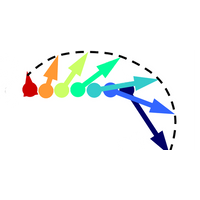
Certain twisted semiconductor bilayers are predicted to host a Fermi liquid of composite fermions—remarkably, without an applied magnetic field.

Composite Fermi Liquid at Zero Magnetic Field in Twisted MoTe2

Junkai Dong, Jie Wang, Patrick J. Ledwith, Ashvin Vishwanath, and Daniel E. Parker

Phys. Rev. Lett. 131, 136502 (2023) - Published 27 September, 2023
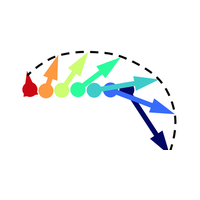
Certain twisted semiconductor bilayers are predicted to host a Fermi liquid of composite fermions—remarkably, without an applied magnetic field.

Sign In to Your Journals Account

Filter

Section

Filter

Article Lookup

Enter a citation