Highlights

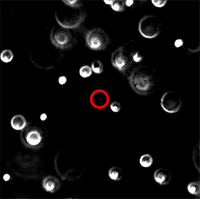
Bend or Twist? What Plectonemes Reveal about the Mysterious Motility of Spiroplasma

Paul M. Ryan, Joshua W. Shaevitz, and Charles W. Wolgemuth

Phys. Rev. Lett. 131, 178401 (2023) - Published 24 October, 2023

Helical bacteria and corkscrew rods can both undergo handedness reversals that could be useful in future robotic systems.

Construction of Coarse-Grained Molecular Dynamics with Many-Body Non-Markovian Memory

Liyao Lyu and Huan Lei

Phys. Rev. Lett. 131, 177301 (2023) - Published 23 October, 2023

A machine-learning-based coarse-grained molecular dynamics (CGMD) model faithfully retains the many-body nature of the intermolecular dissipative interactions.

Electric Fields in Liquid Water Irradiated with Protons at Ultrahigh Dose Rates

F. Gobet, P. Barberet, M.-H. Delville, G. Devès, T. Guérin, R. Liénard, H. N. Tran, C. Vecco-Garda, A. Würger, S. Zein, and H. Seznec

Phys. Rev. Lett. 131, 178001 (2023) - Published 23 October, 2023

Ultrahigh dose rates of proton irradiation induce electrokinetic effects in water that can perturb the dynamics of charged particles, such as macromolecules, in biological tissues and other aqueous systems.

Are Gluon Showers inside a Quark-Gluon Plasma Strongly Coupled? A Theorist’s Test

Peter Arnold, Omar Elgedawy, and Shahin Iqbal

Phys. Rev. Lett. 131, 162302 (2023) - Published 19 October, 2023

A theoretical study demonstrates that in-medium showers of high-energy gluons can be approximately treated as a sequence of individual splitting processes.

Universal Lower Bound on Topological Entanglement Entropy

Isaac H. Kim, Michael Levin, Ting-Chun Lin, Daniel Ranard, and Bowen Shi

Phys. Rev. Lett. 131, 166601 (2023) - Published 19 October, 2023

A lower bound to the topological entanglement entropy partially restores its universality.

Observation of Anisotropic Superfluid Density in an Artificial Crystal

J. Tao, M. Zhao, and I. B. Spielman

Phys. Rev. Lett. 131, 163401 (2023) - Published 18 October, 2023

Trapping a Bose-Einstein condensate (BEC) in an optical lattice, researchers confirm a 53-year-old theory that connects BECs to superfluids and supersolids.

Controlled Excitation of Rotons in Superfluid Helium with an Optical Centrifuge

Alexander A. Milner and Valery Milner

Phys. Rev. Lett. 131, 166001 (2023) - Published 18 October, 2023

A laser pulse with rotating linear polarization creates roton pairs in superfluid helium.

Measurement of the Positive Muon Anomalous Magnetic Moment to 0.20 ppm

D. P. Aguillard et al. (The Muon g−2 Collaboration)

Phys. Rev. Lett. 131, 161802 (2023) - Published 17 October, 2023

The magnetic moment of the muon, a key probe of the standard model and its possible extensions, has been measured to a precision of 200 parts per billion, 2.3 times more precise than their first landmark result.

Femtosecond Reduction of Atomic Scattering Factors Triggered by Intense X-Ray Pulse

Ichiro Inoue, Jumpei Yamada, Konrad J. Kapcia, Michal Stransky, Victor Tkachenko, Zoltan Jurek, Takato Inoue, Taito Osaka, Yuichi Inubushi, Atsuki Ito, Yuto Tanaka, Satoshi Matsuyama, Kazuto Yamauchi, Makina Yabashi, and Beata Ziaja

Phys. Rev. Lett. 131, 163201 (2023) - Published 17 October, 2023

Measurements indicate that intense x-ray pulses can change the electronic structure of a material on femtosecond timescales, a finding that could improve imaging of light–matter interactions.

Room-Temperature Magnetic Phase Transition in an Electrically Tuned van der Waals Ferromagnet

Cheng Tan, Ji-Hai Liao, Guolin Zheng, Meri Algarni, Jia-Yi Lin, Xiang Ma, Edwin L. H. Mayes, Matthew R. Field, Sultan Albarakati, Majid Panahandeh-Fard, Saleh Alzahrani, Guopeng Wang, Yuanjun Yang, Dimitrie Culcer, James Partridge, Mingliang Tian, Bin Xiang, Yu-Jun Zhao, and Lan Wang

Phys. Rev. Lett. 131, 166703 (2023) - Published 17 October, 2023

A ferromagnetism to antiferromagnetism phase transition in a van der Waals magnet at room temperature uses CrTe nanoflakes that may lead to improved spintronic devices.

Search for Light Dark Matter with NA64 at CERN

Yu. M. Andreev et al. (NA64 Collaboration)

Phys. Rev. Lett. 131, 161801 (2023) - Published 16 October, 2023

An experiment at CERN performed by scattering 100 GeV electrons off a fixed target results in limits on thermal dark matter—that requires interactions mediated by hypothetical dark photons—in the MeV mass range.

Doubly Charmed Tetraquark Tcc+ from Lattice QCD near Physical Point

Yan Lyu, Sinya Aoki, Takumi Doi, Tetsuo Hatsuda, Yoichi Ikeda, and Jie Meng

Phys. Rev. Lett. 131, 161901 (2023) - Published 16 October, 2023

A lattice QCD computation close to the physical point finds a near-threshold virtual state in the DD* scattering channel, that suggests the formation of a loosely bound state at the physical point consistent with the experimental observation of a doubly charmed tetraquark Tcc+.

Nonlinear Topological Magnon Spin Hall Effect

Zhejunyu Jin, Xianglong Yao, Zhenyu Wang, H. Y. Yuan, Zhaozhuo Zeng, Weiwei Wang, Yunshan Cao, and Peng Yan

Phys. Rev. Lett. 131, 166704 (2023) - Published 16 October, 2023

Nonlinear scattering of magnons and skyrmions in antiferromagnets leads to a spin Hall effect that emerges from real-space topology.

Thermodynamic Bounds on Correlation Times

Andreas Dechant, Jérôme Garnier-Brun, and Shin-ichi Sasa

Phys. Rev. Lett. 131, 167101 (2023) - Published 16 October, 2023

An analysis of the correlation time of physical observables in steady-state diffusive systems reveals the existence of lower bounds both in and out of equilibrium.

Observation of an Excess of Dicharmonium Events in the Four-Muon Final State with the ATLAS Detector

G. Aad et al. (ATLAS Collaboration)

Phys. Rev. Lett. 131, 151902 (2023) - Published 13 October, 2023

Statistically significant excesses are seen in the di-J/ψ and J/ψ+ψ(2S) channels using the ATLAS detector.

Active Spaghetti: Collective Organization in Cyanobacteria

Mixon K. Faluweki, Jan Cammann, Marco G. Mazza, and Lucas Goehring

Phys. Rev. Lett. 131, 158303 (2023) - Published 13 October, 2023

Lab experiments and theoretical models elucidate how chains of light-harvesting bacteria assemble into various density-dependent structures.

Observation of the γγ→ττ Process in Pb+Pb Collisions and Constraints on the τ-Lepton Anomalous Magnetic Moment with the ATLAS Detector

G. Aad et al. (ATLAS Collaboration)

Phys. Rev. Lett. 131, 151802 (2023) - Published 12 October, 2023

The ATLAS and CMS experiments have separately measured photon-induced τ-lepton pair production in Pb+Pb collisions, providing a novel probe of the τ anomalous magnetic moment.

Observation of τ Lepton Pair Production in Ultraperipheral Pb-Pb Collisions at sNN=5.02  TeV

A. Tumasyan et al. (CMS Collaboration)

Phys. Rev. Lett. 131, 151803 (2023) - Published 12 October, 2023

The ATLAS and CMS experiments have separately measured photon-induced τ-lepton pair production in Pb+Pb collisions, providing a novel probe of the τ anomalous magnetic moment.

Controllable Single Cooper Pair Splitting in Hybrid Quantum Dot Systems

Damaz de Jong, Christian G. Prosko, Lin Han, Filip K. Malinowski, Yu Liu, Leo P. Kouwenhoven, and Wolfgang Pfaff

Phys. Rev. Lett. 131, 157001 (2023) - Published 12 October, 2023

A superconducting island with quantum dots on either side allows for coherent splitting of a single Cooper pair and detection of an emerging unpaired electron.

Optimal Generators for Quantum Sensing

Jarrod T. Reilly, John Drew Wilson, Simon B. Jäger, Christopher Wilson, and Murray J. Holland

Phys. Rev. Lett. 131, 150802 (2023) - Published 11 October, 2023
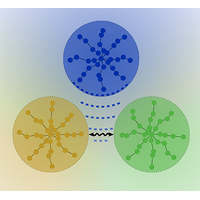
A new method identifies the most sensitive measurement that can be performed using a given quantum state, knowledge key for designing improved quantum sensors.

Sign In to Your Journals Account

Filter

Section

Filter

Article Lookup

Enter a citation