Highlights

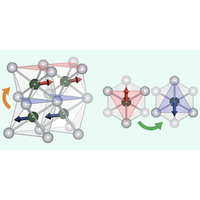
Magnetostriction-Driven Muon Localization in an Antiferromagnetic Oxide

Pietro Bonfà, Ifeanyi John Onuorah, Franz Lang, Iurii Timrov, Lorenzo Monacelli, Chennan Wang, Xiao Sun, Oleg Petracic, Giovanni Pizzi, Nicola Marzari, Stephen J. Blundell, and Roberto De Renzi

Phys. Rev. Lett. 132, 046701 (2024) - Published 24 January, 2024

Small energy differences determine muon-sample interactions, providing a significant insight into muon-spin spectroscopy of magnetic oxides.

Experimental Evidence for Millisecond–Timescale Structural Evolution Following the Microsecond–Timescale Folding of a Small Protein

C. Blake Wilson, Wai-Ming Yau, and Robert Tycko

Phys. Rev. Lett. 132, 048402 (2024) - Published 24 January, 2024

Researchers have used nuclear magnetic resonance to observe a previously unseen intermediate state in which the protein lingers for an unexpectedly long time.

Photonic Flatband Resonances in Multiple Light Scattering

Thanh Xuan Hoang, Daniel Leykam, and Yuri Kivshar

Phys. Rev. Lett. 132, 043803 (2024) - Published 23 January, 2024

Light–matter interactions in certain one-dimensional photonic materials can bring light nearly to a standstill, an effect that researchers show requires consideration of long-range interactions between the material’s components.

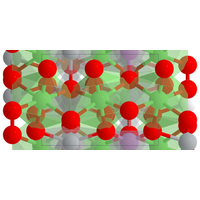
Spectroscopic Evidence of Kondo-Induced Quasiquartet in CeRh2As2

Denise S. Christovam, Miguel Ferreira-Carvalho, Andrea Marino, Martin Sundermann, Daisuke Takegami, Anna Melendez-Sans, Ku Ding Tsuei, Zhiwei Hu, Sahana Rößler, Manuel Valvidares, Maurits W. Haverkort, Yu Liu, Eric D. Bauer, Liu Hao Tjeng, Gertrud Zwicknagl, and Andrea Severing

Phys. Rev. Lett. 132, 046401 (2024) - Published 22 January, 2024

Temperature dependent x-ray absorption spectroscopy experiments on CeRh2As2 offers direct evidence for the coupling of the Kondo interaction and crystal-field states.

Inertia Induces Strong Orientation Fluctuations of Nonspherical Atmospheric Particles

T. Bhowmick, J. Seesing, K. Gustavsson, J. Guettler, Y. Wang, A. Pumir, B. Mehlig, and G. Bagheri

Phys. Rev. Lett. 132, 034101 (2024) - Published 19 January, 2024

Experiments with small falling particles show that their orientations oscillate—which may help explain the settling of volcanic ash and the formation of snow.

Characterization and Control of the Run-and-Tumble Dynamics of Escherichia Coli

Christina Kurzthaler, Yongfeng Zhao, Nan Zhou, Jana Schwarz-Linek, Clemence Devailly, Jochen Arlt, Jian-Dong Huang, Wilson C. K. Poon, Thomas Franosch, Julien Tailleur, and Vincent A. Martinez

Phys. Rev. Lett. 132, 038302 (2024) - Published 19 January, 2024

A new technique could allow researchers to distinguish the swimming motion of a species of microorganisms without the need to track individuals within a population.

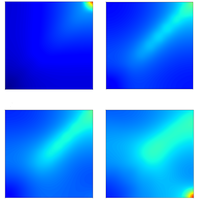
Broken Kramers Degeneracy in Altermagnetic MnTe

Suyoung Lee, Sangjae Lee, Saegyeol Jung, Jiwon Jung, Donghan Kim, Yeonjae Lee, Byeongjun Seok, Jaeyoung Kim, Byeong Gyu Park, Libor Šmejkal, Chang-Jong Kang, and Changyoung Kim

Phys. Rev. Lett. 132, 036702 (2024) - Published 18 January, 2024

Spectroscopic data suggest that thin films of a certain semiconducting material can exhibit altermagnetism, a new and fundamental form of magnetism.

Emergence of Competing Orders and Possible Quantum Spin Liquid in SU(N) Fermions

Xue-Jia Yu, Shao-Hang Shi, Limei Xu, and Zi-Xiang Li

Phys. Rev. Lett. 132, 036704 (2024) - Published 18 January, 2024

A realistic SU(N) interacting fermionic model reveals exotic quantum magnetic phases that occur at intermediate N, where the competition between distinct ordering tendencies gives rise to an intermediate quantum spin liquid phase featuring nontrivial topological order.

Percolation and Topological Properties of Temporal Higher-Order Networks

Leonardo Di Gaetano, Federico Battiston, and Michele Starnini

Phys. Rev. Lett. 132, 037401 (2024) - Published 18 January, 2024

A hidden-variable formalism allows for the characterization of topological properties of temporal networks with higher-order interactions.

Self-Trapping of Slow Electrons in the Energy Domain

Maor Eldar, Zhaopin Chen, Yiming Pan, and Michael Krüger

Phys. Rev. Lett. 132, 035001 (2024) - Published 17 January, 2024

Numerical investigation of the phase-matched interaction of slow electrons with a strong optical field unveils a tunable trapping, opening the door for manipulating free electrons in the low-energy regime.

Nonvolatile Switching of Large Nonreciprocal Optical Absorption at Shortwave Infrared Wavelengths

Kenta Kimura and Tsuyoshi Kimura

Phys. Rev. Lett. 132, 036901 (2024) - Published 17 January, 2024

At low temperatures, crystals of lithium nickel phosphate transmit short-wavelength infrared light much more strongly in one direction than in the other.

Nonequilibrium Response for Markov Jump Processes: Exact Results and Tight Bounds

Timur Aslyamov and Massimiliano Esposito

Phys. Rev. Lett. 132, 037101 (2024) - Published 16 January, 2024

A novel linear-algebra method opens the way to efficiently study a broad class of responses for nonequilibrium systems.

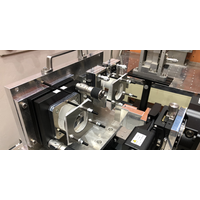
Development of Neutron Interferometer Using Multilayer Mirrors and Measurements of Neutron-Nuclear Scattering Length with Pulsed Neutron Source

Takuhiro Fujiie, Masahiro Hino, Takuya Hosobata, Go Ichikawa, Masaaki Kitaguchi, Kenji Mishima, Yoshichika Seki, Hirohiko M. Shimizu, and Yutaka Yamagata

Phys. Rev. Lett. 132, 023402 (2024) - Published 12 January, 2024

Researchers have demonstrated a mirror-based neutron interferometer that should be more sensitive to beyond-standard-model particle interactions than previous instruments.

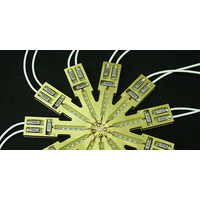
Synchronization of Bloch Oscillations in a Strongly Coupled Pair of Small Josephson Junctions: Evidence for a Shapiro-like Current Step

Fabian Kaap, David Scheer, Fabian Hassler, and Sergey Lotkhov

Phys. Rev. Lett. 132, 027001 (2024) - Published 12 January, 2024

High-precision measurements of the oscillations generated by a superconducting device suggest that an improved electric-current-calibration standard should be possible.

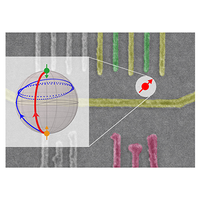
Accelerated Adiabatic Passage of a Single Electron Spin Qubit in Quantum Dots

Xiao-Fei Liu, Yuta Matsumoto, Takafumi Fujita, Arne Ludwig, Andreas D. Wieck, and Akira Oiwa

Phys. Rev. Lett. 132, 027002 (2024) - Published 12 January, 2024

Schemes for shortcuts to adiabaticity are demonstrated in gate-defined quantum dots based on transitionless quantum driving.

Evidence for the Higgs Boson Decay to a Z Boson and a Photon at the LHC

G. Aad et al. (ATLAS Collaboration, CMS Collaboration)

Phys. Rev. Lett. 132, 021803 (2024) - Published 11 January, 2024

The Large Hadron Collider’s ATLAS and CMS collaborations have analyzed data of a rare Higgs-boson decay, finding a hint of a disagreement with standard-model predictions.

Ginzburg-Landau Theory of Flat-Band Superconductors with Quantum Metric

Shuai A. Chen and K. T. Law

Phys. Rev. Lett. 132, 026002 (2024) - Published 11 January, 2024

An application of Ginzburg-Landau theory to superconducting twisted bilayer graphene determines the coherence length and the upper critical field, which are in agreement with recent experiments.

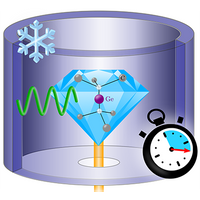
Germanium Vacancy in Diamond Quantum Memory Exceeding 20 ms

Katharina Senkalla, Genko Genov, Mathias H. Metsch, Petr Siyushev, and Fedor Jelezko

Phys. Rev. Lett. 132, 026901 (2024) - Published 11 January, 2024

An experiment demonstrates a record long quantum coherence time that exceeds 20 milliseconds for a germanium vacancy in diamond.

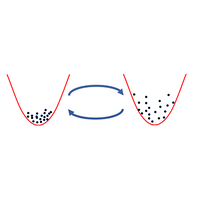
Fate of Boltzmann’s Breathers: Stokes Hypothesis and Anomalous Thermalization

M. I. García de Soria, P. Maynar, David Guéry-Odelin, and Emmanuel Trizac

Phys. Rev. Lett. 132, 027101 (2024) - Published 11 January, 2024

Boltzmann breathers can thermalize at long times due to a damping mechanism related to the bulk viscosity for finite densities.

Fundamental and Second-Order Superregular Breathers in Vector Fields

Chong Liu, Shao-Chun Chen, and Nail Akhmediev

Phys. Rev. Lett. 132, 027201 (2024) - Published 10 January, 2024

An exact theory for superregular breathers in Manakov systems is derived, with possible applications to a wide range of nonlinear wave phenomena.

Sign In to Your Journals Account

Filter

Section

Filter

Article Lookup

Enter a citation