Highlights

Surface Furrowing Instability in Everting Soft Solids

Jonghyun Hwang, Mariana Altomare, and Howard A. Stone

Phys. Rev. Lett. 134, 058205 (2025) - Published 7 February, 2025

An ultrasoft material can move smoothly through a pipe, but the motion generates “furrows” on the material’s front surface.

Monopole-Fermion Scattering and the Solution to the Semiton–Unitarity Puzzle

Vazha Loladze and Takemichi Okui

Phys. Rev. Lett. 134, 051602 (2025) - Published 6 February, 2025

The scattering of a charged particle off a magnetic monopole does not imply the existence of fractional particle numbers, theorists say.

Antiprotons and Elementary Particles over a Solar Cycle: Results from the Alpha Magnetic Spectrometer

M. Aguilar et al. (AMS Collaboration)

Phys. Rev. Lett. 134, 051002 (2025) - Published 3 February, 2025

The spectrum of cosmic-ray antiprotons has been measured for a full solar cycle, which may allow a better understanding of the sources and transport mechanisms of these high-energy particles.

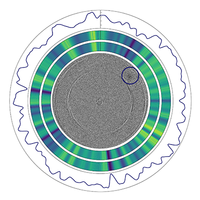
Anderson Transition for Light in a Three-Dimensional Random Medium

Alexey Yamilov, Hui Cao, and Sergey E. Skipetrov

Phys. Rev. Lett. 134, 046302 (2025) - Published 29 January, 2025

Simulations demonstrate that light can be confined within a scattering medium in a way similar to electrons in a disordered metal.

Ultraviolet-Complete Local Field Theory of Persistent Symmetry Breaking in 2+1 Dimensions

Bilal Hawashin, Junchen Rong, and Michael M. Scherer

Phys. Rev. Lett. 134, 041602 (2025) - Published 28 January, 2025

A local quantum field theory is found to spontaneously break a global symmetry at all temperatures, defying the normal expectation that symmetries get restored at high temperatures.

Realizing Quantitative Quasiparticle Modeling of Skyrmion Dynamics in Arbitrary Potentials

Maarten A. Brems, Tobias Sparmann, Simon M. Fröhlich, Leonie-C. Dany, Jan Rothörl, Fabian Kammerbauer, Elizabeth M. Jefremovas, Oded Farago, Mathias Kläui, and Peter Virnau

Phys. Rev. Lett. 134, 046701 (2025) - Published 28 January, 2025

By ascertaining key missing parameters in Thiele-based simulations, a complete spatially resolved mapping of the skyrmion pinning energy without any inaccessible regions is obtained.

Cold Beam Optical Clock with Multifrequency Spectroscopy

William G. Tobias, Bryan Hemingway, and Steven Peil

Phys. Rev. Lett. 134, 043401 (2025) - Published 27 January, 2025

Multifrequency spectroscopy of a cold beam optical clock improves the long-term stability while decreasing several sources of systematic time-keeping errors.

Epitaxially Defined Luttinger Liquids on MoS2 Bicrystals

Bingchen Deng, Heonsu Ahn, Jue Wang, Gunho Moon, Cheolhee Han, Ninad Dongre, Chao Lei, Giovanni Scuri, Jiho Sung, Elise Brutschea, Kenji Watanabe, Takashi Taniguchi, Fan Zhang, Moon-Ho Jo, and Hongkun Park

Phys. Rev. Lett. 134, 046301 (2025) - Published 27 January, 2025

Conductance measurement demonstrate that mirror twin boundaries in transition metal dichalcogenides can serve as a platform for studying the interplay between electronic interactions and topology.

Magnetic Exciton of EuS Revealed by Resonant Inelastic X-Ray Scattering

Lucia Amidani, Jonas J. Joos, Pieter Glatzel, and Jindřich Kolorenč

Phys. Rev. Lett. 134, 046401 (2025) - Published 27 January, 2025

Resonant inelastic x-ray scattering measurements on EuS identify two narrow peaks in the optical absorption spectra as magnetic excitons.

Short-Range Excitonic Phenomena in Low-Density Metals

Jaakko Koskelo, Lucia Reining, and Matteo Gatti

Phys. Rev. Lett. 134, 046402 (2025) - Published 27 January, 2025

Phenomena in metals such as low-energy excitonic collective modes, imaginary poles in the dielectric function, or negative static screening are made possible by the imperfect screening of the electron-hole interaction at short distances.

Dynamical Mean-Field Theory of Complex Systems on Sparse Directed Networks

Fernando L. Metz

Phys. Rev. Lett. 134, 037401 (2025) - Published 24 January, 2025

A generalized dynamical mean-field theory allows computation of the phase diagram of sparse and heterogeneous networks.

Enhanced Strange Metallicity due to Hubbard-U Coulomb Repulsion

Andrew Hardy, Olivier Parcollet, Antoine Georges, and Aavishkar A. Patel

Phys. Rev. Lett. 134, 036502 (2025) - Published 23 January, 2025

A model of electrons that has a particular Coulomb repulsion and is coupled to a 2D bosonic bath shows a quantum critical point where traditional Fermi-liquid physics breaks down, resulting in a so-called strange metal.

Glass Transition in Monolayers of Rough Colloidal Ellipsoids

Jian Liang, Xuan Feng, Ning Zheng, Huaguang Wang, Ran Ni, and Zexin Zhang

Phys. Rev. Lett. 134, 038202 (2025) - Published 23 January, 2025

Roughing up the surfaces of particles in a colloidal system can smooth its transition into a glassy state.

Biased Ensembles of Pulsating Active Matter

William D. Piñeros and Étienne Fodor

Phys. Rev. Lett. 134, 038301 (2025) - Published 23 January, 2025

Ensembles of particles that actively pulsate in size which are also biased to select certain rare configurations can exhibit complex emergent behaviors that depend on system geometry.

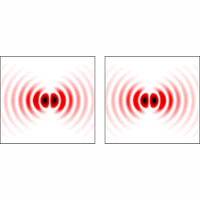
Optimal Reconstruction of the Hellings and Downs Correlation

Bruce Allen and Joseph D. Romano

Phys. Rev. Lett. 134, 031401 (2025) - Published 22 January, 2025

A theoretical analysis places limits on the precision for inter-pulsar correlations contained in the Hellings and Downs curve.

Energy Relaxation and Dynamics in the Correlated Metal Sr2RuO4 via Terahertz Two-Dimensional Coherent Spectroscopy

David Barbalas, Ralph Romero, III, Dipanjan Chaudhuri, Fahad Mahmood, Hari P. Nair, Nathaniel J. Schreiber, Darrell G. Schlom, K. M. Shen, and N. P. Armitage

Phys. Rev. Lett. 134, 036501 (2025) - Published 22 January, 2025

Energy relaxation rates in Sr2RuO4 probed with THz 2D coherent spectroscopy are strongly subdominant compared to the previously measured momentum relaxation rates.

Single-Electron Quantization of Dark Current in Quanta Image Sensors

Joanna Krynski, Daniel McGrath, Alexandre Le Roch, Sarah Holloway, Lucrezia Migliorin, Cédric Virmontois, and Vincent Goiffon

Phys. Rev. Lett. 134, 037001 (2025) - Published 22 January, 2025

A CMOS-based image sensor with very low noise levels allows observation of the quantization of dark current generation rate of stray electron/hole pairs in unilluminated photodetectors.

Fast Radio Bursts as Precursor Radio Emission from Monster Shocks

A. Vanthieghem and A. Levinson

Phys. Rev. Lett. 134, 035201 (2025) - Published 21 January, 2025

Powerful shock waves around magnetized neutron stars may be the source of mysterious radio bursts that are observed across the sky.

Switching Spin Filling Sequence in a Bilayer Graphene Quantum Dot through Trigonal Warping

Guo-Quan Qin, Fang-Ming Jing, Tian-Yue Hao, Shun-Li Jiang, Zhuo-Zhi Zhang, Gang Cao, Xiang-Xiang Song, and Guo-Ping Guo

Phys. Rev. Lett. 134, 036301 (2025) - Published 21 January, 2025

In graphene quantum dots with only a few electrons, a triangular distortion of the energy bands near specific points in the hexagonal Brillouin zone makes it possible to control the spin degree of freedom.

Dynamics of Microscale and Nanoscale Systems in the Weak-Memory Regime

Kay Brandner

Phys. Rev. Lett. 134, 037101 (2025) - Published 21 January, 2025

For dynamical systems in the weak-memory regime, a unique local approximation of the original nonlocal dynamics becomes arbitrarily accurate at long times.

Sign In to Your Journals Account

Filter

Section

Filter

Article Lookup

Enter a citation