Highlights

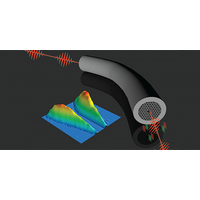
Raman-Free, Noble-Gas-Filled Photonic-Crystal Fiber Source for Ultrafast, Very Bright Twin-Beam Squeezed Vacuum

Martin A. Finger, Timur Sh. Iskhakov, Nicolas Y. Joly, Maria V. Chekhova, and Philip St. J. Russell

Phys. Rev. Lett. 115, 143602 (2015) - Published 30 September, 2015

An optical-fiber scheme generates a bright “twin beam”—a pair of quantum-correlated beams that could be used in high-precision metrology.

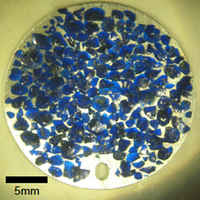
Telecom-Wavelength Atomic Quantum Memory in Optical Fiber for Heralded Polarization Qubits

Jeongwan Jin, Erhan Saglamyurek, Marcel. lí Grimau Puigibert, Varun Verma, Francesco Marsili, Sae Woo Nam, Daniel Oblak, and Wolfgang Tittel

Phys. Rev. Lett. 115, 140501 (2015) - Published 28 September, 2015

The storage and retrieval of polarization qubits encoded into photons is demonstrated using erbium-doped fiber optics.

Measurements of Elliptic and Triangular Flow in High-Multiplicity He3+Au Collisions at sNN=200  GeV

A. Adare et al. (PHENIX Collaboration)

Phys. Rev. Lett. 115, 142301 (2015) - Published 28 September, 2015

Particle correlations in 3He+Au collisions suggest that a low-viscosity quark-gluon plasma forms in collisions using light projectiles.

Anomalous Diffraction in Cold Magnetized Plasma

Z. Abelson, R. Gad, S. Bar-Ad, and A. Fisher

Phys. Rev. Lett. 115, 143901 (2015) - Published 28 September, 2015

Microwaves can propogate in a cold magnetized plasma without being diffracted for certain magnetic field strengths and electron densities.

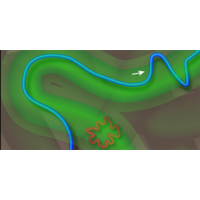
Quantum Oscillations without a Fermi Surface and the Anomalous de Haas–van Alphen Effect

Johannes Knolle and Nigel R. Cooper

Phys. Rev. Lett. 115, 146401 (2015) - Published 28 September, 2015

The Fermi surface of a metal is typically detected via quantum oscillations of its thermodynamic properties in response to a changing applied magnetic field. A microscopic model shows that these oscillations also occur in a band insulator, despite the absence of a Fermi surface.

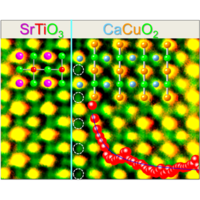
High-Tc Superconductivity at the Interface between the CaCuO2 and SrTiO3 Insulating Oxides

D. Di Castro, C. Cantoni, F. Ridolfi, C. Aruta, A. Tebano, N. Yang, and G. Balestrino

Phys. Rev. Lett. 115, 147001 (2015) - Published 28 September, 2015

CaCuO2/SrTiO3 heterostructures show interface superconductivity at 40K due to extra oxygen ions in the interface Ca plane, which act as doping holes.

Topological Magnon Bands in a Kagome Lattice Ferromagnet

R. Chisnell, J. S. Helton, D. E. Freedman, D. K. Singh, R. I. Bewley, D. G. Nocera, and Y. S. Lee

Phys. Rev. Lett. 115, 147201 (2015) - Published 28 September, 2015

Experimental evidence is presented for a topological magnon insulator, a material where magnetic excitations (magnons) are protected from scattering by the properties of the material.

Sensing Polymer Chain Dynamics through Ring Topology: A Neutron Spin Echo Study

Sebastian Gooßen, Margarita Krutyeva, Melissa Sharp, Artem Feoktystov, Jürgen Allgaier, Wim Pyckhout-Hintzen, Andreas Wischnewski, and Dieter Richter

Phys. Rev. Lett. 115, 148302 (2015) - Published 28 September, 2015

Ring-shaped polymers have been used to detect a theoretical tube that restricts the motion of molten polymer chains.

Identifying Exotic Hidden-Charm Pentaquarks

Rui Chen, Xiang Liu, Xue-Qian Li, and Shi-Lin Zhu

Phys. Rev. Lett. 115, 132002 (2015) - Published 25 September, 2015

The pentaquarks discovered by the LHCb Collaboration could be molecular bound states of a charmed baryon and a meson. Observing the predicted isospin partners would allow for this interpretation to be verified.

Observation of a Helical Luttinger Liquid in InAs/GaSb Quantum Spin Hall Edges

Tingxin Li, Pengjie Wang, Hailong Fu, Lingjie Du, Kate A. Schreiber, Xiaoyang Mu, Xiaoxue Liu, Gerard Sullivan, Gábor A. Csáthy, Xi Lin, and Rui-Rui Du

Phys. Rev. Lett. 115, 136804 (2015) - Published 25 September, 2015

Strong electron-electron interactions are observed in one dimensional InAs/GaSb quantum spin Hall insulators.

Nanofluidic Diode for Simple Fluids without Moving Parts

Long Li, Jingwen Mo, and Zhigang Li

Phys. Rev. Lett. 115, 134503 (2015) - Published 24 September, 2015

An array of nanochannels—made from a mixture of hydrophobic and hydrophilic materials—acts as a one-way diode for fluids.

Local Spectroscopic Characterization of Spin and Layer Polarization in WSe2

Matthew Yankowitz, Devin McKenzie, and Brian J. LeRoy

Phys. Rev. Lett. 115, 136803 (2015) - Published 24 September, 2015

Tunneling spectroscopy exhibits suppression of intervalley electronic scattering in the valence band of a monolayer of the transition metal dichalcogenide WSe2.

Precision Spectroscopy in Cold Molecules: The Lowest Rotational Interval of He2+ and Metastable He2

Paul Jansen, Luca Semeria, Laura Esteban Hofer, Simon Scheidegger, Josef A. Agner, Hansjürg Schmutz, and Frédéric Merkt

Phys. Rev. Lett. 115, 133202 (2015) - Published 23 September, 2015

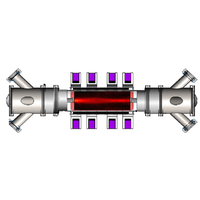
The experimental accuracy needed to reveal quantum-electrodynamics corrections in a three-electron molecule is achieved. These measurements represent a benchmark and test for future ab initio calculations.

Low Speed Crack Propagation via Kink Formation and Advance on the Silicon (110) Cleavage Plane

James R. Kermode, Anna Gleizer, Guy Kovel, Lars Pastewka, Gábor Csányi, Dov Sherman, and Alessandro De Vita

Phys. Rev. Lett. 115, 135501 (2015) - Published 23 September, 2015

A thermally activated fracture process can occur in silicon without bonds breaking at the crack tip. For such a process cracks can propagate at speeds well below 2000 ms^{-1}, which were previously thought to be ‘forbidden’.

Decoherence of Impurities in a Fermi Sea of Ultracold Atoms

Marko Cetina, Michael Jag, Rianne S. Lous, Jook T. M. Walraven, Rudolf Grimm, Rasmus S. Christensen, and Georg M. Bruun

Phys. Rev. Lett. 115, 135302 (2015) - Published 22 September, 2015

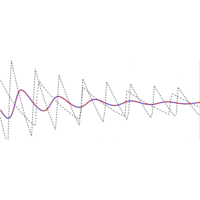
The superposition of internal states of impurity atoms in a strongly interacting Fermi gas decohere an order of magnitude faster than predictions that assume this process occurs via quasiparticle scattering.

Cavity State Manipulation Using Photon-Number Selective Phase Gates

Reinier W. Heeres, Brian Vlastakis, Eric Holland, Stefan Krastanov, Victor V. Albert, Luigi Frunzio, Liang Jiang, and Robert J. Schoelkopf

Phys. Rev. Lett. 115, 137002 (2015) - Published 22 September, 2015

A new quantum gate can control the phase of a quantum state and create a high fidelity single photon Fock state.

Light-Matter Interaction at Surfaces in the Spatiotemporal Limit of Macroscopic Models

M. Lucchini, L. Castiglioni, L. Kasmi, P. Kliuiev, A. Ludwig, M. Greif, J. Osterwalder, M. Hengsberger, L. Gallmann, and U. Keller

Phys. Rev. Lett. 115, 137401 (2015) - Published 22 September, 2015

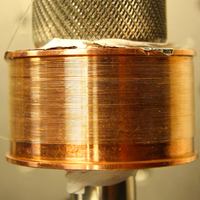
The angular dependence of photoemission from a copper surface, irradiated with an infra-red light pulse, is well described by the Fresnel equations. This shows that despite being derived from macroscopic considerations, the Fresnel equations correctly describe microscopic and attosecond scales.

Orbital Feshbach Resonance in Alkali-Earth Atoms

Ren Zhang, Yanting Cheng, Hui Zhai, and Peng Zhang

Phys. Rev. Lett. 115, 135301 (2015) - Published 21 September, 2015

A scheme is proposed to realize a new type of Feshbach resonance between two atoms with different orbital and nuclear spin quantum numbers.

Semiconducting Graphene from Highly Ordered Substrate Interactions

M. S. Nevius, M. Conrad, F. Wang, A. Celis, M. N. Nair, A. Taleb-Ibrahimi, A. Tejeda, and E. H. Conrad

Phys. Rev. Lett. 115, 136802 (2015) - Published 21 September, 2015

Researchers have engineered a large energy band gap in a graphene layer grown on a silicon carbide substrate.

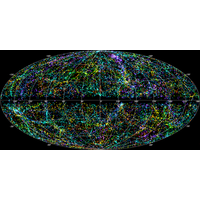
Dispersion Distance and the Matter Distribution of the Universe in Dispersion Space

Kiyoshi Wesley Masui and Kris Sigurdson

Phys. Rev. Lett. 115, 121301 (2015) - Published 18 September, 2015

Analysis of radio pulses from very distant objects may offer a new way to map the Universe.

Sign In to Your Journals Account

Filter

Section

Filter

Article Lookup

Enter a citation