Highlights

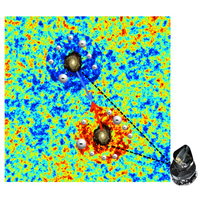
Evidence of the Missing Baryons from the Kinematic Sunyaev-Zeldovich Effect in Planck Data

Carlos Hernández-Monteagudo, Yin-Zhe Ma, Francisco S. Kitaura, Wenting Wang, Ricardo Génova-Santos, Juan Macías-Pérez, and Diego Herranz

Phys. Rev. Lett. 115, 191301 (2015) - Published 3 November, 2015

Analysis of Planck measurements of the cosmic microwave background provides evidence that many of the baryons expected to exist in the Universe, but not detected in stars, are in the gas around the Central Galaxies identified in the Sloan galaxy survey.

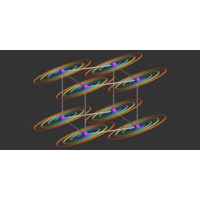
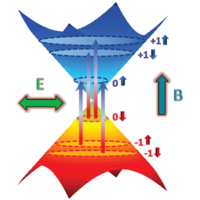
Four-Dimensional Quantum Hall Effect with Ultracold Atoms

H. M. Price, O. Zilberberg, T. Ozawa, I. Carusotto, and N. Goldman

Phys. Rev. Lett. 115, 195303 (2015) - Published 3 November, 2015

Cold atoms in an optical lattice with a synthetic extra dimension could be used to see the 4D version of the quantum Hall effect.

Irreversibility and the Arrow of Time in a Quenched Quantum System

T. B. Batalhão, A. M. Souza, R. S. Sarthour, I. S. Oliveira, M. Paternostro, E. Lutz, and R. M. Serra

Phys. Rev. Lett. 115, 190601 (2015) - Published 2 November, 2015

Entropy production, a quantity associated with the emergence of the arrow of time, has been successfully measured in a microscopic quantum system.

Approaching Tsirelson’s Bound in a Photon Pair Experiment

Hou Shun Poh, Siddarth K. Joshi, Alessandro Cerè, Adán Cabello, and Christian Kurtsiefer

Phys. Rev. Lett. 115, 180408 (2015) - Published 30 October, 2015

Measurements of the correlation between pairs of photons provide the tightest test of local realism to date, with an order of magnitude reduction in the uncertainty compared with previous experiments.

Popping Balloons: A Case Study of Dynamical Fragmentation

Sébastien Moulinet and Mokhtar Adda-Bedia

Phys. Rev. Lett. 115, 184301 (2015) - Published 30 October, 2015

A balloon with low internal pressure bursts through the growth of a single crack, but above a critical pressure, it breaks apart from multiple cracks.

Enhanced Magneto-Optical Edge Excitation in Nanoscale Magnetic Disks

A. Berger, R. Alcaraz de la Osa, A. K. Suszka, M. Pancaldi, J. M. Saiz, F. Moreno, H. P. Oepen, and P. Vavassori

Phys. Rev. Lett. 115, 187403 (2015) - Published 30 October, 2015

Ferromagnetic nanodiscs can exhibit an enhancement, of more than 100%, in their magneto-optical activity. This effect could be used in nano-optical devices for communications, energy harvesting, and biosensors.

Quantum Phase Transition and Universal Dynamics in the Rabi Model

Myung-Joong Hwang, Ricardo Puebla, and Martin B. Plenio

Phys. Rev. Lett. 115, 180404 (2015) - Published 29 October, 2015

A two-level atom coupled to a single-mode cavity field is shown to undergo a second order quantum phase transition when the atomic transition frequency is much larger than the cavity frequency.

Signatures of a Two Million Year Old Supernova in the Spectra of Cosmic Ray Protons, Antiprotons, and Positrons

M. Kachelrieß, A. Neronov, and D. V. Semikoz

Phys. Rev. Lett. 115, 181103 (2015) - Published 29 October, 2015

Several puzzling features in cosmic ray spectra might be explained by a nearby supernova two million years ago. The same explosion may be the source of iron isotopes on Earth.

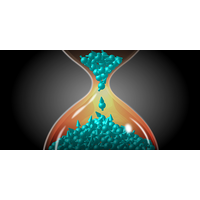
Nonclassical Nucleation in a Solid-Solid Transition of Confined Hard Spheres

Weikai Qi, Yi Peng, Yilong Han, Richard K. Bowles, and Marjolein Dijkstra

Phys. Rev. Lett. 115, 185701 (2015) - Published 29 October, 2015

Molecular dynamics simulations suggests that a solid-solid phase transition in a system of hard spheres takes place via an intermediate liquid stage. The solid ‘melts’ forming a liquid droplet, within which the new stable solid phase nucleates and begins to grow.

Superradiant Emission from a Collective Excitation in a Semiconductor

T. Laurent, Y. Todorov, A. Vasanelli, A. Delteil, C. Sirtori, I. Sagnes, and G. Beaudoin

Phys. Rev. Lett. 115, 187402 (2015) - Published 29 October, 2015

A “Schrödinger’s cat”-type effect entangles collective excitations in a semiconductor nanostructure, making a new infrared light source.

Hydraulic Fracture and Toughening of a Brittle Layer Bonded to a Hydrogel

Alessandro Lucantonio, Giovanni Noselli, Xavier Trepat, Antonio DeSimone, and Marino Arroyo

Phys. Rev. Lett. 115, 188105 (2015) - Published 28 October, 2015

A combination of brittle and porous materials fractures under opposite conditions to conventional brittle materials.

Cell Chirality Induces Collective Cell Migration in Epithelial Sheets

Katsuhiko Sato, Tetsuya Hiraiwa, and Tatsuo Shibata

Phys. Rev. Lett. 115, 188102 (2015) - Published 27 October, 2015

A model of cell migration shows how cell chirality can lead to unidirectional motion of a group of cells.

Gravitational Waves from a Dark Phase Transition

Pedro Schwaller

Phys. Rev. Lett. 115, 181101 (2015) - Published 26 October, 2015

A first order phase transition in the early Universe is shown to be generic to a large class of composite dark matter models. This phase transition may result in detectable gravitational wave signals.

Widely Tunable Two-Color Free-Electron Laser on a Storage Ring

Y. K. Wu, J. Yan, H. Hao, J. Y. Li, S. F. Mikhailov, V. G. Popov, N. A. Vinokurov, S. Huang, and J. Wu

Phys. Rev. Lett. 115, 184801 (2015) - Published 26 October, 2015

A two color free electron laser with simultaneous infrared and ultraviolet lasing is demonstrated using the electron storage ring at Duke University.

Detecting Stealth Dark Matter Directly through Electromagnetic Polarizability

T. Appelquist, E. Berkowitz, R. C. Brower, M. I. Buchoff, G. T. Fleming, X.-Y. Jin, J. Kiskis, G. D. Kribs, E. T. Neil, J. C. Osborn, C. Rebbi, E. Rinaldi, D. Schaich, C. Schroeder, S. Syritsyn, P. Vranas, E. Weinberg, and O. Witzel (Lattice Strong Dynamics (LSD) Collaboration)

Phys. Rev. Lett. 115, 171803 (2015) - Published 23 October, 2015

Lattice gauge theory computations provide bounds on detecting composite dark matter in direct detection experiments.

Semivisible Jets: Dark Matter Undercover at the LHC

Timothy Cohen, Mariangela Lisanti, and Hou Keong Lou

Phys. Rev. Lett. 115, 171804 (2015) - Published 23 October, 2015

Models of dark matter that include dark-sector particles with strong coupling could have evaded LHC searches due to jets of strongly interacting particles that mask their “missing energy” signatures.

Magnetoinfrared Spectroscopy of Landau Levels and Zeeman Splitting of Three-Dimensional Massless Dirac Fermions in ZrTe5

R. Y. Chen, Z. G. Chen, X.-Y. Song, J. A. Schneeloch, G. D. Gu, F. Wang, and N. L. Wang

Phys. Rev. Lett. 115, 176404 (2015) - Published 22 October, 2015

Signatures of massless Dirac fermions have been observed in a new candidate three-dimensional Dirac semimetal.

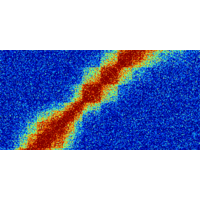
X-Ray Photon Correlation Spectroscopy Reveals Intermittent Aging Dynamics in a Metallic Glass

Zach Evenson, Beatrice Ruta, Simon Hechler, Moritz Stolpe, Eloi Pineda, Isabella Gallino, and Ralf Busch

Phys. Rev. Lett. 115, 175701 (2015) - Published 21 October, 2015

Aging in metallic glasses occurs via intermittent rearrangements of the atoms and is not a steady, continuous process as previously thought.

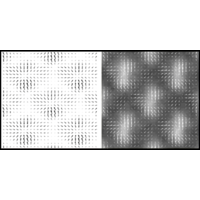
Electron Microscopy of Probability Currents at Atomic Resolution

A. Lubk, A. Béché, and J. Verbeeck

Phys. Rev. Lett. 115, 176101 (2015) - Published 20 October, 2015

A commercial electron microscope is reconfigured to image crystalline strain and variations in electric and magnetic fields within a material.

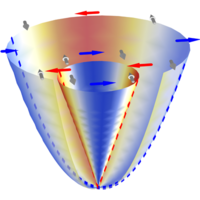
Nonanalyticity, Valley Quantum Phases, and Lightlike Exciton Dispersion in Monolayer Transition Metal Dichalcogenides: Theory and First-Principles Calculations

Diana Y. Qiu, Ting Cao, and Steven G. Louie

Phys. Rev. Lett. 115, 176801 (2015) - Published 20 October, 2015

An ab-initio calculation shows that excitons in a monolayer of the transition metal dichalcogenide MoS2 exhibit an unusual low-energy dispersion pattern.

Sign In to Your Journals Account

Filter

Section

Filter

Article Lookup

Enter a citation