Highlights

Local Melting Attracts Grain Boundaries in Colloidal Polycrystals

Caitlin E. Cash, Jeremy Wang, Maya M. Martirossyan, B. Kemper Ludlow, Alejandro E. Baptista, Nina M. Brown, Eli J. Weissler, Jatin Abacousnac, and Sharon J. Gerbode

Phys. Rev. Lett. 120, 018002 (2018) - Published 5 January, 2018

A new technique allows researchers complete control over the shapes of individual subcrystals within a larger crystal, which could lead to new ways to modify material properties.

Cyclotron Orbits of Composite Fermions in the Fractional Quantum Hall Regime

Insun Jo, Hao Deng, Yang Liu, L. N. Pfeiffer, K. W. West, K. W. Baldwin, and M. Shayegan

Phys. Rev. Lett. 120, 016802 (2018) - Published 4 January, 2018

Cyclotron orbits have been observed in a bilayer semiconductor with coexisting Wigner crystal and composite fermion phases. The result reveals that composite fermions retain their cyclotron orbits even in the strong quantum Hall regime.

Electrical Control of Structural and Physical Properties via Strong Spin-Orbit Interactions in Sr2IrO4

G. Cao, J. Terzic, H. D. Zhao, H. Zheng, L. E. De Long, and Peter S. Riseborough

Phys. Rev. Lett. 120, 017201 (2018) - Published 4 January, 2018

Strong spin-orbit coupling in an iridate compound causes anisotropic lattice expansion when a small current is applied.

Generation of High-Power High-Intensity Short X-Ray Free-Electron-Laser Pulses

Marc W. Guetg, Alberto A. Lutman, Yuantao Ding, Timothy J. Maxwell, Franz-Josef Decker, Uwe Bergmann, and Zhirong Huang

Phys. Rev. Lett. 120, 014801 (2018) - Published 3 January, 2018

The power of a free-electron-laser is increased by more than 300%, a key step towards imaging single particles, which requires short, intense photon pulses.

Observation of the Quantum Hall Effect in Confined Films of the Three-Dimensional Dirac Semimetal Cd3As2

Timo Schumann, Luca Galletti, David A. Kealhofer, Honggyu Kim, Manik Goyal, and Susanne Stemmer

Phys. Rev. Lett. 120, 016801 (2018) - Published 3 January, 2018

Realizing the quantum Hall effect in topological materials is notoriously difficult due to remanent bulk conduction in the material. This feat has now been achieved in a Dirac semimetal by growing a sufficiently thin film of the material, thus eliminating bulk conduction.

Charged Polaron Polaritons in an Organic Semiconductor Microcavity

Chiao-Yu Cheng, Rijul Dhanker, Christopher L. Gray, Sukrit Mukhopadhyay, Eric R. Kennehan, John B. Asbury, Anatoliy Sokolov, and Noel C. Giebink

Phys. Rev. Lett. 120, 017402 (2018) - Published 3 January, 2018

Strong coupling between light and polaron optical excitations is demonstrated in a doped organic semiconductor microcavity at room temperature.

Shrinking of Rapidly Evaporating Water Microdroplets Reveals their Extreme Supercooling

Claudia Goy, Marco A. C. Potenza, Sebastian Dedera, Marilena Tomut, Emmanuel Guillerm, Anton Kalinin, Kay-Obbe Voss, Alexander Schottelius, Nikolaos Petridis, Alexey Prosvetov, Guzmán Tejeda, José M. Fernández, Christina Trautmann, Frédéric Caupin, Ulrich Glasmacher, and Robert E. Grisenti

Phys. Rev. Lett. 120, 015501 (2018) - Published 2 January, 2018

A new technique has measured the lowest temperature ever recorded for liquid water.

Astrometric Search Method for Individually Resolvable Gravitational Wave Sources with Gaia

Christopher J. Moore, Deyan P. Mihaylov, Anthony Lasenby, and Gerard Gilmore

Phys. Rev. Lett. 119, 261102 (2017) - Published 29 December, 2017

A passing gravitational wave produces shifts in the apparent positions of the stars, and these motions should be detectable with the Gaia space telescope.

Three-Dimensional Tracking of Interfacial Hopping Diffusion

Dapeng Wang, Haichao Wu, and Daniel K. Schwartz

Phys. Rev. Lett. 119, 268001 (2017) - Published 29 December, 2017

The 3D motion of molecules at a solid-liquid interface is directly imaged for the first time.

Sorting Photons by Radial Quantum Number

Yiyu Zhou, Mohammad Mirhosseini, Dongzhi Fu, Jiapeng Zhao, Seyed Mohammad Hashemi Rafsanjani, Alan E. Willner, and Robert W. Boyd

Phys. Rev. Lett. 119, 263602 (2017) - Published 28 December, 2017

A new method groups photons based on the radial component of their angular momentum.

Atom Interferometry with the Sr Optical Clock Transition

Liang Hu, Nicola Poli, Leonardo Salvi, and Guglielmo M. Tino

Phys. Rev. Lett. 119, 263601 (2017) - Published 27 December, 2017

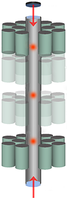
A single-photon interaction atom interferometer is demonstrated using the ultra-narrow optical clock transition of strontium atoms.

Group Velocity Engineering of Confined Ultrafast Magnons

Y.-J. Chen, Kh. Zakeri, A. Ernst, H. J. Qin, Y. Meng, and J. Kirschner

Phys. Rev. Lett. 119, 267201 (2017) - Published 27 December, 2017

Researchers observe the coexistence of counter-propagating, quantum-confined magnon modes localized at different atomic layers of an ultrathin cobalt film.

Breakdown of the Chiral Anomaly in Weyl Semimetals in a Strong Magnetic Field

Pilkwang Kim, Ji Hoon Ryoo, and Cheol-Hwan Park

Phys. Rev. Lett. 119, 266401 (2017) - Published 26 December, 2017

A gap is predicted to open in the band structure of a Weyl semimetal when under a high magnetic field, challenging the chiral anomaly picture for these topological materials.

Twisted-Light–Ion Interaction: The Role of Longitudinal Fields

G. F. Quinteiro, Ferdinand Schmidt-Kaler, and Christian T. Schmiegelow

Phys. Rev. Lett. 119, 253203 (2017) - Published 20 December, 2017

The paraxial approximation of light propagation breaks down for strongly inhomogeneous or oddly-shaped light fields, making it hard to fit data with theory. But, including longitudinal components in the theory allows these light beams to be described accurately.

Fracton Topological Phases from Strongly Coupled Spin Chains

Gábor B. Halász, Timothy H. Hsieh, and Leon Balents

Phys. Rev. Lett. 119, 257202 (2017) - Published 20 December, 2017

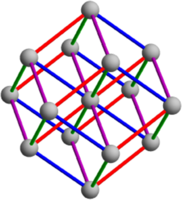
A realistic model of fracton topological phases using only two spins brings their experimental realization a step closer.

Canceling the Gravity Gradient Phase Shift in Atom Interferometry

G. D’Amico, G. Rosi, S. Zhan, L. Cacciapuoti, M. Fattori, and G. M. Tino

Phys. Rev. Lett. 119, 253201 (2017) - Published 19 December, 2017

A method is demonstrated that compensates for gravity gradients in Raman-pulse atom interferometers.

Geometric Phase and Orbital Moment in Quantization Rules for Magnetic Breakdown

A. Alexandradinata and Leonid Glazman

Phys. Rev. Lett. 119, 256601 (2017) - Published 19 December, 2017

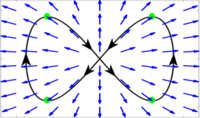
A generalization of the Bohr-Sommerfeld quantization rule unifies geometric phase, orbital magnetic moment, and tunneling between Fermi surfaces in topological metals near the metal-insulator transition.

Strong Constraints on Cosmological Gravity from GW170817 and GRB 170817A

T. Baker, E. Bellini, P. G. Ferreira, M. Lagos, J. Noller, and I. Sawicki

Phys. Rev. Lett. 119, 251301 (2017) - Published 18 December, 2017

Theorists have tightly constrained alternative theories of gravity using the recent joint detection of gravitational waves and light from a neutron star merger.

Dark Energy after GW170817 and GRB170817A

Paolo Creminelli and Filippo Vernizzi

Phys. Rev. Lett. 119, 251302 (2017) - Published 18 December, 2017

Theorists have tightly constrained alternative theories of gravity using the recent joint detection of gravitational waves and light from a neutron star merger.

Implications of the Neutron Star Merger GW170817 for Cosmological Scalar-Tensor Theories

Jeremy Sakstein and Bhuvnesh Jain

Phys. Rev. Lett. 119, 251303 (2017) - Published 18 December, 2017

Theorists have tightly constrained alternative theories of gravity using the recent joint detection of gravitational waves and light from a neutron star merger.

Sign In to Your Journals Account

Filter

Section

Filter

Article Lookup

Enter a citation