Highlights

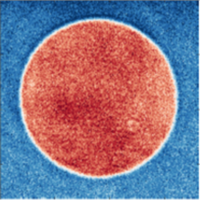
Two-Dimensional Homogeneous Fermi Gases

Klaus Hueck, Niclas Luick, Lennart Sobirey, Jonas Siegl, Thomas Lompe, and Henning Moritz

Phys. Rev. Lett. 120, 060402 (2018) - Published 7 February, 2018

A homogeneous ultracold 2D Fermi gas is trapped in a box potential, which has advantages over harmonically trapped ones for probing strongly interacting systems.

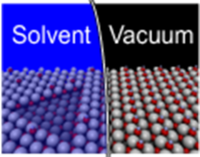
Selective Solvent-Induced Stabilization of Polar Oxide Surfaces in an Electrochemical Environment

Su-Hyun Yoo, Mira Todorova, and Jörg Neugebauer

Phys. Rev. Lett. 120, 066101 (2018) - Published 7 February, 2018

Density functional theory explains why certain oxide surface structures form at a solid-liquid interface, but not under vacuum.

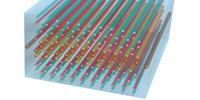
Observation of Photonic Topological Valley Hall Edge States

Jiho Noh, Sheng Huang, Kevin P. Chen, and Mikael C. Rechtsman

Phys. Rev. Lett. 120, 063902 (2018) - Published 6 February, 2018

An optical version of a topological insulator exhibits edge states that could be used to reduce scattering losses in optical waveguides.

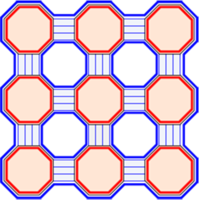
Machine Learning Topological Invariants with Neural Networks

Pengfei Zhang, Huitao Shen, and Hui Zhai

Phys. Rev. Lett. 120, 066401 (2018) - Published 6 February, 2018

Machine learning trains neural networks to distinguish between different phases in topological band insulators.

Beyond the Required LISA Free-Fall Performance: New LISA Pathfinder Results down to 20  μHz

M. Armano et al.

Phys. Rev. Lett. 120, 061101 (2018) - Published 5 February, 2018

The final results from LISA Pathfinder show that the satellite’s technology meets the requirements for space-based gravitational-wave detection.

Fibonacci Topological Superconductor

Yichen Hu and C. L. Kane

Phys. Rev. Lett. 120, 066801 (2018) - Published 5 February, 2018

A Fibonacci topological superconductor could be realized in a system of interacting Majorana fermions.

Mapping Thermal Expansion Coefficients in Freestanding 2D Materials at the Nanometer Scale

Xuan Hu, Poya Yasaei, Jacob Jokisaari, Serdar Öğüt, Amin Salehi-Khojin, and Robert F. Klie

Phys. Rev. Lett. 120, 055902 (2018) - Published 2 February, 2018

Electron microscopy can produce nanometer-scale maps of the thermal expansion of 2D materials, which may be important for the development of nanoelectronic devices.

Collapsed Dark Matter Structures

Matthew R. Buckley and Anthony DiFranzo

Phys. Rev. Lett. 120, 051102 (2018) - Published 1 February, 2018

A new model introduces a charge for dark matter, which would allow it to radiate energy and form compact objects such as dark stars or dark galaxies.

Magnetooptics of Exciton Rydberg States in a Monolayer Semiconductor

A. V. Stier, N. P. Wilson, K. A. Velizhanin, J. Kono, X. Xu, and S. A. Crooker

Phys. Rev. Lett. 120, 057405 (2018) - Published 1 February, 2018

Magnetic-field-dependent magnetoabsorption measurements of Rydberg excitons in a monolayer dichalcogenide semiconductor allow benchmarking of theories of the nonhydrogenic Coulomb potential believed to describe atomically thin materials.

Stochastic Model of Vesicular Sorting in Cellular Organelles

Quentin Vagne and Pierre Sens

Phys. Rev. Lett. 120, 058102 (2018) - Published 1 February, 2018

The sorting of membrane components via vesicles into well-defined compartments—a key process within cells—is predicted to depend both on vesicle budding and fusing times.

Electron and Nucleon Localization Functions of Oganesson: Approaching the Thomas-Fermi Limit

Paul Jerabek, Bastian Schuetrumpf, Peter Schwerdtfeger, and Witold Nazarewicz

Phys. Rev. Lett. 120, 053001 (2018) - Published 31 January, 2018

Calculations of the structure in oganesson—the element with the highest atomic number—reveal a uniform, gas-like distribution of its electrons and nucleons.

Vibrational Energy Redistribution in a Gas-Surface Encounter: State-to-State Scattering of CH4 from Ni(111)

Jörn Werdecker, Maarten E. van Reijzen, Bo-Jung Chen, and Rainer D. Beck

Phys. Rev. Lett. 120, 053402 (2018) - Published 31 January, 2018

A highly efficient mechanism for vibrational energy redistribution during surface scattering of methane molecules is observed using a new laser tagging technique.

Realization of the Axion Insulator State in Quantum Anomalous Hall Sandwich Heterostructures

Di Xiao, Jue Jiang, Jae-Ho Shin, Wenbo Wang, Fei Wang, Yi-Fan Zhao, Chaoxing Liu, Weida Wu, Moses H. W. Chan, Nitin Samarth, and Cui-Zu Chang

Phys. Rev. Lett. 120, 056801 (2018) - Published 31 January, 2018

The topological magnetoelectric effect is observed in a heterostructure of magnetic and nonmagnetic topological insulators.

Direct Characterization of Ultrafast Energy-Time Entangled Photon Pairs

Jean-Philippe W. MacLean, John M. Donohue, and Kevin J. Resch

Phys. Rev. Lett. 120, 053601 (2018) - Published 30 January, 2018

A new detection system directly observes a type of entanglement in which a photon’s energy is correlated with the time its partner is detected.

Polaron Polaritons in the Integer and Fractional Quantum Hall Regimes

Sylvain Ravets, Patrick Knüppel, Stefan Faelt, Ovidiu Cotlet, Martin Kroner, Werner Wegscheider, and Atac Imamoglu

Phys. Rev. Lett. 120, 057401 (2018) - Published 30 January, 2018

Quantum Hall polaritons in the strong coupling regime are studied experimentally in GaAs. These polaritons are expected to be useful in implementing a photonic quantum simulator.

Spacecraft Observations of Oblique Electron Beams Breaking the Frozen-In Law During Asymmetric Reconnection

J. Egedal, A. Le, W. Daughton, B. Wetherton, P. A. Cassak, J. L. Burch, B. Lavraud, J. Dorelli, D. J. Gershman, and L. A. Avanov

Phys. Rev. Lett. 120, 055101 (2018) - Published 29 January, 2018

Insights into the electron dynamics close to the reconnection point in collisionless plasmas are obtained by comparing MMS spacecraft data with numerical simulations of the Earth’s magnetopause.

Soft yet Sharp Interfaces in a Vertex Model of Confluent Tissue

Daniel M. Sussman, J. M. Schwarz, M. Cristina Marchetti, and M. Lisa Manning

Phys. Rev. Lett. 120, 058001 (2018) - Published 29 January, 2018

A model for cellular populations incorporates neighbor-specific interactions to explain sharp boundaries observed around tissues.

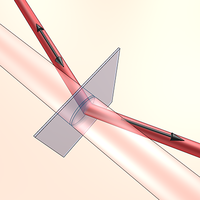
Optical Time Reversal from Time-Dependent Epsilon-Near-Zero Media

Stefano Vezzoli, Vincenzo Bruno, Clayton DeVault, Thomas Roger, Vladimir M. Shalaev, Alexandra Boltasseva, Marcello Ferrera, Matteo Clerici, Audrius Dubietis, and Daniele Faccio

Phys. Rev. Lett. 120, 043902 (2018) - Published 26 January, 2018

Oscillating polarization is induced by femtosecond laser-pulse driving of aluminum-doped zinc-oxide thin films, creating a medium with features that oscillate in time.

Metasurface for Water-to-Air Sound Transmission

Eun Bok, Jong Jin Park, Haejin Choi, Chung Kyu Han, Oliver B. Wright, and Sam H. Lee

Phys. Rev. Lett. 120, 044302 (2018) - Published 26 January, 2018

A structured membrane enhances sound transmission across a water-air boundary, allowing underwater sounds to be heard in the air above.

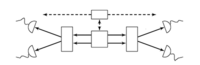
Violation of Bell’s Inequality Using Continuous Variable Measurements

Oliver Thearle, Jiri Janousek, Seiji Armstrong, Sara Hosseini, Melanie Schünemann (Mraz), Syed Assad, Thomas Symul, Matthew R. James, Elanor Huntington, Timothy C. Ralph, and Ping Koy Lam

Phys. Rev. Lett. 120, 040406 (2018) - Published 25 January, 2018
Bell inequalities are shown experimentally to be violated in a continuous variable system, potentially providing an alternate avenue for device-independent tests of quantum protocols.

Sign In to Your Journals Account

Filter

Section

Filter

Article Lookup

Enter a citation