Highlights

Measuring the Hubble Constant with Neutron Star Black Hole Mergers

Salvatore Vitale and Hsin-Yu Chen

Phys. Rev. Lett. 121, 021303 (2018) - Published 12 July, 2018

Among gravitational-wave sources, the merger of a neutron star and a black hole may provide the most precise way to measure how fast the Universe is expanding.

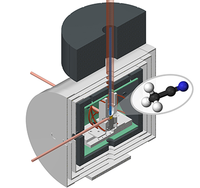
Constraining Dark Matter Models with a Light Mediator at the PandaX-II Experiment

Xiangxiang Ren et al. (PandaX-II Collaboration)

Phys. Rev. Lett. 121, 021304 (2018) - Published 12 July, 2018

A search for signals of nuclear recoils from dark matter, mediated by a light particle, places the first direct-detection constraints on self-interacting dark matter.

Hadronic Vacuum Polarization Contribution to the Anomalous Magnetic Moments of Leptons from First Principles

Sz. Borsanyi, Z. Fodor, C. Hoelbling, T. Kawanai, S. Krieg, L. Lellouch, R. Malak, K. Miura, K. K. Szabo, C. Torrero, and B. C. Toth (Budapest-Marseille-Wuppertal Collaboration)

Phys. Rev. Lett. 121, 022002 (2018) - Published 12 July, 2018

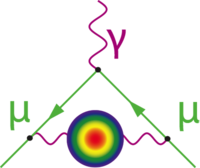
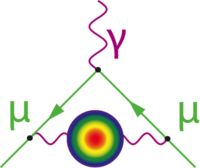
Lattice gauge theory simulations suggest that the disagreement between theoretical and experimental values for the anomalous magnetic moment of the muon might be less than previously thought.

Calculation of the Hadronic Vacuum Polarization Contribution to the Muon Anomalous Magnetic Moment

T. Blum, P. A. Boyle, V. Gülpers, T. Izubuchi, L. Jin, C. Jung, A. Jüttner, C. Lehner, A. Portelli, and J. T. Tsang (RBC and UKQCD Collaborations)

Phys. Rev. Lett. 121, 022003 (2018) - Published 12 July, 2018

Lattice gauge theory simulations suggest that the disagreement between theoretical and experimental values for the anomalous magnetic moment of the muon might be less than previously thought.

Observation of a00(980)−f0(980) Mixing

M. Ablikim et al. (BESIII Collaboration)

Phys. Rev. Lett. 121, 022001 (2018) - Published 11 July, 2018

Observed mixing between two light scalar mesons may help constrain their internal structure.

Discovery of Ca60 and Implications For the Stability of Ca70

O. B. Tarasov et al.

Phys. Rev. Lett. 121, 022501 (2018) - Published 11 July, 2018

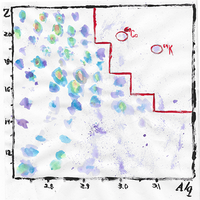
Eight newly discovered neutron-rich nuclei act as key discriminators between different mass models.

Nuclear-Spin Comagnetometer Based on a Liquid of Identical Molecules

Teng Wu, John W. Blanchard, Derek F. Jackson Kimball, Min Jiang, and Dmitry Budker

Phys. Rev. Lett. 121, 023202 (2018) - Published 11 July, 2018

A new nuclear-spin comagnetometer made from two ensembles of atomic spins can improve constraints on spin-gravity coupling of nucleons by several orders of magnitude.

Discovery of a Voltage-Stimulated Heartbeat Effect in Droplets of Liquid Gallium

Zhenwei Yu, Yuchen Chen, Frank F. Yun, David Cortie, Lei Jiang, and Xiaolin Wang

Phys. Rev. Lett. 121, 024302 (2018) - Published 11 July, 2018

Applying a current across a drop of liquid gallium induces an oscillatory motion reminiscent to that of a beating heart.

Biorthogonal Bulk-Boundary Correspondence in Non-Hermitian Systems

Flore K. Kunst, Elisabet Edvardsson, Jan Carl Budich, and Emil J. Bergholtz

Phys. Rev. Lett. 121, 026808 (2018) - Published 11 July, 2018

Bulk/boundary correspondence is shown to exist in non-Hermitian models through the use of biorthogonal quantum mechanics.

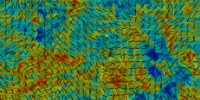
Dust-Polarization Maps for Local Interstellar Turbulence

Alexei G. Kritsuk, Raphael Flauger, and Sergey D. Ustyugov

Phys. Rev. Lett. 121, 021104 (2018) - Published 10 July, 2018

Simulations provide a detailed picture of the emission of dust grains in our Galaxy, which is known to interfere with measurements of the cosmic microwave background.

Theory of Disorder-Induced Half-Integer Thermal Hall Conductance

David F. Mross, Yuval Oreg, Ady Stern, Gilad Margalit, and Moty Heiblum

Phys. Rev. Lett. 121, 026801 (2018) - Published 9 July, 2018

Heat transport studies of fractional quantum Hall systems provide evidence for a new phase of matter with potential applications in fault-tolerant quantum computation.

Strain-Induced Asymmetric Line Segregation at Faceted Si Grain Boundaries

Christian H. Liebscher, Andreas Stoffers, Masud Alam, Liverios Lymperakis, Oana Cojocaru-Mirédin, Baptiste Gault, Jörg Neugebauer, Gerhard Dehm, Christina Scheu, and Dierk Raabe

Phys. Rev. Lett. 121, 015702 (2018) - Published 6 July, 2018

Simulations and high-resolution imaging show that segregation of solutes in silicon occurs at facet junctions and not at grain boundary planes, contrary to the common view of impurity behavior.

Measuring the Local Velocity along Transition Paths during the Folding of Single Biological Molecules

Krishna Neupane, Noel Q. Hoffer, and M. T. Woodside

Phys. Rev. Lett. 121, 018102 (2018) - Published 6 July, 2018

Measurements of the transition path velocity of a folding DNA hairpin using optical tweezers indicate that barrier re-crossing reduces overall transition rates by several orders of magnitude.

Collective Spin Modes of a Trapped Quantum Ferrofluid

S. Lepoutre, L. Gabardos, K. Kechadi, P. Pedri, O. Gorceix, E. Maréchal, L. Vernac, and B. Laburthe-Tolra

Phys. Rev. Lett. 121, 013201 (2018) - Published 5 July, 2018

Researchers have spotted a never-before-seen collective spin oscillation in a Bose-Einstein condensate of chromium atoms.

Dissociation Energy of the Hydrogen Molecule at 10−9 Accuracy

C.-F. Cheng, J. Hussels, M. Niu, H. L. Bethlem, K. S. E. Eikema, E. J. Salumbides, W. Ubachs, M. Beyer, N. Hölsch, J. A. Agner, F. Merkt, L.-G. Tao, S.-M. Hu, and Ch. Jungen

Phys. Rev. Lett. 121, 013001 (2018) - Published 3 July, 2018

A precision measurement of the energy needed to break molecular hydrogen apart disagrees with recent calculations.

Constraining Baryon–Dark-Matter Scattering with the Cosmic Dawn 21-cm Signal

Anastasia Fialkov, Rennan Barkana, and Aviad Cohen

Phys. Rev. Lett. 121, 011101 (2018) - Published 2 July, 2018

Recent observations of hydrogen absorption that occurred when the first stars turned on may give insights into the nature of dark matter, new analyses show.

Severely Constraining Dark-Matter Interpretations of the 21-cm Anomaly

Asher Berlin, Dan Hooper, Gordan Krnjaic, and Samuel D. McDermott

Phys. Rev. Lett. 121, 011102 (2018) - Published 2 July, 2018

Recent observations of hydrogen absorption that occurred when the first stars turned on may give insights into the nature of dark matter, new analyses show.

Bounds on Dark-Matter Annihilations from 21-cm Data

Guido D’Amico, Paolo Panci, and Alessandro Strumia

Phys. Rev. Lett. 121, 011103 (2018) - Published 2 July, 2018

Recent observations of hydrogen absorption that occurred when the first stars turned on may give insights into the nature of dark matter, new analyses show.

Negative Hydration Expansion in ZrW2O8: Microscopic Mechanism, Spaghetti Dynamics, and Negative Thermal Expansion

Mia Baise, Phillip M. Maffettone, Fabien Trousselet, Nicholas P. Funnell, François-Xavier Coudert, and Andrew L. Goodwin

Phys. Rev. Lett. 120, 265501 (2018) - Published 29 June, 2018

The mechanisms by which a material contracts on heating and on absorbing water turn out to be intimately connected.

18-Qubit Entanglement with Six Photons’ Three Degrees of Freedom

Xi-Lin Wang, Yi-Han Luo, He-Liang Huang, Ming-Cheng Chen, Zu-En Su, Chang Liu, Chao Chen, Wei Li, Yu-Qiang Fang, Xiao Jiang, Jun Zhang, Li Li, Nai-Le Liu, Chao-Yang Lu, and Jian-Wei Pan

Phys. Rev. Lett. 120, 260502 (2018) - Published 28 June, 2018

An 18-qubit Greenberger-Horne-Zeilinger entangled state is created by using three degrees of freedom—path, polarization, and orbital angular momentum—of six photons.

Sign In to Your Journals Account

Filter

Section

Filter

Article Lookup

Enter a citation