Highlights

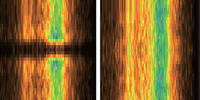
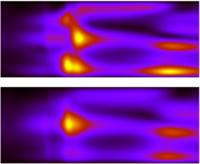
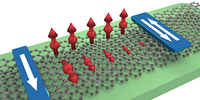
Strong and Tunable Spin-Lifetime Anisotropy in Dual-Gated Bilayer Graphene

Jinsong Xu, Tiancong Zhu, Yunqiu Kelly Luo, Yuan-Ming Lu, and Roland K. Kawakami

Phys. Rev. Lett. 121, 127703 (2018) - Published 20 September, 2018

Two groups have shown they can create long-lived, polarized spin currents in bilayer graphene.

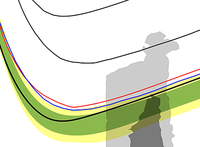
Fragile Topology and Wannier Obstructions

Hoi Chun Po, Haruki Watanabe, and Ashvin Vishwanath

Phys. Rev. Lett. 121, 126402 (2018) - Published 18 September, 2018

Distinguishing between fragile and stable scenarios is central to a proper diagnosis of topological band insulators.

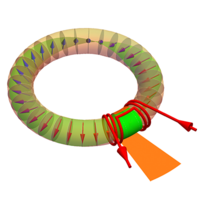
Energy Storage via Topological Spin Textures

Yaroslav Tserkovnyak and Jiang Xiao

Phys. Rev. Lett. 121, 127701 (2018) - Published 18 September, 2018

Topological spin textures are proposed as an energy-storage concept, utilizing the free energy associated with metastable magnetic configurations.

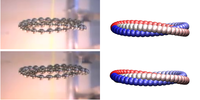
Periodic Motion of Sedimenting Flexible Knots

Magdalena Gruziel, Krishnan Thyagarajan, Giovanni Dietler, Andrzej Stasiak, Maria L. Ekiel-Jeżewska, and Piotr Szymczak

Phys. Rev. Lett. 121, 127801 (2018) - Published 18 September, 2018

A knotted loop of metal beads—mimicking a knotted molecule—organizes into a flat horizontal ring when drifting down through a viscous fluid.

Observation of Higgs Boson Decay to Bottom Quarks

A. M. Sirunyan et al. (CMS Collaboration)

Phys. Rev. Lett. 121, 121801 (2018) - Published 17 September, 2018

Two CERN experiments have observed the most probable decay channel of the Higgs boson—a milestone in the pursuit to confirm whether this remarkable particle behaves as physicists expect.

Quantum Spin Hall Effect and Spin Bott Index in a Quasicrystal Lattice

Huaqing Huang and Feng Liu

Phys. Rev. Lett. 121, 126401 (2018) - Published 17 September, 2018

A proposed realization of the quantum spin Hall state in quasicrystals would extend electronic topology beyond crystals to aperiodic and amorphous systems.

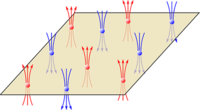
Fractional Excitonic Insulator

Yichen Hu, Jörn W. F. Venderbos, and C. L. Kane

Phys. Rev. Lett. 121, 126601 (2018) - Published 17 September, 2018

A correlated fluid of electrons and holes can exhibit the fractional quantum Hall effect at zero magnetic field.

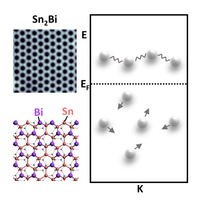
Binary Two-Dimensional Honeycomb Lattice with Strong Spin-Orbit Coupling and Electron-Hole Asymmetry

Jian Gou, Bingyu Xia, Hang Li, Xuguang Wang, Longjuan Kong, Peng Cheng, Hui Li, Weifeng Zhang, Tian Qian, Hong Ding, Yong Xu, Wenhui Duan, Kehui Wu, and Lan Chen

Phys. Rev. Lett. 121, 126801 (2018) - Published 17 September, 2018

A honeycomb structure of Bi and Sn atoms on a Si substrate has a pronounced electron-hole asymmetry, providing a platform to explore applications in nanodevices.

Unveiling the Superconducting Mechanism of Ba0.51K0.49BiO3

C. H. P. Wen, H. C. Xu, Q. Yao, R. Peng, X. H. Niu, Q. Y. Chen, Z. T. Liu, D. W. Shen, Q. Song, X. Lou, Y. F. Fang, X. S. Liu, Y. H. Song, Y. J. Jiao, T. F. Duan, H. H. Wen, P. Dudin, G. Kotliar, Z. P. Yin, and D. L. Feng

Phys. Rev. Lett. 121, 117002 (2018) - Published 13 September, 2018

Photoemission experiments challenge the long-held belief that the high-temperature superconductivity of certain bismuth oxides is of the unconventional type.

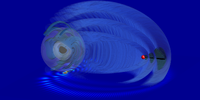
Dark Matter Search Results from a One Ton-Year Exposure of XENON1T

E. Aprile et al. (XENON Collaboration)

Phys. Rev. Lett. 121, 111302 (2018) - Published 12 September, 2018

World-leading bounds are placed on the spin-independent elastic scatter cross-section for weakly interacting particle masses above 6 GeV.

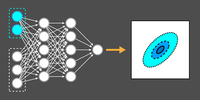
Constraining Effective Field Theories with Machine Learning

Johann Brehmer, Kyle Cranmer, Gilles Louppe, and Juan Pavez

Phys. Rev. Lett. 121, 111801 (2018) - Published 12 September, 2018

A proposed machine-learning approach could speed up the analysis that underlies searches for new particles in high-energy collisions.

Theoretical Prediction of the Creation and Observation of a Ghost Trilobite Chemical Bond

Matthew T. Eiles, Zhengjia Tong, and Chris H. Greene

Phys. Rev. Lett. 121, 113203 (2018) - Published 12 September, 2018

A series of electric and magnetic pulses applied to an atom could cause one of its electrons to behave as if “bonded” to an empty point in space.

Unraveling the Stereodynamics of Cold Controlled HD−H2 Collisions

James F. E. Croft, Naduvalath Balakrishnan, Meng Huang, and Hua Guo

Phys. Rev. Lett. 121, 113401 (2018) - Published 11 September, 2018

First principles simulations of the HD-H2 collisions show that a single scattering resonance controls the stereochemistry of bimolecular collisions near 1 K.

Electron Ghost Imaging

S. Li, F. Cropp, K. Kabra, T. J. Lane, G. Wetzstein, P. Musumeci, and D. Ratner

Phys. Rev. Lett. 121, 114801 (2018) - Published 11 September, 2018

Ghost imaging—a sensitive imaging technique previously demonstrated with visible and x-ray light—has been extended to electrons.

Field Theory for Amorphous Solids

E. DeGiuli

Phys. Rev. Lett. 121, 118001 (2018) - Published 10 September, 2018

Theorists are coming closer to a comprehensive description of the mechanics of solids with an amorphous structure, such as glass, cement, and compacted sand.

Conclusive Experimental Demonstration of One-Way Einstein-Podolsky-Rosen Steering

Nora Tischler, Farzad Ghafari, Travis J. Baker, Sergei Slussarenko, Raj B. Patel, Morgan M. Weston, Sabine Wollmann, Lynden K. Shalm, Varun B. Verma, Sae Woo Nam, H. Chau Nguyen, Howard M. Wiseman, and Geoff J. Pryde

Phys. Rev. Lett. 121, 100401 (2018) - Published 7 September, 2018

A new photon source is used to realize one-way Einstein-Podolsky-Rosen steering free from restrictions on the type of allowed measurements and on assumptions about the quantum state.

Concentrators for Water Waves

Chunyang Li, Lin Xu, Lili Zhu, Siyuan Zou, Qing Huo Liu, Zhenyu Wang, and Huanyang Chen

Phys. Rev. Lett. 121, 104501 (2018) - Published 7 September, 2018

A new structure concentrates water wave motion and could lead to improved techniques for harvesting this renewable energy resource.

Noise-Induced Backscattering in a Quantum Spin Hall Edge

Jukka I. Väyrynen, Dmitry I. Pikulin, and Jason Alicea

Phys. Rev. Lett. 121, 106601 (2018) - Published 6 September, 2018

The observed imperfect conductance quantization in 2D topological insulators may be due to time-dependent electronic noise from charge puddles.

Imaging the Zigzag Wigner Crystal in Confinement-Tunable Quantum Wires

Sheng-Chin Ho, Heng-Jian Chang, Chia-Hua Chang, Shun-Tsung Lo, Graham Creeth, Sanjeev Kumar, Ian Farrer, David Ritchie, Jonathan Griffiths, Geraint Jones, Michael Pepper, and Tse-Ming Chen

Phys. Rev. Lett. 121, 106801 (2018) - Published 6 September, 2018

Using a nanowire with controllable width, researchers have created a type of Wigner crystal in which electrons form an ordered zigzag pattern.

Dirac-Weyl Semimetal: Coexistence of Dirac and Weyl Fermions in Polar Hexagonal ABC Crystals

Heng Gao, Youngkuk Kim, Jörn W. F. Venderbos, C. L. Kane, E. J. Mele, Andrew M. Rappe, and Wei Ren

Phys. Rev. Lett. 121, 106404 (2018) - Published 5 September, 2018
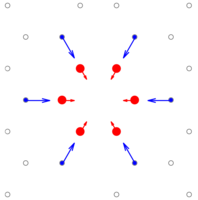
The simultaneous appearance of Dirac and Weyl fermions is predicted to occur in momentum space in a noncentrosymmetric material.

Sign In to Your Journals Account

Filter

Section

Filter

Article Lookup

Enter a citation