Highlights

Birth, Life, and Death of a Dipolar Supersolid

Maximilian Sohmen, Claudia Politi, Lauritz Klaus, Lauriane Chomaz, Manfred J. Mark, Matthew A. Norcia, and Francesca Ferlaino

Phys. Rev. Lett. 126, 233401 (2021) - Published 7 June, 2021

When a cloud of cold atoms goes through a supersolid phase transition its coexisting superfluid and crystalline phases do not emerge simultaneously.

Observation of Negative Terahertz Photoconductivity in Large Area Type-II Dirac Semimetal PtTe2

Peng Suo, Huiyun Zhang, Shengnan Yan, Wenjie Zhang, Jibo Fu, Xian Lin, Song Hao, Zuanming Jin, Yuping Zhang, Chao Zhang, Feng Miao, Shi-Jun Liang, and Guohong Ma

Phys. Rev. Lett. 126, 227402 (2021) - Published 4 June, 2021

Ultrafast pulses of infrared light generate electron-phonon polarons that cause a short dip in the effective temperature of semimetal PtTe2 thin films during the first few picoseconds after photoexcitation.

Invisible Gateway by Superscattering Effect of Metamaterials

Kang-Ping Ye, Wen-Jin Pei, Zhong-Hao Sa, Huanyang Chen, and Rui-Xin Wu

Phys. Rev. Lett. 126, 227403 (2021) - Published 4 June, 2021

An invisible gateway experiment at microwave frequencies is demonstrated, providing a real observation of the superscattering effects of metamaterials in electromagnetic waves.

Flat Bands in Magic-Angle Bilayer Photonic Crystals at Small Twists

Kaichen Dong, Tiancheng Zhang, Jiachen Li, Qingjun Wang, Fuyi Yang, Yoonsoo Rho, Danqing Wang, Costas P. Grigoropoulos, Junqiao Wu, and Jie Yao

Phys. Rev. Lett. 126, 223601 (2021) - Published 2 June, 2021

As an analogy of the magic-angle twisted bilayer graphene, a coupled-mode theory is formulated for low-angle twisted bilayer honeycomb photonic crystals, discovering magic-angle photonic flat bands with a non-Anderson-type localization.

Interfacial Flow around Brownian Colloids

Mehdi Molaei, Nicholas G. Chisholm, Jiayi Deng, John C. Crocker, and Kathleen J. Stebe

Phys. Rev. Lett. 126, 228003 (2021) - Published 2 June, 2021

A new technique for measuring displacements of tiny particles in a fluid reveals a previously unseen hydrodynamic flow pattern that could provide intel on the interface’s mechanical properties.

Measurement-Based Variational Quantum Eigensolver

R. R. Ferguson, L. Dellantonio, A. Al Balushi, K. Jansen, W. Dür, and C. A. Muschik

Phys. Rev. Lett. 126, 220501 (2021) - Published 1 June, 2021

A proposal combines classical optimization using a cost function with measurement-based quantum computation, which would allow one to run efficient VQEs on photonic architectures.

How Activity Landscapes Polarize Microswimmers without Alignment Forces

Nicola Andreas Söker, Sven Auschra, Viktor Holubec, Klaus Kroy, and Frank Cichos

Phys. Rev. Lett. 126, 228001 (2021) - Published 1 June, 2021

A self-propelled particle trapped in a potential well defined by energy availability, has a unique swimming pattern that comes from hidden currents in the fluid in which it swims.

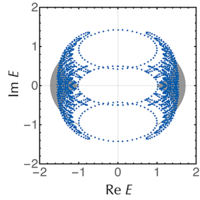
Topological Field Theory of Non-Hermitian Systems

Kohei Kawabata, Ken Shiozaki, and Shinsei Ryu

Phys. Rev. Lett. 126, 216405 (2021) - Published 28 May, 2021

A field theory formulated in just spatial degrees of freedom, as opposed to spacetime ones, provides new insights into non-Hermitian topological phenomena.

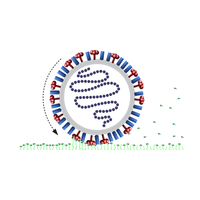
How Influenza’s Spike Motor Works

Falko Ziebert and Igor M. Kulić

Phys. Rev. Lett. 126, 218101 (2021) - Published 28 May, 2021

To infect a cell, the flu virus needs to move, and a new theory suggests how it does that.

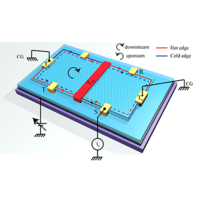
Vanishing Thermal Equilibration for Hole-Conjugate Fractional Quantum Hall States in Graphene

Saurabh Kumar Srivastav, Ravi Kumar, Christian Spånslätt, K. Watanabe, T. Taniguchi, Alexander D. Mirlin, Yuval Gefen, and Anindya Das

Phys. Rev. Lett. 126, 216803 (2021) - Published 27 May, 2021

Quantization differences of electrical and thermal conductance indicate that, independent of the wave function symmetry, charge transport is in equilibrium while heat transport is in nonequilibrium.

Bending Response of a Book with Internal Friction

Samuel Poincloux, Tian Chen, Basile Audoly, and Pedro M. Reis

Phys. Rev. Lett. 126, 218004 (2021) - Published 27 May, 2021

Rich, nontrivial physics underpins the bending response of a book.

Path-Dependent Supercooling of the He3 Superfluid A−B Transition

Dmytro Lotnyk, Anna Eyal, Nikolay Zhelev, Abhilash Sebastian, Yefan Tian, Aldo Chavez, Eric Smith, John Saunders, Erich Mueller, and Jeevak Parpia

Phys. Rev. Lett. 126, 215301 (2021) - Published 25 May, 2021

Transition from the A phase to the B phase of superfluid 3He is experimentally shown to be path-dependent, which is not consistent with any of the existing models of the transition.

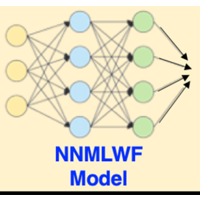
Dielectric Constant of Liquid Water Determined with Neural Network Quantum Molecular Dynamics

Aravind Krishnamoorthy, Ken-ichi Nomura, Nitish Baradwaj, Kohei Shimamura, Pankaj Rajak, Ankit Mishra, Shogo Fukushima, Fuyuki Shimojo, Rajiv Kalia, Aiichiro Nakano, and Priya Vashishta

Phys. Rev. Lett. 126, 216403 (2021) - Published 25 May, 2021

Two neural networks were used to compute the exact dielectric constant of liquid water.

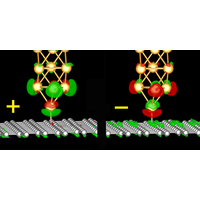
Electric-Field Control of a Single-Atom Polar Bond

M. Omidian, S. Leitherer, N. Néel, M. Brandbyge, and J. Kröger

Phys. Rev. Lett. 126, 216801 (2021) - Published 25 May, 2021

A scheme that uses a voltage to control a chemical bond’s strength allows the tip of an atomic force microscope to pluck a graphene sheet from a substrate.

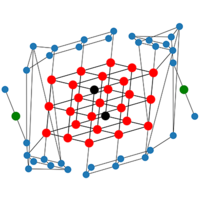
Proposal for Realizing Quantum Scars in the Tilted 1D Fermi-Hubbard Model

Jean-Yves Desaules, Ana Hudomal, Christopher J. Turner, and Zlatko Papić

Phys. Rev. Lett. 126, 210601 (2021) - Published 24 May, 2021

A new mechanism associated with a free spin-1 paramagnet predicts the occurrence of quantum manybody scars in 1D Fermi–Hubbard chains.

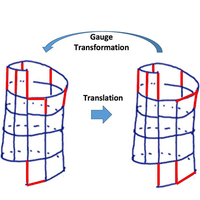
Twisted Boundary Condition and Lieb-Schultz-Mattis Ingappability for Discrete Symmetries

Yuan Yao and Masaki Oshikawa

Phys. Rev. Lett. 126, 217201 (2021) - Published 24 May, 2021

The Lieb-Schultz-Mattis theorem shows that gapless excitations above a ground state or a degeneracy within one is possible in arbitrary dimensions and not just in one dimension.

Slow and Fast Light in Plasma Using Optical Wave Mixing

C. Goyon, M. R. Edwards, T. Chapman, L. Divol, N. Lemos, G. J. Williams, D. A. Mariscal, D. Turnbull, A. M. Hansen, and P. Michel

Phys. Rev. Lett. 126, 205001 (2021) - Published 19 May, 2021

Interactions between two laser beams in a plasma allow for precise control over the light’s velocity.

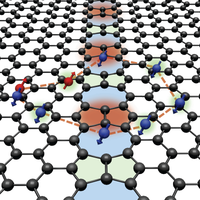
Spontaneous Time-Reversal Symmetry Breaking at Individual Grain Boundaries in Graphene

Kimberly Hsieh, Vidya Kochat, Tathagata Biswas, Chandra Sekhar Tiwary, Abhishek Mishra, Gopalakrishnan Ramalingam, Aditya Jayaraman, Kamanio Chattopadhyay, Srinivasan Raghavan, Manish Jain, and Arindam Ghosh

Phys. Rev. Lett. 126, 206803 (2021) - Published 19 May, 2021

Quantum transport and universal conductance fluctuation measurements show spontaneous breaking of time-reversal symmetry across graphene grain boundaries.

Experimental Evidence of Chiral Symmetry Breaking in Kekulé-Ordered Graphene

Changhua Bao, Hongyun Zhang, Teng Zhang, Xi Wu, Laipeng Luo, Shaohua Zhou, Qian Li, Yanhui Hou, Wei Yao, Liwei Liu, Pu Yu, Jia Li, Wenhui Duan, Hong Yao, Yeliang Wang, and Shuyun Zhou

Phys. Rev. Lett. 126, 206804 (2021) - Published 19 May, 2021

Sensitive photoemission measurements visualize the signatures of a symmetry-broken phase of graphene with carriers of mixed handedness.

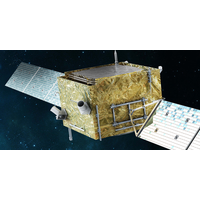
Measurement of the Cosmic Ray Helium Energy Spectrum from 70 GeV to 80 TeV with the DAMPE Space Mission

F. Alemanno et al. (DAMPE Collaboration)

Phys. Rev. Lett. 126, 201102 (2021) - Published 18 May, 2021

The DArk Matter Particle Explorer has made the most precise measurements of galactic cosmic rays to date.

Sign In to Your Journals Account

Filter

Section

Filter

Article Lookup

Enter a citation