Recent Articles

Higher-order topological superconductors in P-, T-odd quadrupolar Dirac materials

Bitan Roy

Phys. Rev. B 101, 220506(R) (2020) - Published 15 June, 2020

Phase diagram of ferroelectrics with tricritical and Lifshitz points at coupling between polar and antipolar fluctuations

V. Liubachko, A. Oleaga, A. Salazar, R. Yevych, A. Kohutych, and Yu. Vysochanskii

Phys. Rev. B 101, 224110 (2020) - Published 15 June, 2020

Beyond universal behavior in the one-dimensional chain with random nearest-neighbor hopping

Akshay Krishna and R. N. Bhatt

Phys. Rev. B 101, 224203 (2020) - Published 15 June, 2020

Magnetic structure and crystalline electric field effects in the triangular antiferromagnet CePtAl4Ge2

S. Shin, V. Pomjakushin, L. Keller, P. F. S. Rosa, U. Stuhr, C. Niedermayer, R. Sibille, S. Toth, J. Kim, H. Jang, S.-K. Son, H.-O. Lee, T. Shang, M. Medarde, E. D. Bauer, M. Kenzelmann, and T. Park

Phys. Rev. B 101, 224421 (2020) - Published 15 June, 2020

Canted Eu magnetic structure in EuMnSb2

Dongliang Gong, Silu Huang, Feng Ye, Xin Gui, Jiandi Zhang, Weiwei Xie, and Rongying Jin

Phys. Rev. B 101, 224422 (2020) - Published 15 June, 2020

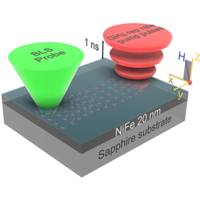
Sustained coherent spin wave emission using frequency combs

S. Muralidhar, A. A. Awad, A. Alemán, R. Khymyn, M. Dvornik, D. Hanstorp, and J. Åkerman

Phys. Rev. B 101, 224423 (2020) - Published 15 June, 2020

While rapid demagnetization of magnetic metals, driven by a laser pulse, can excite spin waves with high efficiency, they dissipate faster than the typical laser pulse repetition rate, precluding any continuous spin-wave generation. Here, the authors combine a gigahertz femtosecond laser comb with a Brillouin light scattering microscope to excite and detect sustained, coherent spin waves. Both localized and propagating spin waves can be excited with tailored wave vectors and a laser power dependent amplitude obeying Bloch’s T32 law.

Slave-boson analysis of the two-dimensional Hubbard model

David Riegler, Michael Klett, Titus Neupert, Ronny Thomale, and Peter Wölfle

Phys. Rev. B 101, 235137 (2020) - Published 15 June, 2020

Interlayer coupling induced quasiparticles

Christopher Lane

Phys. Rev. B 101, 235138 (2020) - Published 15 June, 2020

A principle challenge in the rational design of new emergent physics in complex multilayer systems is describing how the various layers interact with one another. This paper addresses the definition of interlayer coupling and its consequences within an exact many-body treatment. A variety of charge and spin quasiparticles, residing within a layer and traversing between layers, naturally emerge. Additionally, a new class of interfacial plasmons, magnons, and excitons constrained to propagate along the boundary between the various layers is predicted. These new boundary modes are visualized within a simple bilayer system, where key features are directly accessible to light scattering. This approach to layered systems paves the way for rigorous material-specific theoretical studies in this emerging research field.

Long lifetime of the E1u in-plane infrared-active modes of h-BN

Alfredo Segura, Ramon Cuscó, Takashi Taniguchi, Kenji Watanabe, and Luis Artús

Phys. Rev. B 101, 235203 (2020) - Published 15 June, 2020

Semiclassical modeling of coupled quantum-dot–cavity systems: From polaritonlike dynamics to Rabi oscillations

K. Jürgens, F. Lengers, T. Kuhn, and D. E. Reiter

Phys. Rev. B 101, 235311 (2020) - Published 15 June, 2020

Graphene fractals: Energy gap and spin polarization

Thomas Garm Pedersen

Phys. Rev. B 101, 235427 (2020) - Published 15 June, 2020

Numerical study of the rippling instability driven by electron-phonon coupling in graphene

T. Cea, M. Ruiz-García, L. L. Bonilla, and F. Guinea

Phys. Rev. B 101, 235428 (2020) - Published 15 June, 2020

Anomalous photon thermal Hall effect

A. Ott, S.-A. Biehs, and P. Ben-Abdallah

Phys. Rev. B 101, 241411(R) (2020) - Published 15 June, 2020

Spin structure of spin-orbit split surface states in a magnetic material revealed by spin-integrated photoemission

D. Yu. Usachov, M. Güttler, S. Schulz, G. Poelchen, S. Seiro, K. Kliemt, K. Kummer, C. Krellner, C. Laubschat, E. V. Chulkov, and D. V. Vyalikh

Phys. Rev. B 101, 245140 (2020) - Published 15 June, 2020

Joint action of spin-orbit coupling and exchange magnetic interactions leads to a complex spin structure of electronic states, which is challenging to disentangle. Here, the authors show that in the presence of an in-plane magnetization, the effective spin-orbit and exchange fields create an asymmetry of the surface state dispersions that enables determination of the spin structure of these states without the use of a spin-sensitive instrument. The proposed approach can be a versatile tool for studying magnetic materials with strong relativistic effects.

Polariton gap and gap-stripe solitons in Zeeman lattices

Dmitry A. Zezyulin, Yaroslav V. Kartashov, and Ivan A. Shelykh

Phys. Rev. B 101, 245305 (2020) - Published 15 June, 2020

Landau-Zener-Stückelberg interferometry in dissipative circuit quantum electrodynamics

Mariano Bonifacio, Daniel Domínguez, and María José Sánchez

Phys. Rev. B 101, 245415 (2020) - Published 15 June, 2020

Valley degree of freedom in ferromagnetic Janus monolayer H-VSSe and the asymmetry-based tuning of the valleytronic properties

Chaobo Luo, Xiangyang Peng, Jinfeng Qu, and Jianxin Zhong

Phys. Rev. B 101, 245416 (2020) - Published 15 June, 2020

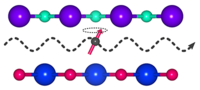
Enhanced longevity of the spin helix in low-symmetry quantum wells

Daisuke Iizasa, Makoto Kohda, Ulrich Zülicke, Junsaku Nitta, and Michael Kammermeier

Phys. Rev. B 101, 245417 (2020) - Published 15 June, 2020

In two-dimensional electron gases, optimally tuned linear Rashba and Dresselhaus spin-orbit couplings enable the emergence of a persistent spin helix. While such a spin texture has an extremely high durability and robustness, its lifetime is still limited due to the unavoidable influence of the cubic Dresselhaus spin-orbit coupling. Here, the authors investigate the possibility to minimize this unwanted effect by altering the quantum-well orientation. It is demonstrated that a low-symmetry growth direction is ideal for enhancing the spin-helix lifetime.

Separation of the valley exciton-polariton in two-dimensional semiconductors with an anisotropic photonic crystal

Ruoming Peng, Changming Wu, Huan Li, Xiaodong Xu, and Mo Li

Phys. Rev. B 101, 245418 (2020) - Published 15 June, 2020

Electron-electron interactions in low-dimensional Si:P delta layers

Joseph A. Hagmann, Xiqiao Wang, Ranjit Kashid, Pradeep Namboodiri, Jonathan Wyrick, Scott W. Schmucker, M. D. Stewart, Jr., Richard M. Silver, and Curt A. Richter

Phys. Rev. B 101, 245419 (2020) - Published 15 June, 2020

Sign In to Your Journals Account

Filter

Recent Issues

Vol. 114, Iss. 30
15 November 2026
Vol. 114, Iss. 29
15 November 2026
Vol. 114, Iss. 28
15 November 2026
Vol. 114, Iss. 27
1 November 2026
Category
Article Type
Section

Filter

Article Lookup

Enter a citation