Browse by Subject

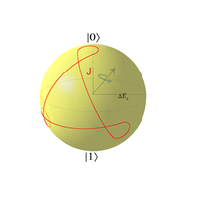
Designing fast quantum gates using optimal control with a reinforcement-learning ansatz

Bijita Sarma and Michael J. Hartmann

Phys. Rev. Applied 23, 014015 (2025) - Published 6 January, 2025

Multipurpose architecture for fast reset and protective readout of superconducting qubits

Jiayu Ding, Yulong Li, He Wang, Guangming Xue, Tang Su, Chenlu Wang, Weijie Sun, Feiyu Li, Yujia Zhang, Yang Gao, Jun Peng, Zhi Hao Jiang, Yang Yu, Haifeng Yu, and Fei Yan

Phys. Rev. Applied 23, 014012 (2025) - Published 6 January, 2025

Direct generation of multiphoton hyperentanglement

Peng Zhao, Jia-Wei Ying, Meng-Ying Yang, Wei Zhong, Ming-Ming Du, Shu-Ting Shen, Yun-Xi Li, An-Lei Zhang, Lan Zhou, and Yu-Bo Sheng

Phys. Rev. Applied 23, 014003 (2025) - Published 2 January, 2025

Unconventional geometric quantum computation robust to residual crosstalk in a superconducting circuit

Ying Hong, Fei-Fan Cui, Li-Na Ji, Zheng-Yuan Xue, and Tao Chen

Phys. Rev. Applied 22, 064095 (2024) - Published 30 December, 2024

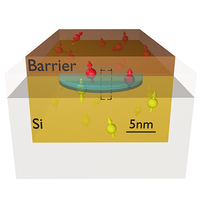
Coherence limit due to hyperfine interaction with nuclei in the barrier material of Si spin qubits

Lukas Cvitkovich, Peter Stano, Christoph Wilhelmer, Dominic Waldhör, Daniel Loss, Yann-Michel Niquet, and Tibor Grasser

Phys. Rev. Applied 22, 064089 (2024) - Published 24 December, 2024

Limited coherence times pose one of the biggest challenges for quantum computing with electron-spin qubits. One promising strategy to enhance the coherence of silicon spin qubits is purification of the semiconducting host material, to remove isotopes with nuclear spins. This study shows that the residual hyperfine interactions with atoms in the barrier material act as an additional source of hyperfine noise, limiting the coherence times even for present-day purification levels of 28Si. Thus we should not focus solely on the silicon to improve silicon qubits.

Field-based formalism for calculating multiqubit exchange-coupling rates for transmon qubits

Ghazi Khan and Thomas E. Roth

Phys. Rev. Applied 22, 064084 (2024) - Published 23 December, 2024

Proximal quantum control of spin and spin ensemble with localized control field from skyrmions

Md Fahim F. Chowdhury, Mohamad Niknam, Md Mahadi Rajib, Louis-S. Bouchard, and Jayasimha Atulasimha

Phys. Rev. Applied 22, 064077 (2024) - Published 19 December, 2024

Digitized counterdiabatic quantum algorithms for logistics scheduling

Archismita Dalal, Iraitz Montalban, Narendra N. Hegade, Alejandro Gomez Cadavid, Enrique Solano, Abhishek Awasthi, Davide Vodola, Caitlin Jones, Horst Weiss, and Gernot Füchsel

Phys. Rev. Applied 22, 064068 (2024) - Published 18 December, 2024

Independent-optical-frequency-comb-powered 546-km field test of twin-field quantum key distribution

Lai Zhou, Jinping Lin, Chengfang Ge, Yuanbin Fan, Zhiliang Yuan, Hao Dong, Yang Liu, Di Ma, Jiu-Peng Chen, Cong Jiang, Xiang-Bin Wang, Li-Xing You, Qiang Zhang, and Jian-Wei Pan

Phys. Rev. Applied 22, 064057 (2024) - Published 16 December, 2024

Twin-field quantum key distribution exploits single-photon interference to provide long-haul secure communication. However, real-time phase tracking between optical signals sent from opposite ends of the communication link is necessary to realize this scheme. Here the authors show that it is feasible to apply independent optical frequency combs in a quantum communication field trial, using a coherent dual-band stabilization technique. A practical finite-size-secure-key rate of 0.53 bit/s is recorded over a 546-km link connecting two major cities in China. This study represents a significant setup toward the integration of long-distance fiber links into quantum networks.

Stabilizing two-photon frequency to reduce the decoherence rate of Rydberg-state electromagnetically induced transparency

Chia-Yu Hsu, Bongjune Kim, Meng-Cheng Xie, Ko-Tang Chen, Yu-Chih Tseng, Ming-Shien Chang, and Ite A. Yu

Phys. Rev. Applied 22, 064056 (2024) - Published 16 December, 2024

Measurement-induced state transitions in dispersive qubit-readout schemes

Konstantin N. Nesterov and Ivan V. Pechenezhskiy

Phys. Rev. Applied 22, 064038 (2024) - Published 10 December, 2024

Four-state reference-frame-independent quantum key distribution over 200 km

Ziran Xie, Zhiyu Tian, Xiaodong Fan, Ye Chen, and Shihai Sun

Phys. Rev. Applied 22, 064037 (2024) - Published 10 December, 2024

Structured position-momentum-entangled two-photon fields

Radhika Prasad, Sanjana Wanare, Suman Karan, Mritunjay K. Joshi, Abhinandan Bhattacharjee, and Anand K. Jha

Phys. Rev. Applied 22, 064034 (2024) - Published 10 December, 2024

Thin-film quartz for high-coherence piezoelectric phononic crystal resonators

A. L. Emser, C. Metzger, B. C. Rose, and K. W. Lehnert

Phys. Rev. Applied 22, 064032 (2024) - Published 10 December, 2024

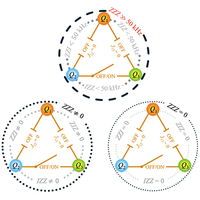
Lattice Hamiltonians and stray interactions within quantum processors

Xuexin Xu, Manabputra, Chloé Vignes, Mohammad H. Ansari, and John M. Martinis

Phys. Rev. Applied 22, 064030 (2024) - Published 10 December, 2024

This study’s modeling of superconducting quantum processors reveals that, contrary to popular belief, three-body ZZZ stray couplings can surpass parasitic ZZ interactions, posing a serious threat to gate fidelity and crosstalk. Even more striking, strongly decoupled qubits—long thought to be ideal—can be more problematic than loosely coupled ones, even when idle. These findings overturn traditional design principles and force us to rethink next-generation architectures for quantum processors.

Dynamically corrected gates in silicon singlet-triplet spin qubits

Habitamu Y. Walelign, Xinxin Cai, Bikun Li, Edwin Barnes, and John M. Nichol

Phys. Rev. Applied 22, 064029 (2024) - Published 10 December, 2024

Quantum computers are sensitive to sources of noise in their surroundings. In this work the authors design, implement, and demonstrate a technique that can overcome noise from the nuclei of the atoms hosting a semiconductor spin qubit. The team uses the geometrical properties of qubits to design noise-canceling control sequences and experimentally demonstrate high-fidelity quantum operations.

Two-tone spectroscopy of high-frequency quantum circuits with a Josephson emitter

A. Peugeot, H. Riechert, S. Annabi, L. Balembois, M. Villiers, E. Flurin, J. Griesmar, E. Arrighi, J.-D. Pillet, and L. Bretheau

Phys. Rev. Applied 22, 064027 (2024) - Published 6 December, 2024

Automated long-range compensation of an rf quantum dot sensor

Joseph Hickie, Barnaby van Straaten, Federico Fedele, Daniel Jirovec, Andrea Ballabio, Daniel Chrastina, Giovanni Isella, Georgios Katsaros, and Natalia Ares

Phys. Rev. Applied 22, 064026 (2024) - Published 6 December, 2024

Parametrically controlled chiral interface for superconducting quantum devices

Xi Cao, Abdullah Irfan, Michael Mollenhauer, Kaushik Singirikonda, and Wolfgang Pfaff

Phys. Rev. Applied 22, 064023 (2024) - Published 5 December, 2024

Reference-frame-independent quantum key distribution over 250 km of optical fiber

Xin Liu, Di Luo, Zhicheng Luo, Shizhuo Li, Zhenrong Zhang, and Kejin Wei

Phys. Rev. Applied 22, 064018 (2024) - Published 4 December, 2024

Sign In to Your Journals Account

Filter

Filter

Article Lookup

Enter a citation