Recent Articles

Effect of Contacts in Organic Bulk Heterojunction Solar Cells

Oskar J. Sandberg, Mathias Nyman, and Ronald Österbacka

Phys. Rev. Applied 1, 024003 (2014) - Published 27 March, 2014

Despite progress that has been made over the past decade, fundamental understanding of carrier injection and extraction mechanisms in organic solar cells is lacking. In this paper, the distinct processes that drive charge transfer in organic bulk heterojunction solar cells are identified, and importantly, a method of distinguishing between them is proposed.

Energy-Tunable Quantum Dot with Minimal Fine Structure Created by Using Simultaneous Electric and Magnetic Fields

M. A. Pooley, A. J. Bennett, R. M. Stevenson, A. J. Shields, I. Farrer, and D. A. Ritchie

Phys. Rev. Applied 1, 024002 (2014) - Published 27 March, 2014

The development of quantum computers relies on storing and transferring entangled states, and quantum dots are a promising platform for both. In this work, it is shown that energy differences between exciton eigenstates below 1 micro-electron-volt can be achieved by simultaneously applying electric and magnetic fields to a semiconductor quantum dot.

Dynamic and Static Manifestation of Molecular Absorption in Thin Films Probed by a Microcantilever

Eric Finot, Arnaud Fabre, Ali Passian, and Thomas Thundat

Phys. Rev. Applied 1, 024001 (2014) - Published 27 March, 2014

Simultaneous measurements of frequency shift and deformation of microcantilevers help in discerning between absorption-induced changes in swelling and elastic moduli of very thin films.

Magnetic Anisotropy Engineering in Thin Film Ni Nanostructures by Magnetoelastic Coupling

S. Finizio, M. Foerster, M. Buzzi, B. Krüger, M. Jourdan, C. A. F. Vaz, J. Hockel, T. Miyawaki, A. Tkach, S. Valencia, F. Kronast, G. P. Carman, F. Nolting, and M. Kläui

Phys. Rev. Applied 1, 021001 (2014) - Published 27 March, 2014

The control of magnetization by low power approaches, instead of power-hungry magnetic fields generated by electric currents, is a key challenge for future spintronics devices. Researchers have now shown that by exploiting magnetoelastic coupling, magnetization can be accurately controlled in nanostructures.

Coherent Control of Plasmon Propagation in a Nanocircuit

Christian Rewitz, Gary Razinskas, Peter Geisler, Enno Krauss, Sebastian Goetz, Monika Pawłowska, Bert Hecht, and Tobias Brixner

Phys. Rev. Applied 1, 014007 (2014) - Published 27 February, 2014

The abilty to control signal propagation in optical-plasmonic nanocircuits may be important for future ultrafast computers. Scientists design and fabricate a directional coupler, an essential element of nano-optical circuits, and demonstrate coherent control of plasmon propagation.

Microwave Manipulation of Electrically Injected Spin-Polarized Electrons in Silicon

C. C. Lo, J. Li, I. Appelbaum, and J. J. L. Morton

Phys. Rev. Applied 1, 014006 (2014) - Published 27 February, 2014

Spintronics carry the potential to dramatically improve processing speeds and densities in future computing devices. This technology relies on manipulating electron spins in semiconductors, and in this paper it is shown that this manipulation can be sensitively performed using microwave excitation. This provides the potential for providing unprecedented clarity of the temporal spin dynamics in these systems.

Optimal Thickness for Charge Transfer in Multilayer Graphene Electrodes

Marcelo A. Kuroda, J. Tersoff, Razvan A. Nistor, and Glenn J. Martyna

Phys. Rev. Applied 1, 014005 (2014) - Published 27 February, 2014

First-principles calculations show that maximum charge transfer can be achieved using single- and bi-layer graphene, emphasizing the potential of graphene as an ultrathin electrode. Both highly oriented and turbostratic graphene show very similar charge transfer despite their different band structures.

Velocity Profile inside Piezoacoustic Inkjet Droplets in Flight: Comparison between Experiment and Numerical Simulation

Arjan van der Bos, Mark-Jan van der Meulen, Theo Driessen, Marc van den Berg, Hans Reinten, Herman Wijshoff, Michel Versluis, and Detlef Lohse

Phys. Rev. Applied 1, 014004 (2014) - Published 27 February, 2014

Inkjet printers fire droplets that travel a thousand times their own radius every second. The dynamics of this process involve a delicate interplay between surface tension and hydrodynamics that have now been experimentally measured in unprecedented detail. Experimental data are compared with analytic predictions to reveal internal velocities within a droplet that likewise vary by many meters per second within a droplet only tens of microns across.

How the Ear Tunes In to Sounds: A Physics Approach

Florian Gomez, Victor Saase, Nikolaus Buchheim, and Ruedi Stoop

Phys. Rev. Applied 1, 014003 (2014) - Published 27 February, 2014

Listening is commonly seen as a passive process, by which the brain decodes signals from the ear. In fact, specialists have known for many years that the identification of pitch relies also on signals sent from the brain back to the cochlea, in the ear. Neurophysicists now show that this complex feedback process can be accurately modeled and compared with biological data.

Three-Dimensional Holographic Refractive-Index Measurement of Continuously Flowing Cells in a Microfluidic Channel

Yongjin Sung, Niyom Lue, Bashar Hamza, Joseph Martel, Daniel Irimia, Ramachandra R. Dasari, Wonshik Choi, Zahid Yaqoob, and Peter So

Phys. Rev. Applied 1, 014002 (2014) - Published 27 February, 2014

A method for holographic three-dimensional imaging of biological samples continuously flowing in a microfluidic channel promises high-throughput single-cell characterization using 3D refractive index maps, without relying on any contrast agents. This method could be useful for discriminating pathological from healthy cells, identifying structural effects of drug treatments, and developing advanced cell sorting techniques.

Extending the Concept of Defect Chemistry from Semiconductor Physics to Electrochemistry

Mira Todorova and Jörg Neugebauer

Phys. Rev. Applied 1, 014001 (2014) - Published 27 February, 2014

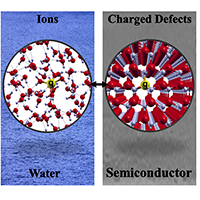
Despite similarities between their fundamental building blocks—charged defects/ions—theoretical and modeling concepts in semiconductor defect chemistry and electrochemistry have little overlap. Theorists present a unified approach based on a fully grand-canonical description of both ions and electrons, connecting the respective concepts and providing surprising new insights into apparently “old” problems.

Editorial: The First Papers

Troy Shinbrot

Phys. Rev. Applied 1, 010002 (2014) - Published 27 February, 2014

The first issue of Physical Review Applied opens with high-quality, intriguing work.

Editorial: Troy Shinbrot Introduces Physical Review Applied

Troy Shinbrot

Phys. Rev. Applied 1, 010001 (2014) - Published 25 February, 2014

The Editors announce the members of the Editorial Board and look forward to providing a publishing home for those who work at the intersection of physics and engineering, as well as in the traditional areas of applied physics.

Sign In to Your Journals Account

Filter

Recent Issues

Vol. 26, Iss. 4
October 2026
Vol. 26, Iss. 3
September 2026
Vol. 26, Iss. 2
August 2026
Vol. 26, Iss. 1
July 2026
Category
Article Type

Filter

Article Lookup

Enter a citation