Recent Articles

Interference Model for an Array of Wave-Energy-Absorbing Flexible Structures

C. Nové-Josserand, R. Godoy-Diana, and B. Thiria

Phys. Rev. Applied 11, 034054 (2019) - Published 21 March, 2019

Water, water, everywhere… Ocean waves are a source of renewable energy at the terawatt level. Optimizing array layouts for wave-energy converters is tricky, though, as the performance of each device is impacted by the presence of its neighbors. The excitation forces acting on each harvester can be increased or decreased via the complicated interference between waves scattered by the array. Based on small-scale experiments, the authors develop a one-dimensional interference model to predict the force amplifications resulting from such multiple-wave interference, and find that regular arrays may not always be optimal.

Twin-Field Quantum Key Distribution without Phase Postselection

Chaohan Cui, Zhen-Qiang Yin, Rong Wang, Wei Chen, Shuang Wang, Guang-Can Guo, and Zheng-Fu Han

Phys. Rev. Applied 11, 034053 (2019) - Published 21 March, 2019

In quantum cryptography, the twin-field (TF) quantum key distribution (QKD) protocol could extend theoretical key rates through a lossy channel, but most of its security proofs require phase postselection, which complicates practical systems and severely limits secure key rates. This study presents a truncated TF-QKD protocol without any postselection, gives a general security proof, and shows that this scheme may beat other protocols in terms of key rate, even when only finite decoy states are employed. By showing that a medium-range QKD system can reach much higher key rates, this protocol will make QKD systems more applicable in tomorrow’s cybersecurity.

Nanosecond rf-Power Switch for Gyrotron-Driven Millimeter-Wave Accelerators

S.V. Kutsaev, B. Jacobson, A.Yu. Smirnov, T. Campese, V.A. Dolgashev, V. Goncharik, M. Harrison, A. Murokh, E. Nanni, J. Picard, M. Ruelas, and S.C. Schaub

Phys. Rev. Applied 11, 034052 (2019) - Published 21 March, 2019

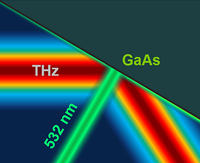
Terahertz accelerators can achieve potential gradients beyond 200 MV/m. Gyrotrons are the only power sources capable of producing megawatt-level, microsecond-long pulses in this frequency range, yet nanosecond-long pulses are required for breakdown-free operation. The authors explore the possibility of using a single GaAs wafer to enable production of the required pulse widths, with rise and fall times that closely track the illuminating laser’s pulse length. They demonstrate and quantify the reflective properties and laser-induced photoconductive effect of GaAs in the millimeter-wave regime, for use in a laser-operated shutter.

Dynamics of magnetoelectric reversal of an antiferromagnetic domain

Arun Parthasarathy and Shaloo Rakheja

Phys. Rev. Applied 11, 034051 (2019) - Published 20 March, 2019

In spintronics research, the actual dynamics of magnetoelectric magnetization switching in an antiferromagnet is often overlooked in experimental work, even though it is important to establish whether multidomain effects play a role. The authors analyze the speed and energy limits of the spatial mechanisms governing electrically controlled domain switching in antiferromagnetic insulators. This study provides valuable insight into the performance of such materials for applications in ultralow-power nonvolatile memory and logic processing.

Tunable Superconducting Two-Chip Lumped-Element Resonator

B. Ferdinand, D. Bothner, R. Kleiner, and D. Koelle

Phys. Rev. Applied 11, 034050 (2019) - Published 20 March, 2019

Superconducting coplanar microwave resonators may serve as a quantum bus to transfer information from superconducting qubits to natural spin systems, such as ultracold atomic vapors, for long-lived quantum memory. The authors investigate a stacked two-chip superconducting device, consisting of a lumped-element resonator side-coupled to a coplanar-waveguide transmission line. By moving the chips relative to each other, the device can be operated in different regimes, enabling control over both the resonance frequency and the coupling. This system has the advantage of providing tunable coupling to clouds of ultracold atoms that must be operated at millitesla-level magnetic fields.

Spatial Spin-Wave Modulator for Quantum-Memory-Assisted Adaptive Measurements

Michał Lipka, Adam Leszczyński, Mateusz Mazelanik, Michał Parniak, and Wojciech Wasilewski

Phys. Rev. Applied 11, 034049 (2019) - Published 20 March, 2019

Capitalizing on the spatial degree of freedom for highly multimode quantum memories demands a flexible method, analogous to those using spatial light modulators. The authors demonstrate arbitrary one-dimensional phase modulation of a coherent spin-wave state, stored in a wave-vector-multiplexed quantum memory, via the ac Stark effect. This technique can be valuable for practical implementations of innovative protocols in quantum information and communication.

Proposed Valley Valve from Four-Channel Valley Manipulation

Youngjae Kim and J.D. Lee

Phys. Rev. Applied 11, 034048 (2019) - Published 20 March, 2019

In valleytronics, local maxima and minima in a semiconductor’s electronic band structure are exploited for processing bits of information. Here a model of the AB-stacked WS2/MoS2 bilayer heterostructure, in which inversion symmetry is designed to be ideal for Berry-curvature engineering, shows that four-bit valley manipulation can be achieved, going beyond the two-bit standard. This ingenious management leads to the proposal of a valley valve, a device that realizes nonlocal resistances at multiple levels, being analogous to the spin valve of spintronics.

Simultaneous Optical and Electrical Spin-Torque Magnetometry with Phase-Sensitive Detection of Spin Precession

Yi Li, Hilal Saglam, Zhizhi Zhang, Rao Bidthanapally, Yuzan Xiong, John E. Pearson, Valentine Novosad, Hongwei Qu, Gopalan Srinivasan, Axel Hoffmann, and Wei Zhang

Phys. Rev. Applied 11, 034047 (2019) - Published 19 March, 2019

Detecting the local amplitude and phase of magnetization excitations (spin waves) is important for coherent spin information processing. Phase detection traditionally is either via electrically rectified signals, or by pump-probe optical and x-ray methods. In this work, the authors demonstrate tabletop, heterodyne optical detection of the local phase of ferromagnetic resonance, with the capability to extract spin-orbit torques by quantifying an additional precessional phase in a heavy-metal/ferromagnet bilayer. The results offer spin-torque magnetometry with spatial and phase resolution, for studying electrically driven magnetization dynamics in spintronic nanodevices.

Control of Spin-Wave Damping in YIG Using Spin Currents from Topological Insulators

Aryan Navabi, Yuxiang Liu, Pramey Upadhyaya, Koichi Murata, Farbod Ebrahimi, Guoqiang Yu, Bo Ma, Yiheng Rao, Mohsen Yazdani, Mohammad Montazeri, Lei Pan, Ilya N. Krivorotov, Igor Barsukov, Qinghui Yang, Pedram Khalili Amiri, Yaroslav Tserkovnyak, and Kang L. Wang

Phys. Rev. Applied 11, 034046 (2019) - Published 19 March, 2019

Yttrium iron garnet (YIG) is a material with unique properties that make it very attractive for use in microwave applications, such as frequency-selective limiters and logic processing. However, the decay of a spin wave’s amplitude as it propagates in the material curbs the use of YIG in practical applications. To surmount this limitation, in this study the surface spin currents of a topological insulator are used to enhance the spin-wave amplitude in adjacent YIG. In addition, interesting properties of magnons are observed and investigated, to advance spintronics.

Toward High-Performing Topological Edge-State Optical Isolators

Dolendra Karki, Ramy El-Ganainy, and Miguel Levy

Phys. Rev. Applied 11, 034045 (2019) - Published 19 March, 2019

The development of on-chip optical isolators for integrated photonic circuits has been actively pursued for several decades now, especially since the advent of optical-fiber telecommunication. This article reports the experimental realization, practical implementation, and performance of a topological edge−state isolator, based on the Su-Shrieffer-Heeger model in the optical regime. Such isolators have been predicted to deliver superior isolation ratios (up to -50 dB at telecom wavelengths), due to the existence of a topological edge state in the forward propagation direction, and its destruction in the reverse direction via the magneto-optical nonreciprocal phase-shift effect.

Telecom-Band Quantum Optics with Ytterbium Atoms and Silicon Nanophotonics

Jacob P. Covey, Alp Sipahigil, Szilard Szoke, Neil Sinclair, Manuel Endres, and Oskar Painter

Phys. Rev. Applied 11, 034044 (2019) - Published 19 March, 2019

Wavelengths in the telecommunication window (ca.1.25–1.65 μm) are ideal for quantum communication, due to the low transmission loss in optical-fiber networks. To realize quantum networks operating at these wavelengths, we need long-lived quantum memories that couple efficiently to telecom-band photons. This study proposes using optical tweezers to couple neutral ytterbium atoms, which have a strong telecom-wavelength transition, to a silicon photonic-crystal cavity. The combination of high system efficiency, telecom-band operation, and long coherence times makes this platform well suited for quantum optics on a silicon chip and long-distance quantum communication.

Generalized Spatial Differentiation from the Spin Hall Effect of Light and Its Application in Image Processing of Edge Detection

Tengfeng Zhu, Yijie Lou, Yihan Zhou, Jiahao Zhang, Junyi Huang, Yan Li, Hailu Luo, Shuangchun Wen, Shiyao Zhu, Qihuang Gong, Min Qiu, and Zhichao Ruan

Phys. Rev. Applied 11, 034043 (2019) - Published 18 March, 2019

Optical spatial differentiation is important for applications in massively parallel computing and real-time image processing. This study makes use of the generalized spin Hall effect of light to perform optical spatial differentiation. Importantly, this scheme generally accompanies oblique light reflection and refraction at any planar interface, regardless of material compositions or angles of incidence. Moreover, this spin-optical approach offers robust image processing to extract the boundaries of objects, where two distinct images can be stored in two different polarization states.

Bright-Exciton Splittings in Inorganic Cesium Lead Halide Perovskite Nanocrystals

R. Ben Aich, I. Saïdi, S. Ben Radhia, K. Boujdaria, T. Barisien, L. Legrand, F. Bernardot, M. Chamarro, and C. Testelin

Phys. Rev. Applied 11, 034042 (2019) - Published 18 March, 2019

A precise understanding of the excitonic fine structure of all-inorganic perovskite nanocrystals is essential, in view of applications at the single-object scale in fields such as nanophotonics and quantum optics. This class of colloidal materials with defect-tolerant behavior has emerged recently as a potential alternative to II−VI semiconductor nanocrystals. Here calculations clearly show that the interplay of shape anisotropy and crystalline phase define the energy splitting between the fine-structure components, and thus the emission characteristics, of the nanocrystal. This study provides key information for optimizing nanophotonic devices based on these inorganic perovskites.

Saturated Stimulated-Raman-Scattering Microscopy for Far-Field Superresolution Vibrational Imaging

Li Gong, Wei Zheng, Ying Ma, and Zhiwei Huang

Phys. Rev. Applied 11, 034041 (2019) - Published 18 March, 2019

Superresolution microscopy based on stimulated Raman scattering (SRS) is appealing for label-free quantitative imaging of biological and biomedical systems with higher resolution than conventional SRS microscopy, which is diffraction-limited. This study experimentally demonstrates a saturated SRS (SSRS) technique to break the diffraction limit for vibrational imaging of biological samples, such as chloroplasts and Hela cells. The technique holds great promise for studying living cells.

Dual-Axis π-Pulse Magnetometer with Suppressed Spin-Exchange Relaxation

Elena Zhivun, Michael Bulatowicz, Alexander Hryciuk, and Thad Walker

Phys. Rev. Applied 11, 034040 (2019) - Published 18 March, 2019

Spin-exchange relaxation-free (SERF) optical atomic magnetometers are a promising alternative to superconducting quantum interference devices (SQUIDs) for biomedical applications, as they do not require liquid-helium cryogenics or a shielded room. However, their sensitivity in the 0.1–100 Hz range is undermined by 1/f noise. The authors present a vector SERF magnetometer with suppressed 1/f noise, due to the ac response along each of its two sensitive axes. The improved long-term stability of this system offers the possibility of precise gradiometry with several independent sensors.

Using Shape Diversity on the Way to Structure-Function Designs for Magnetic Micropropellers

Felix Bachmann, Klaas Bente, Agnese Codutti, and Damien Faivre

Phys. Rev. Applied 11, 034039 (2019) - Published 15 March, 2019

Rigid magnetic micropropellers, driven in an external magnetic field, are a model system for envisioned biomedical applications, but currently the potential of such propellers is neither fully used nor fully understood. This study uses the swimming characteristics of randomly shaped propellers to investigate these possibilities, and their dynamics. In this regard, propellers with frequency-induced reversal of swimming direction (FIRSD) are a key example that might help to extend even further the range of applications of magnetic micropropellers, especially for multitargeting or swarm control.

Electrochemical-Reaction-Driven Interfacial Stress in a Solid-Solid Layered Architecture

Feng Hao, Wenxiu Wang, and Partha P. Mukherjee

Phys. Rev. Applied 11, 034038 (2019) - Published 15 March, 2019

Multilayer architecture plays a pivotal role in energy-storage devices, such as lithium metal batteries. Interfacial deposition and dissolution lead to volumetric changes, which could adversely affect battery performance. This study theoretically addresses the mechanics and transport interaction under asymmetric volumetric changes in a solid/solid multilayer configuration. The analytical formalism is applied to an all-solid-state lithium metal battery, which allows design guidelines for the interfacial mechanical stability of such a layered architecture.

Manipulation of the Electronic Transport Properties of Charge-Transfer Oxide Thin Films of NdNiO3 Using Static and Electric-Field-Controllable Dynamic Lattice Strain

Jian-Min Yan, Meng Xu, Ting-Wei Chen, Ming-Min Yang, Fei Liu, Hui Wang, Lei Guo, Zhi-Xue Xu, Fang-Yuan Fan, Guan-Yin Gao, Si-Ning Dong, Xiao-Guang Li, Hao-Su Luo, Weiyao Zhao, and Ren-Kui Zheng

Phys. Rev. Applied 11, 034037 (2019) - Published 15 March, 2019

Strongly correlated perovskite transition-metal oxides have received considerable attention due to their intriguing physical properties, including a metal-insulator transition that can be used in devices. Key questions remain, though, including whether in-plane tensile strain helps or hinders the transition. This study uses both static and dynamic lattice strain to manipulate the transport properties of NdNiO3 films systematically. The electric-field-tunable ferroelastic/piezoelectric strain approach can be used not only to obtain deeper insight into the intrinsic properties of nickelate films, but also as a simple, energy-efficient means to construct multistate resistive memory.

Thermal Resistance of GaN/AlN Graded Interfaces

Ambroise van Roekeghem, Bjorn Vermeersch, Jesús Carrete, and Natalio Mingo

Phys. Rev. Applied 11, 034036 (2019) - Published 14 March, 2019

Heat transport across compositionally graded interfaces can be a key factor in microelectronic devices, where lifetime can be dramatically affected by small changes in operating temperature. Such heat flow is seldom included in the design phase, though, due to poor understanding of the underlying physics, and a lack of predictive models to treat the problem. This study uses a first-principles-based approach to phonon transmission plus a Monte Carlo simulator to account for all relevant bulk and interfacial phenomena, yielding quantitative predictions that can help guide device design. Surprisingly, alloy disorder has a larger impact on heat transport at interfaces than does reflection.

Parametric amplification and squeezing with an ac- and dc-voltage biased superconducting junction

Udson C. Mendes, Sébastien Jezouin, Philippe Joyez, Bertrand Reulet, Alexandre Blais, Fabien Portier, Christophe Mora, and Carles Altimiras

Phys. Rev. Applied 11, 034035 (2019) - Published 14 March, 2019

In the quest to realize a quantum computer, physicists are dealing with signals that can be as weak as a single microwave photon. To detect such signals with sufficient quantum efficiency to implement e.g. quantum error correction, they must be amplified within the cryostat, and the amplifier itself must be a quantum device. To this end, the authors present a broadband, nearly quantum-limited parametric amplifier based on the tunneling of quasiparticles in a superconducting junction. This development may allow the generation of microwave continuous-variable cluster states, and is expected to have great impact on quantum information science.

Sign In to Your Journals Account

Filter

Recent Issues

Vol. 26, Iss. 5
November 2026
Vol. 26, Iss. 4
October 2026
Vol. 26, Iss. 3
September 2026
Vol. 26, Iss. 2
August 2026
Category
Article Type

Filter

Article Lookup

Enter a citation