Highlights

Rotational tuning of the dipole-dipole interaction in a Bose gas of magnetic atoms

D. Baillie and P. B. Blakie

Phys. Rev. A 101, 043606 (2020) - Published 10 April, 2020

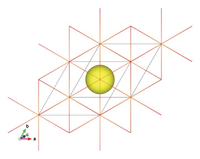
The dynamics of a dipolar Bose-Einstein condensate of magnetic atoms under a rotating magnetic field is investigated theoretically. Dynamic instabilities are identified and the results could stimulate future experimental work.

Quantum error-correction codes and absolutely maximally entangled states

Paweł Mazurek, Máté Farkas, Andrzej Grudka, Michał Horodecki, and Michał Studziński

Phys. Rev. A 101, 042305 (2020) - Published 2 April, 2020

The connection between maximally entangled states and quantum error-correcting code is explored to gain insight on the AdS-CFT correspondence, i.e., on the link between gravity and quantum field theories. The study presents corrections to the so-called Ryu-Takayanagi formula.

Near-term performance of quantum repeaters with imperfect ensemble-based quantum memories

Yufeng Wu, Jianlong Liu, and Christoph Simon

Phys. Rev. A 101, 042301 (2020) - Published 1 April, 2020

Four different quantum repeater schemes built with ensemble-based quantum memories are analyzed in order to guide experimentalists to achieve real-world implementations. The work focuses on repeaters devoid of error correction and suggests that meaningful proof-of-principle demonstrations are within reach of current technology.

Verifying multipartite entangled Greenberger-Horne-Zeilinger states via multiple quantum coherences

Ken X. Wei, Isaac Lauer, Srikanth Srinivasan, Neereja Sundaresan, Douglas T. McClure, David Toyli, David C. McKay, Jay M. Gambetta, and Sarah Sheldon

Phys. Rev. A 101, 032343 (2020) - Published 25 March, 2020

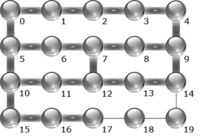
An 18-qubit GHZ state with multipartite entanglement is prepared and measured on a 20-qubit device. The detection technique used, which is based on measuring multiple quantum coherences, is robust to noise and only requires measuring the population in the ground state.

Cooper minimum of high-order harmonic spectra from an MgO crystal in an ultrashort laser pulse

Yiting Zhao, Xiaoqin Xu, Shicheng Jiang, Xi Zhao, Jigen Chen, and Yujun Yang

Phys. Rev. A 101, 033413 (2020) - Published 25 March, 2020

The crystal harmonic spectra of MgO from an ultrashort midinfrared laser pulse are shown to exhibit the Cooper minimum characteristic. This study could potentially be useful for retrieving the band information of solid materials and all-optical reconstruction of the band structure through high-order harmonic generation.

Circuit-centric quantum classifiers

Maria Schuld, Alex Bocharov, Krysta M. Svore, and Nathan Wiebe

Phys. Rev. A 101, 032308 (2020) - Published 6 March, 2020

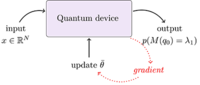
A machine learning design is developed to train a quantum circuit specialized in solving a classification problem. In addition to discussing the training method and effect of noise, it is shown that the circuits perform reasonably well on classical benchmarks.

Superradiant optomechanical phases of cold atomic gases in optical resonators

Simon B. Jäger, Murray J. Holland, and Giovanna Morigi

Phys. Rev. A 101, 023616 (2020) - Published 24 February, 2020

Superradiant emission of light from a cold atomic gas in an optical resonator is analyzed theoretically. It is shown that the dynamics ofsuperradiant emission is accompanied by the formation of spatialstructures. Three different phases, incoherent, coherent, and chaotic,are identified where the coherence properties are distinctly different.

Excited-band Bloch oscillations for precision atom interferometry

Katherine E. McAlpine, Daniel Gochnauer, and Subhadeep Gupta

Phys. Rev. A 101, 023614 (2020) - Published 20 February, 2020

A method based on Bloch oscillation in an excited band of a pulsed optical standing-wave lattice to increase the momentum separation between the arms of an atom interferometer is proposed and demonstrated experimentally. A significant improvement in measurement precision is achieved.

Controlling photon bunching and antibunching of two quantum emitters near a core-shell sphere

Tiago J. Arruda, Romain Bachelard, John Weiner, Sebastian Slama, and Philippe W. Courteille

Phys. Rev. A 101, 023828 (2020) - Published 18 February, 2020

Photon correlations in the emission of a two-atom system coupled to a core-shell plasmonic nanoparticle can be tuned. This theoretical and numerical investigation is relevant for technological applications requiring controllable light-emitting devices.

Scaling hypothesis of a spatial search on fractal lattices using a quantum walk

Rei Sato, Tetsuro Nikuni, and Shohei Watabe

Phys. Rev. A 101, 022312 (2020) - Published 10 February, 2020

A quantum spatial search problem on fractal lattices, such as Sierpinski carpets and Menger sponges, is studied numerically. The results confirmed various conjectures on the relationship between the number of oracle calls needed for a search with respect to the number of sites and spatial dimensions.

Broadband analysis and self-control of spectral fluctuations in a passively phase-stable Er-doped fiber frequency comb

A. Liehl, P. Sulzer, D. Fehrenbacher, S. Eggert, M. Ludwig, F. Ritzkowsky, D. V. Seletskiy, and A. Leitenstorfer

Phys. Rev. A 101, 023801 (2020) - Published 3 February, 2020

Full stabilization of a fiber-based frequency comb without any active external references is presented. The compact and autonomously operating table-top source may broaden even more the technological impact of frequency combs.

Evaporative cooling from an optical dipole trap in microgravity

Christian Vogt, Marian Woltmann, Sven Herrmann, Claus Lämmerzahl, Henning Albers, Dennis Schlippert, and Ernst M. Rasel (PRIMUS)

Phys. Rev. A 101, 013634 (2020) - Published 28 January, 2020

Evaporative cooling under microgravity is investigated in the free-fall experiment of 87Rb atoms optically trapped from a temporarily dark magneto-optical trap in the drop tower in Bremen. The efficiency of evaporation is determined to be equal, with and without the effect of gravity.

High-temperature expansion of the viscosity in interacting quantum gases

Johannes Hofmann

Phys. Rev. A 101, 013620 (2020) - Published 16 January, 2020

The frequency-dependent shear and bulk viscosity spectral functions of an interacting Fermi gas at high temperature are computed using a systematic virial expansion of the stress tensor correlation function. The field-theoretical methods employed have interesting relations with many-body techniques, such as the Keldysh formalism and can be compared with numerical calculations.

Dark-time decay of the retrieval efficiency of light stored as a Rydberg excitation in a noninteracting ultracold gas

Steffen Schmidt-Eberle, Thomas Stolz, Gerhard Rempe, and Stephan Dürr

Phys. Rev. A 101, 013421 (2020) - Published 14 January, 2020

A comprehensive analysis of photon storage in a Rydberg state of ultracold 87Rb gas based on electromagnetically induced transparency is performed both experimentally and theoretically. The theoretical model shows that the retrieval efficiency is related to the decay of fringe visibility in Ramsey spectroscopy.

Collective excitation dynamics of a cold atom cloud

T. S. do Espirito Santo, P. Weiss, A. Cipris, R. Kaiser, W. Guerin, R. Bachelard, and J. Schachenmayer

Phys. Rev. A 101, 013617 (2020) - Published 14 January, 2020

The time-dependent response of a cold atom cloud illuminated by a laser beam after the light is switched on is investigated both experimentally and theoretically. A superradiant damping is discovered in the collective Rabi oscillations.

Fault-tolerant bosonic quantum error correction with the surface–Gottesman-Kitaev-Preskill code

Kyungjoo Noh and Christopher Chamberland

Phys. Rev. A 101, 012316 (2020) - Published 13 January, 2020

The performance of the circuit-based surface-GKP bosonic quantum error correction code under noise due to finite squeezing of the GKP states and photon losses is investigated. The authors show under what conditions fault-tolerant quantum error correction is possible with the surface-GKP code.

Improved entanglement detection with subspace witnesses

Won Kyu Calvin Sun, Alexandre Cooper, and Paola Cappellaro

Phys. Rev. A 101, 012319 (2020) - Published 13 January, 2020

A “subspace” witness of entanglement, more robust than a typical state fidelity-based witness, is introduced and experimentally tested with a hybrid two-qubit system composed of electronic spins in diamond. Its straightforward implementation offers improved detection of specific genuine multipartite entangled states in noisy, intermediate-scale quantum processors.

Cross-dimensional relaxation of Li7−Rb87 atomic gas mixtures in a spherical-quadrupole magnetic trap

Fang Fang, Shun Wu, Aaron Smull, Joshua A. Isaacs, Yimeng Wang, Chris H. Greene, and Dan M. Stamper-Kurn

Phys. Rev. A 101, 012703 (2020) - Published 10 January, 2020

Interspecies interaction strength between 7Li and 87Rb atoms through cross-dimensional relaxation of two-element gas mixtures is measured experimentally and calculated with Monte Carlo simulations. A disagreement between those two results provides an interesting challenge for interpretation and may stimulate further work.

Exploring emergent heterogeneous phases in strongly repulsive Fermi gases

F. Scazza, G. Valtolina, A. Amico, P. E. S. Tavares, M. Inguscio, W. Ketterle, G. Roati, and M. Zaccanti

Phys. Rev. A 101, 013603 (2020) - Published 8 January, 2020

An experimental study of a Fermi gas of ultracold atoms with strong repulsive interactions leads to the discovery of an emulsion state of anticorrelated fermions and pairs. This finding allows exploration of quantum emulsions and also possibly of inhomogeneous superfluid regimes.

Nonlinear isotope-shift effects in Be-like, B-like, and C-like argon

V. A. Yerokhin, R. A. Müller, A. Surzhykov, P. Micke, and P. O. Schmidt

Phys. Rev. A 101, 012502 (2020) - Published 6 January, 2020

Nonlinear effects of the King plot in the isotope shifts of the 2P fine-structure transitions in Be-, B-, and C-like argon ions are investigated through large-scale configuration-interaction calculations. Nonlinearities are found to be four orders of magnitude larger than previous estimates in comparable systems. This work could be important for the identification of possible nonlinearities originating from physics beyond the standard model.

Sign In to Your Journals Account

Filter

Section

Filter

Article Lookup

Enter a citation