Highlights

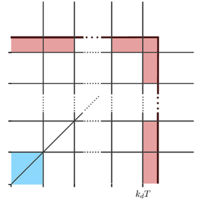
Floquet theory for temporal correlations and spectra in time-periodic open quantum systems: Application to squeezed parametric oscillation beyond the rotating-wave approximation

C. Navarrete-Benlloch, R. Garcés, N. Mohseni, and G. J. de Valcárcel

Phys. Rev. A 103, 023713 (2021) - Published 17 February, 2021

The authors develop a general method for the computation of temporal correlation functions and the corresponding spectra in time-periodic open quantum systems based on the Floquet theory. The authors relate the long-time behavior to dynamics within a single period, which could be applied to a wide range of driven systems.

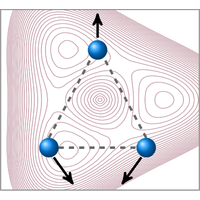
Towards photoassociation processes of ultracold rubidium trimers

Jan Schnabel, Tobias Kampschulte, Simon Rupp, Johannes Hecker Denschlag, and Andreas Köhn

Phys. Rev. A 103, 022820 (2021) - Published 16 February, 2021

The authors theoretically investigate the prospects for photoassociation of three rubidium atoms, with emphasis on the symmetries that drive Jahn-Teller and related effects. The results could provide experimental guidance for the creation of ultracold rubidium trimer molecules.

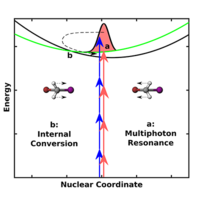
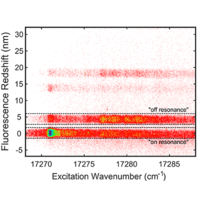
Competition between dynamic resonance and internal conversion in strong-field molecular ionization with chirped ultrafast laser pulses

Brian Kaufman, Tamás Rozgonyi, Philipp Marquetand, and Thomas Weinacht

Phys. Rev. A 103, 023108 (2021) - Published 15 February, 2021

The authors show theoretically and experimentally how the time-varying phase or frequency of a chirped strong-field ultrafast laser pulse can be used to control the ionization yield to different ionic states in a polyatomic molecule. The results are interpreted in terms of a competition between two types of nonadiabatic dynamics: multiphoton resonance and internal conversion.

Observation and laser spectroscopy of ytterbium monomethoxide, YbOCH3

Benjamin L. Augenbraun, Zack D. Lasner, Alexander Frenett, Hiromitsu Sawaoka, Anh T. Le, John M. Doyle, and Timothy C. Steimle

Phys. Rev. A 103, 022814 (2021) - Published 12 February, 2021

The authors report on a series of new laser spectroscopic measurements of the lowest-lying electronic states of YbOCH3, a molecule that is of interest for new laboratory tests of fundamental physics, in particular precision tests of parity and time-reversal-symmetry violation. The results indicate that YbOCH3 is suited to laser cooling, opening up a range of potential precision-measurement experiments that could set new limits on theories beyond the standard model.

Spontaneous parametric down-conversion induced by optomechanical gradient forces in nanophotonic waveguides

Mohamed Ashour, Jan Niklas Caspers, Eva M. Weig, and Peter Degenfeld-Schonburg

Phys. Rev. A 103, 023513 (2021) - Published 12 February, 2021

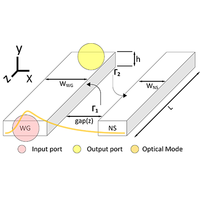
The authors study a waveguide system of two parallel nanobeams coupled by the evanescent field of the light propagating in the wider guide, and show how the light field can be used to induce and control a nonlinear coupling between the vibrational modes of the two beams. The result promises technological applications by enabling the all-optical operation of nano- and micromechanical systems, allowing the use of standard CMOS-compatible platforms for device fabrication.

Discrimination and estimation of incoherent sources under misalignment

J. O. de Almeida, J. Kołodyński, C. Hirche, M. Lewenstein, and M. Skotiniotis

Phys. Rev. A 103, 022406 (2021) - Published 3 February, 2021

The authors consider two prototypical imaging problems: the optimal estimation of the separation between two incoherent point sources and the discrimination between one and two point sources of equal luminosity. The impact of misalignment on the precision in estimating the sources’ separation as well as on the error in discriminating multiple sources is discussed.

Strong-field physics in three-dimensional topological insulators

Denitsa Baykusheva, Alexis Chacón, Dasol Kim, Dong Eon Kim, David A. Reis, and Shambhu Ghimire

Phys. Rev. A 103, 023101 (2021) - Published 2 February, 2021

In this work, the authors theoretically investigate high-order harmonic generation from a three-dimensional topological insulator. They find that the surface states enhance the harmonic yield for circularly polarized fields. Such behaviors could be linked to the conical shape of the energy bands near the Dirac point in the Brillouin zone, as well as the associated interband transition dipole moments that form vortexlike features at the cusp of the cone.

Nonlinear Bell inequality for macroscopic measurements

Adam Bene Watts, Nicole Yunger Halpern, and Aram Harrow

Phys. Rev. A 103, L010202 (2021) - Published 27 January, 2021

The authors prove an inequality usable to certify the presence of entanglement in noisy macroscopic systems. Violations of this inequality could potentially be observed experimentally.

RABBITT phase transition across the ionization threshold

Anatoli S. Kheifets and Alexander W. Bray

Phys. Rev. A 103, L011101 (2021) - Published 21 January, 2021

The authors present a theoretical treatment of attosecond phase shifts in photoionization due to the interference of pathways involving two-photon transitions with adjacent harmonics for the special case where one of the involved states is a bound state, rather than the usual situation where both states are in the continuum. They show that this process provides an alternative way of assessing the continuum-continuum phase, which is usually closely linked to the Wigner time delay and hard to access experimentally.

Estimating the gradient and higher-order derivatives on quantum hardware

Andrea Mari, Thomas R. Bromley, and Nathan Killoran

Phys. Rev. A 103, 012405 (2021) - Published 11 January, 2021

The authors show how to evaluate, with near-term quantum computers, high-order derivatives of expectation values with respect to the variational parameters of quantum circuits. The authors also study how such derivatives are affected by statistical noise. Their theoretical results are then tested with both numerical simulations and experiments.

Physics-inspired forms of the Bayesian Cramér-Rao bound

Mankei Tsang

Phys. Rev. A 102, 062217 (2020) - Published 23 December, 2020

Inspired by differential geometry and quantum mechanics, the author proposes forms of a lower error bound widely used in statistics and engineering.

Enhanced atom-by-atom assembly of arbitrary tweezer arrays

Kai-Niklas Schymik, Vincent Lienhard, Daniel Barredo, Pascal Scholl, Hannah Williams, Antoine Browaeys, and Thierry Lahaye

Phys. Rev. A 102, 063107 (2020) - Published 10 December, 2020

The authors describe the capability of an atom-by-atom assembler to create large arrays of neutral atoms and provide an overview of advances that can be realized through several new sorting algorithms, including one that enables the assembly of arbitrary, nonregular target arrays. The performance of the enhanced assembler is then demonstrated experimentally.

Fluctuation-guided search in quantum annealing

Nicholas Chancellor

Phys. Rev. A 102, 062606 (2020) - Published 9 December, 2020

In this paper, the author shows how the uneven sampling of ground-state manifolds due to quantum fluctuations can be exploited to trade optimality of the solution for flexibility, where some variables can be changed at little or no cost. Leveraging this tradeoff could be practically important, e.g., in hybrid algorithms where some penalties cannot be directly implemented on the annealer.

Correlation-induced orbital angular momentum changes

Yongtao Zhang, Olga Korotkova, Yangjian Cai, and Greg Gbur

Phys. Rev. A 102, 063513 (2020) - Published 9 December, 2020

It has long been known that partial coherence of a light source can lead to a change of properties such as the intensity, spectrum, or the degree of polarization of a beam during propagation in free space. In this paper, the authors extend this effect to beams with optical angular momentum, and show that one can use source correlations to significantly change the optical angular momentum flux density of a beam on propagation through free space.

Theory of reflectionless scattering modes

William R. Sweeney, Chia Wei Hsu, and A. Douglas Stone

Phys. Rev. A 102, 063511 (2020) - Published 7 December, 2020

In this paper, the authors develop the theory of impedance matching of scattering waves to finite structures of arbitrary geometry, focusing on modes that have zero reflection back into the input channels at specific frequencies. The framework is applicable to all linear classical wave scattering, and to quantum scattering as long as the scattering potential is short ranged.

Wigner-friend scenarios with noninvasive weak measurements

A. Matzkin and D. Sokolovski

Phys. Rev. A 102, 062204 (2020) - Published 4 December, 2020

In this paper, the authors extend the “Wigner friend” scenario with two sets of laboratories to the case where the external agents can probe the laboratories in an asymptotically noninvasive manner, using weak measurements. The authors conclude that within their scheme (which allows a small coupling to the lab), the weak measurements indicate to the agents how to obtain consistent predictions.

Laser cooling of transition-metal atoms

Scott Eustice, Kayleigh Cassella, and Dan Stamper-Kurn

Phys. Rev. A 102, 053327 (2020) - Published 30 November, 2020

The authors propose the laser cooling scheme for eleven transition-metal atoms, including both bosonic and fermionic species. A number of cycling optical transitions from the ground state or from a long-lived metastable state to the excited states are identified for the cooling scheme.

Nonequilibrium thermodynamics of quantum friction

D. Reiche, F. Intravaia, J.-T. Hsiang, K. Busch, and B. L. Hu

Phys. Rev. A 102, 050203(R) (2020) - Published 25 November, 2020

Quantum friction is a phenomenon where quantum fluctuations of the electrodynamic vacuum lead to a lateral force between two objects moving relative to each other, thus leading to friction. In this paper, the authors study quantum friction under nonequilibrium conditions and demonstrate that common assumptions such as local thermal equilibrium can contradict basic principles of thermodynamics.

Nuclear spin-dependent parity-violating effects in light polyatomic molecules

Yongliang Hao, Petr Navrátil, Eric B. Norrgard, Miroslav Iliaš, Ephraim Eliav, Rob G. E. Timmermans, Victor V. Flambaum, and Anastasia Borschevsky

Phys. Rev. A 102, 052828 (2020) - Published 25 November, 2020

Measurements of nuclear spin-dependent parity-violating effects in small molecules provide a promising route to search for physics beyond the standard model. In this paper, the authors lay out a strategy for the complementary determination of both the anapole moment and contributions due to electron-nucleus interactions, and assess the expected sensitivity of such an experiment.

Vortex-Meissner phase transition induced by a two-tone-drive-engineered artificial gauge potential in the fermionic ladder constructed by superconducting qubit circuits

Yan-Jun Zhao, Xun-Wei Xu, Hui Wang, Yu-xi Liu, and Wu-Ming Liu

Phys. Rev. A 102, 053722 (2020) - Published 24 November, 2020

The authors are proposing a way to engineer artificial gauge fields in systems of superconducting qubits that is applicable, in principle, to circuits with any nonzero anharmonicity, thereby allowing for the simulation of fermionic systems. As an application, they study the transition between vortex and Meissner phases in a two-leg ladder system induced by varying the interleg coupling strength and effective magnetic flux.

Sign In to Your Journals Account

Filter

Section

Filter

Article Lookup

Enter a citation