Highlights

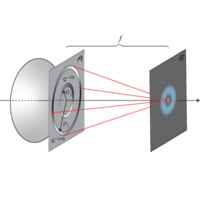
Theory of nanoparticle cooling by elliptic coherent scattering

Henning Rudolph, Jonas Schäfer, Benjamin A. Stickler, and Klaus Hornberger

Phys. Rev. A 103, 043514 (2021) - Published 23 April, 2021

The authors present the theoretical framework of elliptic coherent scattering cooling for aspherical nanoparticles. These theoretical tools could potentially enable simultaneous cooling of the rotational and translational motions of nanoscale dielectrics into the quantum regime.

Single collective excitation of an atomic array trapped along a waveguide: A study of cooperative emission for different atomic chain configurations

V. A. Pivovarov, L. V. Gerasimov, J. Berroir, T. Ray, J. Laurat, A. Urvoy, and D. V. Kupriyanov

Phys. Rev. A 103, 043716 (2021) - Published 21 April, 2021

The authors study theoretically a linear array of atoms with only a segment excited to a super-radiant mode of a 1D waveguide system. Under different atomic geometries, the authors find the system can store, redirect, or behave as an atomic resonator for the light, which could be useful for quantum information processing

Coulomb-explosion imaging of carbon monoxide dimers

A. Méry, V. Kumar, X. Fléchard, B. Gervais, S. Guillous, M. Lalande, J. Rangama, W. Wolff, and A. Cassimi

Phys. Rev. A 103, 042813 (2021) - Published 19 April, 2021

The authors use a COLTRIMS setup and Coulomb-explosion imaging to deduce the structure of (CO)2 from two- and three-body dissociation induced by collisions with highly charged argon ions. The structure of the dimer is found to be very diffuse and to be compatible with a purely random orientation of each CO molecule in the dimer. The mean intermolecular distance is found to correspond to the predicted true ground state of the CO dimer with a planar C-bonded geometry.

Enhanced sensitivity to ultralight bosonic dark matter in the spectra of the linear radical SrOH

Ivan Kozyryev, Zack Lasner, and John M. Doyle

Phys. Rev. A 103, 043313 (2021) - Published 8 April, 2021

Time variations of the proton-to-electron mass ratio are signatures of ultralight dark matter particles coupling to ordinary matter. The authors propose to use laser-cooled SrOH molecules to search for such signals to exquisite precision.

Magnetic-field measurement and analysis for the Muon g−2 Experiment at Fermilab

T. Albahri et al. (The Muon g−2 Collaboration)

Phys. Rev. A 103, 042208 (2021) - Published 7 April, 2021

Measurements of the muon magnetic moment strengthen a previously reported tension with theoretical predictions, ushering in a new era of precision tests of the standard model.

Magic conditions for multiple rotational states of bialkali molecules in optical lattices

Q. Guan, Simon L. Cornish, and S. Kotochigova

Phys. Rev. A 103, 043311 (2021) - Published 7 April, 2021

The authors present detailed calculations of the dynamic polarizability of low-lying rotational states in bialkali molecules focusing on ultracold RbCs. Simultaneous magic-wavelength trapping of multiple rotational states is shown to be possible for laser frequencies between two nearest-neighbor vibrational poles. Analytical criteria for the magic condition are derived.

Two quantum Ising algorithms for the shortest-vector problem

David Joseph, Adam Callison, Cong Ling, and Florian Mintert

Phys. Rev. A 103, 032433 (2021) - Published 26 March, 2021

Traditional public key cryptography will become obsolete when quantum computers are able to break it. The authors propose two quantum algorithms to solve the shortest-vector problem, which could play an important role in designing new cryptosystems for the postquantum era.

Direct double ionization of the Ar+ M shell by a single photon

A. Müller, A. L. D. Kilcoyne, R. A. Phaneuf, K. Holste, S. Schippers, and A. S. Kheifets

Phys. Rev. A 103, L031101 (2021) - Published 17 March, 2021

In this combined experimental and theoretical study, the authors report on the measurement of the absolute cross section for direct single-photon double ionization of Ar+, which is orders of magnitude smaller than the corresponding cross section for a neutral target. The experimental data are in very good agreement with the results of a theoretical approach which describes the dominant two-step-one process as the product of a single ionization and a subsequent half collision.

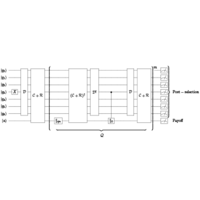
Quantum unary approach to option pricing

Sergi Ramos-Calderer, Adrián Pérez-Salinas, Diego García-Martín, Carlos Bravo-Prieto, Jorge Cortada, Jordi Planagumà, and José I. Latorre

Phys. Rev. A 103, 032414 (2021) - Published 15 March, 2021

The authors present a quantum algorithm for the pricing of options, a financial derivative, which works in the unary representation of the value of the underlying asset. Compared to a previous binary algorithm, the present one is designed to be simple in terms of logic operations and in terms of connectivity requirements, while still giving sufficiently accurate results with less than 100 qubits.

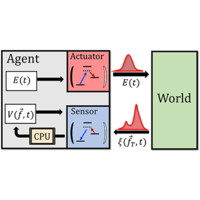
Designing a physical quantum agent

M. J. Kewming, S. Shrapnel, and G. J. Milburn

Phys. Rev. A 103, 032411 (2021) - Published 12 March, 2021

A physical agent must interact with its environment using actuators (to act on the environment) and sensors (to read the environment). In this article, the authors show that an optical agent which interacts with its environment using quantum mechanical actuators and sensors can experience a dramatic enhancement in its ability to learn its environment, and they study the thermodynamic properties of learning in such a physical agent.

Nuclear polarization effects in atoms and ions

V. V. Flambaum, I. B. Samsonov, H. B. Tran Tan, and A. V. Viatkina

Phys. Rev. A 103, 032811 (2021) - Published 10 March, 2021

Nuclear structure effects lead to small corrections to electron energy-level shifts and isotope shifts in neutral atoms but have enhanced effects on heavy hydrogenlike ions. The authors analyze how nuclear structure effects scale with nuclear charge, mass number, and other parameters in various atoms and ions, with an emphasis on heavy hydrogenlike ions.

Analytical expression for the electronic stopping cross section of atomic gas targets for hydrogen projectiles

R. Cabrera-Trujillo

Phys. Rev. A 103, 032812 (2021) - Published 10 March, 2021

The author derives an analytical expression for the electronic stopping cross section of atomic gas targets at nonrelativistic velocities for hydrogen ions. The expression is based on an ab initio approach to account for the electronic excitations and charge exchange processes at low collision energies and the correct Bethe approach at high collision energies.

Universal variational quantum computation

Jacob Biamonte

Phys. Rev. A 103, L030401 (2021) - Published 10 March, 2021

The author proves that the contemporary variational approach to quantum-enhanced algorithms enables a universal model of quantum computation. This brings the resources required for universal quantum computation closer to contemporary quantum processors.

Quantum degenerate mixtures of Cs and Yb

Kali E. Wilson, Alexander Guttridge, Jack Segal, and Simon L. Cornish

Phys. Rev. A 103, 033306 (2021) - Published 9 March, 2021

The authors experimentally demonstrate the production of quantum degenerate Bose-Bose mixtures of cesium and ytterbium with attractive and repulsive interactions through sympathetic cooling. This development adds another system to the ultracold-atom toolbox, enabling future studies of quantum droplets and binary fluid dynamics.

High-energy-resolution measurements of an ultracold-atom–ion collisional cross section

Ruti Ben-shlomi, Meirav Pinkas, Ziv Meir, Tomas Sikorsky, Or Katz, Nitzan Akerman, and Roee Ozeri

Phys. Rev. A 103, 032805 (2021) - Published 5 March, 2021

The authors report on a method for scanning the collisional energies of a single ion with a cloud of ultracold atoms. This method is then applied to directly measure the collisional cross section between the two species, with high-energy resolution.

Coherent seeding of the dynamics of a spinor Bose-Einstein condensate: From quantum to classical behavior

Bertrand Evrard, An Qu, Jean Dalibard, and Fabrice Gerbier

Phys. Rev. A 103, L031302 (2021) - Published 3 March, 2021

The authors study experimentally the spin dynamics of a spin-1 Bose-Einstein condensate under two different magnetic field regimes and discuss the competing effect of quantum fluctuations and a coherent seed. The experimental results are compared to theoretical predictions from classical, semiclassical, and quantum models.

Kelvin's chirality of optical beams

Sergey Nechayev, Jörg S. Eismann, Rasoul Alaee, Ebrahim Karimi, Robert W. Boyd, and Peter Banzer

Phys. Rev. A 103, L031501 (2021) - Published 2 March, 2021

In this paper, the authors clarify the physical significance of the two types of chirality that occur in optical beams, namely geometrical chirality (determined by the spatial distribution of the beam) and optical chirality (given by the local handedness of the electromagnetic field vectors). An experiment shows how the two types of chirality couple to each other.

Photon-recoil and laser-focusing limits to Rydberg gate fidelity

F. Robicheaux, T. M. Graham, and M. Saffman

Phys. Rev. A 103, 022424 (2021) - Published 24 February, 2021

The authors present an analysis of the limits on two-qubit Rydberg gate fidelity set by the entanglement of internal states and center-of-mass motion due to momentum kicks from the photons from the laser pulses implementing gate operations. They also discuss an approximation which leads to simple analytic formulas that account for the momentum of the photon, atom temperature, harmonic-oscillator frequency, and atomic mass. The results give valuable guidance for designing future experiments.

Unified matrix representation for spin and orbital angular momentum in partially coherent beams

Olga Korotkova and Greg Gbur

Phys. Rev. A 103, 023529 (2021) - Published 23 February, 2021

In this paper, the authors introduce and study a matrix formalism that allows describing the interplay between coherence and orbital angular momentum in partially coherent light beams. The matrix is an analog of the known coherence-polarization matrix, and can be combined with the latter to yield a general characterization of second-order correlations in stationary light fields of arbitrary polarization and orbital angular momentum.

Raman transitions driven by phase-modulated light in a cavity atom interferometer

Sofus L. Kristensen, Matt Jaffe, Victoria Xu, Cristian D. Panda, and Holger Müller

Phys. Rev. A 103, 023715 (2021) - Published 18 February, 2021

The performance of a cavity atom interferometer depends on the Raman pulse efficiency and ac Stark phase cancellation of the beam-splitter operations. The authors model the atom-light interaction inside the cavity and show how to use this model to improve the performance of a cavity atom interferometer.

Sign In to Your Journals Account

Filter

Section

Filter

Article Lookup

Enter a citation